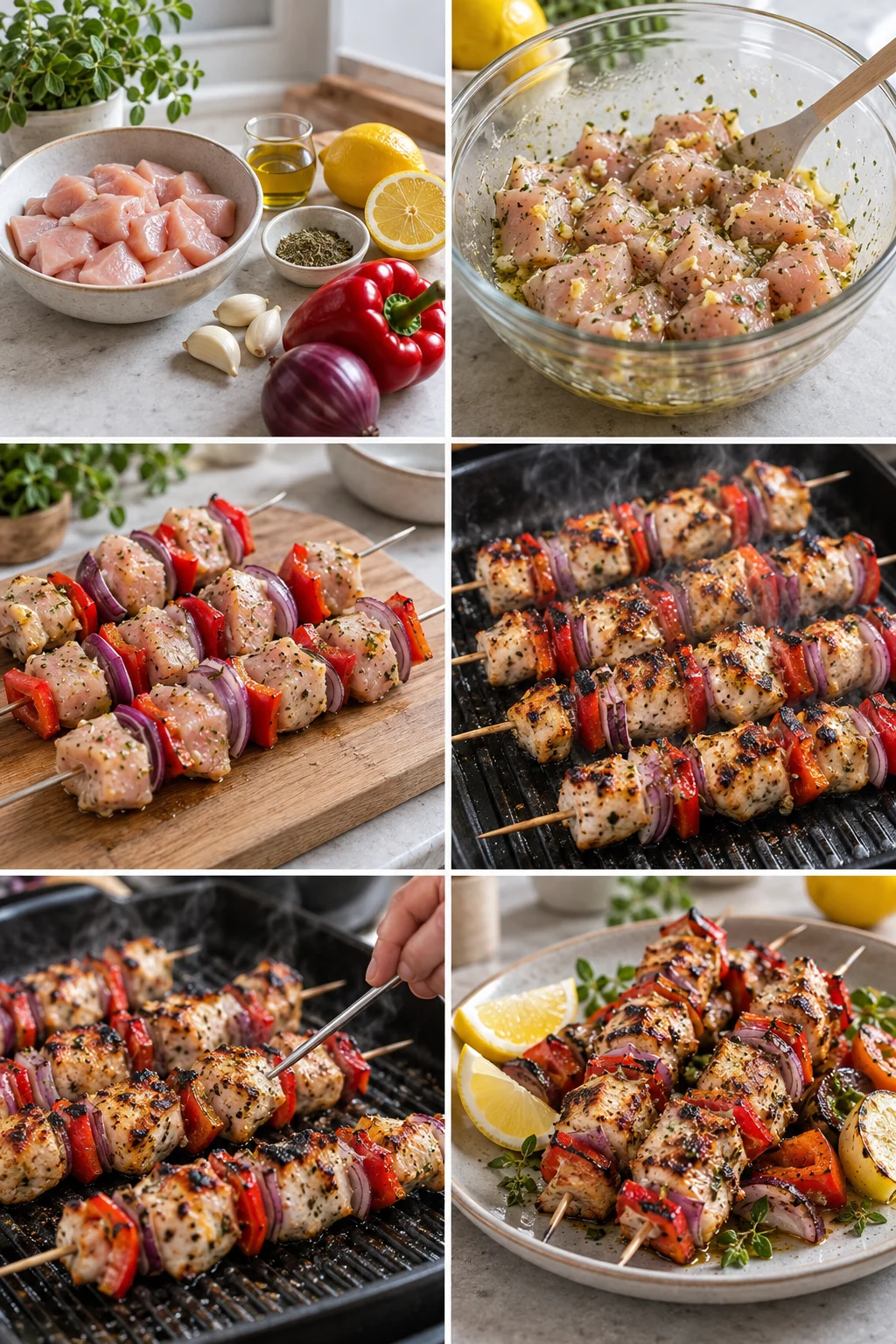
A lower-calorie way to make Chicken Souvlaki
Chicken Souvlaki That Browns Before the Vegetables Go Soft
Cut chicken and vegetables to different sizes, measure the oil, and grill compact skewers for chicken souvlaki at about 300 calories per serving.
Chicken, onion, and pepper do not cook at the same speed just because they share a skewer. Smaller onion layers and wider chicken cubes bring their timing closer together. Packing each skewer firmly—but not tightly—creates enough contact for browning without trapping raw surfaces.
What changes—and what stays
From conventional 430 calories in a comparison plate using 30 g oil and an added 120 g pita across two servings to 305 calories
Measure 8 g oil for the full batch, use 3 cm chicken cubes and thinner vegetable pieces, and serve the skewers as a vegetable-forward plate rather than automatically adding bread. Lemon zest, oregano, and garlic cling to broad chicken surfaces, while direct high heat adds the char that makes a simple marinade taste complete.
| Part | Conventional | Lighter | Why |
|---|---|---|---|
| Core method | More added fat or a heavier proportion | Measure 8 g oil for the full batch, use 3 cm chicken cubes and thinner vegetable pieces, and serve the skewers as a vegetable-forward plate rather than automatically adding bread. | Lemon zest, oregano, and garlic cling to broad chicken surfaces, while direct high heat adds the char that makes a simple marinade taste complete. |
How the flavor stays
Lemon zest, oregano, and garlic cling to broad chicken surfaces, while direct high heat adds the char that makes a simple marinade taste complete.
A cost rule that survives inflation
Bell pepper and onion stretch the skewers without pretending to replace the chicken. Buy whichever pepper color is reasonably priced; flavor matters more than color.
Ingredients for 2
Measure first; timing is part of how this recipe uses less fat.
- 320 gboneless skinless chicken breast, cut into 3 cm cubes
- 160 gred bell pepper, cut into 3 cm pieces
- 140 gred onion, separated into double layers
- 8 golive oil
- 1 largelemon, zested and juiced
- 8 ggarlic, grated
- 3 gdried oregano
- 2 gkosher salt
- 1 gblack pepper
- 80 gmixed greens for serving
Method
Each step includes heat, a visible cue, and a recovery.
Step 1 · follow the visible cue
Match size to cooking speed
Cut chicken into 3 cm cubes, pepper into broad 3 cm pieces, and onion into thinner double layers. Mix oil, lemon zest, 15 ml juice, garlic, oregano, salt, and pepper; coat the chicken for 20 minutes.
Look for: Chicken pieces are equal in volume while onion pieces are visibly thinner than the pepper.
Step 2 · follow the visible cue
Thread firmly with tiny gaps
Alternate chicken, onion, and pepper on four skewers. Leave a few millimeters between pieces so heat reaches their sides, and keep pointed skewer ends clear.
Look for: Every chicken cube has at least one exposed face and no vegetables are compressed into a solid block.
Step 3 · follow the visible cue
Turn only after the first char
Preheat a grill pan over medium-high. Lay in the skewers and leave them until the chicken releases with brown marks, then rotate to expose the remaining sides.
Look for: The first face lifts without tearing and shows distinct grill marks before the skewer is turned.
Step 4 · follow the visible cue
Check the center, then rest the whole skewer
Test the largest chicken cube for 165°F/74°C. Transfer all skewers to a plate, rest for 3 minutes, and finish with the remaining lemon juice over greens.
Look for: The largest cube is 165°F/74°C while the pepper still holds its shape and the onion edges are browned.
Calories at the same serving size
150 kcal · 33% lower estimated
The estimate uses the listed ingredients divided into 2 servings. Brand labels, trimming, and the amount left in the pan can change the result.
Keep the leftovers in the same spirit
Remove cooked chicken and vegetables from wooden skewers before refrigerating for up to 3 days. Reheat briefly in a skillet to avoid drying the cubes.
Remove cooked chicken and vegetables from wooden skewers before refrigerating for up to 3 days. Reheat briefly in a skillet to avoid drying the cubes.
Frequently asked questions
Should wooden skewers be soaked?
Soaking can reduce scorching, but exposed ends may still darken. Keep them away from direct flame and follow your grill manufacturer's instructions.
Is pita included in the calorie estimate?
No. This version is calculated as skewers with greens. Add pita, rice, or sauce according to the portion you actually eat.
- boneless skinless chicken breast, cut into 3 cm cubes320 g
- red bell pepper, cut into 3 cm pieces160 g
- red onion, separated into double layers140 g
- olive oil8 g
CaloNote · mobile analysis example
Check the Chicken Souvlaki serving you actually made
Photograph the finished plate in CaloNote, review the detected ingredients and portion, and correct the estimate before saving.
This uses the real CaloNote meal-detail layout with this recipe’s photo and estimated nutrition. Actual AI results vary with the photo and portion.
Analyze my meal in CaloNoteMethod and sources
Recipe development and nutrition review: CaloNote Editorial
This editorial recipe uses ingredient-level nutrition estimates and reviewed cooking principles. It is not represented as physically test-cooked, and nutrition is approximate.
Published and last reviewed: August 25, 2026
Make another familiar dinner lighter
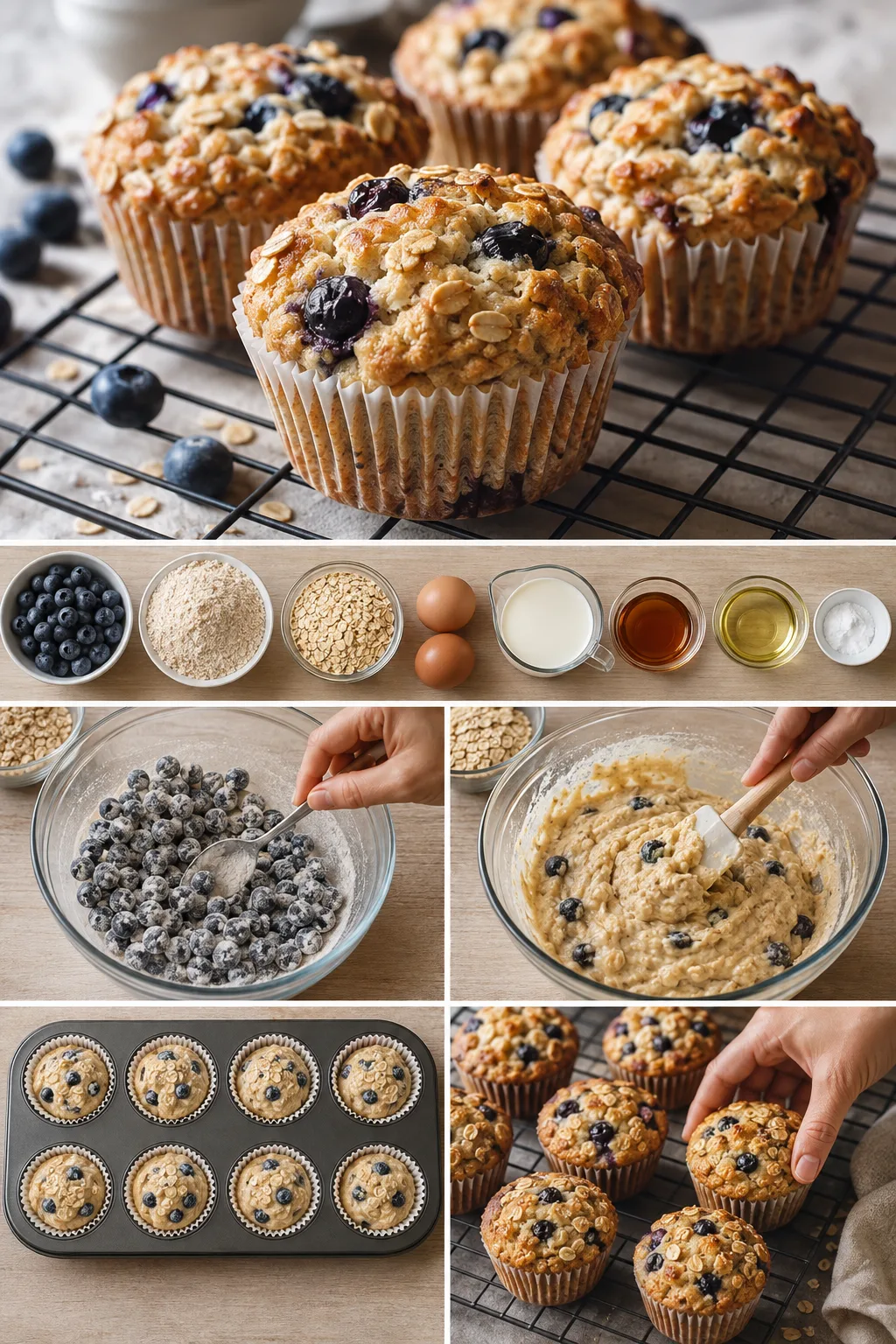
Blueberry Muffins: a lighter American recipe with a clear doneness check
American Blueberry Muffins for eight: coat dry berries lightly, fold the batter only until streaks disappear, and bake in evenly filled cups. The measured formula uses blueberries, whole-wheat flour, rolled oats, eggs, and low-fat milk; the reliable finish is domed tops spring back and berries stay suspended. About 345 kcal per portion.
See the recipe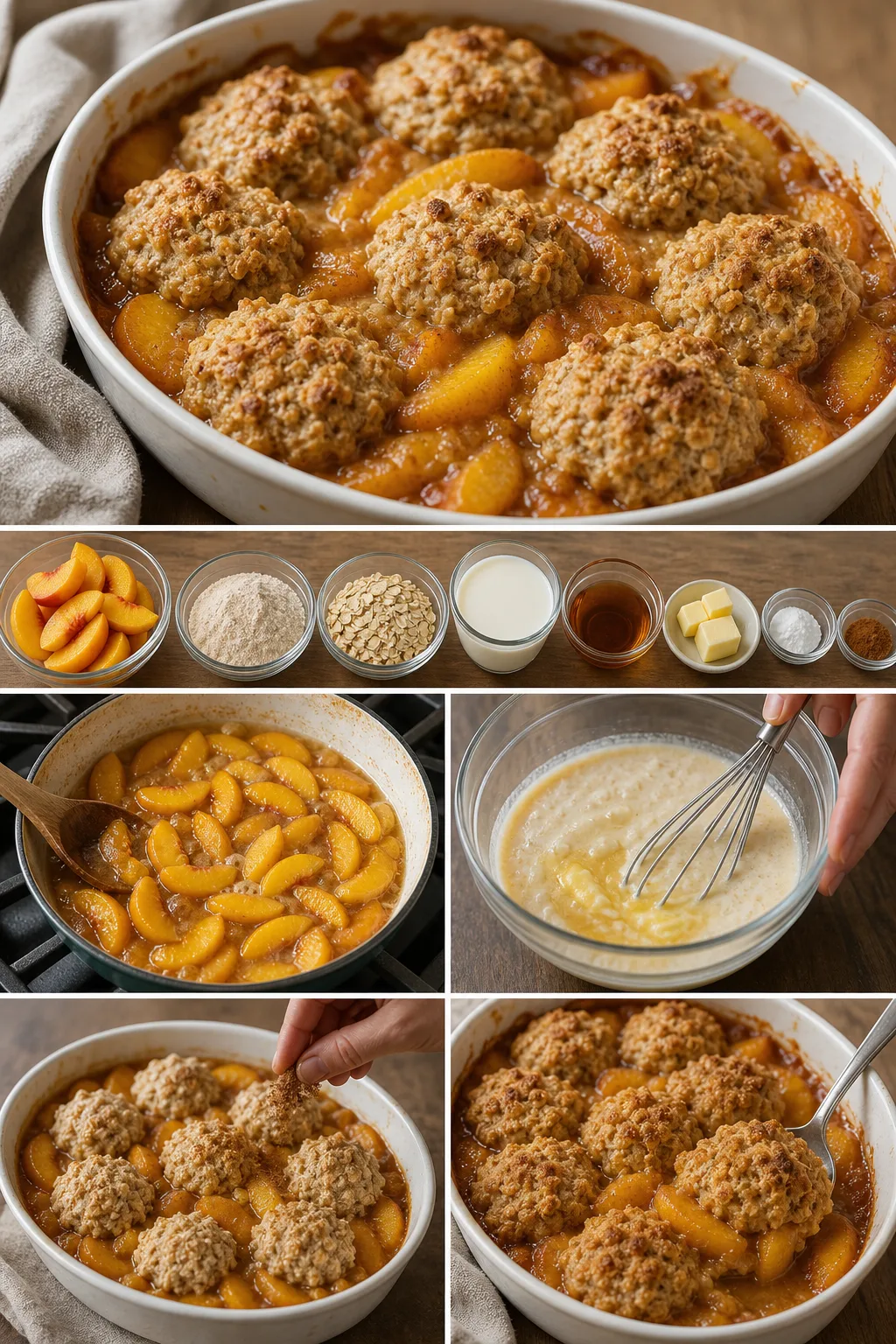
Peach Cobbler: a lighter American recipe with a clear doneness check
American Peach Cobbler for eight: reduce the peach juices first and spoon small biscuit mounds apart so steam can escape. The measured formula uses ripe peaches, whole-wheat flour, rolled oats, low-fat milk, and maple syrup; the reliable finish is the fruit bubbles thickly and each biscuit is dry beneath. About 345 kcal per portion.
See the recipe