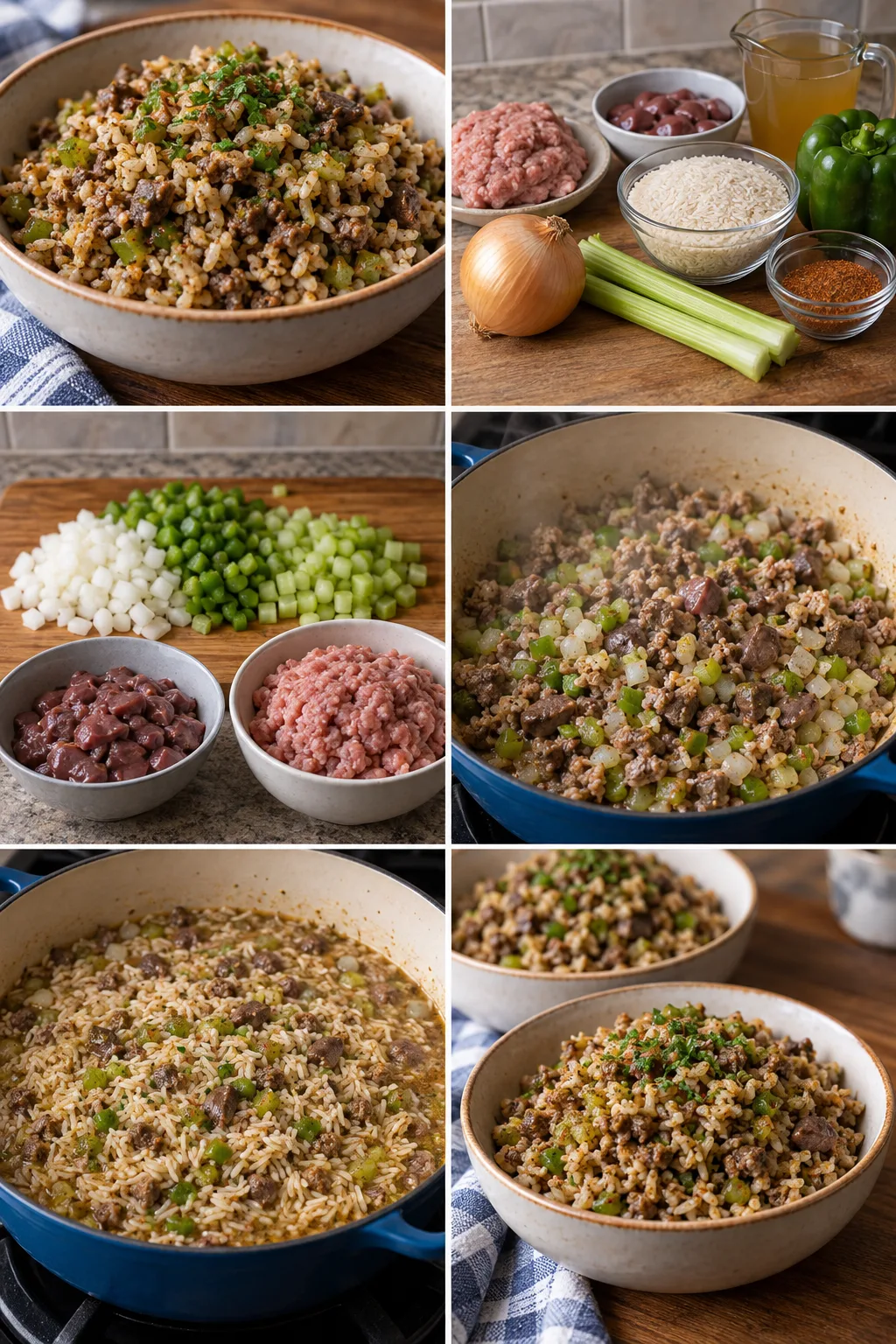
A lower-calorie way to make Dirty Rice
Dirty Rice: a lighter everyday recipe for two · US
Make Dirty Rice for two with eight measured ingredients and a lighter cooking method. Use The rice will be fully cooked and tender, having absorbed all the liquid, and the meats will be crumbly and well-integrated throughout the dish. as the final doneness check; approximately 415 kcal per serving.
Dirty Rice works best when its familiar flavour is built in layers instead of relying on excess oil, cream, or sugar. This version measures every ingredient for two servings. The main technique is to To prepare a lighter dirty rice, brown the lean ground pork and finely minced chicken livers with the 'holy trinity' of vegetables, then simmer with rice and broth until tender.. Judge the result by what you can see and feel: The rice will be fully cooked and tender, having absorbed all the liquid, and the meats will be crumbly and well-integrated throughout the dish.. Dirty Rice is characterized by its distinctive 'dirty' appearance, which comes from the finely minced chicken livers and ground meat cooked with rice.
What changes—and what stays
From a restaurant portion with unmeasured fat and sides commonly reaches 600–800 kcal to 415 calories
Dirty Rice: The useful change is portion control before cooking. Measure lean ground pork, chicken livers, and long-grain white rice, then use the stated method so the texture develops without an unmeasured finishing fat. This recipe uses extra-lean ground pork and significantly reduces any added oil when browning the meats, making it much lighter. Dirty Rice: The characteristic flavour comes from yellow onion, celery, green bell pepper, low-sodium chicken broth, and Cajun seasoning. Add them at the correct stage and stop cooking when The rice will be fully cooked and tender, having absorbed all the liquid, and the meats will be crumbly and well-integrated throughout the dish.. Dirty Rice is characterized by its distinctive 'dirty' appearance, which comes from the finely minced chicken livers and ground meat cooked with rice.
| Part | Conventional | Lighter | Why |
|---|---|---|---|
| Core method | More added fat or a heavier proportion | Dirty Rice: The useful change is portion control before cooking. Measure lean ground pork, chicken livers, and long-grain white rice, then use the stated method so the texture develops without an unmeasured finishing fat. This recipe uses extra-lean ground pork and significantly reduces any added oil when browning the meats, making it much lighter. | Dirty Rice: The characteristic flavour comes from yellow onion, celery, green bell pepper, low-sodium chicken broth, and Cajun seasoning. Add them at the correct stage and stop cooking when The rice will be fully cooked and tender, having absorbed all the liquid, and the meats will be crumbly and well-integrated throughout the dish.. Dirty Rice is characterized by its distinctive 'dirty' appearance, which comes from the finely minced chicken livers and ground meat cooked with rice. |
How the flavor stays
Dirty Rice: The characteristic flavour comes from yellow onion, celery, green bell pepper, low-sodium chicken broth, and Cajun seasoning. Add them at the correct stage and stop cooking when The rice will be fully cooked and tender, having absorbed all the liquid, and the meats will be crumbly and well-integrated throughout the dish.. Dirty Rice is characterized by its distinctive 'dirty' appearance, which comes from the finely minced chicken livers and ground meat cooked with rice.
A cost rule that survives inflation
For two servings, buy the main ingredients in small quantities and use green bell pepper, low-sodium chicken broth, and Cajun seasoning as targeted flavour builders. This keeps leftovers practical without changing the identity of Dirty Rice.
Ingredients for 2
Measure first; timing is part of how this recipe uses less fat.
- 100 gramslean ground pork
- 50 gramschicken livers
- 150 gramslong-grain white rice
- 50 gramsyellow onion
- 30 gramscelery
- 30 gramsgreen bell pepper
- 350 milliliterslow-sodium chicken broth
- 5 gramsCajun seasoning
Method
Each step includes heat, a visible cue, and a recovery.
Step 1 · follow the visible cue
Measure and prepare
Measure all eight ingredients before heating the pan. Prepare lean ground pork and chicken livers to an even size, then keep long-grain white rice ready for the stage where it cooks most evenly. Finely mince the chicken livers and dice the onion, celery, and green bell pepper into small, uniform pieces.
Look for: The pieces are evenly sized, all quantities match the ingredient list, and no unintended soaking or preparation liquid remains.
Step 2 · follow the visible cue
Start the flavour base
Start with yellow onion and celery over controlled heat. Add green bell pepper only after the raw aroma softens, keeping the surface moist enough to prevent scorching. Brown the lean ground pork and minced chicken livers in a large skillet until fully cooked and crumbly, draining any excess fat.
Look for: The aroma is rounded rather than raw, the base has not burned, and any released moisture is controlled before the main ingredients go in.
Step 3 · follow the visible cue
Cook the main components
Add lean ground pork, chicken livers, and long-grain white rice. To prepare a lighter dirty rice, brown the lean ground pork and finely minced chicken livers with the 'holy trinity' of vegetables, then simmer with rice and broth until tender.. Adjust heat and measured liquid rather than adding extra oil, cream, or sugar. Simmer the rice with the browned meats, sautéed vegetables, low-sodium chicken broth, and Cajun seasoning until tender.
Look for: The centre is cooked through and the defining texture of Dirty Rice is present without a greasy or watery layer.
Step 4 · follow the visible cue
Finish, rest, and portion
Add low-sodium chicken broth and Cajun seasoning, then rest briefly so the texture settles. Divide into two equal portions and confirm that The rice will be fully cooked and tender, having absorbed all the liquid, and the meats will be crumbly and well-integrated throughout the dish.. Fluff the cooked dirty rice gently with a fork and allow it to rest, covered, for a few minutes before serving.
Look for: The rice will be fully cooked and tender, having absorbed all the liquid, and the meats will be crumbly and well-integrated throughout the dish.. The two portions are equal and the finishing ingredients remain noticeable rather than overcooked.
Calories at the same serving size
187 kcal · 31% lower estimated
The estimate uses the listed ingredients divided into 2 servings. Brand labels, trimming, and the amount left in the pan can change the result.
Keep the leftovers in the same spirit
Cool leftover Dirty Rice promptly, cover, and refrigerate for up to two days. Reheat only one portion at a time until piping hot; keep fresh or crisp garnishes separate.
Cool leftover Dirty Rice promptly, cover, and refrigerate for up to two days. Reheat only one portion at a time until piping hot; keep fresh or crisp garnishes separate.
Frequently asked questions
How do I keep Dirty Rice from becoming watery or greasy?
Dirty Rice: Use the listed quantities and complete each moisture-reduction stage before adding the next ingredient. The reliable stopping point is when The rice will be fully cooked and tender, having absorbed all the liquid, and the meats will be crumbly and well-integrated throughout the dish..
Can I scale this Dirty Rice recipe?
Dirty Rice: Yes. Multiply every listed ingredient by the same factor and use a wider pan or an additional baking dish so the food cooks in the same depth. Recheck doneness rather than simply multiplying the time.
- lean ground pork100 grams
- chicken livers50 grams
- long-grain white rice150 grams
- yellow onion50 grams
CaloNote · mobile analysis example
Check the Dirty Rice serving you actually made
Photograph the finished plate in CaloNote, review the detected ingredients and portion, and correct the estimate before saving.
This uses the real CaloNote meal-detail layout with this recipe’s photo and estimated nutrition. Actual AI results vary with the photo and portion.
Analyze my meal in CaloNoteMethod and sources
Recipe development and nutrition review: CaloNote Editorial
This editorial recipe uses ingredient-level nutrition estimates and reviewed cooking principles. It is not represented as physically test-cooked, and nutrition is approximate.
Published and last reviewed: August 25, 2026
Make another familiar dinner lighter
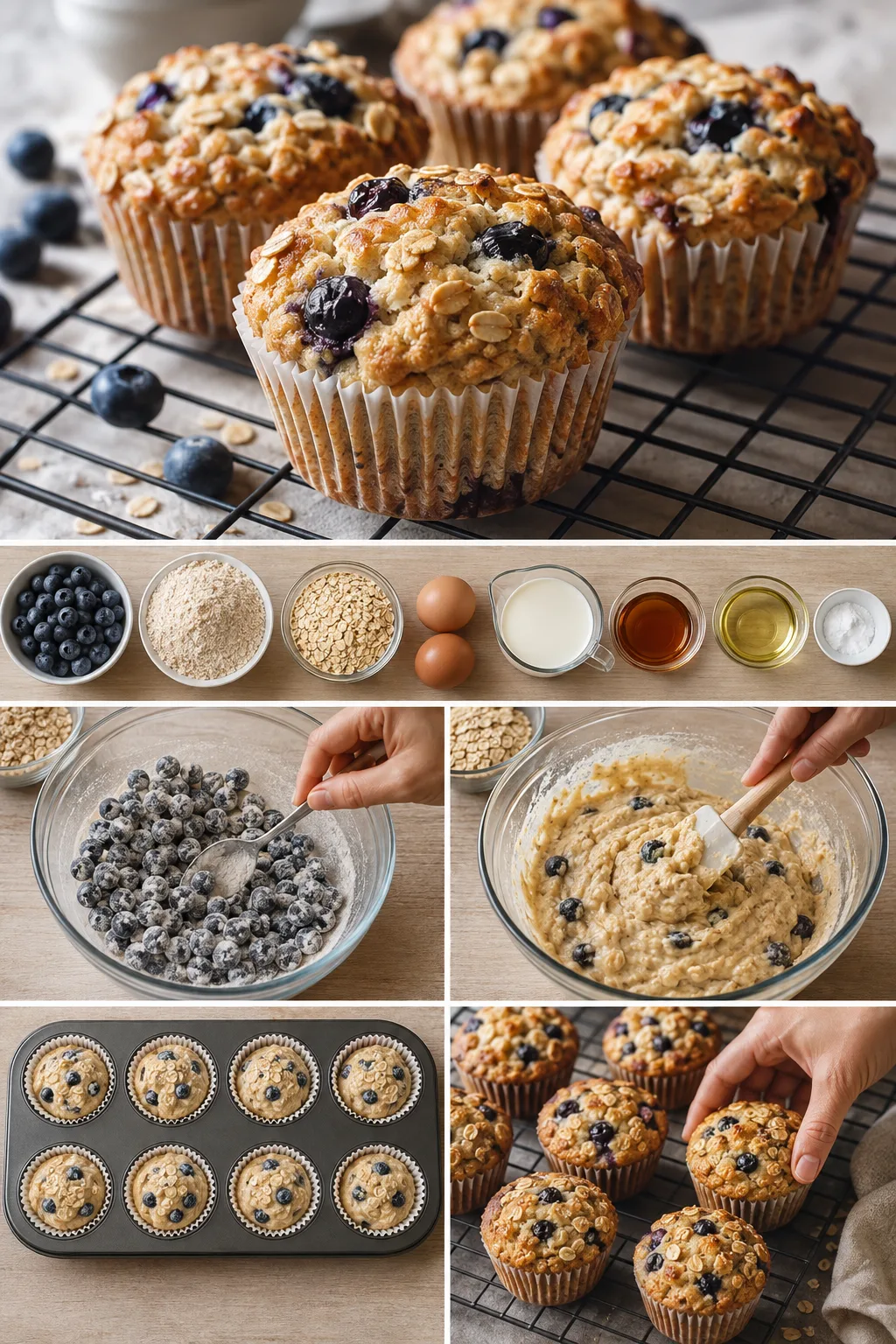
Blueberry Muffins: a lighter American recipe with a clear doneness check
American Blueberry Muffins for eight: coat dry berries lightly, fold the batter only until streaks disappear, and bake in evenly filled cups. The measured formula uses blueberries, whole-wheat flour, rolled oats, eggs, and low-fat milk; the reliable finish is domed tops spring back and berries stay suspended. About 345 kcal per portion.
See the recipe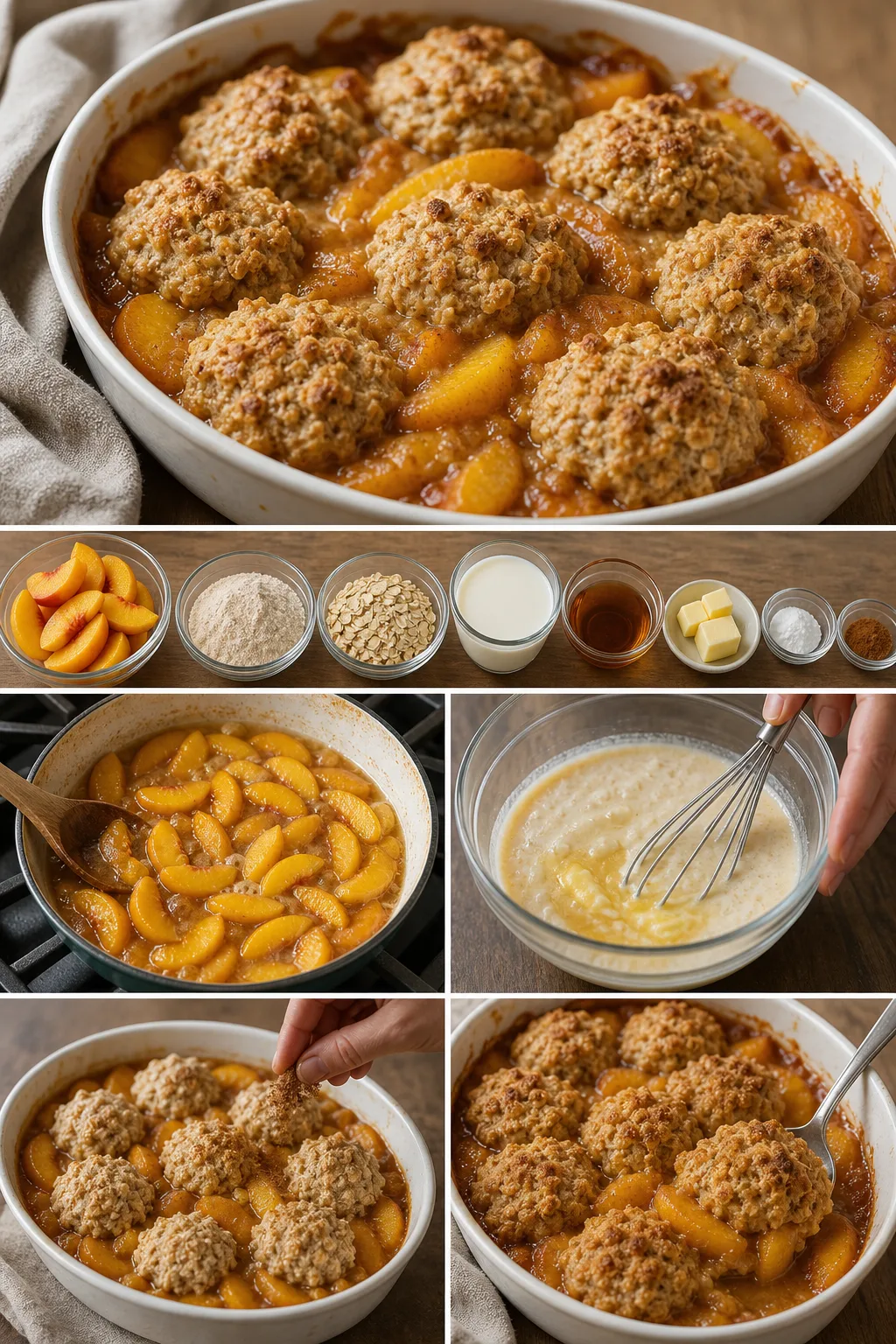
Peach Cobbler: a lighter American recipe with a clear doneness check
American Peach Cobbler for eight: reduce the peach juices first and spoon small biscuit mounds apart so steam can escape. The measured formula uses ripe peaches, whole-wheat flour, rolled oats, low-fat milk, and maple syrup; the reliable finish is the fruit bubbles thickly and each biscuit is dry beneath. About 345 kcal per portion.
See the recipe