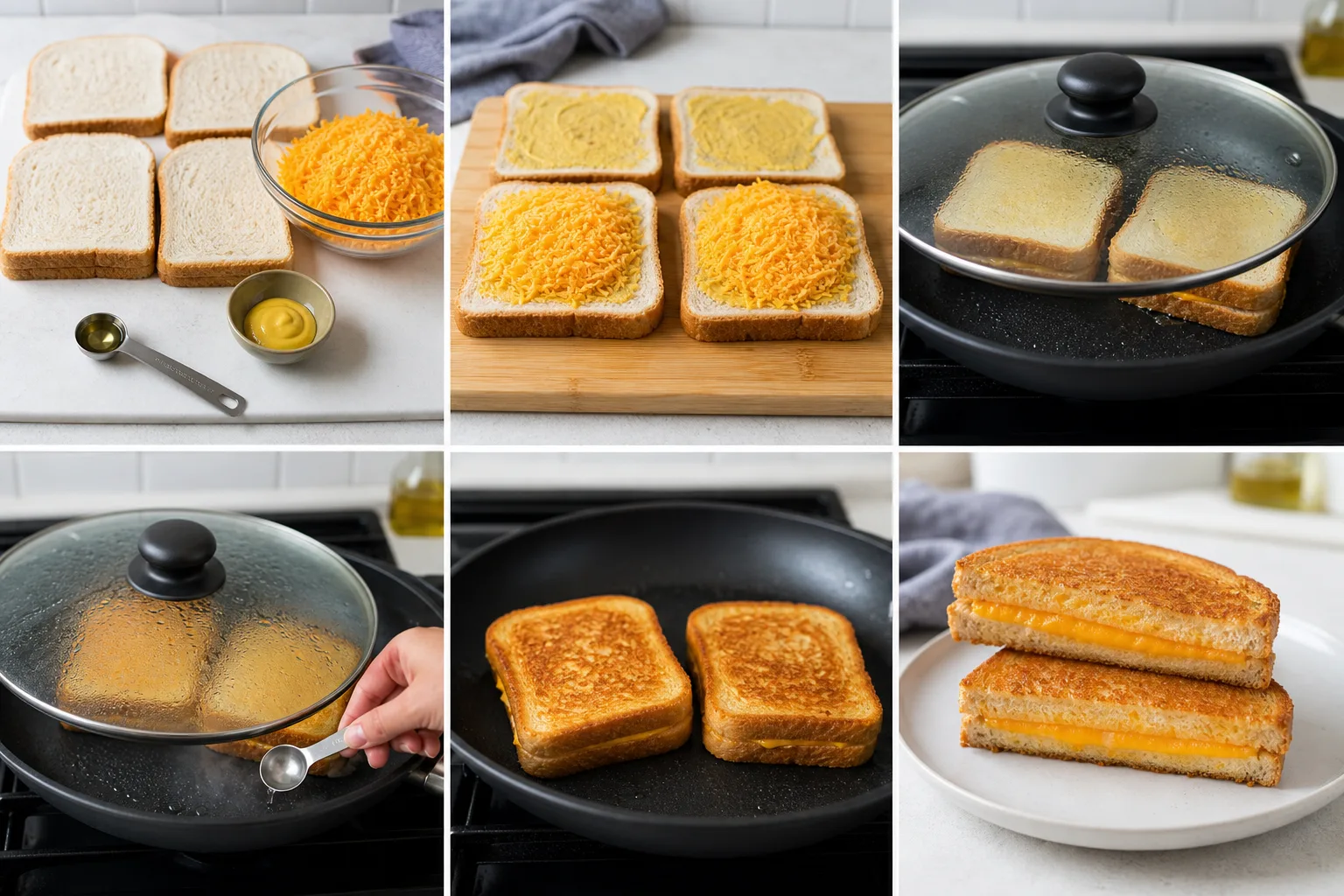
A lower-calorie way to make Grilled Cheese Sandwich
Crisp Grilled Cheese With Less Cheddar—Steam Melts It First
Finely grated sharp cheddar and a teaspoon of trapped steam melt before the bread burns, producing a crisp grilled cheese around 360 calories with less cheese and butter.
Reducing cheese usually creates the worst version of grilled cheese: dry bread around a few rubbery patches. The better move is to help a measured layer melt sooner. Fine shreds, a lid, and a teaspoon of water finish the center while the pan stays gentle enough to crisp the bread.
What changes—and what stays
From double-cheese, butter-fried grilled cheese to 360 calories
Fine sharp cheddar and a short burst of covered steam create a continuous melt before a modestly buttered crust becomes too dark.
| Part | Conventional | Lighter | Why |
|---|---|---|---|
| Cheese | 3 oz mild sliced cheese | 1.5 oz extra-sharp cheddar | More flavor from a thinner layer |
| Butter | 1 tbsp or more | 1 tsp across both faces | Low heat browns a thin coating evenly |
| Melting method | Wait for pan heat to reach the center | Cover with 1 tsp steam | Cheese melts before bread scorches |
How the flavor stays
Fine shreds expose more cheese surface, Dijon sharpens its flavor, and steam moves heat into the center. The bread can therefore brown with one measured teaspoon of butter instead of waiting in a greasy pan.
A cost rule that survives inflation
A smaller block of strongly flavored cheddar lasts across more sandwiches than stacking several mild slices. Ordinary sandwich bread works; no diet-branded loaf is required.
Ingredients for 1
Measure first; timing is part of how this recipe uses less fat.
- 2 slices (70g)whole-grain sandwich bread
- 1.5 oz (42g)extra-sharp cheddar— finely grated
- 1 tsp (5g)softened butter
- 1 tsp (5g)Dijon mustard
- 1 tsp (5ml)water
- 1/8 tsp (0.3g)black pepper
What to look for when shopping
Sharpness is functional here
Aged cheddar remains distinct in a thin layer. Mild cheese often tempts you to add another slice simply to taste it.
Avoid very thick artisan slices
A sturdy but thin sandwich loaf lets heat reach the center. Thick sourdough can brown before this smaller cheese layer loosens.
Butter must be soft
Soft butter spreads to the corners without tearing bread or leaving calorie-dense clumps.
Tools
small-hole grater · 8- or 10-inch nonstick skillet · fitted lid · thin spatula · measuring teaspoon
Method
Each step includes heat, a visible cue, and a recovery.
Grater and board · no heat · 4 minutes
Build one even cheese layer
Grate cheddar on the small holes. Spread Dijon inside the bread, scatter cheese to the edges, add pepper, and close the sandwich. Spread butter in a whisper-thin layer over both outer faces.
Look for: No mound in the center should be thicker than the edges, or that spot will still be cold when the bread browns.
Why this order: Small shreds create more contact points and melt into one layer faster.
Let it sit at room temperature for five minutes, then grate with short strokes rather than pressing hard.
Nonstick skillet · medium-low · 3 minutes
Start in a barely warm skillet
Set the sandwich in a nonstick skillet over medium-low heat. Cook 3 minutes, pressing only once with a spatula, until the first side is pale gold.
Look for: You should hear a soft sizzle, not aggressive frying; the cheese at the rim will just begin to slump.
Why this order: Slow first-side browning gives heat time to approach the cheese without demanding extra butter.
Remove the pan from heat for one minute and resume on low. Do not add water yet.
Covered skillet · 45–60 seconds
Use one teaspoon of steam
Flip the sandwich. Add water to the empty edge of the skillet and immediately cover for 45–60 seconds, keeping water away from the bread.
Look for: When uncovered, the cheese should look glossy and connected rather than holding the shape of separate shreds.
Why this order: A teaspoon of steam transfers heat around the sandwich and softens the cheese from above.
Uncover immediately and continue over low heat until that corner feels dry again.
Uncovered skillet · 1–2 minutes
Uncover for the final crisp
Remove the lid and cook 1–2 minutes more, flipping once if needed. Rest on a rack or board for 60 seconds before cutting.
Look for: Both sides feel dry and crisp under the spatula, while the cheese gives gently when the sandwich is pressed.
Why this order: The final dry heat restores crust crispness after steaming.
Raise heat only one step and flip every 20 seconds until evenly gold.
Adjust it for the ingredients you have
Bread thickness, cheese moisture, and skillet material change the timing. Keep the heat gentle enough that you can correct the melt before the crust burns.
You use a dense sourdough
Cover for up to 90 seconds and keep heat low. Choose thinner slices rather than increasing butter.
The cheddar is oily
Use an aged but not pre-shredded block and stop cooking once melted. Prolonged high heat can separate even a modest portion.
You want tomato inside
Salt and blot two very thin slices first. Wet tomato added raw can undo the crispness the steam method protects.
Calories at the same serving size
200 kcal · 36% lower estimated
Whole-recipe calorie breakdown
| Whole-grain bread | 190 kcal |
| Extra-sharp cheddar | 170 kcal |
| Butter | 36 kcal |
| Dijon and seasoning | 5 kcal |
| Whole-recipe total | 401 kcal |
| Estimated per serving (total ÷ 1) | 360 kcal |
The sandwich totals about 400 calories with typical bread and cheese labels; brands may place it near 350–420. The conventional comparison assumes more cheese and butter.
Steam solves the mismatch between crust and center
Bread touches the hot pan directly; cheese does not. Without help, the outside can race ahead while the center warms by slow conduction.
Covered steam surrounds the sandwich with moist heat for less than a minute. That is long enough to soften fine shreds, but short enough to dry the crust again afterward.
The smaller cheese amount works because it is distributed edge to edge. Every bite receives flavor instead of alternating between bare bread and a thick central pocket.
Keep the leftovers in the same spirit
Serve at once when possible. Refrigerate no more than one day and re-crisp in a dry skillet rather than a microwave.
Grilled cheese is best immediately. If necessary, cool completely, refrigerate one day, and reheat in a dry skillet; microwaving softens the crisp crust.
Frequently asked questions
Can I use pre-sliced cheese?
Yes, but choose thin sharp-cheddar slices and overlap them to the edges. Fine grating melts more evenly at this reduced amount.
Will the water make the bread soggy?
Not if it lands on the bare pan and the lid comes off after one minute. The final uncovered cooking drives away surface moisture.
- Whole-grain bread190kcal
- Extra-sharp cheddar170kcal
- Butter36kcal
- Dijon and seasoning5kcal
CaloNote · mobile analysis example
Soup, chips, or nothing—the plate tells the truth
Use CaloNote on the finished plate so the sandwich and whatever accompanies it are estimated together, then correct the serving before saving.
This uses the real CaloNote meal-detail layout with this recipe’s photo and estimated nutrition. Actual AI results vary with the photo and portion.
Analyze my meal in CaloNoteMethod and sources
Recipe development and nutrition review: CaloNote Editorial
This editorial recipe uses ingredient-level nutrition estimates and reviewed cooking principles. It is not represented as physically test-cooked, and nutrition is approximate.
Published and last reviewed: August 25, 2026
Make another familiar dinner lighter
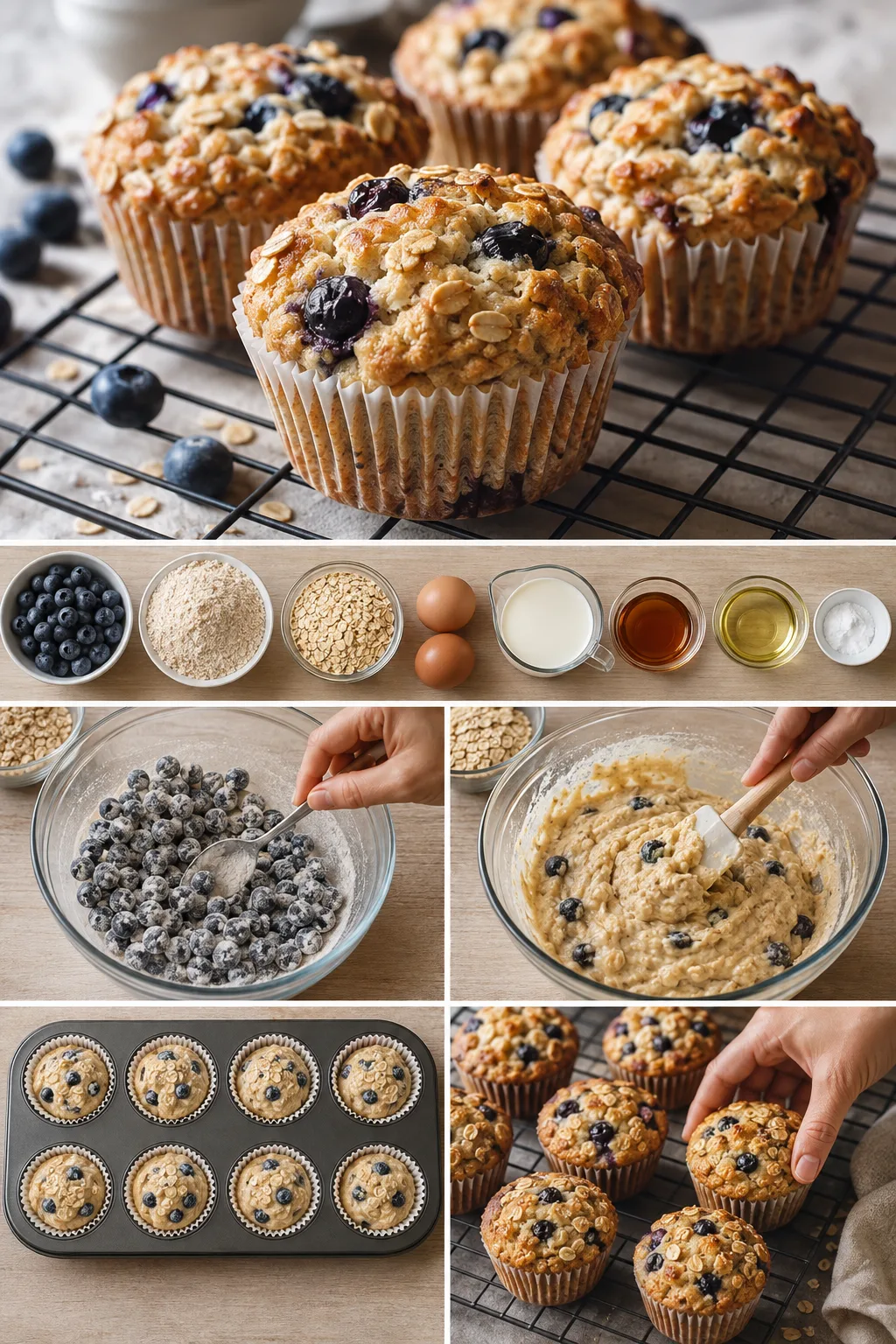
Blueberry Muffins: a lighter American recipe with a clear doneness check
American Blueberry Muffins for eight: coat dry berries lightly, fold the batter only until streaks disappear, and bake in evenly filled cups. The measured formula uses blueberries, whole-wheat flour, rolled oats, eggs, and low-fat milk; the reliable finish is domed tops spring back and berries stay suspended. About 345 kcal per portion.
See the recipe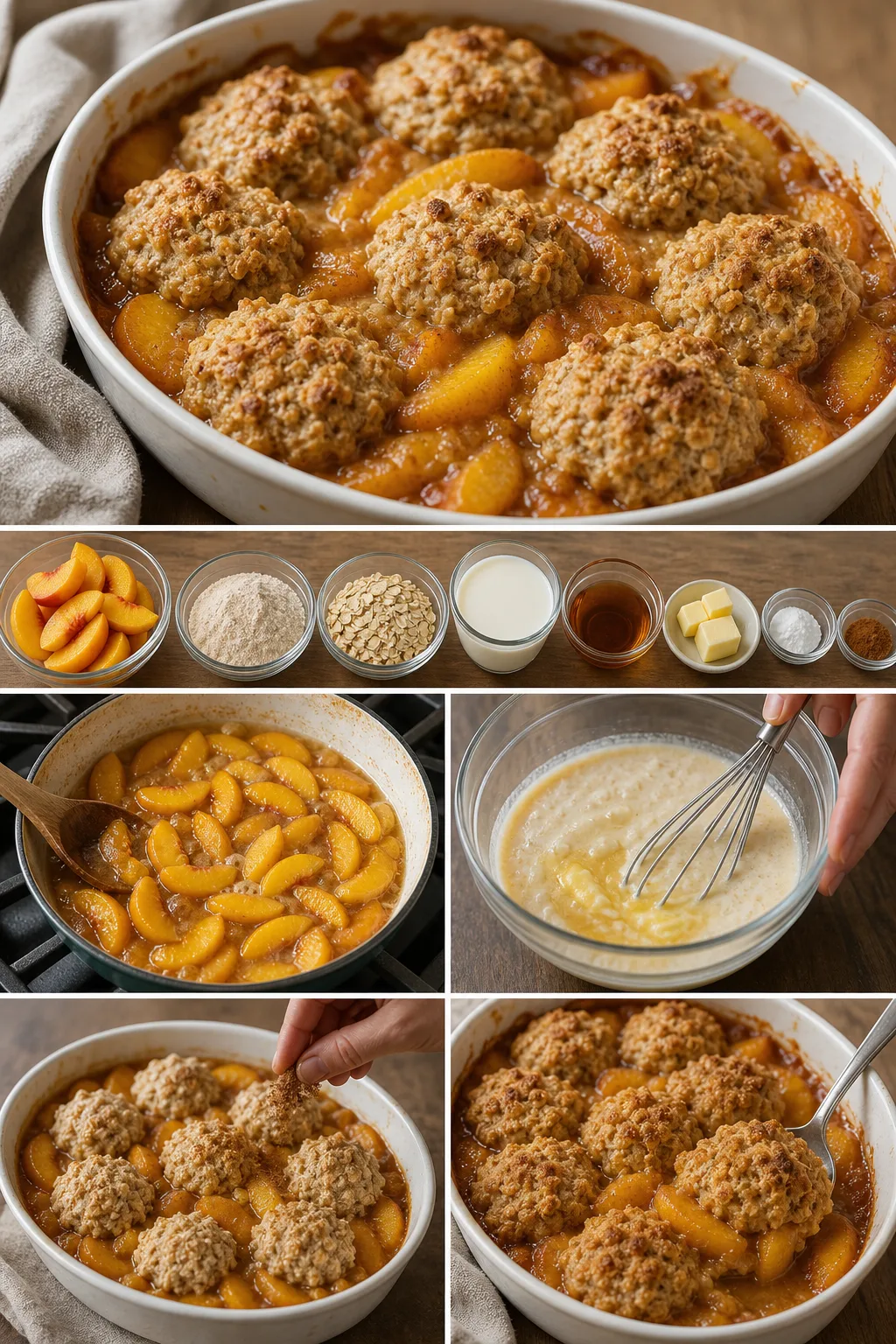
Peach Cobbler: a lighter American recipe with a clear doneness check
American Peach Cobbler for eight: reduce the peach juices first and spoon small biscuit mounds apart so steam can escape. The measured formula uses ripe peaches, whole-wheat flour, rolled oats, low-fat milk, and maple syrup; the reliable finish is the fruit bubbles thickly and each biscuit is dry beneath. About 345 kcal per portion.
See the recipe