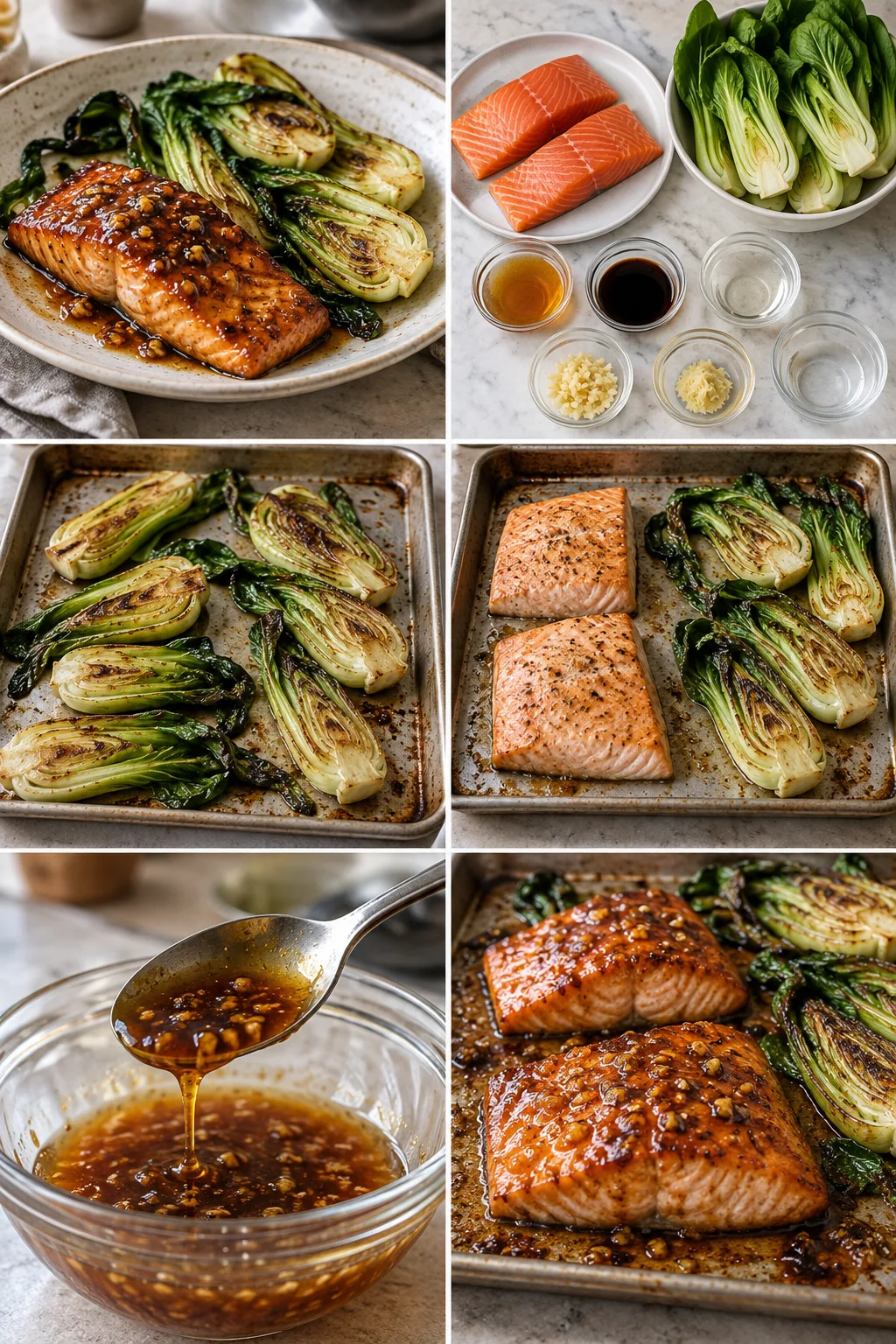
A lower-calorie way to make Honey Garlic Salmon
Honey Garlic Salmon With a Thin Glaze That Does Not Burn
Reduce a one-tablespoon honey glaze separately, brush it on near the end, and serve salmon with bok choy for about 400 calories.
Honey burns before a thick salmon fillet is cooked through. Instead of marinating the fish in a sugary sauce, this method roasts it nearly to temperature while a small glaze reduces in a separate pan. One late brush creates a shiny surface; the rest becomes a measured drizzle rather than a layer of caramelized sugar stuck to the tray.
What changes—and what stays
From conventional 560 calories in a comparison serving with a half-cup bottled honey sauce and oil-fried vegetables to 400 calories
Use 1 tbsp/21 g honey for two 5-oz/142-g fillets, reduce it with soy and vinegar, and brush only during the final 2 minutes. Garlic cooks briefly in the glaze, vinegar prevents one-note sweetness, and a late brush preserves shine without scorching. Bok choy catches the savory pan juices.
| Part | Conventional | Lighter | Why |
|---|---|---|---|
| Core method | More added fat or a heavier proportion | Use 1 tbsp/21 g honey for two 5-oz/142-g fillets, reduce it with soy and vinegar, and brush only during the final 2 minutes. | Garlic cooks briefly in the glaze, vinegar prevents one-note sweetness, and a late brush preserves shine without scorching. Bok choy catches the savory pan juices. |
How the flavor stays
Garlic cooks briefly in the glaze, vinegar prevents one-note sweetness, and a late brush preserves shine without scorching. Bok choy catches the savory pan juices.
A cost rule that survives inflation
Honey, soy sauce, garlic, and vinegar are pantry staples used by the teaspoon. Bok choy cooks in the same pan, and frozen salmon portions reduce trim and leftovers.
Ingredients for 2
Measure first; timing is part of how this recipe uses less fat.
- 2 fillets (10 oz/284 g total)salmon fillets
- 12 oz (340 g)baby bok choy, halved
- 1 tbsp (21 g)honey
- 1 tbsp (15 ml)reduced-sodium soy sauce
- 1 tbsp (15 ml)rice vinegar
- 2 cloves (8 g)garlic, minced
- 1 tsp (5 g)neutral oil
- 1 tsp (5 g)fresh ginger, grated
- 2 tbsp (30 ml)water
Method
Each step includes heat, a visible cue, and a recovery.
Step 1 · follow the visible cue
Start the bok choy cut-side down
Heat the oven to 425°F/220°C. Toss dry bok choy with oil and place cut-side down on a rimmed pan; roast 5 minutes to brown its flat surface.
Look for: The cut faces show caramelized spots while the leaves remain green and upright.
Step 2 · follow the visible cue
Roast the salmon without honey
Pat salmon dry and place it beside the bok choy. Roast 6 to 8 minutes with no glaze while you combine honey, soy, vinegar, garlic, ginger, and water in a small skillet.
Look for: The salmon edges have turned opaque but the center is still darker and under 145°F/63°C.
Step 3 · follow the visible cue
Reduce the glaze where you can see it
Simmer the glaze in the small skillet for 2 to 3 minutes, stirring, until bubbles become glossy and slightly slow. Brush half over the salmon and return the pan to the oven for 2 minutes.
Look for: The glaze coats the spoon thinly and the fish surface shines without blackened sugar spots.
Step 4 · follow the visible cue
Stop at seafood-safe temperature
Remove salmon when the thickest part reaches 145°F/63°C. Rest 3 minutes, then spoon the remaining measured glaze over salmon and bok choy.
Look for: The fish flakes moistly and the glaze forms a translucent amber film rather than a sticky puddle.
Calories at the same serving size
180 kcal · 31% lower estimated
The estimate uses the listed ingredients divided into 2 servings. Brand labels, trimming, and the amount left in the pan can change the result.
Keep the leftovers in the same spirit
Refrigerate salmon and bok choy up to 2 days. Reheat covered at low power or in a 300°F/149°C oven; boil leftover glaze before reuse if it contacted raw fish.
Refrigerate salmon and bok choy up to 2 days. Reheat covered at low power or in a 300°F/149°C oven; boil leftover glaze before reuse if it contacted raw fish.
Frequently asked questions
Why did the honey turn black?
It went onto the fish too early or the broiler was too close. Roast the fish plain first and apply the glaze only for the final 2 minutes.
Can I replace honey with maple syrup?
Yes, use the same weight and watch the skillet closely; maple syrup is thinner and may need an extra minute to reduce.
- salmon fillets2 fillets (10 oz/284 g total)
- baby bok choy, halved12 oz (340 g)
- honey1 tbsp (21 g)
- reduced-sodium soy sauce1 tbsp (15 ml)
CaloNote · mobile analysis example
Check the Honey Garlic Salmon serving you actually made
Photograph the finished plate in CaloNote, review the detected ingredients and portion, and correct the estimate before saving.
This uses the real CaloNote meal-detail layout with this recipe’s photo and estimated nutrition. Actual AI results vary with the photo and portion.
Analyze my meal in CaloNoteMethod and sources
Recipe development and nutrition review: CaloNote Editorial
This editorial recipe uses ingredient-level nutrition estimates and reviewed cooking principles. It is not represented as physically test-cooked, and nutrition is approximate.
Published and last reviewed: August 25, 2026
Make another familiar dinner lighter
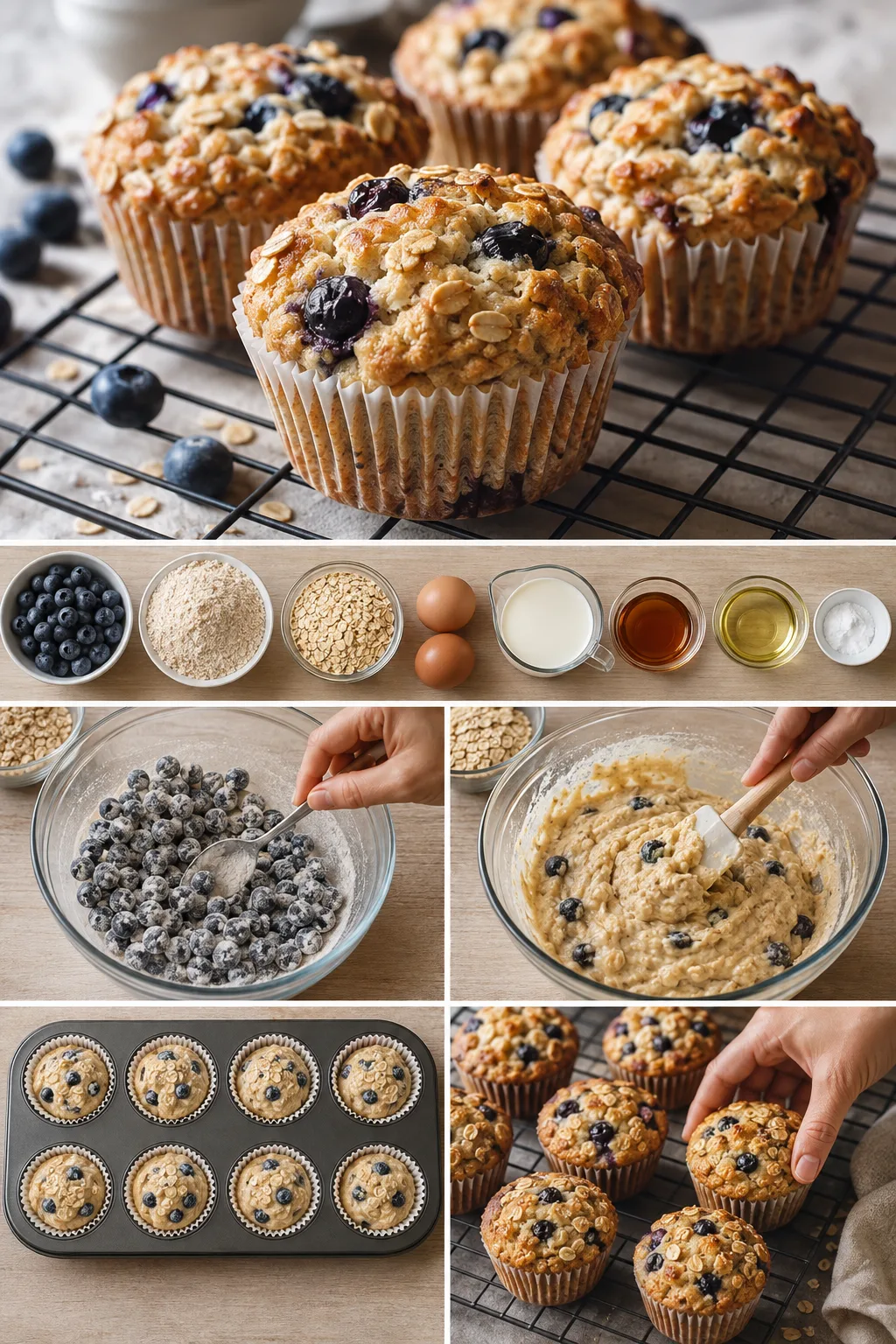
Blueberry Muffins: a lighter American recipe with a clear doneness check
American Blueberry Muffins for eight: coat dry berries lightly, fold the batter only until streaks disappear, and bake in evenly filled cups. The measured formula uses blueberries, whole-wheat flour, rolled oats, eggs, and low-fat milk; the reliable finish is domed tops spring back and berries stay suspended. About 345 kcal per portion.
See the recipe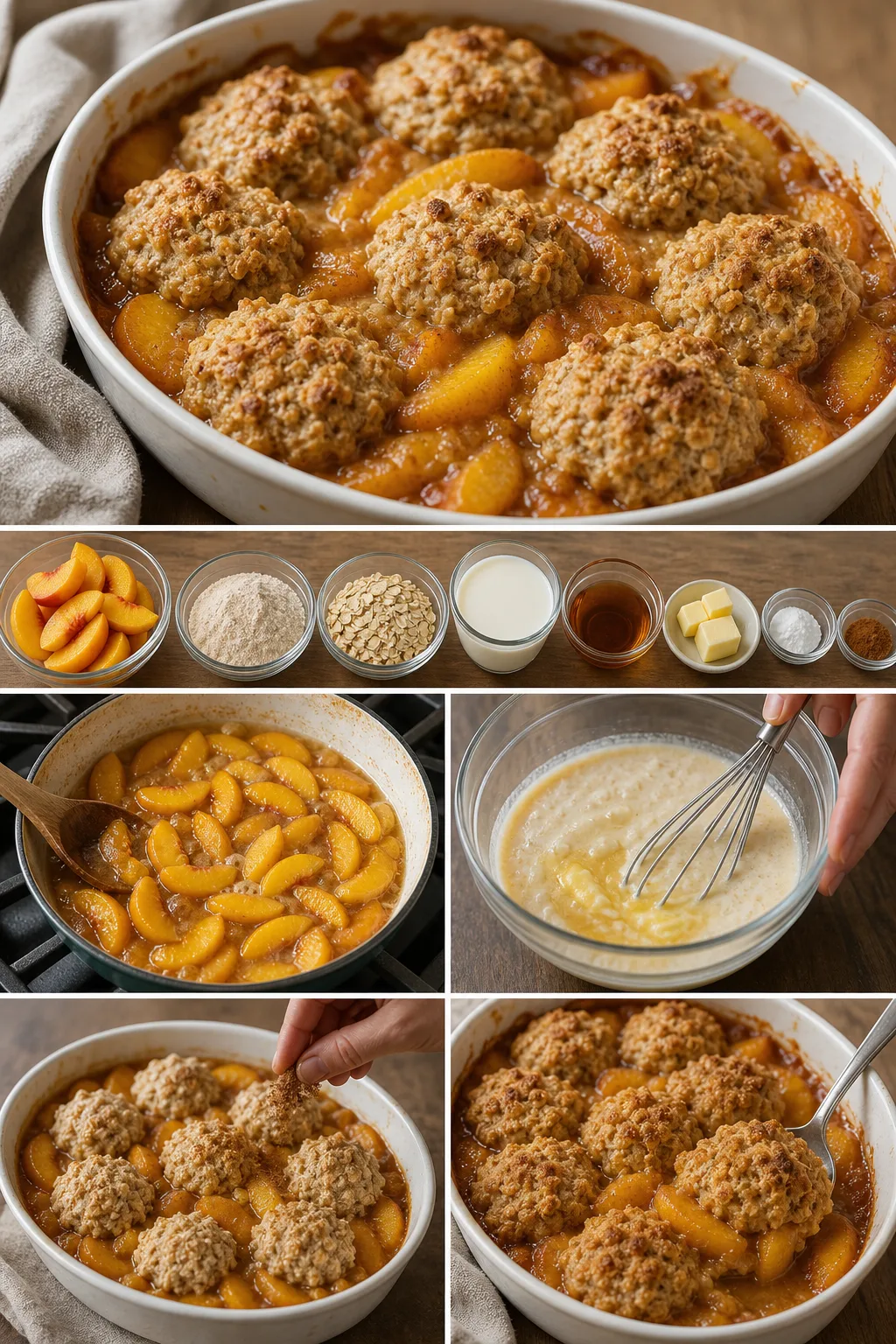
Peach Cobbler: a lighter American recipe with a clear doneness check
American Peach Cobbler for eight: reduce the peach juices first and spoon small biscuit mounds apart so steam can escape. The measured formula uses ripe peaches, whole-wheat flour, rolled oats, low-fat milk, and maple syrup; the reliable finish is the fruit bubbles thickly and each biscuit is dry beneath. About 345 kcal per portion.
See the recipe