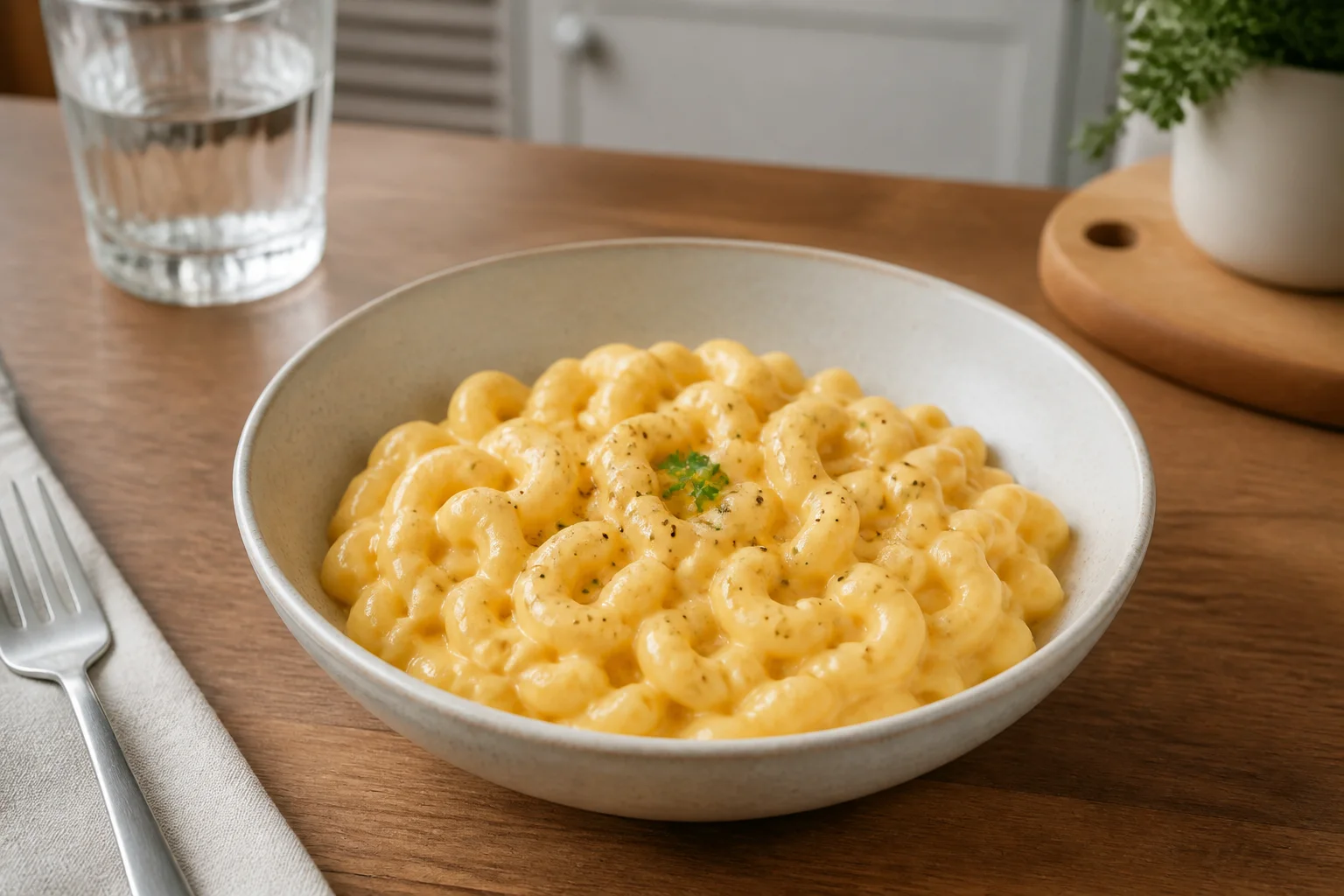
A lower-calorie way to make Mac and Cheese
Keep Mac and Cheese Creamy With Less Cheddar and Butter
Sharp cheddar, a small roux, and pasta water keep this lighter stovetop mac and cheese glossy and creamy at about 420 calories per serving.
Lighter mac and cheese often fails because it removes the ingredients that make the sauce feel complete. This version keeps enough extra-sharp cheddar to taste unmistakably cheesy, then uses a small flour-and-milk base for body instead of relying on a large butter-and-cheese load.
What changes—and what stays
From butter-and-cheese-heavy stovetop mac to 420 calories
Extra-sharp cheddar supplies more flavor per ounce, while a small flour-thickened milk sauce provides the creamy volume usually built with more butter and cheese.
| Part | Conventional | Lighter | Why |
|---|---|---|---|
| Cheddar | 4 oz mild cheddar | 2 oz extra-sharp cheddar | Stronger cheese flavor with half the amount |
| Butter | 2–3 tbsp | 1 tsp | Flour and milk carry the sauce instead |
| Sauce texture | Fat and melted cheese | 1% milk plus pasta starch | Creaminess without a heavy finish |
How the flavor stays
A concentrated cheese flavor matters more than sheer cheese volume. Dijon and black pepper sharpen the sauce, while starchy pasta water keeps it glossy without extra butter.
A cost rule that survives inflation
Extra-sharp cheddar delivers more flavor per ounce, so a small block goes farther than a large bag of mild shredded cheese. Milk and flour are inexpensive pantry support, not cheese substitutes pretending to be cheese.
Ingredients for 2
Measure first; timing is part of how this recipe uses less fat.
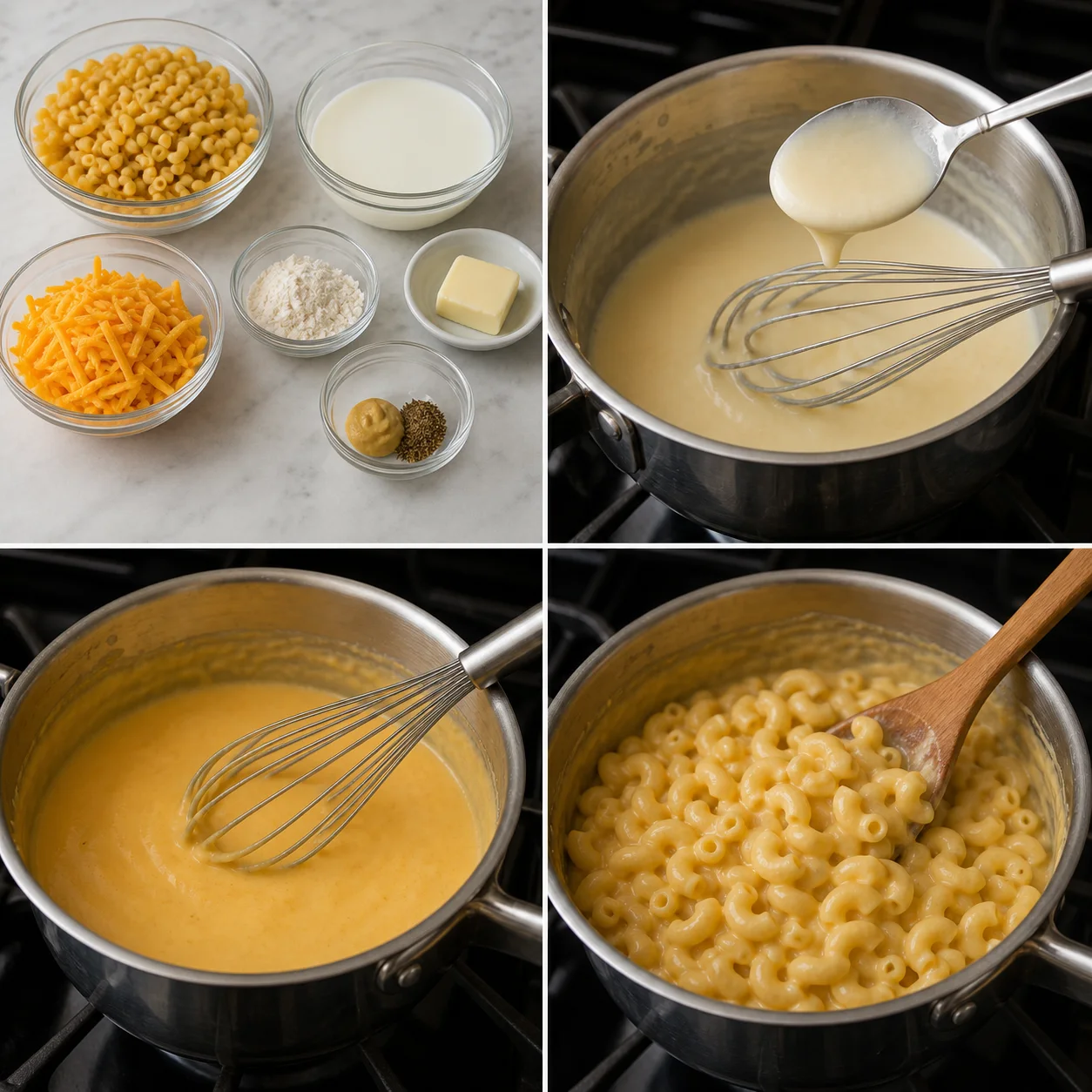
- 4 oz (113g)dry elbow macaroni
- 2 oz (57g)extra-sharp cheddar— finely grated
- 1 cup (240ml)1% milk
- 1 tbsp (8g)all-purpose flour
- 1 tsp (5g)butter
- 1 tsp (5g)Dijon mustard
- 1/4 tspkosher salt— plus pasta water
- 1/4 tspblack pepper
- 1/3 cupreserved pasta water— use as needed
What to look for when shopping
Buy extra-sharp, not more cheese
A well-aged cheddar tastes distinct after dilution with milk. Grate it finely from a block so it melts before the sauce overheats.
Use elbow macaroni or another short tube
Small curved pasta holds a thin sauce on its surface. Large shells need more sauce to feel equally coated.
Keep the milk cold
Cold milk added in three small pours gives you time to whisk out flour lumps before the sauce thickens.
Tools
2-quart saucepan · medium pot · fine grater · whisk · heatproof spatula
Method
Each step includes heat, a visible cue, and a recovery.
Grater and pot · before heat · 5 minutes
Grate first, then boil
Finely grate the cheddar and measure every sauce ingredient before the pasta goes in. Boil macaroni until one minute shy of package directions; reserve pasta water before draining.
Look for: The pasta should bend easily but still show a tiny pale core when bitten.
Why this order: Finely grated cheese melts quickly, so the pasta cannot overcook while you fight cheese clumps.
Add it in three handfuls off heat. The anti-caking coating may require another tablespoon of pasta water, but do not raise the heat.
2-quart saucepan · medium-low · 3–4 minutes
Build a very small roux
Melt butter over medium-low heat. Whisk in flour for 45 seconds, then add milk in three additions, whisking smooth each time. Simmer 2–3 minutes.
Look for: The sauce should coat a spoon in a thin, even film—not sit like paste.
Why this order: A small roux disperses flour and thickens milk enough to cling without relying on butter.
Take it off heat and whisk in 1 tablespoon cold milk. If lumps remain, press the sauce through a fine strainer before adding cheese.
Burner off · 1–2 minutes
Take the pan off the heat
Remove from heat before stirring in cheddar, Dijon, pepper, and salt. Add 2 tablespoons pasta water and stir until glossy.
Look for: Cheese should melt into a smooth sauce with no oily puddle around the edge.
Why this order: Residual heat is sufficient to melt finely grated cheddar; boiling can squeeze its fat into an oily ring.
Stop heating and whisk in cold pasta water 1 teaspoon at a time. Do not add flour directly to the finished sauce.
Low heat · 60–90 seconds
Finish pasta in the sauce
Fold in the macaroni over low heat for 60–90 seconds. Add reserved water one tablespoon at a time until the sauce moves easily around the noodles.
Look for: The sauce will tighten as it sits, so stop while it looks slightly looser than you want on the plate.
Why this order: Finishing the noodles in the sauce releases a final film of starch and evens out the coating.
Fold in warm pasta water 1 tablespoon at a time. Stop while the sauce looks a touch looser than the texture you want.
Adjust it for the ingredients you have
Cheddar age, pasta shape, and milk solids change how fast this sauce tightens. Adjust its movement before adjusting its seasoning.
Your cheddar is very salty
Salt only the pasta water lightly and omit the sauce salt until the cheese has melted. Dijon adds tang without another pinch of salt.
You want a baked top
Transfer to a shallow dish, add 1 tablespoon seasoned breadcrumbs, and broil briefly. Do not bake it for 25 minutes; the lean sauce will dry out.
Whole-wheat pasta is all you have
Reserve extra pasta water and begin checking the noodles two minutes early. Its nuttier flavor works especially well with sharp cheddar and mustard.
Calories at the same serving size
280 kcal · 40% lower estimated
Whole-recipe calorie breakdown
| Elbow macaroni, 4 oz | 420 kcal |
| Extra-sharp cheddar, 2 oz | 230 kcal |
| 1% milk, 1 cup | 100 kcal |
| Flour, 1 tbsp | 29 kcal |
| Butter, 1 tsp | 36 kcal |
| Mustard and seasoning | 25 kcal |
| Whole-recipe total | 840 kcal |
| Estimated per serving (total ÷ 2) | 420 kcal |
The listed ingredients total about 840 calories and make two servings. The conventional comparison uses the same pasta with roughly 4 ounces cheddar and 2–3 tablespoons butter. Brand labels and the amount of sauce left in the pan will change both figures.
Why half the cheddar can still taste like mac and cheese
Cheese quantity and cheese impact are not the same thing. Extra-sharp cheddar brings a concentrated aged flavor, while finely grating it spreads that flavor over more noodle surface.
The sauce still needs body. A teaspoon of butter cooks the flour, milk supplies volume, and pasta water helps the sauce move around the elbows instead of sitting in thick pockets.
Temperature is the final part of the swap. Cheese stirred into boiling sauce is more likely to separate, which can make a lower-fat recipe seem greasy despite using less fat.
Keep the leftovers in the same spirit
Refrigerate within two hours. Reheat one serving over low heat with 1–2 tablespoons milk, stirring just until loose; high heat makes the cheddar separate. The texture is best within three days.
Refrigerate up to 3 days. Reheat gently with 1 tablespoon milk per serving; high heat can split the cheese sauce.
Frequently asked questions
Can I use pre-shredded cheese?
You can, but anti-caking starches can make a small sauce grainier. Hand-grated cheese melts more reliably here.
Is 420 calories for the whole pan?
No. It is an ingredient-level estimate for one of two servings.
- Elbow macaroni210kcal
- Extra-sharp cheddar115kcal
- 1% milk50kcal
- Flour15kcal
CaloNote · mobile analysis example
Check the bowl you actually served
A recipe estimate cannot see the extra handful of cheese or the portion left in the pot. Photograph your finished bowl in CaloNote, review the estimate, and save the amount you actually ate.
This uses the real CaloNote meal-detail layout with this recipe’s photo and estimated nutrition. Actual AI results vary with the photo and portion.
Analyze my meal in CaloNoteMethod and sources
Recipe development and nutrition review: CaloNote Editorial
This editorial recipe uses ingredient-level nutrition estimates and reviewed cooking principles. It is not represented as physically test-cooked, and nutrition is approximate.
Published and last reviewed: August 25, 2026
Make another familiar dinner lighter
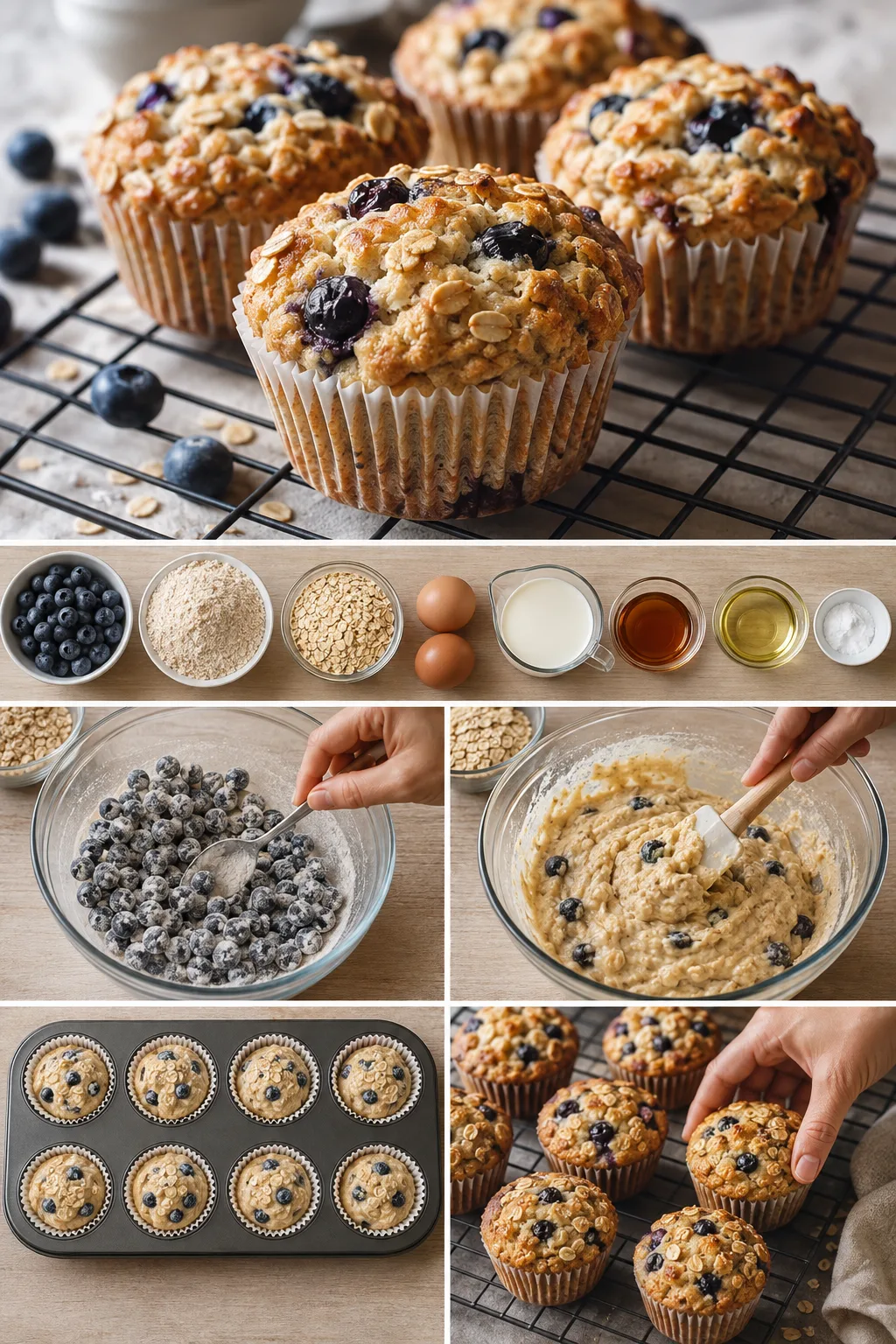
Blueberry Muffins: a lighter American recipe with a clear doneness check
American Blueberry Muffins for eight: coat dry berries lightly, fold the batter only until streaks disappear, and bake in evenly filled cups. The measured formula uses blueberries, whole-wheat flour, rolled oats, eggs, and low-fat milk; the reliable finish is domed tops spring back and berries stay suspended. About 345 kcal per portion.
See the recipe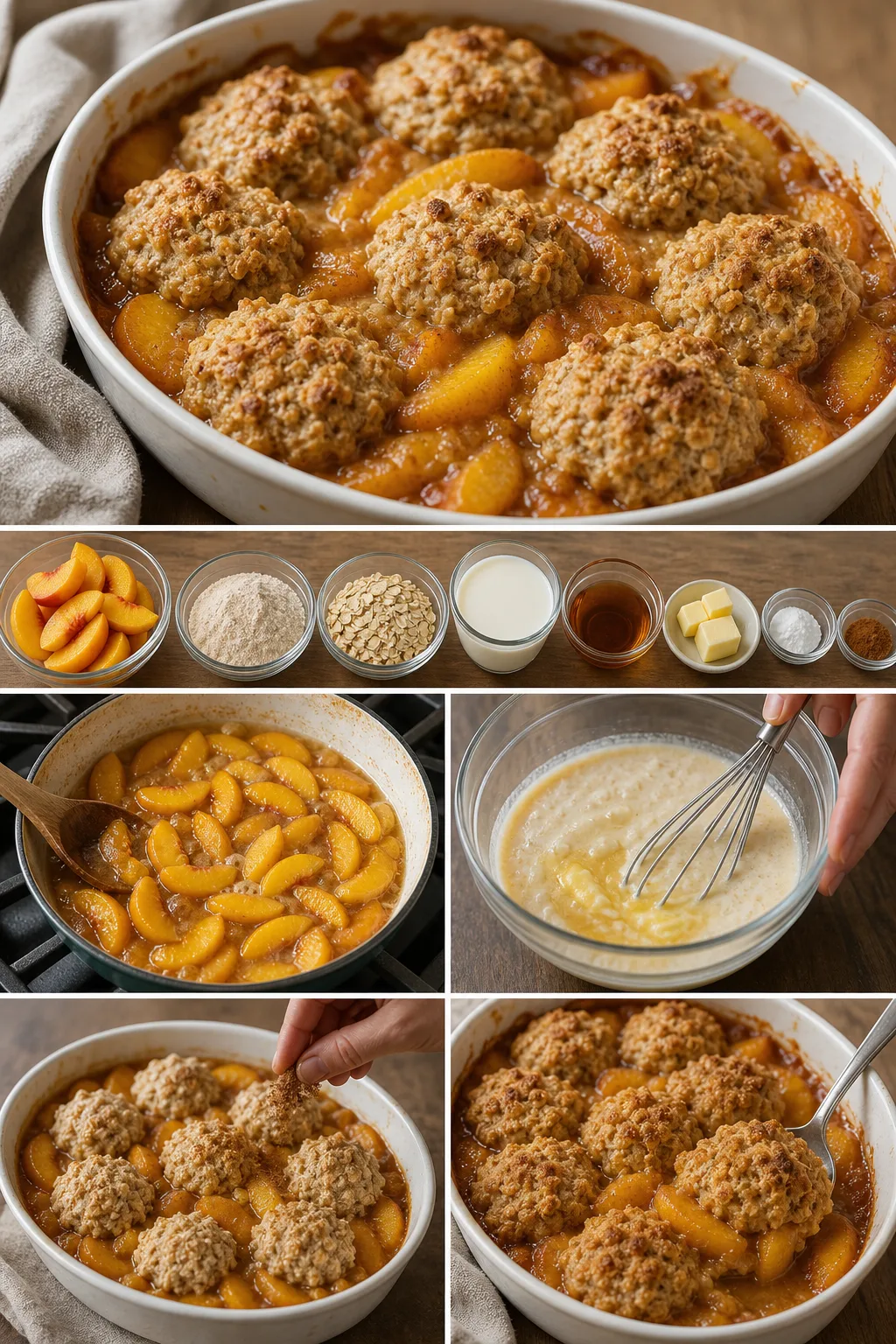
Peach Cobbler: a lighter American recipe with a clear doneness check
American Peach Cobbler for eight: reduce the peach juices first and spoon small biscuit mounds apart so steam can escape. The measured formula uses ripe peaches, whole-wheat flour, rolled oats, low-fat milk, and maple syrup; the reliable finish is the fruit bubbles thickly and each biscuit is dry beneath. About 345 kcal per portion.
See the recipe