A lower-calorie way to make Pot Roast
Pot Roast tastes richer after the fat is chilled—not stirred into the gravy
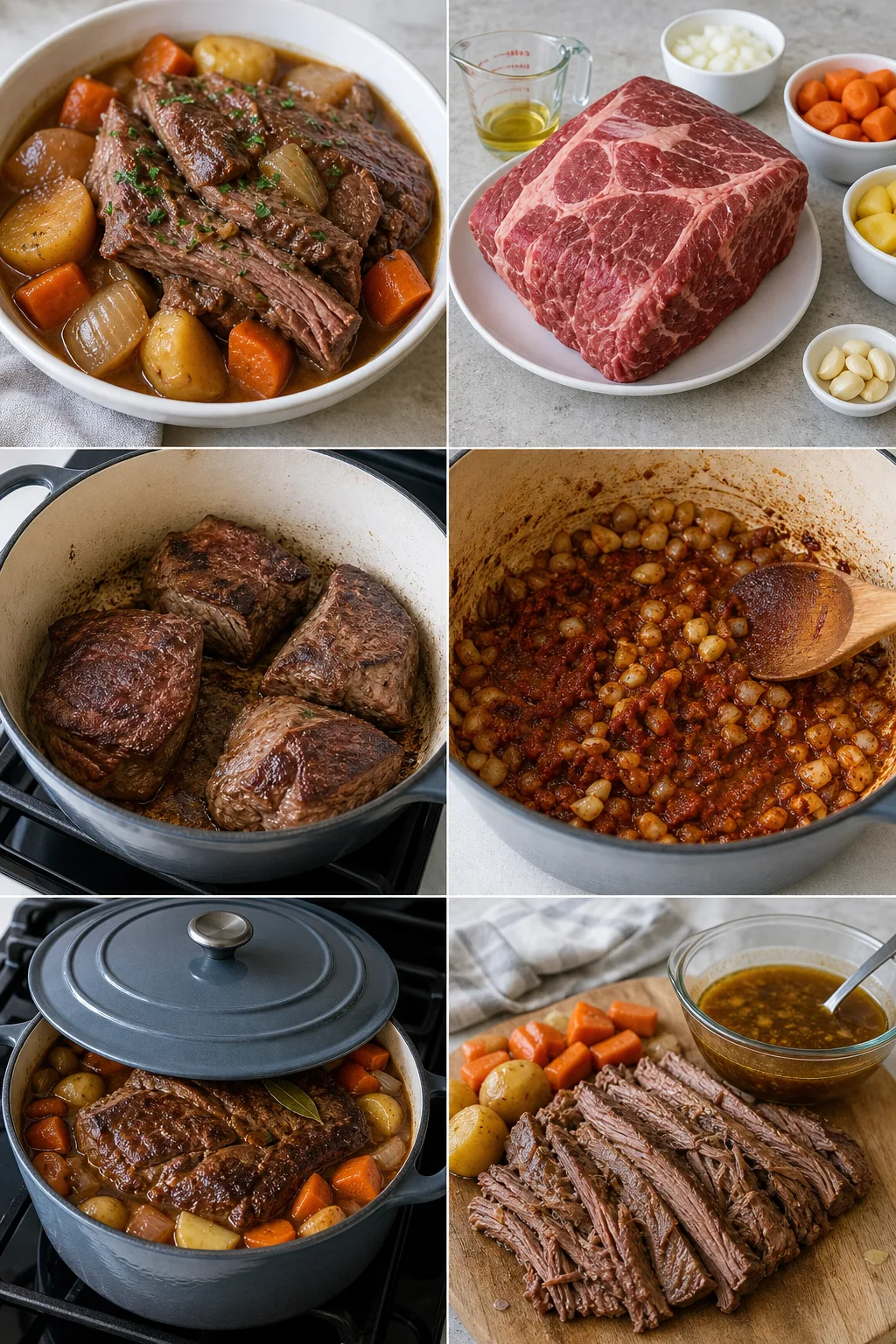
A trimmed chuck roast, deeply browned vegetables and defatted braising liquid make a generous pot roast dinner for about 520 calories.
Chuck needs some internal marbling to become tender, but the thick exterior seams do not need to stay in the pot. Trimming those seams before browning and skimming the braising liquid afterward removes free fat without asking a lean, dry cut to behave like pot roast. The gravy is thickened by pureeing one roasted onion and carrot, so its body comes from the braise itself.
What changes—and what stays
From often 700–1,000 calories with fatty gravy and large meat portions to 520 calories
Trim exterior fat from a 1.5-kilogram chuck roast, serve 150 grams cooked meat per person, and defat the braising liquid before blending vegetables into the gravy. A dry roast develops a true brown crust, tomato paste caramelizes, and the covered braise dissolves collagen. Reducing the skimmed liquid concentrates all three flavors without needing butter or flour.
| Part | Conventional | Lighter | Why |
|---|---|---|---|
| Core method | More added fat or a heavier proportion | Trim exterior fat from a 1.5-kilogram chuck roast, serve 150 grams cooked meat per person, and defat the braising liquid before blending vegetables into the gravy | A dry roast develops a true brown crust, tomato paste caramelizes, and the covered braise dissolves collagen. Reducing the skimmed liquid concentrates all three flavors without needing butter or flour. |
How the flavor stays
A dry roast develops a true brown crust, tomato paste caramelizes, and the covered braise dissolves collagen. Reducing the skimmed liquid concentrates all three flavors without needing butter or flour.
A cost rule that survives inflation
A tougher chuck roast becomes six tender portions through time rather than an expensive steak cut. Root vegetables fill the Dutch oven and also thicken the gravy.
Ingredients for 6
Measure first; timing is part of how this recipe uses less fat.
- 1.5 kgboneless chuck roast— exterior fat trimmed
- 700 gsmall potatoes
- 500 gcarrots
- 350 gonions
- 500 mllow-sodium beef stock
- 250 mldry red wine or stock
- 35 gtomato paste
- 12 gcanola oil
- 15 ggarlic
- 10 gthyme
Method
Each step includes heat, a visible cue, and a recovery.
Step 1 · follow the visible cue
Trim seams that will never become tender
Remove thick white exterior caps while leaving fine marbling inside the roast. Salt, refrigerate uncovered if possible, and pat dry again before searing.
Look for: The meat surface should be dry and red, with no dangling strips of firm white fat.
Step 2 · follow the visible cue
Brown in one piece without crowding vegetables around it
Heat the Dutch oven, add measured oil and sear every broad side for four to five minutes. Remove the roast before browning onions and tomato paste.
Look for: The roast should have a mahogany crust and the pot should hold brown fond, not black soot.
Step 3 · follow the visible cue
Braise low enough that the liquid barely moves
Deglaze with wine, add stock and thyme, return the roast and cook covered at 300°F. Add potatoes and carrots only for the final seventy minutes.
Look for: A fork should twist easily in the meat while potatoes remain whole rather than splitting apart.
Step 4 · follow the visible cue
Rest meat while the gravy loses its free fat
Lift out meat and vegetables. Skim the liquid, blend one onion and carrot into it, then reduce briefly. Slice across the grain and measure six portions.
Look for: Gravy should coat a spoon without orange grease beads, and slices should bend before breaking.
Calories at the same serving size
234 kcal · 31% lower estimated
The estimate uses the listed ingredients divided into 6 servings. Brand labels, trimming, and the amount left in the pan can change the result.
Keep the leftovers in the same spirit
Chill the meat in its sauce for up to four days; any remaining fat lifts off cleanly when cold. Reheat covered at low temperature so slices stay moist.
Chill the meat in its sauce for up to four days; any remaining fat lifts off cleanly when cold. Reheat covered at low temperature so slices stay moist.
Frequently asked questions
Is red wine required?
No. Replace it with more low-sodium stock plus one tablespoon cider vinegar added after the braise.
Why add potatoes and carrots late?
The roast needs several hours, while the vegetables do not. A later start preserves their shape and keeps the gravy from becoming starchy paste.
- boneless chuck roast1.5 kg
- small potatoes700 g
- carrots500 g
- onions350 g
CaloNote · mobile analysis example
Check the Pot Roast serving you actually made
Photograph the finished plate in CaloNote, review the detected ingredients and portion, and correct the estimate before saving.
This uses the real CaloNote meal-detail layout with this recipe’s photo and estimated nutrition. Actual AI results vary with the photo and portion.
Analyze my meal in CaloNoteMethod and sources
Recipe development and nutrition review: CaloNote Editorial
This editorial recipe uses ingredient-level nutrition estimates and reviewed cooking principles. It is not represented as physically test-cooked, and nutrition is approximate.
Published and last reviewed: August 25, 2026
Make another familiar dinner lighter
Blueberry Muffins: a lighter American recipe with a clear doneness check
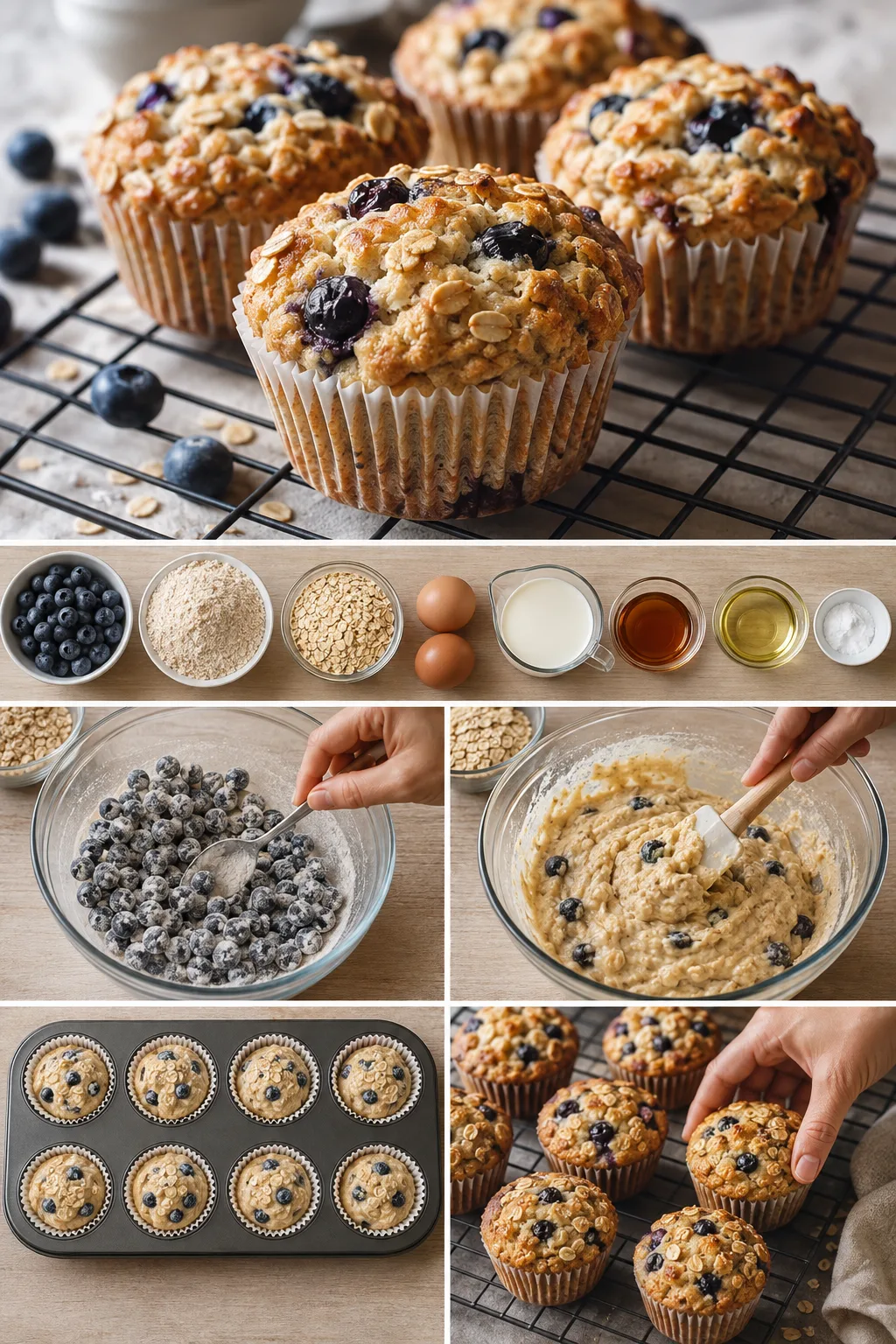
American Blueberry Muffins for eight: coat dry berries lightly, fold the batter only until streaks disappear, and bake in evenly filled cups. The measured formula uses blueberries, whole-wheat flour, rolled oats, eggs, and low-fat milk; the reliable finish is domed tops spring back and berries stay suspended. About 345 kcal per portion.
See the recipe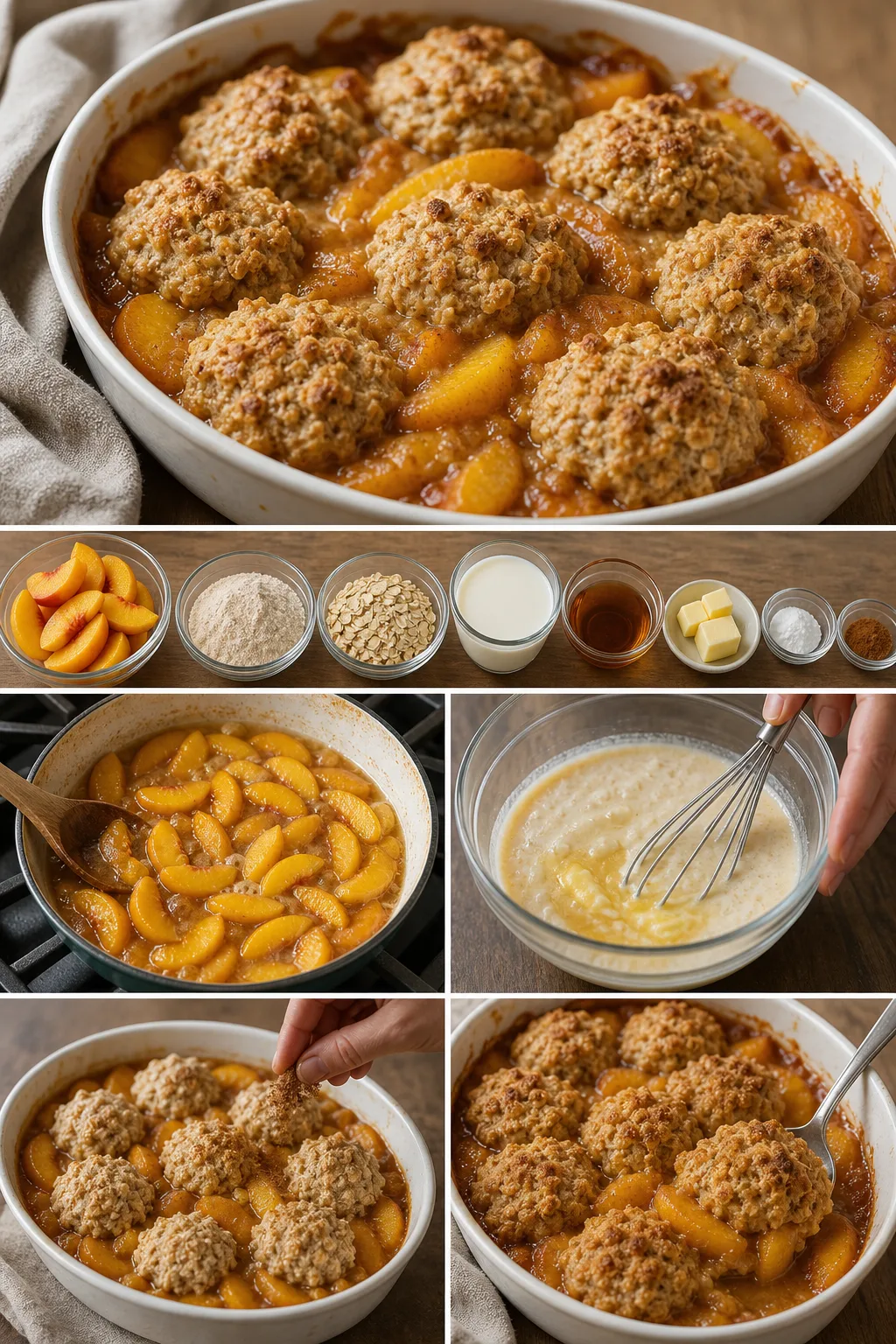
Peach Cobbler: a lighter American recipe with a clear doneness check
American Peach Cobbler for eight: reduce the peach juices first and spoon small biscuit mounds apart so steam can escape. The measured formula uses ripe peaches, whole-wheat flour, rolled oats, low-fat milk, and maple syrup; the reliable finish is the fruit bubbles thickly and each biscuit is dry beneath. About 345 kcal per portion.
See the recipe