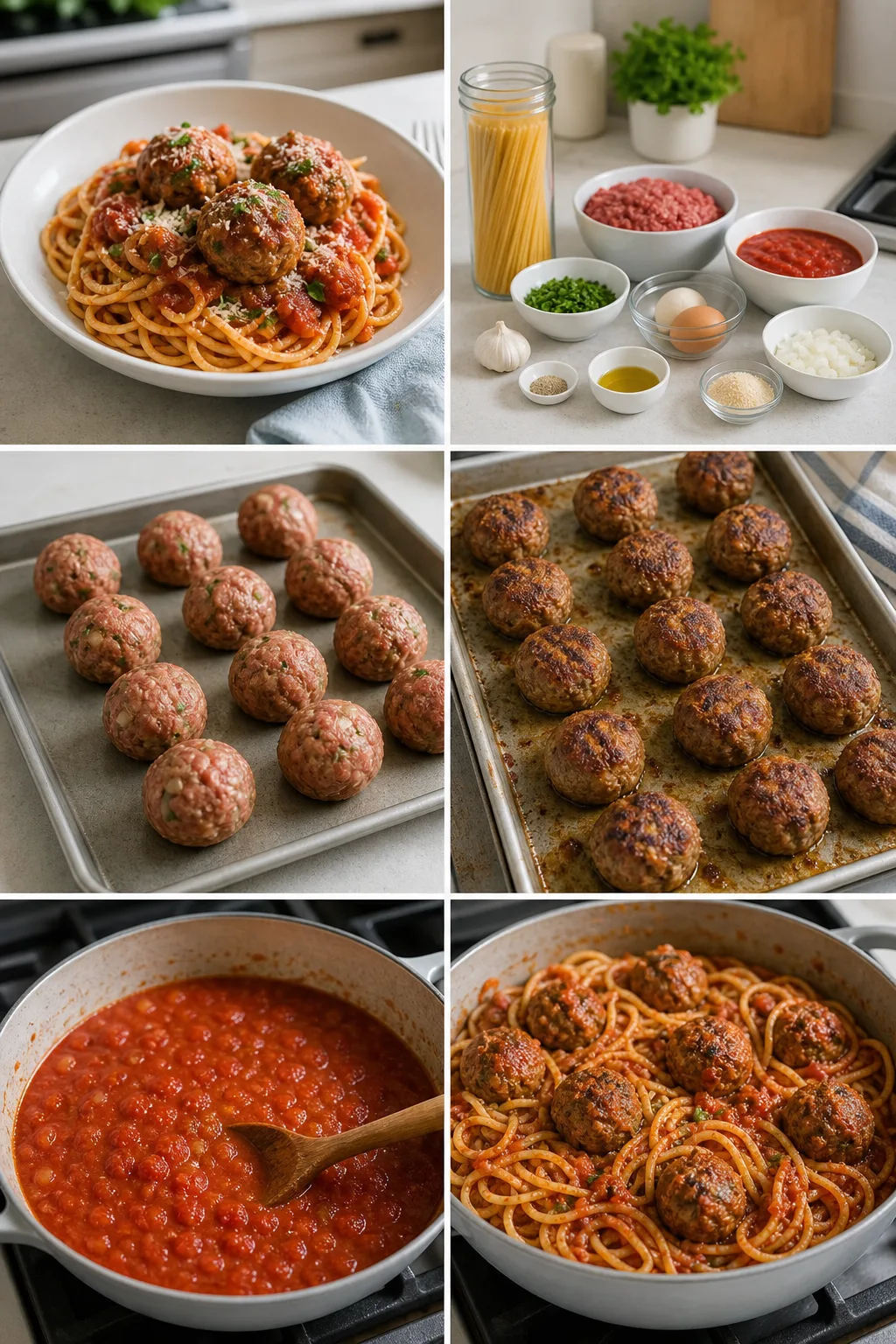
A lower-calorie way to make Spaghetti and Meatballs
Spaghetti and Meatballs stay tender with grated zucchini—not extra oil
Lean meatballs, grated zucchini and a properly reduced tomato sauce make a full spaghetti dinner for about 495 calories per serving.
A lighter meatball often turns dense because fat is removed without replacing the moisture it carried. Grated zucchini solves a different problem than breadcrumbs: it releases steam inside the meatball while the oats hold that moisture in place. The pasta is weighed dry, and its cooking water finishes the sauce so every strand tastes seasoned without a slick of oil.
What changes—and what stays
From usually 700–1,000 calories with larger pasta and meat portions to 495 calories
Use 500 grams of 93% lean meat with squeezed zucchini, weigh 70 grams dry spaghetti per person, and bake rather than shallow-fry the meatballs. Browning happens on a preheated sheet pan, tomato paste is cooked to brick red, and pasta water emulsifies the reduced sauce. Those three browned and concentrated notes replace the taste impact of excess oil.
| Part | Conventional | Lighter | Why |
|---|---|---|---|
| Core method | More added fat or a heavier proportion | Use 500 grams of 93% lean meat with squeezed zucchini, weigh 70 grams dry spaghetti per person, and bake rather than shallow-fry the meatballs | Browning happens on a preheated sheet pan, tomato paste is cooked to brick red, and pasta water emulsifies the reduced sauce. Those three browned and concentrated notes replace the taste impact of excess oil. |
How the flavor stays
Browning happens on a preheated sheet pan, tomato paste is cooked to brick red, and pasta water emulsifies the reduced sauce. Those three browned and concentrated notes replace the taste impact of excess oil.
A cost rule that survives inflation
Zucchini and oats stretch one standard pack of meat into sixteen meatballs, while canned tomatoes build the sauce without a jarred product or a temporary sale price.
Ingredients for 4
Measure first; timing is part of how this recipe uses less fat.
- 500 g93% lean ground beef or turkey
- 180 gzucchini— grated and squeezed
- 45 gquick oats
- 1 largeegg
- 280 gdry spaghetti
- 800 gcrushed tomatoes
- 30 gtomato paste
- 12 golive oil
- 12 ggarlic
- 15 gparsley
Method
Each step includes heat, a visible cue, and a recovery.
Step 1 · follow the visible cue
Squeeze the zucchini until it holds together
Salt the grated zucchini for ten minutes, then squeeze it firmly in a towel. Mix it with meat, oats, egg, parsley and half the garlic just until combined.
Look for: The mixture should hold a scoop shape without leaving green liquid in the bowl.
Step 2 · follow the visible cue
Use a hot sheet pan for the brown crust
Preheat a heavy sheet pan at 450°F. Shape sixteen equal meatballs, brush with half the oil and roast for twelve minutes without turning.
Look for: The bottoms should be deeply brown and each meatball should release cleanly from the pan.
Step 3 · follow the visible cue
Reduce tomato before the meatballs go in
Cook garlic and tomato paste in the remaining oil until brick red. Add tomatoes and simmer uncovered for fifteen minutes before adding the roasted meatballs.
Look for: A spoon dragged across the skillet should leave a clear path for about one second.
Step 4 · follow the visible cue
Finish weighed pasta in the sauce
Boil spaghetti until one minute shy of tender, reserve pasta water, and toss with sauce and measured splashes of water. Divide before adding four meatballs each.
Look for: Sauce should cling to separate strands with no watery ring or oil pool on the plate.
Calories at the same serving size
223 kcal · 31% lower estimated
The estimate uses the listed ingredients divided into 4 servings. Brand labels, trimming, and the amount left in the pan can change the result.
Keep the leftovers in the same spirit
Refrigerate sauce and meatballs together for up to three days, but keep cooked pasta separate. Reheat the sauce gently and loosen it with water rather than oil.
Refrigerate sauce and meatballs together for up to three days, but keep cooked pasta separate. Reheat the sauce gently and loosen it with water rather than oil.
Frequently asked questions
Can I use all turkey for the meatballs?
Yes. Choose 93% lean rather than extra-lean breast and stop mixing as soon as the ingredients hold together so the texture stays tender.
Does 495 calories include all four meatballs?
Yes. It includes 70 grams of dry spaghetti, one quarter of the sauce and four of the sixteen meatballs.
- 93% lean ground beef or turkey500 g
- zucchini180 g
- quick oats45 g
- egg1 large
CaloNote · mobile analysis example
Check the Spaghetti and Meatballs serving you actually made
Photograph the finished plate in CaloNote, review the detected ingredients and portion, and correct the estimate before saving.
This uses the real CaloNote meal-detail layout with this recipe’s photo and estimated nutrition. Actual AI results vary with the photo and portion.
Analyze my meal in CaloNoteMethod and sources
Recipe development and nutrition review: CaloNote Editorial
This editorial recipe uses ingredient-level nutrition estimates and reviewed cooking principles. It is not represented as physically test-cooked, and nutrition is approximate.
Published and last reviewed: August 25, 2026
Make another familiar dinner lighter
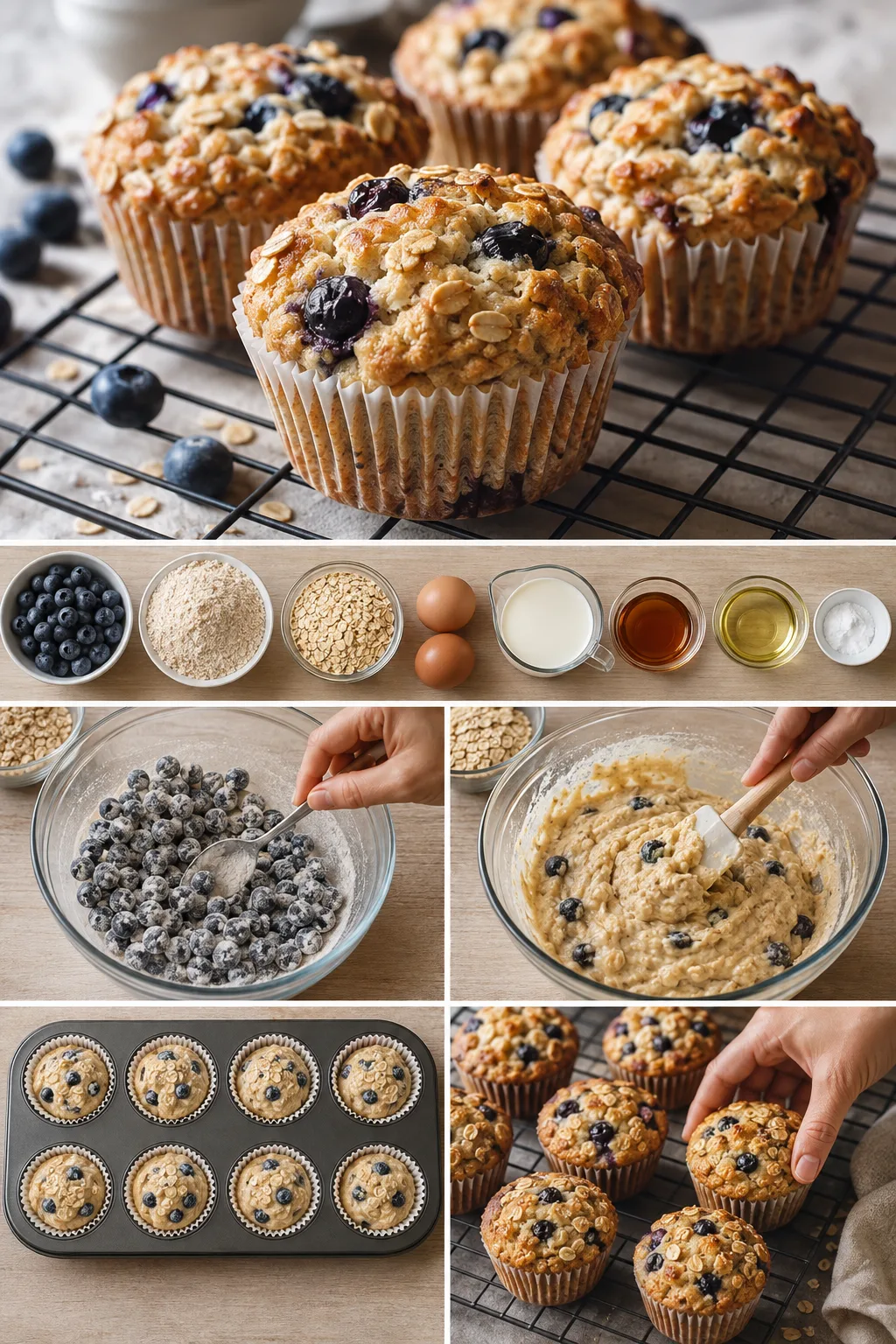
Blueberry Muffins: a lighter American recipe with a clear doneness check
American Blueberry Muffins for eight: coat dry berries lightly, fold the batter only until streaks disappear, and bake in evenly filled cups. The measured formula uses blueberries, whole-wheat flour, rolled oats, eggs, and low-fat milk; the reliable finish is domed tops spring back and berries stay suspended. About 345 kcal per portion.
See the recipe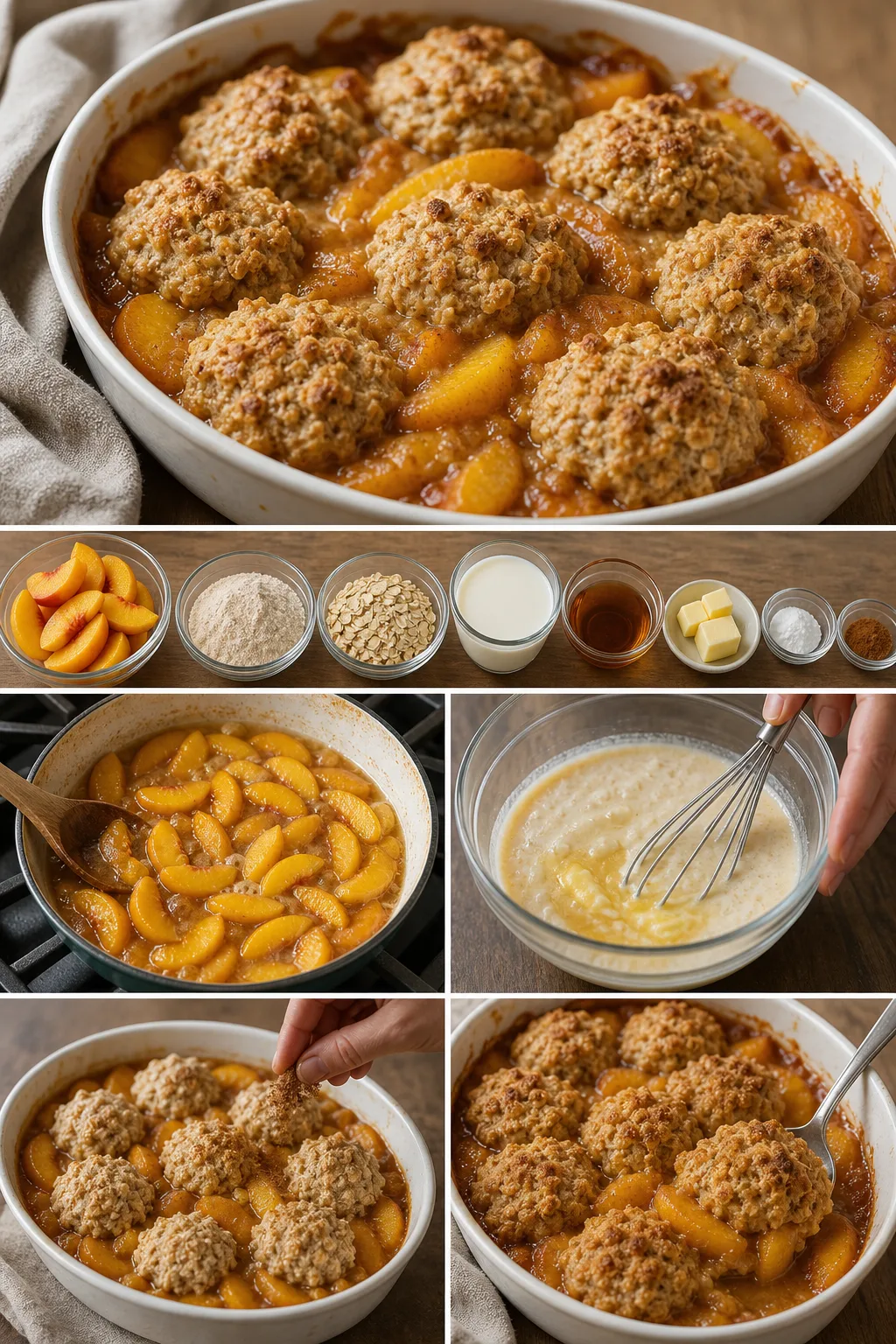
Peach Cobbler: a lighter American recipe with a clear doneness check
American Peach Cobbler for eight: reduce the peach juices first and spoon small biscuit mounds apart so steam can escape. The measured formula uses ripe peaches, whole-wheat flour, rolled oats, low-fat milk, and maple syrup; the reliable finish is the fruit bubbles thickly and each biscuit is dry beneath. About 345 kcal per portion.
See the recipe