ARNOLD PRESS
Combine controlled arm rotation with an overhead press while keeping the shoulders comfortable and the torso stable.
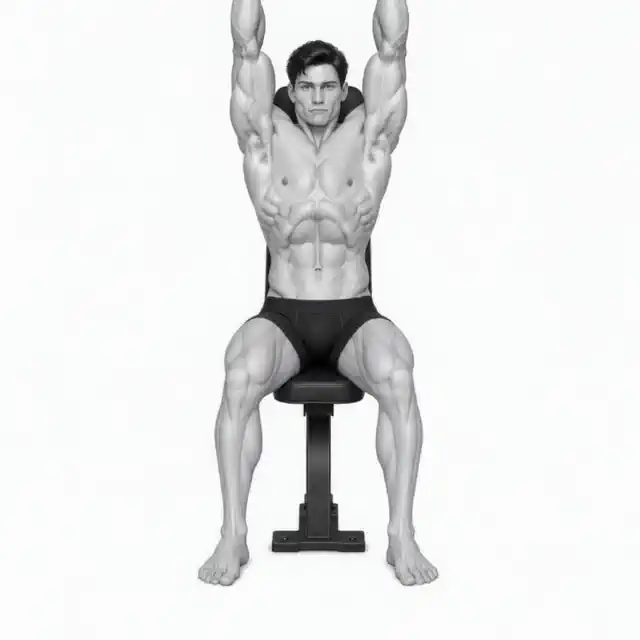
The Arnold press is a variation of the dumbbell shoulder press with added arm rotation. Since you start with your palm facing your face, spread your elbows, and push over your head, the front and side deltoid muscles mainly exert the force. A larger rotation range does not necessarily mean that it is more effective, and if your shoulders are uncomfortable or your back is excessively tilted, you should adjust to a lighter weight and shorter range.
- Primary muscles
- Anterior Deltoid · Lateral Deltoid
- Secondary muscles
- Triceps Brachii · Upper Trapezius
- Difficulty
- Intermediate
- Movement type
- Dumbbell Overhead Press with Rotation
Is the Arnold press better for muscle growth than a standard shoulder press?
The rotation and longer path can provide a different training stimulus, but they are not automatically superior. Choose the variation that lets you keep the shoulder comfortable and repeat the same path.
STEP BY STEP
4 Steps for One Complete Rep
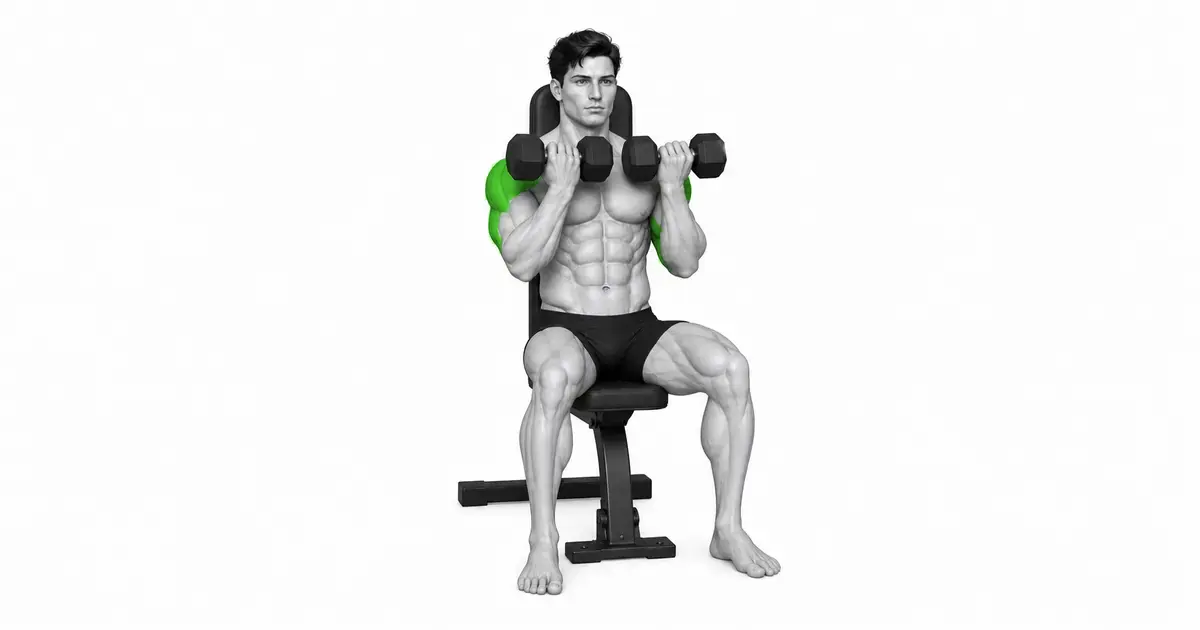
- 1
Set start position
Sit on a bench and hold dumbbells in front of your chest at shoulder height with your palms facing you (face).
- 2
Press with rotation
Exhale and press the dumbbells upward. Gradually rotate your wrist outward so that your palm is facing forward at the top of the movement.
- 3
Maximum shrinkage
Feel your shoulders fully contracted at their highest point. Make sure the dumbbells don't touch.
- 4
Reverse rotation when descending
Inhale and lower the dumbbells, turning your wrists inward back to the starting position (palms facing you).
Arnold Press
Rotational Timing and Fluid Connections
The success of the Arnold Press depends on rotation timing. As you begin to press, begin to rotate so that your palms are halfway to the side and facing forward at the top. This fluid movement ensures that all deltoid muscle fibers are recruited sequentially.
The extended range of motion allows you to place more stress on your shoulder joints than a standard press. To master the route, start with a weight that is 20-30% lighter than your usual shoulder press. Make sure your elbows aren't bent too far back. Keep the movement centered in the front of your chest.
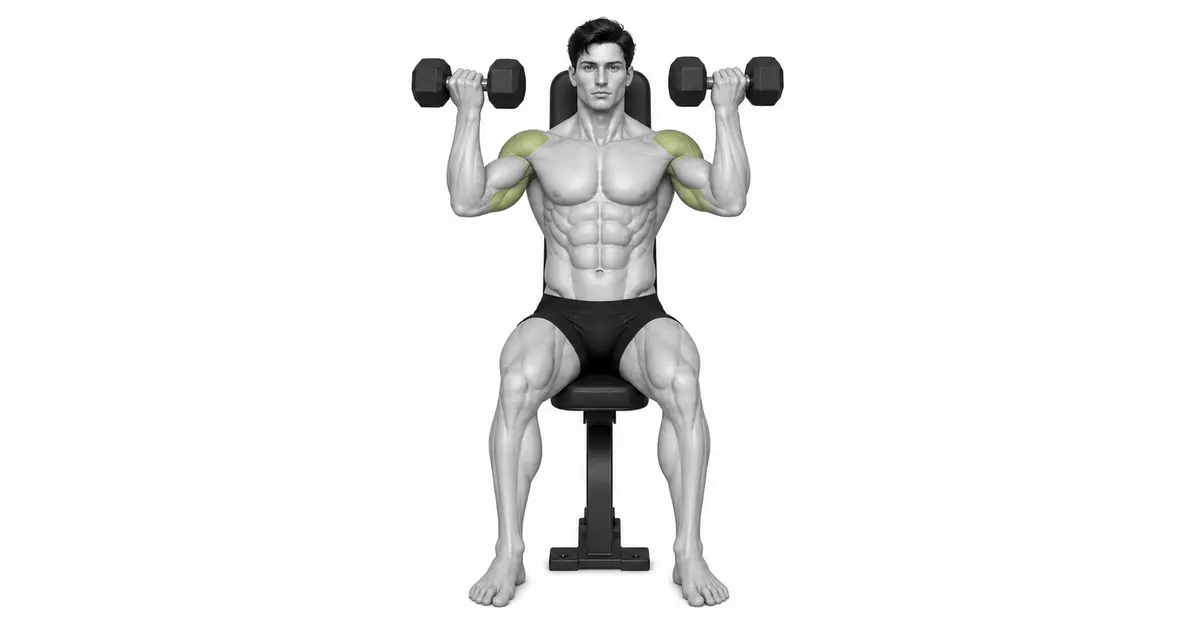
Key point: Do not rotate too suddenly. Press and rotation must be combined into one smooth, continuous flow.
RANGE, LOAD & TEMPO
Choose a range and load that keep the Arnold Press repeatable
The useful range of motion ends before your torso or working joints have to change position to move the load. Keep the anterior deltoid · lateral deltoid producing the movement while the triceps brachii · upper trapezius support the same alignment from the first repetition to the last.
Use a controlled lowering phase of about two to three seconds and avoid bouncing through the transition. If the final repetitions become shorter, faster, or visibly different from the first, reduce the load or stop the set before technique breaks down.
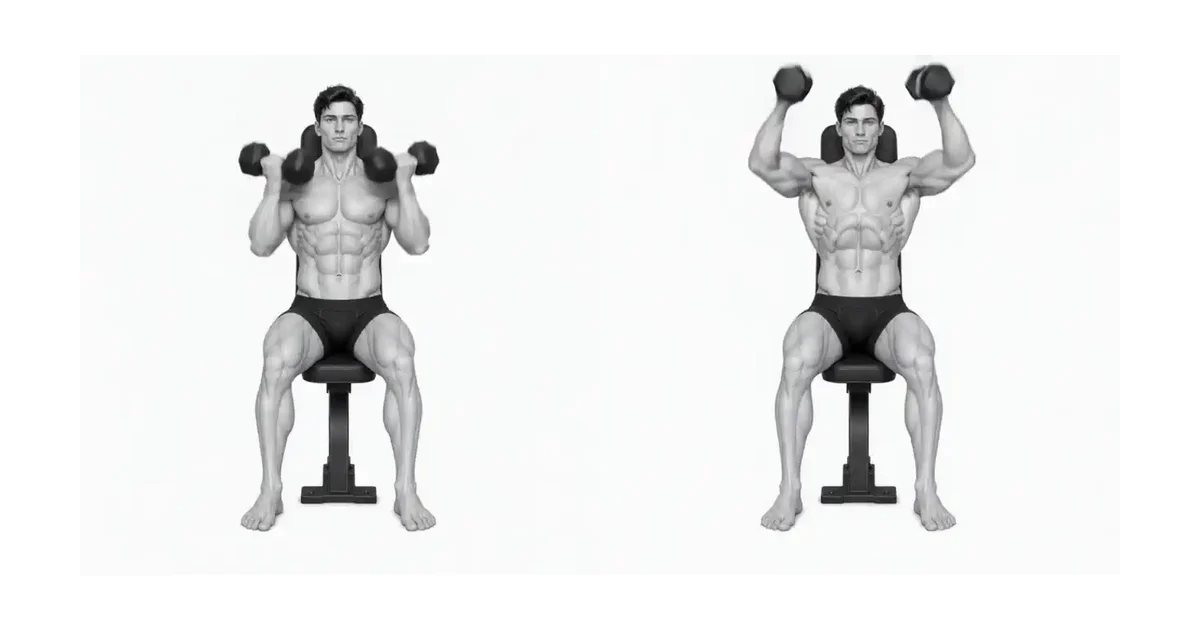
Key point: Progress the Arnold Press only after every repetition follows the same path without joint pain.
TROUBLESHOOTING
Fix the cause of a mistake, not just its appearance
Incomplete operating range
- What you see
- Stops midway through descent without returning to chest
- Likely cause
- The weight is too heavy or the rotation feels awkward.
- How to correct it
- Lower the dumbbells all the way down until your palms are facing your face so that your front delts are fully extended.
Excessive shoulder shrugging
- What you see
- Traps that rise towards the ears during the press
- Likely cause
- Relies too much on traps rather than deltoids
- How to correct it
- Keep your shoulders pressed and focus on pressing and rotating with just your arms.
REGRESSION & PROGRESSION
Match the difficulty before adding load
Light dumbbell press with back upright
Before adding rotations, familiarize yourself with the vertical push path of light dumbbells with your back and pelvis stable against the backrest.
Arnold Press with Partial Rotation
Open your arms only to the point where your palms face each other, then press. When your shoulders and wrists are relaxed and the left and right paths are the same, gradually increase the range.
Full Range Arnold Press
Smoothly connect the rotation and press without bending your back or shrugging your shoulders, and slowly come down in the same path.
BEGINNER PROGRAM
A practical starting framework
Learn the rotational path using lighter weight than a standard dumbbell shoulder press, then increase the number of repetitions first, within a range that is comfortable for your shoulders.
Repeat
8–12 times
Controls rotation and press in one flow.
Set
2–3 sets
Rest 90–120 seconds between sets.
Weight
Easy start
Maintain back and wrist alignment until the last repetition.
- Instead of twisting just your wrist, let your elbow and upper arm rotate naturally together.
- If your lower back feels wet or the dumbbell path is wobbly, lower the weight and use back support.
- If you feel shoulder impingement or sharp pain, reduce your rotation range or switch to a regular neutral grip press.
Frequently asked questions
How heavy should the Arnold press be?
Use a load you can rotate and press without leaning the torso back. Add a small amount of weight only after you can repeat the same joint path across the full target rep range.