BOX JUMP
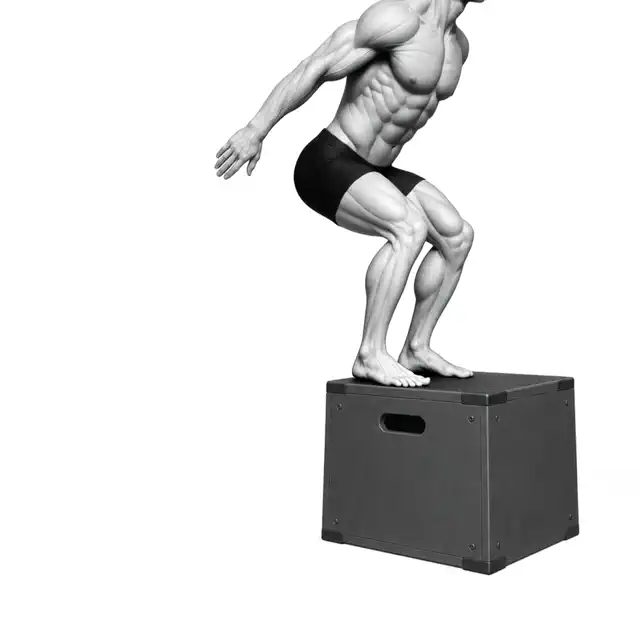
Box jumps are not a record of climbing onto a high box by folding your knees to your chest, but are a power exercise in which you create force with both feet and land stably with all feet
Jumping onto a box increases the height of your landing, which can reduce the impact of falling compared to landing on the floor. However, if the box is too high, you risk bending your knees too much and barely being able to climb up, or your shins hitting the edge. Learn two-foot takeoffs and quiet full-foot landings on a low box, and only increase height when your landing position is not too deep than your takeoff position.
- Primary muscles
- Gluteus maximus, quadriceps, calf
- Secondary muscles
- Hamstrings, core, ankle stabilizers
- Difficulty
- Intermediate
- Movement type
- Two-foot vertical jump and high landing
Is the higher the box the better?
No. A height that allows you to land stably on your entire foot and not squat excessively is appropriate.
STEP BY STEP
4 Steps for One Complete Rep
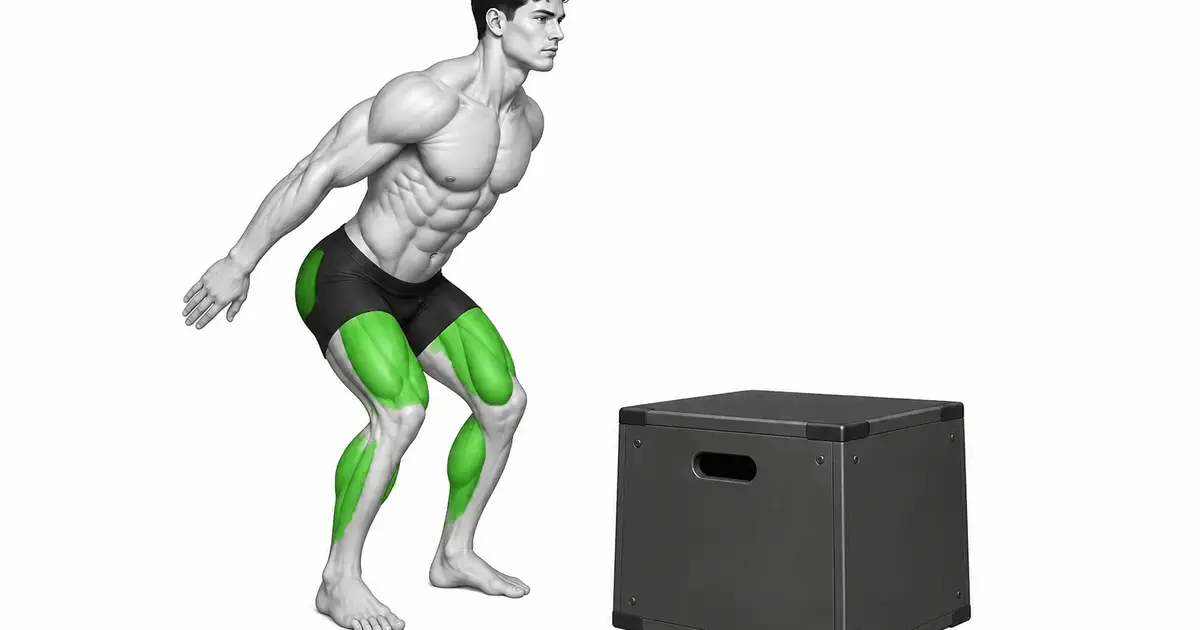
- 1
Choosing a low, steady box
Uses a top that allows the entire foot to rise sufficiently and a non-slip box. Start lower than your shins.
- 2
Create arm swings and short descents
Place your feet shoulder-width apart, extend your arms behind you, and briefly bend your knees and hips. Keep your eyes on the top of the box.
- 3
Jump with both feet and land on the box
Jump by swinging your arms forward and straightening your ankles, knees, and hip joints. Place both feet completely on the box and bend your knees towards your toes to receive it quietly.
- 4
Stand completely and then walk down
Regain your balance on the box and straighten your hips and knees to stand up straight. Instead of jumping back, take a controlled step down and reset.
LAND TALL
Box is too high if you have to squat too deeply when landing
A high box record may reflect your ability to fold your knees rather than your jump height. Use a height that allows you to land with a knee angle similar to your takeoff.
If your foot catches on the edge of the top or your heel remains outside, immediately lower the height.
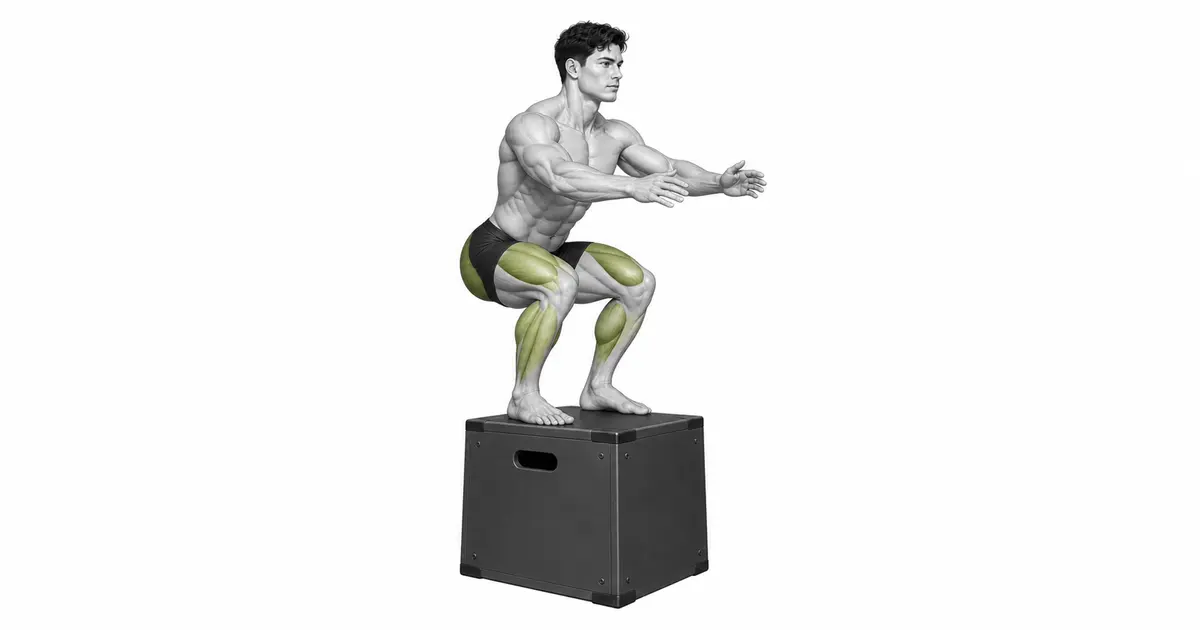
Key point: Cue to try right away: “Land quietly on both feet and stand straight on the box.”
STEP DOWN
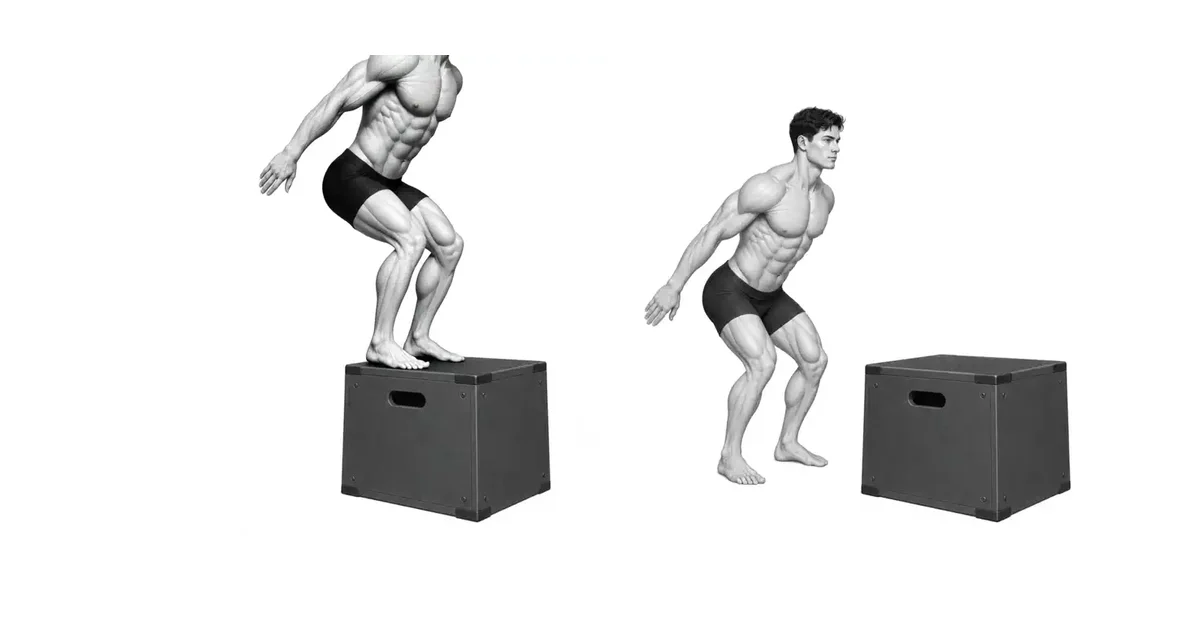
Jumping down creates unnecessary additional landing impact
If the goal of training is to take off and land on a box, there is no reason to jump backwards. Walk down one step at a time.
Maintains the quality of each jump by realigning your form from the bottom rather than consecutive repetitions.
TROUBLESHOOTING
Fix the cause of a mistake, not just its appearance
The box is too high and lands deeply folded.
- What you see
- Bring your knees closer to your chest and lower your hips under your heels.
- Likely cause
- Targeted box height rather than jump height.
- How to correct it
- Lower the box and repeat landing at a similar angle to the takeoff.
Only the front of the foot rests on the top.
- What you see
- Heel remains outside the box and body falls forward.
- Likely cause
- Distance and height exceed your current jumping ability.
- How to correct it
- Lower the box and adjust the distance so your entire foot is centered on the top.
Jump back and repeat immediately
- What you see
- There is a big impact when coming down, and the next jump becomes hasty.
- Likely cause
- Prioritized speed and number of iterations.
- How to correct it
- Step down one foot at a time and completely reset from the floor.
REGRESSION & PROGRESSION
Match the difficulty before adding load
Increased weight and speed
Gradually increase the weight or increase the speed of the movement while maintaining correct posture.
Continuous performance (complex)
Combine with other movements to strengthen cardiorespiratory endurance and muscular endurance simultaneously.
BEGINNER PROGRAM
A practical starting framework
Use low repetitions when fatigue is low and quit when landing depth, noise, or foot position changes. The box height is rarely raised, only slightly.
Frequency
1-2 times a week
High nervous system fatigue, so allow ample recovery time.
Volume
3~5 sets, 3~6 times
Low reps are recommended to focus on maintaining quality movement and explosiveness.
- If you become tired and lose your posture, end the set immediately.
- Protect your spine by maintaining abdominal pressure with powerful breathing.
Frequently asked questions
Can I jump out of the box?
For most training, stepping down with one foot at a time reduces unnecessary landing shock.
Does pulling your knees up to your chest increase your jumping power?
Knee pull helps get the foot on the box, but it is not the same as actual vertical propulsion. Use a stable landing height as a guide.