BROAD JUMP
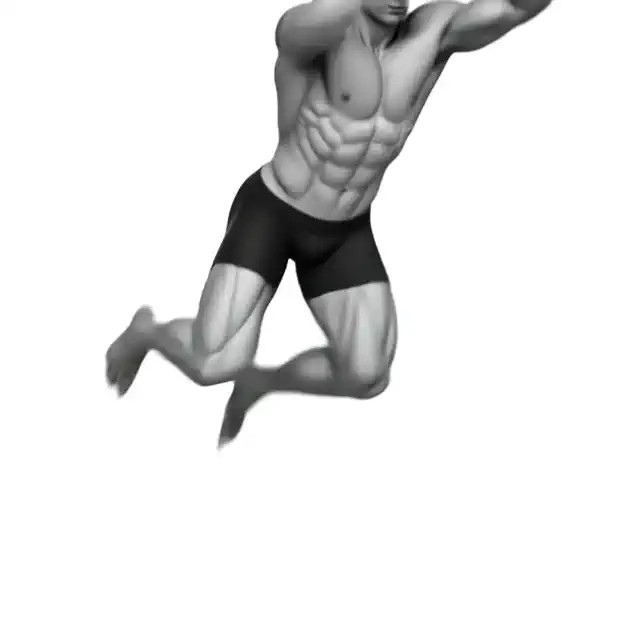
Broad jump is not just a test of jumping far, but a power technique that creates horizontal force with both feet and lands and stops without shaking.
Broad jump, which involves jumping forward with both feet from a standing position, uses rapid extension of the hips, knees, and ankles and arm swings to create horizontal propulsion. If you only focus on distance, you may throw your feet forward, fall backwards, or collapse your knees inward. Start with low-intensity jump-and-sticks and increase the distance only when you can lift off with both feet together and maintain balance for two seconds after landing.
- Primary muscles
- Gluteus maximus, quadriceps, hamstrings
- Secondary muscles
- Calf, core, ankle stabilizer muscles
- Difficulty
- Intermediate
- Movement type
- Two-leg horizontal jump
Do I have to jump as far as possible every time?
No. In training, 70-90% effort jumps that maintain a stable landing are useful. Maximum testing should be limited to when you have fully recovered.
STEP BY STEP
4 Steps for One Complete Rep
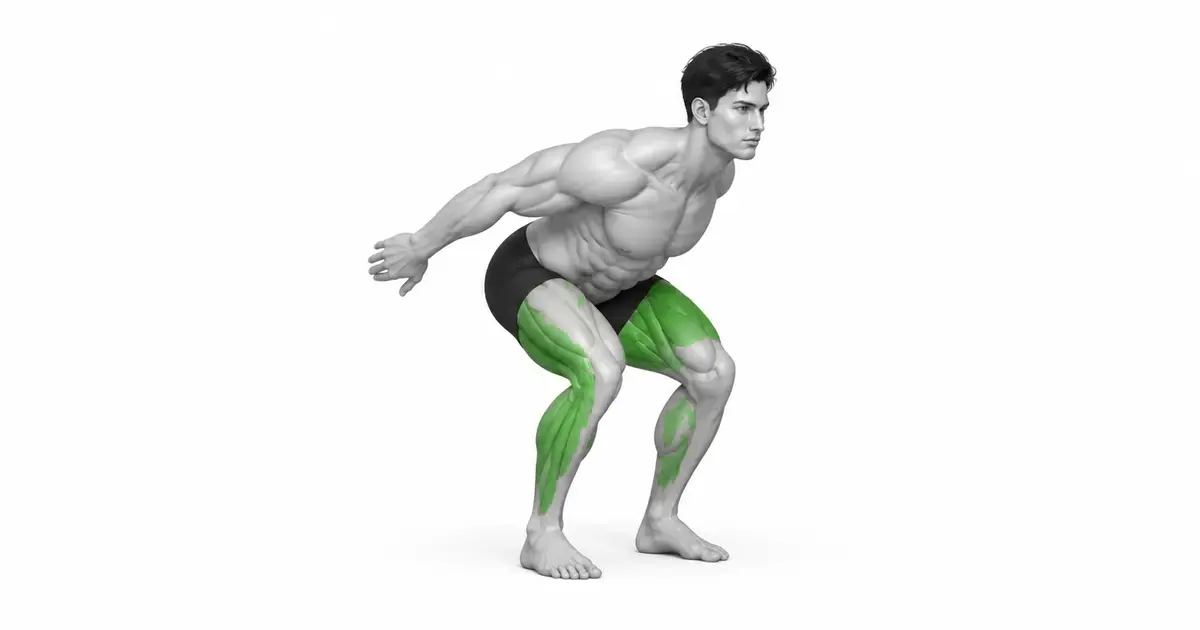
- 1
Check landing space and target line
Clear front and side obstacles on non-slip floors. Set a short target line where you can stop comfortably, not a maximum distance.
- 2
Creating arm swings and hip loading
Send your arms back and quickly bend your hips and knees. Don't let your chest sink in. Place pressure on your entire feet.
- 3
Push forward with both feet to take off
Swing your arms forward strongly and straighten your ankles, knees, and hip joints and jump horizontally. Push both feet out at the same time without letting one fall off first.
- 4
Land on both feet and pause for 2 seconds
Bring both feet forward, touch gently starting with the midfoot, and bend your knees and hip joints to absorb shock. Maintain your balance for 2 seconds without moving your feet.
PROJECT, DON'T REACH
The starting point of distance is to push the ground back strongly rather than extending your feet forward.
If you just put your feet out to extend your landing, your butt will stay behind your feet and you will fall backwards. At the moment of takeoff, make sure your entire body moves forward.
Arm swings are used to aid propulsion but do so without disrupting torso alignment.
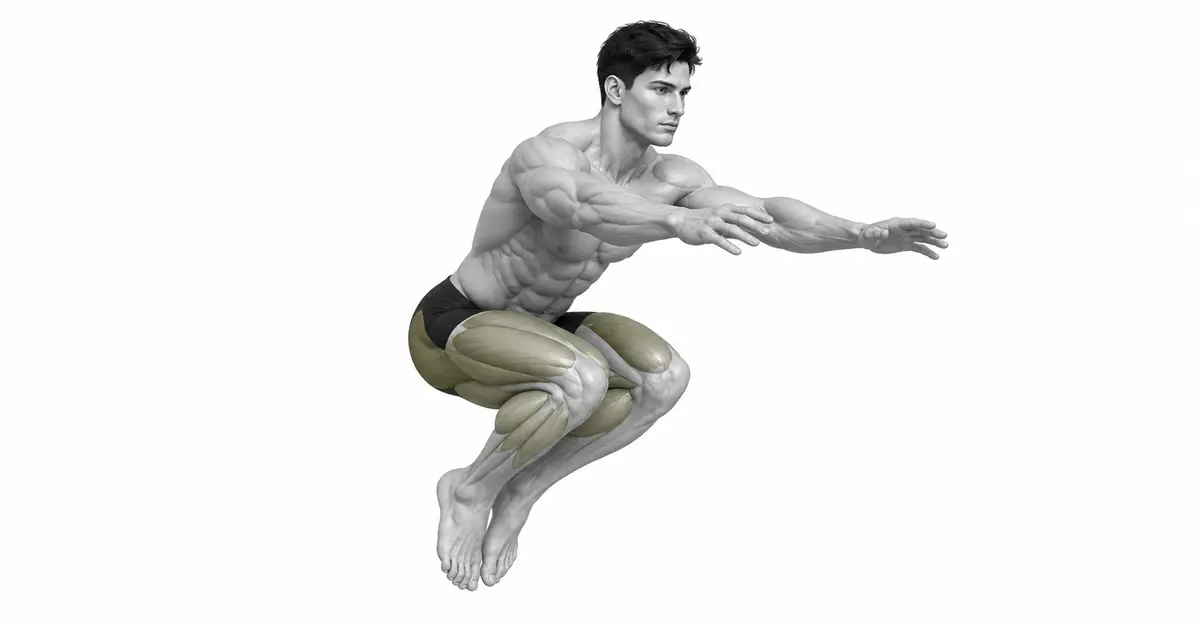
Key point: Cue to try right away: “Push the floor back, and land quietly.”
STICK THE LANDING
Distance is only counted if you can stop without moving your feet after landing
If you jump forward or reach backwards after landing, your current distance is beyond your control. Move the target line closer.
Your knees should follow the direction of your toes and the pressure should be evenly distributed across both feet.
TROUBLESHOOTING
Fix the cause of a mistake, not just its appearance
Land with only feet forward
- What you see
- Fall backwards after landing with your hips behind your feet.
- Likely cause
- Attempted to increase recorded distance rather than thrust.
- How to correct it
- Shorten your target distance and practice short jumps that send your entire body forward.
One foot takes off or lands first
- What you see
- The body rotates and the impact is concentrated on one knee.
- Likely cause
- Left and right foot pressure and arm swing are asymmetric.
- How to correct it
- Stop repeating and check for simultaneous takeoff and landing of both feet in a low jump.
Knees are brought together when landing
- What you see
- Feet are spread, but both knees are dropped inward.
- Likely cause
- Distance and fatigue exceeded landing control.
- How to correct it
- Practice landing squats first, lowering the distance and keeping your knees toward your toes.
REGRESSION & PROGRESSION
Match the difficulty before adding load
Squat and Reach
Learn a quick triple shrine without jumping.
Short jump and stick
Land on both feet and pause for 2 seconds.
Broad jump
Increase distance while maintaining a stable landing.
Continuous Broad Jump
Adds reactivity only after single landing is mastered.
BEGINNER PROGRAM
A practical starting framework
Perform after warm-up when fatigue is low and do not perform all repetitions at maximum distance. The moment your landing quality or speed drops, end the set.
Count
3–5 times
Full reset after each repeated landing
Set
3–5 sets
90–180 seconds recovery between sets
Frequency
1–2 times a week
Manage weekly jump landing count together
- Slightly increases distance only when a 2 second static landing is maintained.
- End the set if you experience asymmetrical takeoff, foot movement, or knee collapse.
- Avoid consecutive maximum distance attempts while fatigued.
Frequently asked questions
Can I take a step forward after landing?
For training quality, use the distance you can stop without moving your feet. One step is a sign that the current distance is excessive.
Can I use arm swing?
Yes. Arm swing aids horizontal propulsion. However, the left and right sides must be symmetrical and not interfere with landing preparation.