BURPEE
Burpees are not a speed test. Add the next step only when you can control each transition.
Burpees are a full-body movement that combines squats, planks or push-ups, stands and jumps. Studies that have included burpees in high-intensity functional training have reported an association with changes in cardiorespiratory fitness and muscular endurance, but no single burpee is suitable for everyone or guaranteed to be equally effective. Considering the condition of your wrists, shoulders, knees, and back, as well as your current physical strength, jumping and push-ups are optional, and the standard is to stop before your posture collapses due to fatigue.
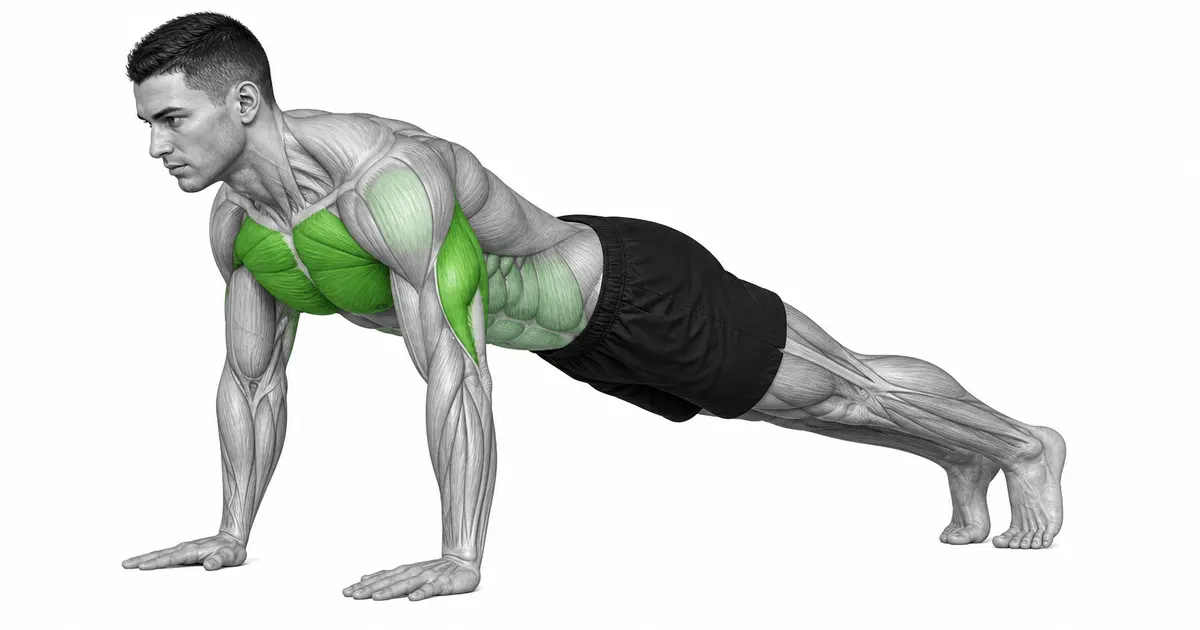
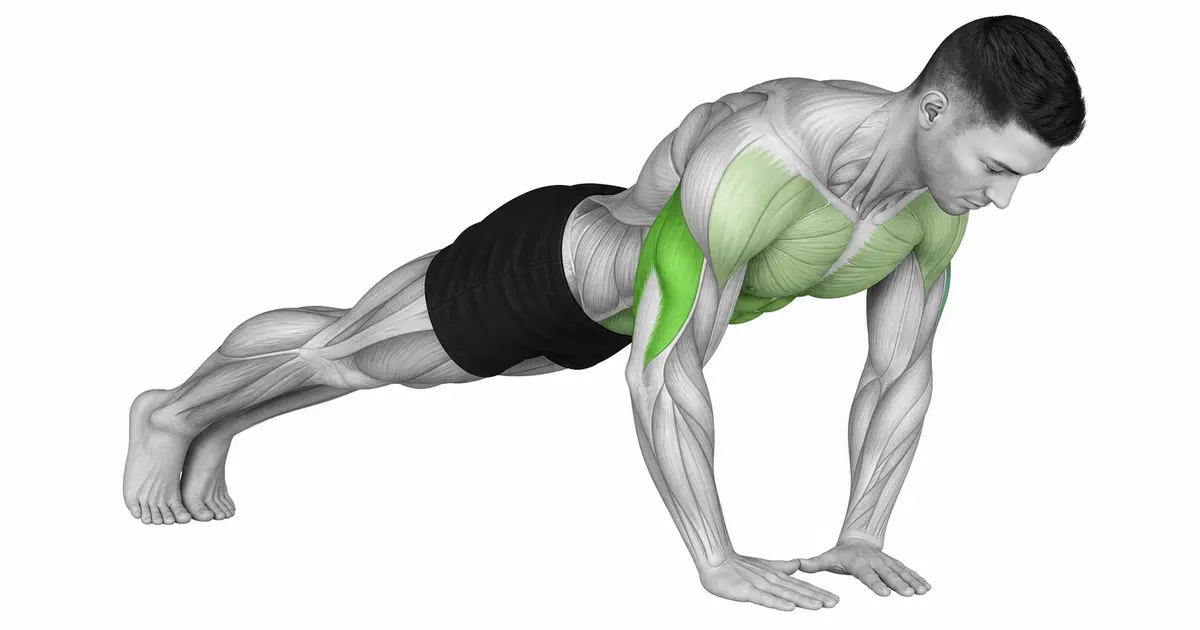
- Primary muscles
- Quadriceps, gluteus maximus, pectoralis major
- Secondary muscles
- Triceps, deltoids, calves, core
- Difficulty
- Intermediate
- Movement type
- Full body complex movements
Is it necessary to do push-ups?
No. The basic straight back from a high plank is also a burpee variation. Add pushups only if you can control them.
STEP BY STEP
6 Steps for One Complete Rep
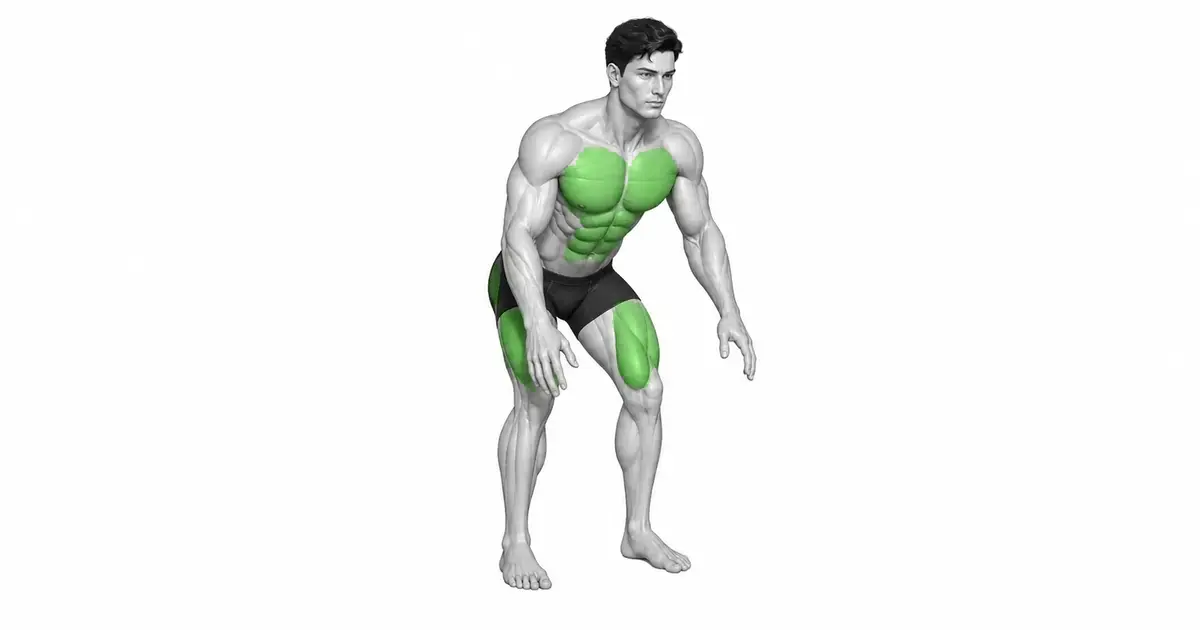
- 1
Check your surroundings and landing space
Make sure there is a non-slip floor and free space on both sides. Don't start if you have dizziness, chest pain, or sharp joint pain.
- 2
Going down from a standing position to a squat
With your feet firmly on the floor, bend your hips and knees together. It doesn't fall to the floor in a hurry.
- 3
Move to plank with hands on the floor
If your wrist is uncomfortable, do not kick your legs all at once, but send them backwards one foot at a time. Use a range that does not cause your torso to sag excessively.
- 4
Add pushups only when needed
The basic model can come right back from the high plank. Do push-ups only if you can control your wrists, shoulders, and torso.
- 5
Return your feet toward your hands to create a squat
If jumping with both feet is unstable, bring one foot forward at a time. Make sure your feet are not too far ahead of your hands and cause back discomfort.
- 6
Stand up quietly and optionally do small jumps
Bend your knees and hips to absorb the landing. You can stand up by lifting your heels without jumping, and end the repetition if you feel out of breath or out of alignment.
SEQUENCE
Fix transition order first rather than fast
One repetition of a burpee can consist of the following sequence: standing, squat, plank, squat, standing. Push-ups and jumps are optional elements to add only after the basic sequence is stable.
If your wrists or shoulders are uncomfortable when going to plank, change to a variation of putting one foot back at a time. To make it faster, don't put any impact on your wrists or shoulders.
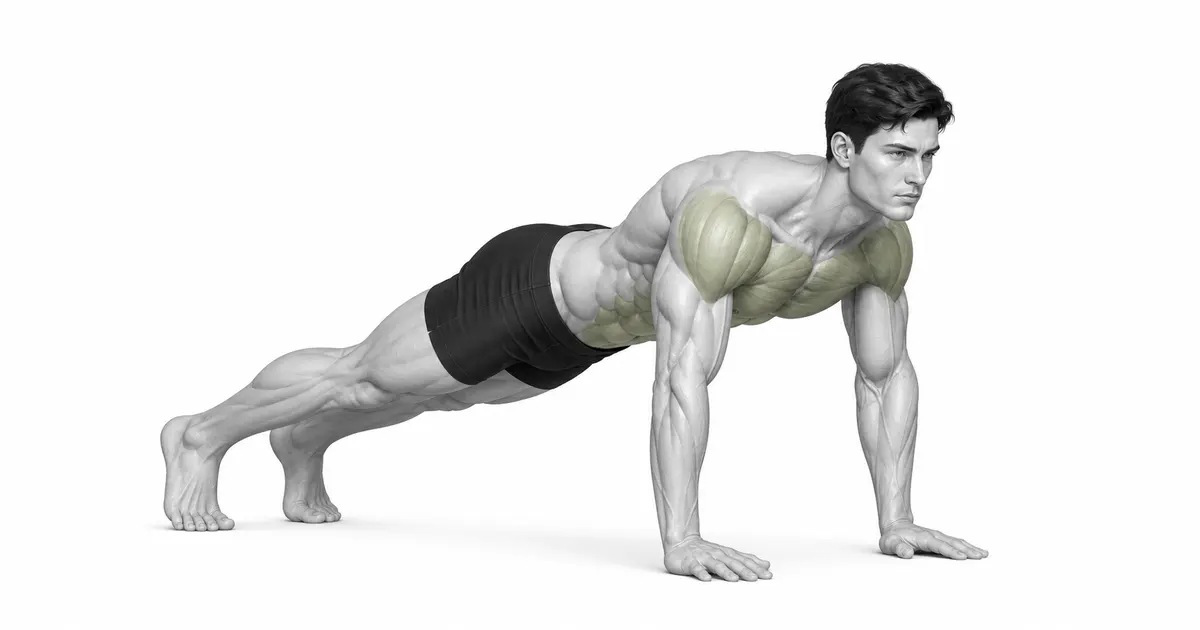
Key point: Practical cue: “Connect quietly one step at a time, and add the next step only after the current step is stable.”
LANDING
Landing is small and absorbs quietly
In a jumping burpee, landing is a separate technique to end the repetition. It touches the entire foot gently and absorbs shock within a comfortable bending range of the knees and hips.
If your knees are collapsing inward or your footsteps are loud, your jump height or number of repetitions may be beyond your current control. Return to the stand variation, minus the jump.
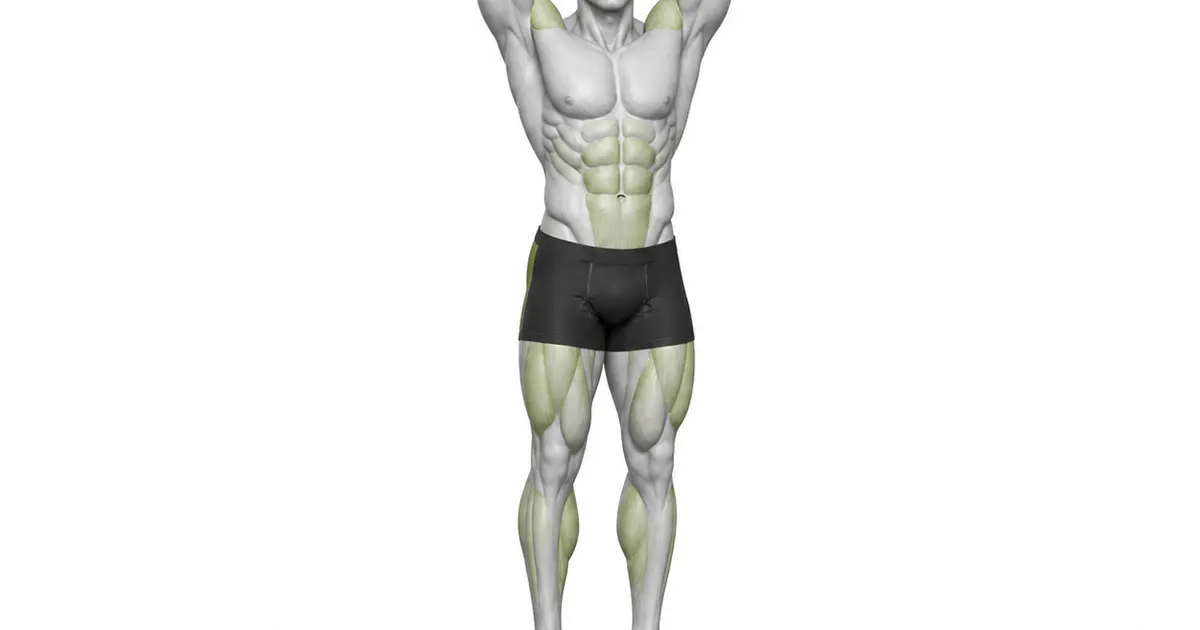
Key point: Point to check: You can maintain balance without rushing to the next repetition immediately after landing.
FATIGUE
Fatigue stops before changing posture
Functional high-intensity training, including burpees, can place high cardiorespiratory and muscular endurance demands, but research results cannot be translated into a safe number of repetitions for an individual.
Stop immediately if you experience excessive shortness of breath, difficulty speaking, dizziness, chest discomfort, or sharp joint pain. Do not increase the number of repetitions, speed, jumps, or push-ups all at once.
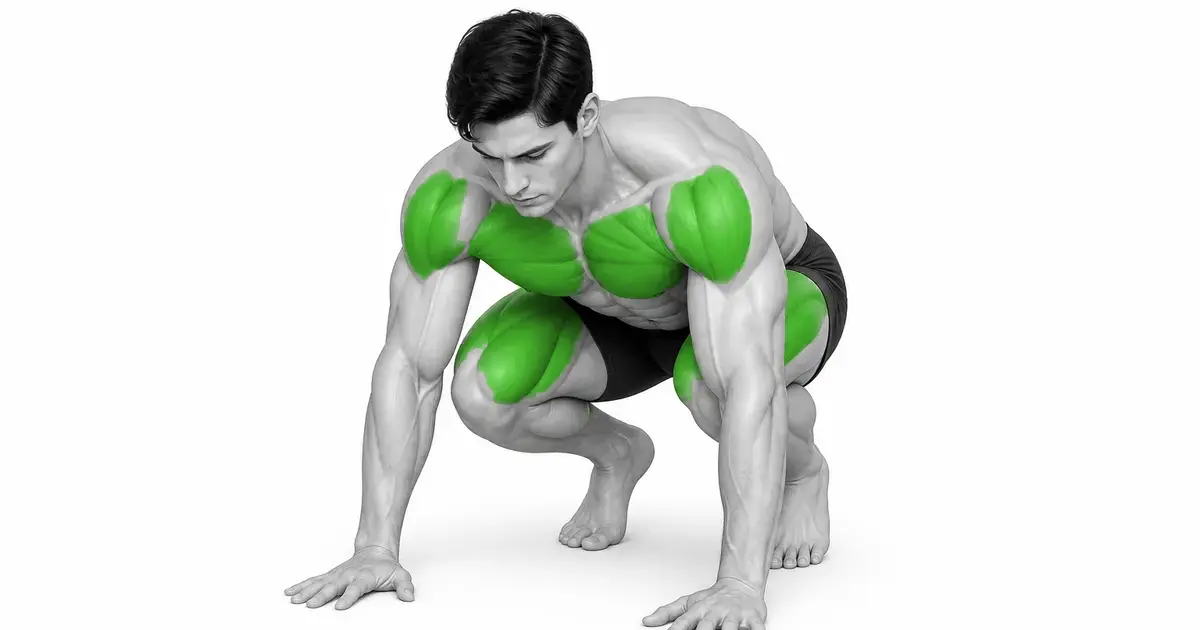
Key point: Progression Principle: Once the form is maintained in one set, add a smaller number of repetitions or just one variation to the next session.
TROUBLESHOOTING
Fix the cause of a mistake, not just its appearance
Only increases speed when fatigued
- What you see
- Between plank and squat, my lower back sags and the landing becomes noisy.
- Likely cause
- The number or rate of repetitions may have exceeded current control capabilities.
- How to correct it
- End a set and lower reps on the next set.
Shock your wrist
- What you see
- When you place your hand hard on the floor, you experience wrist discomfort.
- Likely cause
- You may be kicking your leg back too quickly.
- How to correct it
- Switch to a plank transition with one foot back at a time.
Knees collapse inward
- What you see
- Knees are pulled into the feet during squats and landings.
- Likely cause
- Fatigue or current jump height may be the cause.
- How to correct it
- minus the jump, lower the range and speed.
Push-ups are considered essential
- What you see
- My shoulders feel uncomfortable or my torso sags during push-ups.
- Likely cause
- Push-up variations may be faster than your current level.
- How to correct it
- Uses the basic type that returns directly from a high plank.
Stiffen your landing
- What you see
- Footsteps are loud and knees barely bend.
- Likely cause
- You may be jumping too high or fatigue may have accumulated.
- How to correct it
- Switch to small jumps or stand-ups without jumps.
Ignore shortness of breath or dizziness
- What you see
- Uncontrolled breathing or blurred vision.
- Likely cause
- Current workload may be excessive.
- How to correct it
- Stop and recover immediately. If symptoms persist, consult a specialist.
REGRESSION & PROGRESSION
Match the difficulty before adding load
Stepback Burpee
Go to plank with one foot at a time and stand up without jumping.
Basic burpees without jumps
Use only when movement of both feet is stable, and finish by standing up.
Small Jump Burpees
Add small jumps only when quiet landing is maintained.
Burpees with pushups
Add pushups only if you have wrist, shoulder, and torso control.
BEGINNER PROGRAM
A practical starting framework
1–2 times per week, starting with short sets that do not overlap with other high-intensity exercises. In the first two weeks, don't rush to increase repetitions, but check your transitions and breathing in variations without jumps.
Number of iterations
4–8 times
Range for resetting posture between repetitions
Number of sets
2–4 sets
Rest 60–120 seconds between sets
Progress
+1 time or one variant
Add only when all iterations are quiet and stable
- Control all transitions and landings without pain in your wrists, shoulders, knees, or back, and only raise one variable to the next session.
- If you experience any kickback, loud landing, knee collapse, or wrist discomfort, immediately return to an easier variation.
- Shortness of breath, dizziness, chest discomfort, and sharp pain are different from muscle fatigue. Do not continue if you have symptoms.
Frequently asked questions
Can I skip the jump?
Yes. Standing up without jumping is a suitable initial variation. Add small jumps only when the quiet landing is stable.
How many times should I do it without stopping?
There is no set required number of times. Start with short sets that maintain your posture and breathing, and stop before fatigue causes you to change posture.
What should I do if my wrist feels uncomfortable?
Move your legs back one foot at a time. If wrist discomfort continues, do not proceed with this variation.
When do I proceed to the next step?
Add one small repetition or variation only when transitions, planks, and landings are controlled and pain-free on all repetitions.