CABLE CRUNCH
Cable crunches are not an exercise where you fold your hips back and lower the rope, but rather a resistance crunch where you fix your pelvis and roll your ribs toward your pelvis.
Kneel while holding a rope on a high pulley next to your head, allowing the cable to create resistance to straighten your torso, training rectus abdominis flexion. Pulling the rope with your arms or folding your hips back increases lat and hip movement. Keep your arm position and pelvis fixed and roll down your spine as if you are reducing the distance between your solar plexus and pubic bone.
- Primary muscles
- Rectus abdominis
- Secondary muscles
- Obliques and transversus abdominis
- Difficulty
- Intermediate
- Movement type
- Resisted Kneeling Spinal Flexion
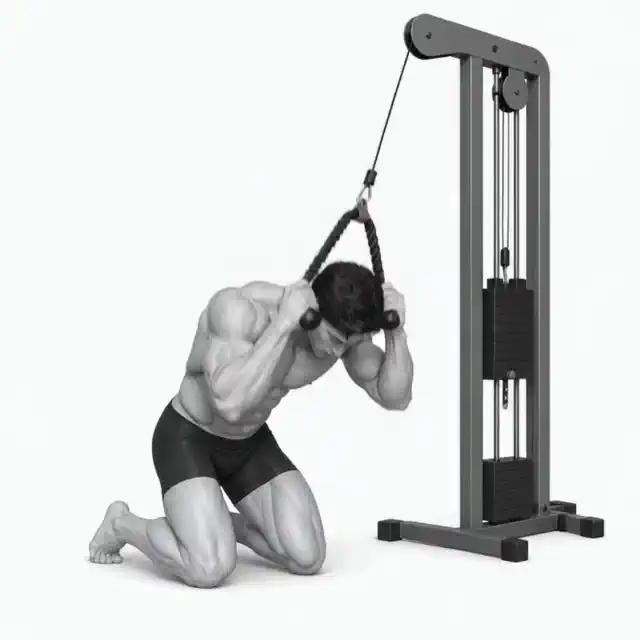
Should your buttocks touch your heels?
Not required. Perform this on your knees at a point where your pelvic position does not move much during the repetition.
STEP BY STEP
4 Steps for One Complete Rep
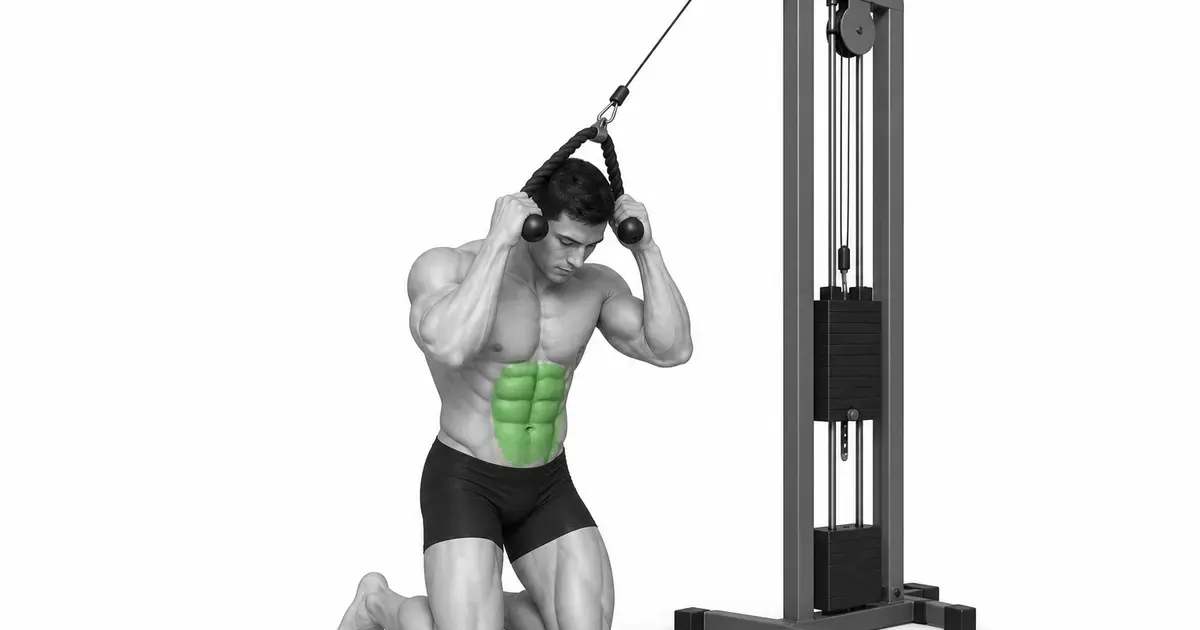
- 1
Aligning high pulley and rope positioning
Place the pulley high and connect the rope. Sit on a knee pad and place the end of the rope next to your head or in front of your shoulder, keeping your elbows at a fixed angle.
- 2
Fixing the pelvis and thighs
Keep your knees hip-width apart and do not sit your buttocks completely on your heels. Maintain pelvic position and create light tension on the cable.
- 3
Roll ribs toward pelvis
Exhale and bring your solar plexus toward your pubis, bending your spine. Use the feeling of shortening your stomach rather than placing your elbows against your thighs.
- 4
Controlling the stack to the abdomen
Return to the top over 2 to 3 seconds, releasing abdominal tension to avoid bumping the stack. Maintain hip and arm position throughout the repetition.
FLEX THE SPINE
Folds between the ribs and pelvis rather than a hip hinge that pushes the pelvis backwards
If your hips move back significantly, your torso will remain long and only the rope can move down. Keep your thighs and pelvis quiet.
Bend the spine evenly within a pain-free range and do not bend the neck excessively.
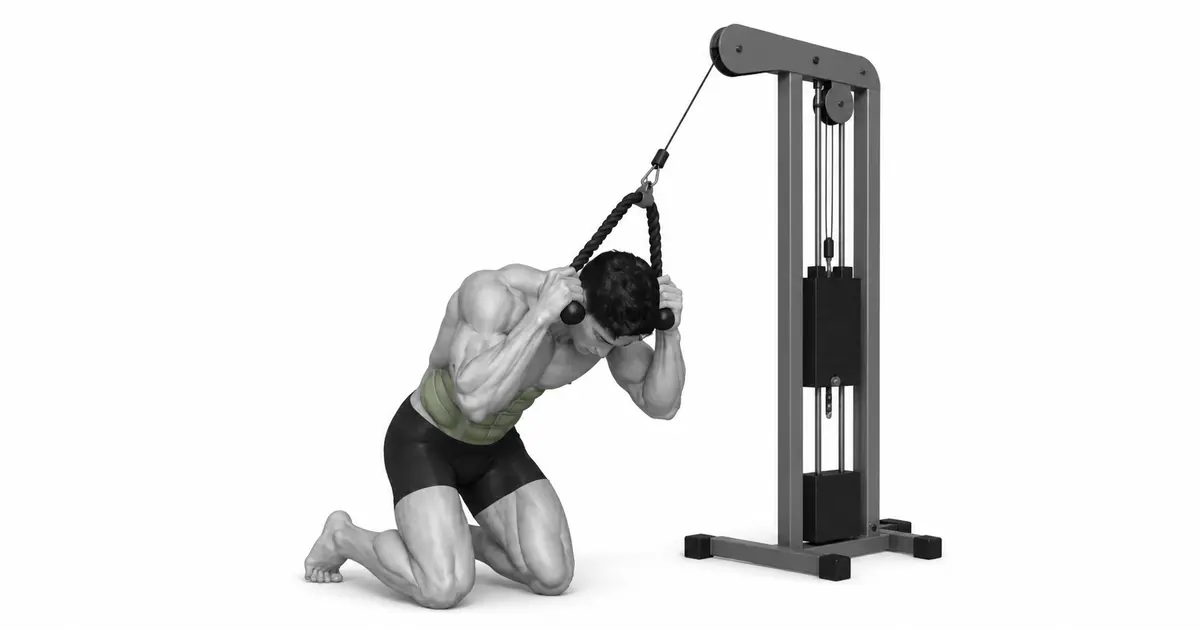
Key point: Cue to use right away: “Don’t move the solar plexus toward the pubic bone, but keep the pelvis intact.”
ARMS ARE HOOKS
Hands and arms only hold the rope and follow the curve of the torso
If you stretch the rope downward with your triceps or pull it with your lats, your arms and back will get tired before your abdomen. Keep your elbow angle fixed.
Hold the rope comfortably next to your head or in front of your shoulders, rather than pulling it behind your neck.
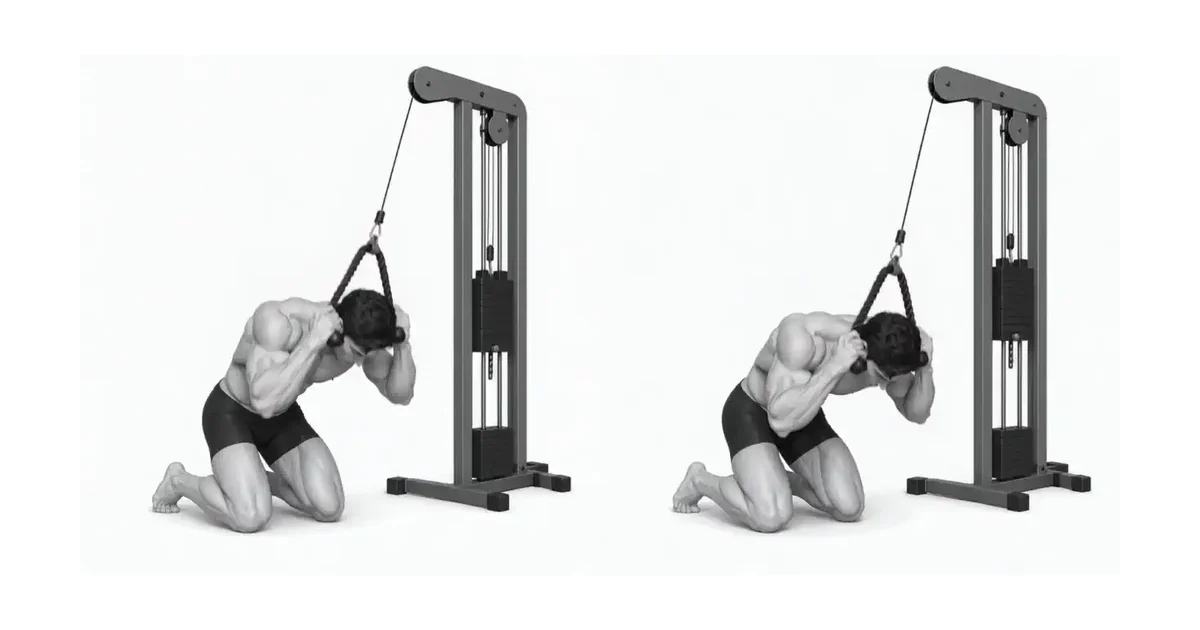
TROUBLESHOOTING
Fix the cause of a mistake, not just its appearance
Fold your hips back to lower the rope
- What you see
- The spine remains almost still and the pelvis moves toward the heels.
- Likely cause
- Used hip hinge and body weight instead of abdominal flexion.
- How to correct it
- Lower the weight, secure your pelvis, and roll down only your ribs.
Pull the rope with your arms
- What you see
- The elbow angle keeps changing, and the triceps and lats get tired first.
- Likely cause
- Used the hand as the driving point of the movement.
- How to correct it
- Hold your arms like hooks and keep your hand position constant next to your head.
Crashing stack at the top
- What you see
- With each repetition, the weight hits and abdominal tension breaks.
- Likely cause
- No controlled return or too close to the machine.
- How to correct it
- Adjust the position for one step and slowly come up for 2-3 seconds.
REGRESSION & PROGRESSION
Match the difficulty before adding load
Floor Crunch
Learn the curve between the ribs and the pelvis.
Band Knee Crunch
Practice pelvic locks at light resistance.
Cable Crunch
Controls stack tension.
Stop Cable Crunch
Add 1-2 seconds of bottom contraction.
BEGINNER PROGRAM
A practical starting framework
Increase the weight only when the number of repetitions and bottom contraction are the same. Pulling down a heavy stack with your body weight does not count as progress.
Count
8–15 times
Bottom 1 second, return 2~3 seconds
Set
2–4 sets
60–120 seconds recovery between sets
Frequency
2–4 times a week
Different torso flexion volume and adjustment
- Once the pelvic and arm positions are fixed, increase the number of repetitions first.
- If hip hinge, arm pull, or stack collision occurs, immediately lower the weight.
- Avoid forcing maximum flexion to avoid neck or back pain.
Frequently asked questions
Should the rope be placed behind the head?
No. Placing it at your temple or in front of your shoulder makes it easier to position your arm without putting pressure on your neck.
Is it important to gain a lot of weight?
Weight that maintains spinal flexion and controlled return is important. Your goals will vary as you pull with your body weight and hip hinge.