CABLE FRONT RAISE
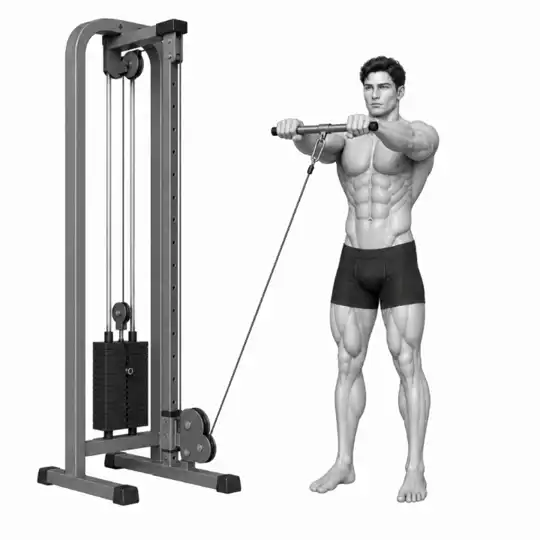
Exercise to isolate the front deltoids and increase front shoulder definition through constant resistance on the cable.
Set the cable machine's pulley to the lowest position and hold the handle with one hand or the bar with both hands. Stand with your back to the machine and let the cable pass between your legs. Raise your arms forward to eye level with your elbows very slightly bent. Feel the contraction of the front deltoid muscles at the top, and slowly return to the starting position while holding on to the resistance of the cable.
- Primary muscles
- Anterior Deltoid
- Secondary muscles
- Lateral Deltoid · Upper Trapezius
- Difficulty
- Beginner
- Movement type
- Shoulder Flexion
Are cables better than dumbbells?
Cables provide constant tension, which can be more beneficial for muscle definition and pumping.
STEP BY STEP
4 Steps for One Complete Rep
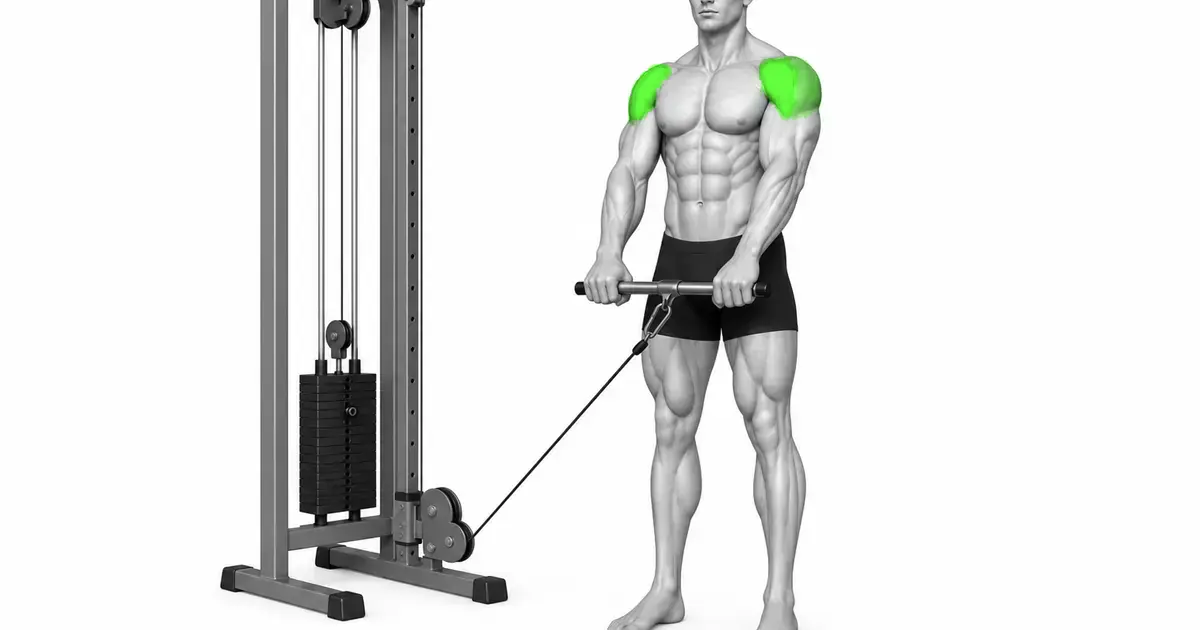
- 1
Cable setup and positioning
Align the pulley at the bottom and hold the handle. Stand with your back to the machine and take a step forward to tension the cable.
- 2
Lift forward
Keeping your elbows locked, raise your arms in front of your body to eye level. Use the strength of your front deltoids.
- 3
Apex Contraction
Pause briefly at the point of maximum contraction, feeling the stimulation of the anterior deltoid.
- 4
Resistance and descent
Maintain cable tension all the way and slowly return to the starting position. Be careful not to touch the weight.
CONSTANT TENSION
Constant resistance throughout operating range
Dumbbell front raises have less resistance at the start of the movement due to less influence of gravity, but the cable provides constant tension from start to finish.
This sustained tension stimulates the muscle fibers of the anterior deltoid more efficiently and prevents the muscle from resting, especially at the bottom of the movement, leading to a greater pumping effect.
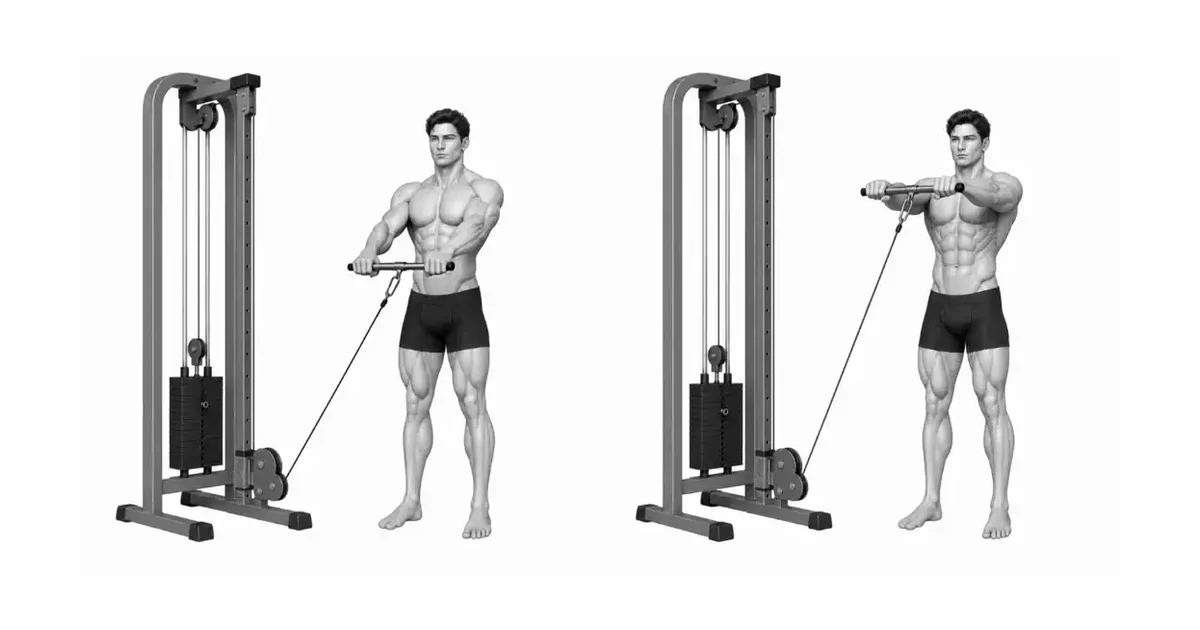
RANGE, LOAD & TEMPO
Choose a range and load that keep the Cable Front Raise repeatable
The useful range of motion ends before your torso or working joints have to change position to move the load. Keep the anterior deltoid producing the movement while the lateral deltoid · upper trapezius support the same alignment from the first repetition to the last.
Use a controlled lowering phase of about two to three seconds and avoid bouncing through the transition. If the final repetitions become shorter, faster, or visibly different from the first, reduce the load or stop the set before technique breaks down.
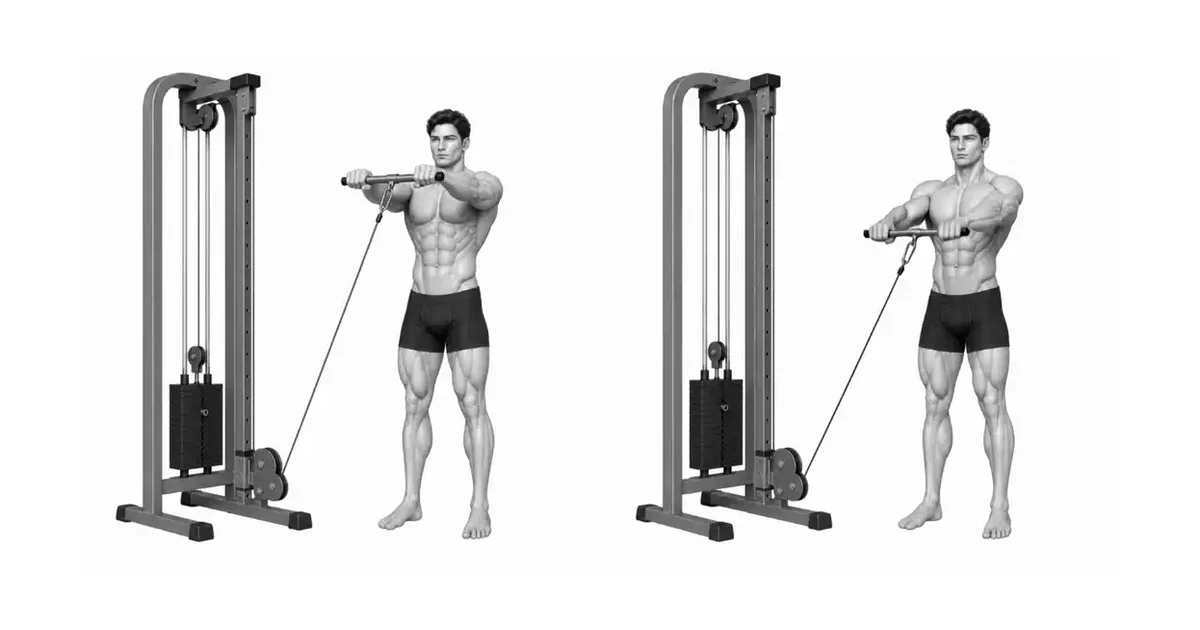
Key point: Progress the Cable Front Raise only after every repetition follows the same path without joint pain.
TROUBLESHOOTING
Fix the cause of a mistake, not just its appearance
Excessive shaking of the upper body
- What you see
- The movement of rocking the body back and forth to lift weight.
- Likely cause
- Too heavy or lack of core stability.
- How to correct it
- Lower the weight, tighten your core, keep your torso stationary and move only your arms.
Shrug
- What you see
- A phenomenon in which the shoulder rises toward the ear when raising the arm.
- Likely cause
- Compensatory action of the upper trapezius muscle.
- How to correct it
- Keep your shoulders down and lift using only your front deltoids.
REGRESSION & PROGRESSION
Match the difficulty before adding load
Rope Cable Front Raise
Reduce the strain on the shoulder joints by performing with a neutral grip using a rope handle.
One Arm Cable Front Raise
Perform with one arm to more precisely feel the stimulation of each shoulder and correct imbalances.
BEGINNER PROGRAM
A practical starting framework
Cable front raises are very effective in increasing front delt definition. It is important to maintain a consistent speed.
Frequency
1-2 times a week
Use as an isolation exercise at the end of shoulder exercise.
Volume
3~4 sets, 15~20 times
Take advantage of the cable’s characteristics to maximize metabolic stress on your muscles with high repetitions.
- Do not fully straighten your elbows, but keep them slightly bent.
- Be careful not to loosen the cable tension throughout the operation.
- Exhale when going up and inhale when going down.
Frequently asked questions
How high should I raise my arms?
Just raising it to eye level or parallel to the shoulder will sufficiently contract the front deltoid muscle.