CABLE GLUTE KICKBACK
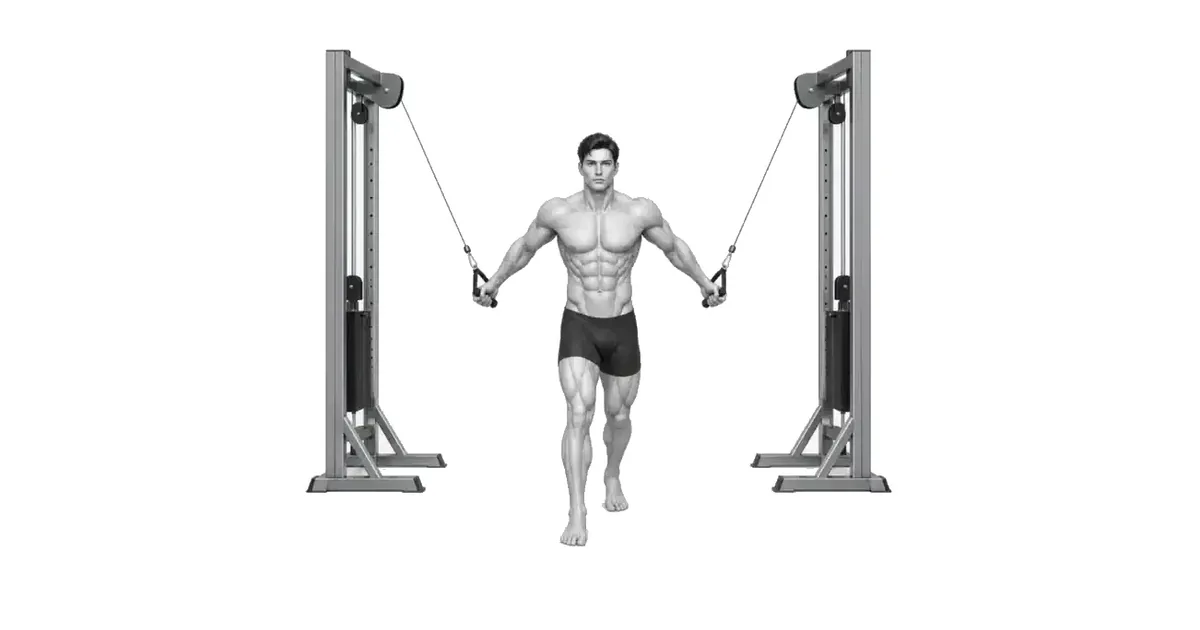
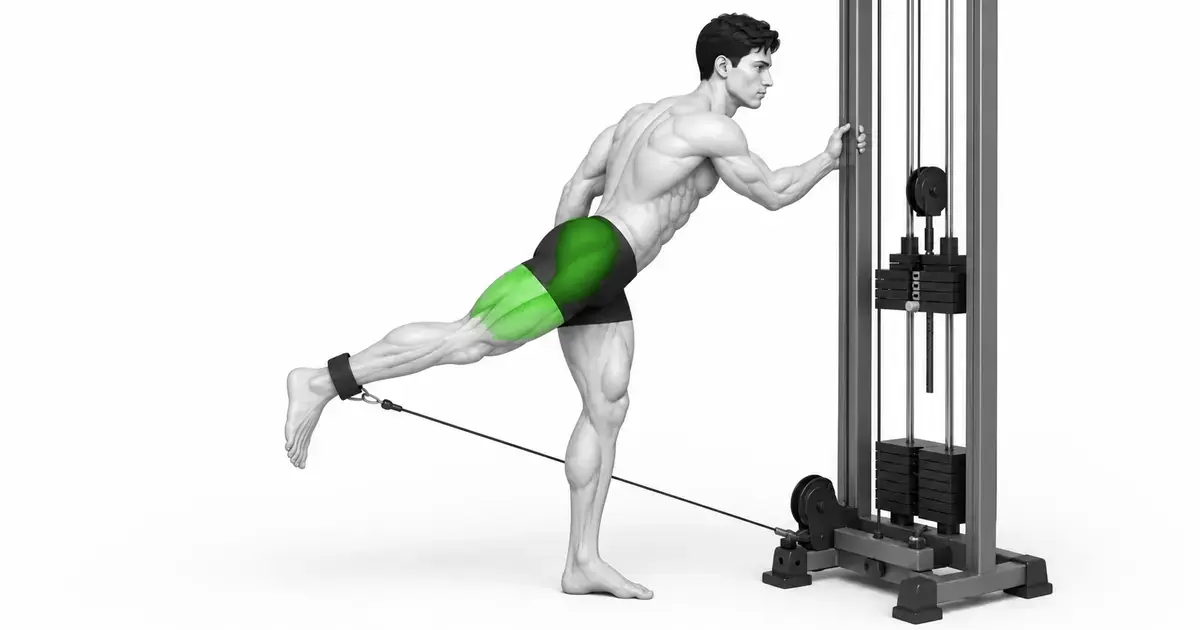
Cable glute kickback is not an exercise where you kick your legs high, but rather a hip extension exercise where you send your thighs back with your gluteus maximus while keeping your pelvis in front.
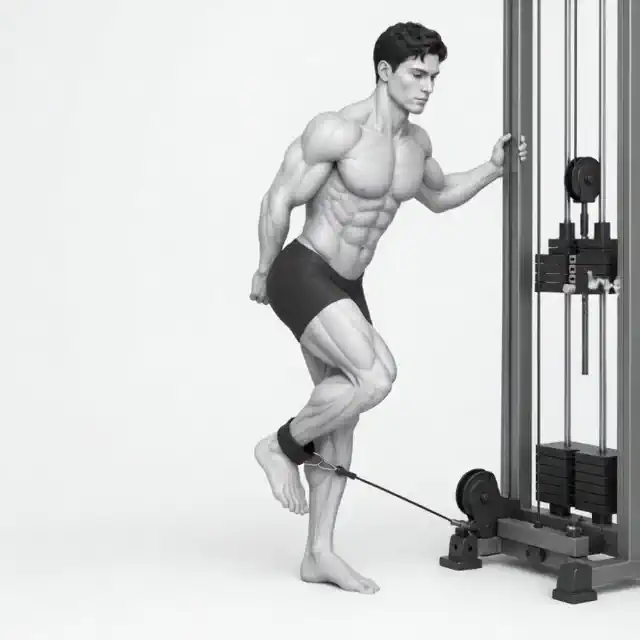
You can train your gluteus maximus unilaterally by attaching an ankle strap to the lower pulley and sending one leg behind you. However, if the weight is too heavy or the range of motion is greedy, the pelvis opens, the lower back becomes wet, and only the cable moves a lot. Lean your torso slightly forward, anchoring your supporting foot and pelvis, and controlling the small amount of movement your thighs have behind your torso.
- Primary muscles
- Gluteus maximus
- Secondary muscles
- Hamstrings, gluteus medius, core
- Difficulty
- Intermediate
- Movement type
- Unilateral hip extension
How high should I raise my legs?
Just raise it to a height that keeps your pelvis facing forward and does not wet your lower back. Height itself is not the goal.
STEP BY STEP
4 Steps for One Complete Rep
- 1
Checking the lower pulley and strap
Place the cable in the lowest position and check the ankle strap buckle and link. Start with light weights that don't cause stacks.
- 2
Secure your support feet and torso
Hold the pole lightly and take a step back to create light tension on the cable. Bend your supporting knee slightly, keep your torso long, and place your pelvis forward.
- 3
Send thighs back
Exhale, maintaining approximately the knee angle of your working leg and sending your thigh back. Squeeze your gluteus maximus and pause just before your pelvis opens or your lower back begins to wet.
- 4
Slowly returning before stack is reached
Return your legs to the starting position over 2 to 3 seconds. Begin the next repetition before your feet touch the floor or hit the weight stack.
HIP EXTENSION
The extent to which the pelvis remains forward, rather than the height of the legs, determines gluteus maximus stimulation
The thighs move backwards from the hip joint, but if the lumbar spine is also wet, the range of motion only appears larger. Keep your lower ribs toward your pelvis and keep your stomach tight.
In most cases, it is sufficient to place your legs slightly back and in line with your torso. Do not lift your toes excessively.
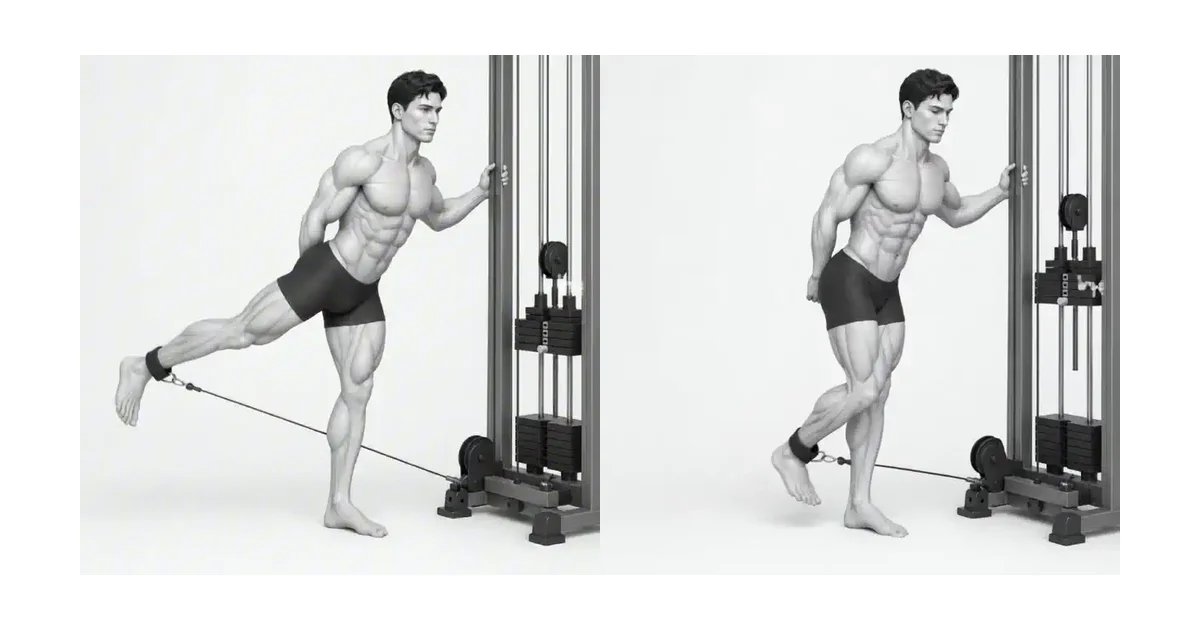
Key point: Cue to use right away: “Pelvis forward, only thighs back.”
STABLE SUPPORT
The purpose of holding the support is not to pull the upper body, but to reduce pelvic sway
When you pull yourself in with your arms, your torso position changes with each repetition. Use your hands only to assist with balance, and keep the heel, thumb, and ball of the little toe of the supporting foot on the floor.
If the pelvis on the working leg side lifts upward, lower the weight and adjust the left and right pelvic heights in a short range.
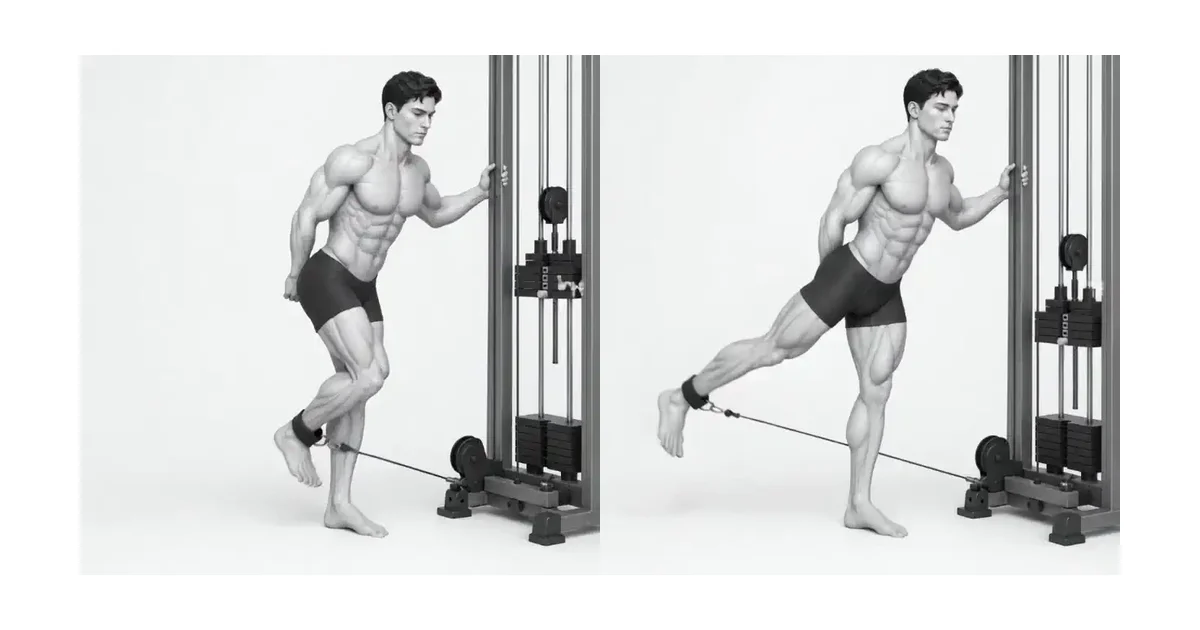
TROUBLESHOOTING
Fix the cause of a mistake, not just its appearance
Lie back and raise your legs
- What you see
- I feel my ribs being lifted at the top and pressure in my lower back.
- Likely cause
- After hip extension, the range was increased to lumbar extension.
- How to correct it
- Tighten your abs, lower your legs, and repeat until your hips begin to move.
Pelvis opens outward
- What you see
- The pelvis and toes on the working leg side are turned outward.
- Likely cause
- Heavy weight or use full body rotation instead of gluteus maximus.
- How to correct it
- Practice a straight path with both pelvic bones facing the floor and a light load.
Stack bounces on recoil
- What you see
- At the beginning and end, the weights hit and the torso swings back and forth.
- Likely cause
- Cable tension is broken or the weight is beyond the current control range.
- How to correct it
- Adjust step distance, slow descent to 2-3 seconds, and reduce weight.
REGRESSION & PROGRESSION
Match the difficulty before adding load
Wall-supported hip extension
Learn pelvic fixation and thigh path without load.
Band Glute Kickback
Practice unilateral hip extension under light tension.
Cable Kickback
Maintains constant tension throughout the range.
Stop Cable Kickback
Increase pelvic control with a 1-2 second pause at the top.
BEGINNER PROGRAM
A practical starting framework
Good to use as an auxiliary exercise after large lower body exercises such as squats and hip thrusts. Start with your weaker side and apply equal weight and repetitions on both sides.
Count
10–20 times each
Top 1 second, return 2~3 seconds
Set
2–4 sets each
45–90 seconds recovery after both sides
Frequency
1–3 times a week
Total glute volume and summation
- If pelvic frontage and slow return are maintained, increase the number of repetitions first.
- If back bending, pelvic rotation, or stack collision occurs, reduce the weight and range.
- Even if the difference between left and right is large, it is not adjusted with additional repetitions on the stronger side.
Frequently asked questions
Should I straighten my knees?
Do not lock your knees and keep the slightly bent angle approximately constant throughout the repetition. Continuing to bend and straighten your knees mixes up the hamstring action.
Does turning my toes out cause more glute stimulation?
The target movement will change if you rotate the pelvis as well. First, learn a controlled, straight path with your feet and hips close to neutral.