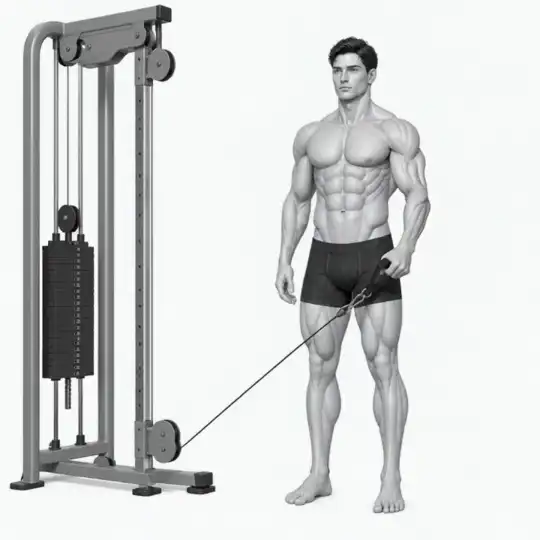
CABLE LATERAL RAISE
Isolation exercise that isolates the lateral deltoid muscles and improves the three-dimensionality of the shoulders through continuous resistance of the cable.
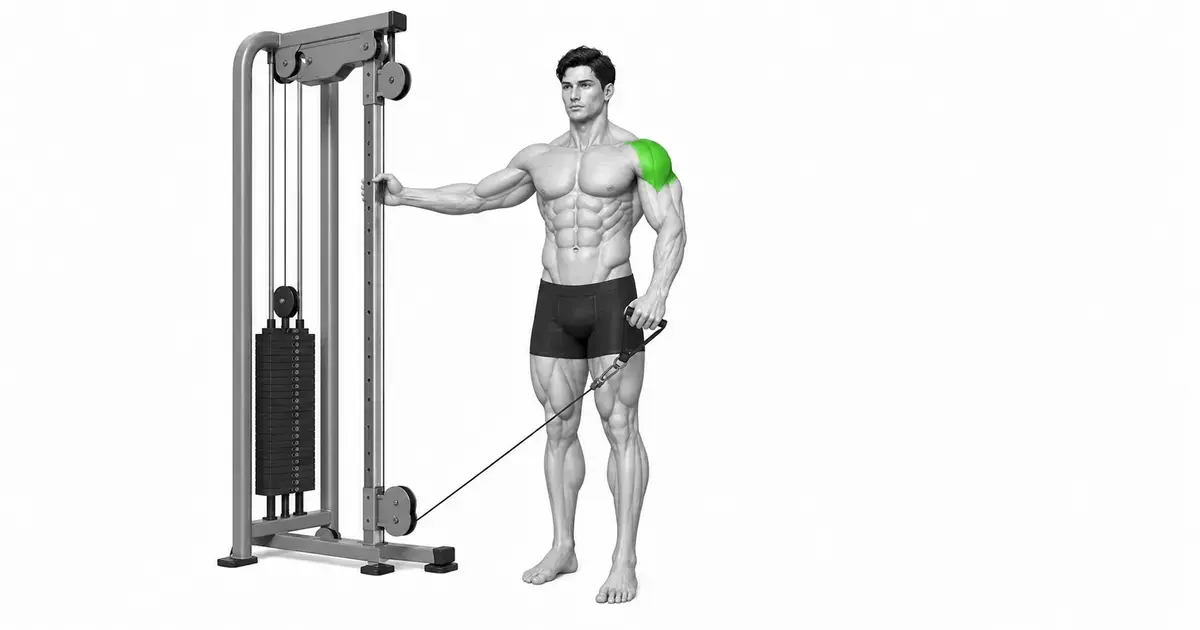
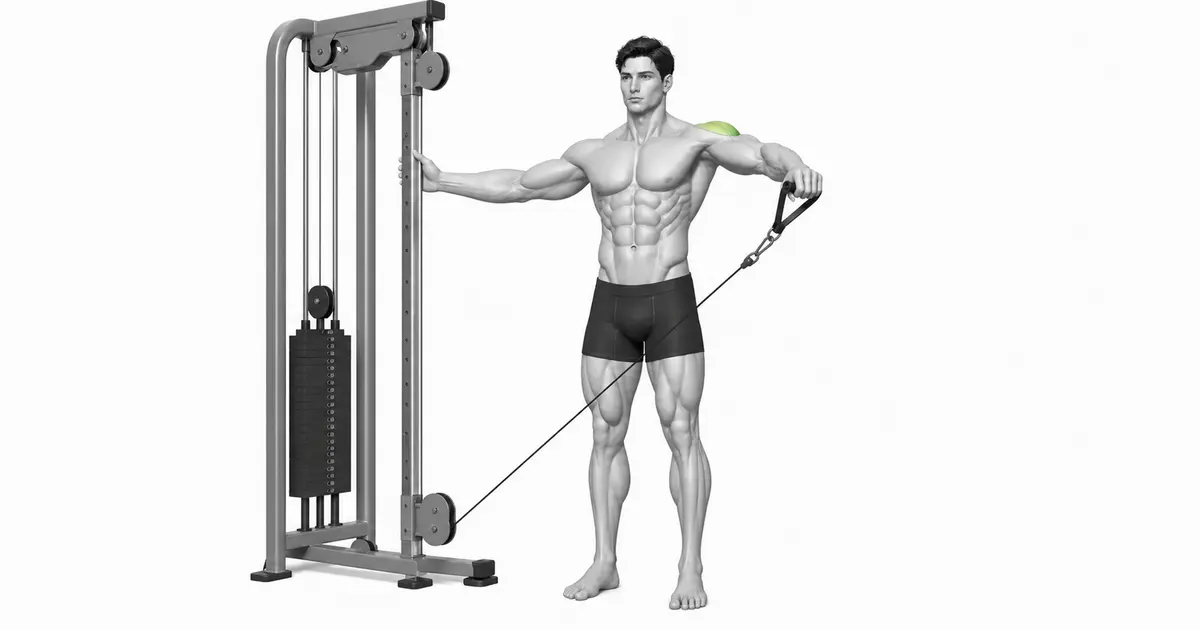
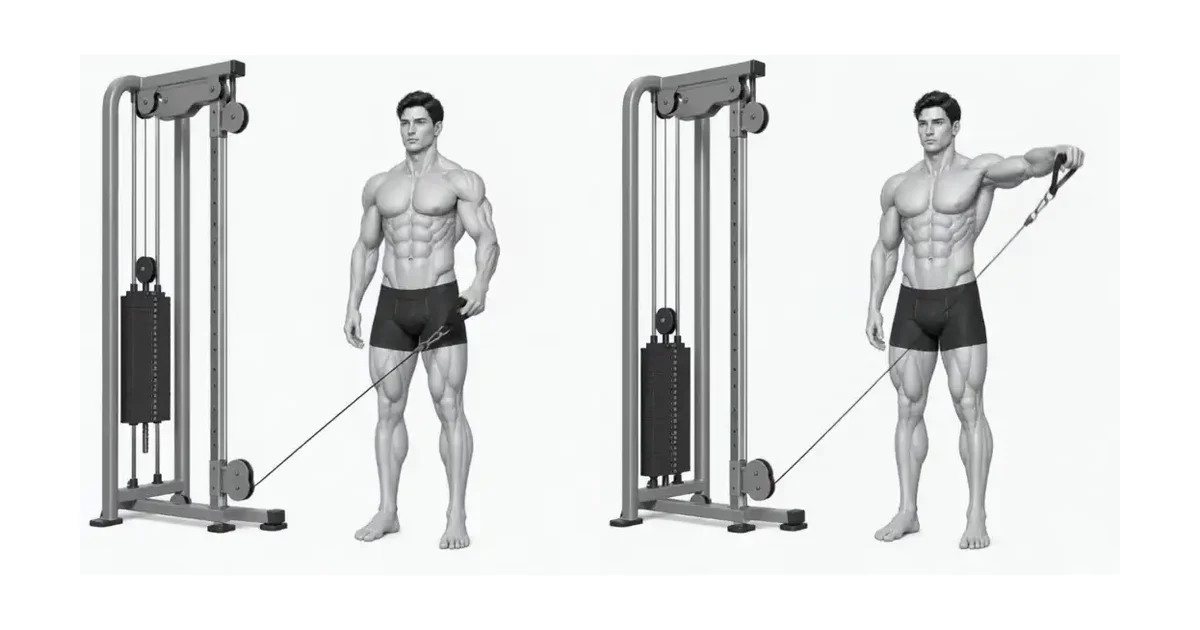
Set the cable machine's pulley to the lowest position and hold the handle with one hand. Stand next to the machine and support yourself by holding it with your opposite hand. Keeping your core tense, raise your arms out to your sides. You can set the cable's trajectory to pass in front or behind your body. Raise it to shoulder height, feel the contraction at the top, and slowly return to the starting position while supporting the resistance of the cable.
- Primary muscles
- Lateral Deltoid
- Secondary muscles
- Anterior Deltoid · Upper Trapezius
- Difficulty
- Intermediate
- Movement type
- Shoulder Abduction
Are cables better than dumbbells?
Rather than one being absolutely superior, they complement each other. Dumbbells are good for heavy weights, and cables are good for constant tension.
STEP BY STEP
4 Steps for One Complete Rep
- 1
Cable setup and positioning
Align the pulley at the bottom and hold the handle with one hand. Stand about one step away from the cable machine and check the tension.
- 2
Raise Arm
With your elbows very slightly bent, lift the handle diagonally away from your body.
- 3
Apex Contraction
Feel a strong contraction of the lateral deltoid muscle at the point where the arm becomes parallel to the floor. Concentrate on the pulling force of the cable.
- 4
Resisting and descending
Maintain cable tension all the way and slowly lower to the starting position. Be careful not to touch the weight stack.
CONSTANT TENSION
The power of ‘continuous resistance’ different from dumbbells
Dumbbell lateral raises have little resistance when the arms are next to the body (lower end), but the cables deliver a lot of tension to the lateral deltoids from the starting point.
This type of sustained resistance is very beneficial for inducing muscle hypertrophy by increasing metabolic stress on the muscles, and is especially effective at filling out the lower volume of the lateral deltoid.
RANGE, LOAD & TEMPO
Choose a range and load that keep the Cable Lateral Raise repeatable
The useful range of motion ends before your torso or working joints have to change position to move the load. Keep the lateral deltoid producing the movement while the anterior deltoid · upper trapezius support the same alignment from the first repetition to the last.
Use a controlled lowering phase of about two to three seconds and avoid bouncing through the transition. If the final repetitions become shorter, faster, or visibly different from the first, reduce the load or stop the set before technique breaks down.
Key point: Progress the Cable Lateral Raise only after every repetition follows the same path without joint pain.
TROUBLESHOOTING
Fix the cause of a mistake, not just its appearance
Excessive body lean
- What you see
- A movement in which the upper body is greatly tilted in the opposite direction to lift a weight.
- Likely cause
- Compensation action for lifting heavy weights.
- How to correct it
- Keep your upper body vertical or slightly tilted and use only your shoulder muscles.
Pull with wrist
- What you see
- A phenomenon in which the wrist is bent and the hand rises before the elbow.
- Likely cause
- Overuse of forearm or wrist strength rather than lateral deltoids.
- How to correct it
- Keep your wrists fixed and lift with the feeling that your elbows are moving away.
REGRESSION & PROGRESSION
Match the difficulty before adding load
Behind back cable raise
improves stimulation of the eccentric section of the lateral deltoid muscle by running the cable behind the back.
Leaning Cable Raise (Leaning)
Increase resistance at the top of the range of motion by holding the machine and leaning your body outward.
BEGINNER PROGRAM
A practical starting framework
Cable lateral raises perfect your shoulder routine. Focus on correct tempo and sustained tension.
Frequency
2-3 times a week
It is recommended to experience different resistance profiles in combination with dumbbell exercises.
Volume
3~4 sets, 15~20 times
Take advantage of the cable’s characteristics to induce burning stimulation in your muscles through high repetitions.
- When coming down, make sure your arms don't go too far inside your body.
- Always keep your shoulders down to minimize trapezius involvement.
- Perform with one arm at a time, so pay attention to left and right balance.
Frequently asked questions
Where is the best cable location?
The lowest position (ankle height) is common, but can also be adjusted to knee height depending on the stimulation point.