CABLE UPRIGHT ROW
A vertical pull that builds the lateral deltoids and upper back using continuous cable resistance for safer shoulder development
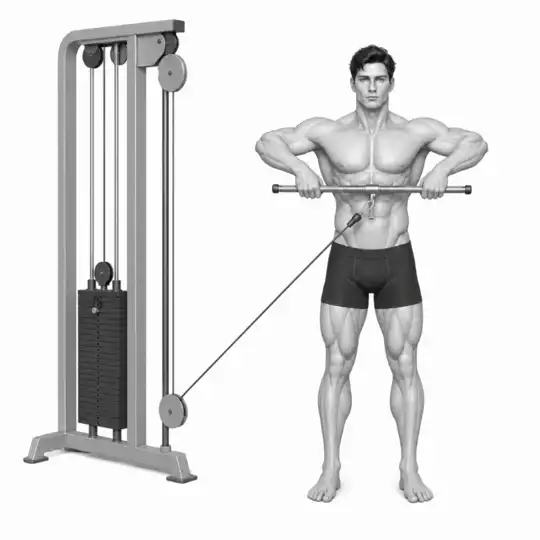
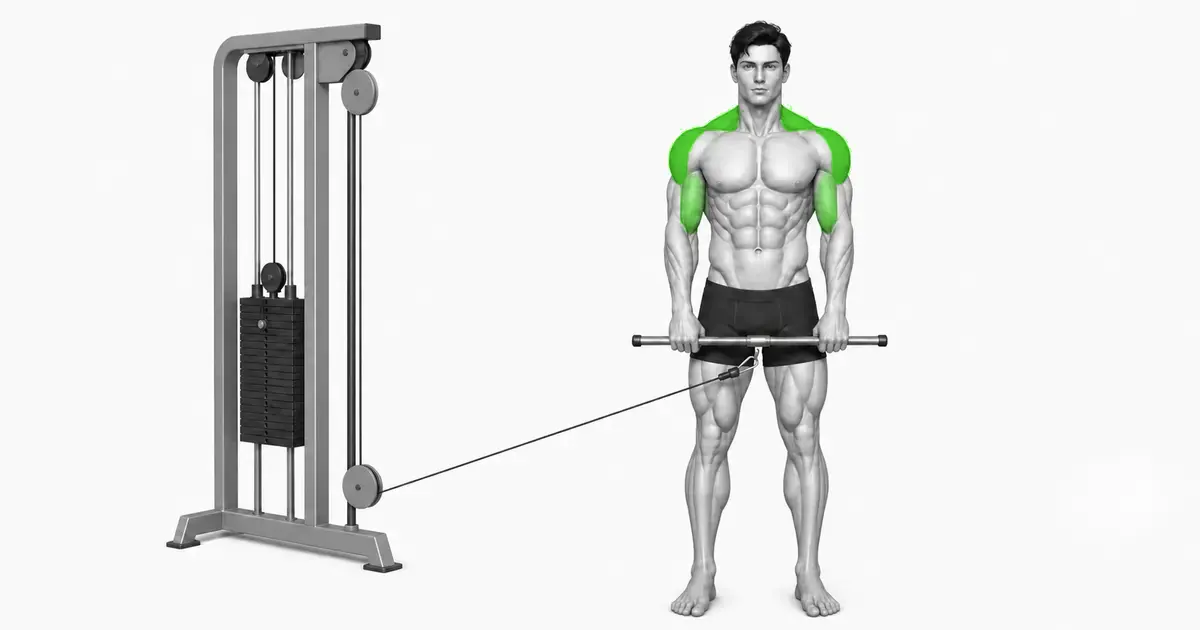
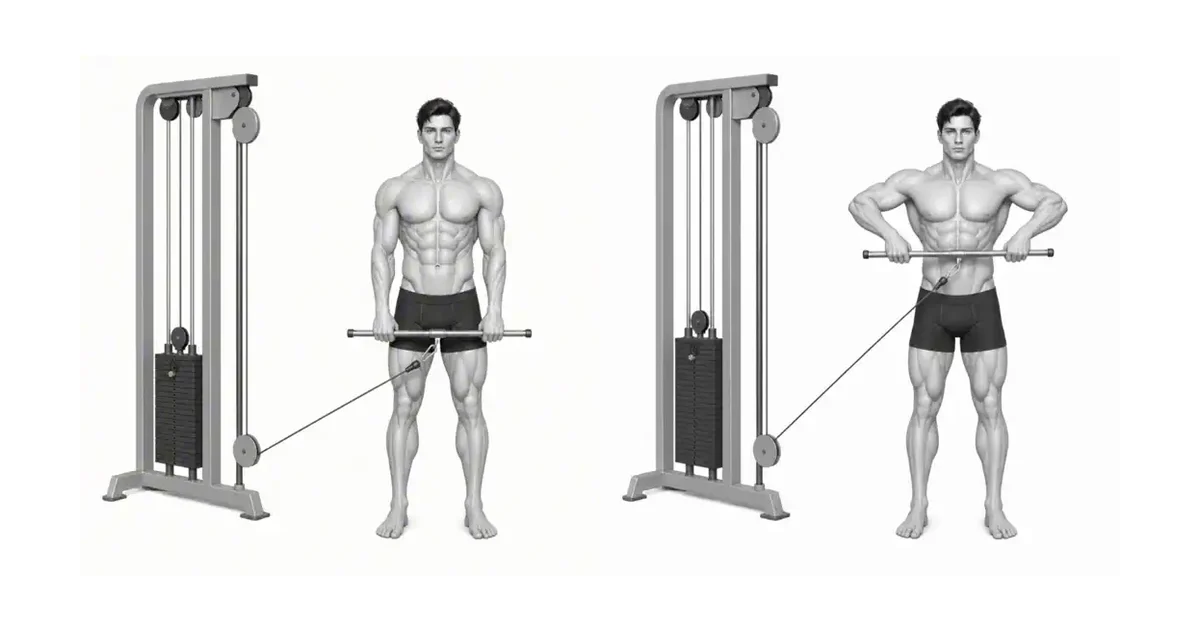
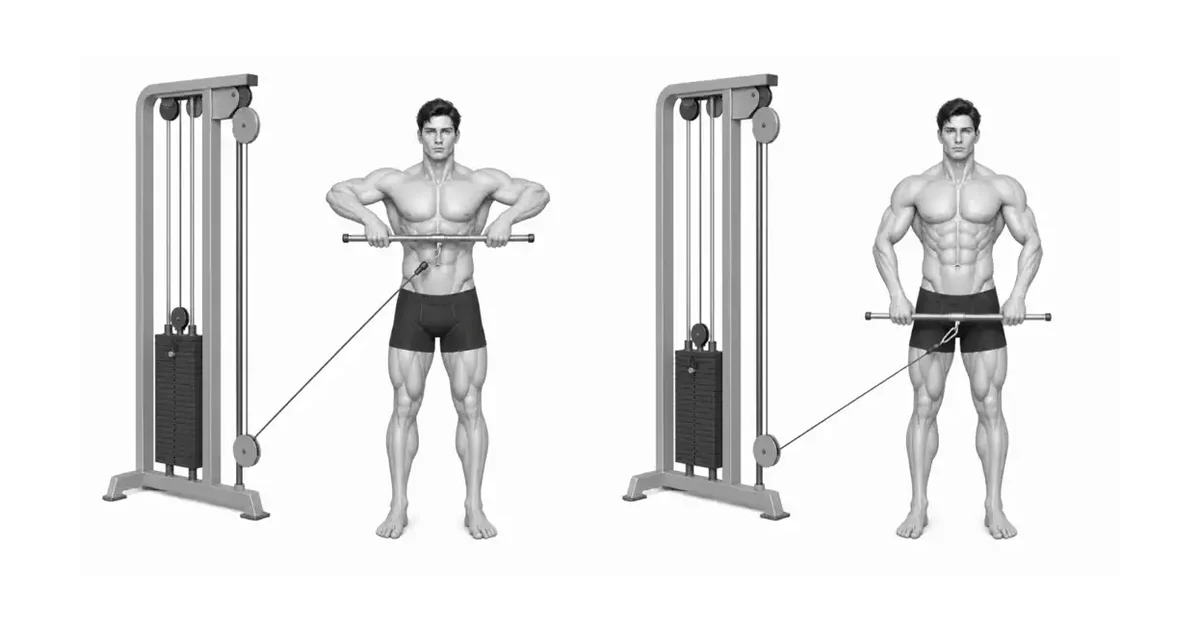
Attach a straight bar or EZ-bar to the lowest pulley of a cable machine. Stand tall and hold the bar with an overhand grip, slightly narrower than shoulder-width. Keeping the bar close to your body, pull it vertically toward your chest, leading with your elbows. Your elbows should remain higher than your wrists at all times. Pause at the top to feel the contraction, then slowly lower the bar back to the starting position under full control.
- Primary muscles
- Lateral Deltoid · Upper Trapezius
- Secondary muscles
- Anterior Deltoid · Biceps Brachii
- Difficulty
- Beginner
- Movement type
- Vertical Pull
Is it safer than the barbell version?
Generally, yes. The cable provides a more adjustable and forgiving path for the shoulder and wrist joints.
STEP BY STEP
4 Steps for One Complete Rep
- 1
Setup and grip
Position the pulley at the bottom. Hold the bar with a grip about shoulder-width apart, palms facing your thighs.
- 2
Pull vertically
Lead with your elbows, pulling them high and wide. Keep the bar skimming close to your torso as it rises.
- 3
Peak contraction
Stop when the bar reaches your upper chest. Focus on the squeeze in your lateral deltoids and upper traps.
- 4
Controlled return
Slowly lower the bar back to the starting position, resisting the cable's pull to maintain tension.
CABLE ADVANTAGE
Continuous tension and joint comfort
One of the main benefits of the cable upright row is the constant tension provided by the weight stack. Unlike free weights, the resistance doesn't drop off at the bottom, forcing the deltoids to remain active throughout the entire repetition.
Furthermore, the cable allows for a more fluid and natural path for the shoulders and wrists. If you find a straight bar uncomfortable, using a rope attachment can allow your hands to move independently, further reducing joint stress while increasing the range of motion at the top of the lift.
RANGE, LOAD & TEMPO
Choose a range and load that keep the Cable Upright Row repeatable
The useful range of motion ends before your torso or working joints have to change position to move the load. Keep the lateral deltoid · upper trapezius producing the movement while the anterior deltoid · biceps brachii support the same alignment from the first repetition to the last.
Use a controlled lowering phase of about two to three seconds and avoid bouncing through the transition. If the final repetitions become shorter, faster, or visibly different from the first, reduce the load or stop the set before technique breaks down.
Key point: Progress the Cable Upright Row only after every repetition follows the same path without joint pain.
TROUBLESHOOTING
Fix the cause of a mistake, not just its appearance
Bar drifting away
- What you see
- The bar moves forward away from the body during the pull.
- Likely cause
- Over-reliance on the biceps or lack of control.
- How to correct it
- Focus on pulling the bar straight up your midline, keeping it as close to your body as possible.
Leading with the wrists
- What you see
- The wrists rise higher than the elbows at the top of the movement.
- Likely cause
- Attempting to 'curl' the weight up using the forearms.
- How to correct it
- Think about 'driving your elbows to the ceiling' and let your hands follow as hooks.
REGRESSION & PROGRESSION
Match the difficulty before adding load
Rope Cable Upright Row
Use a rope to allow for a wider hand position at the top, increasing lateral deltoid isolation.
Single-Arm Cable Upright Row
Perform the exercise one arm at a time to improve focus and address strength asymmetries.
BEGINNER PROGRAM
A practical starting framework
Cable upright rows are excellent for adding detail to the side delts. Maintain a smooth, rhythmic tempo throughout.
Frequency
1-2 times per week
Include as a secondary or finishing move in your shoulder routine.
Volume
3-4 sets of 12-15 reps
Focus on high-quality repetitions and a deep muscle burn.
- Do not use momentum or 'hip drive' to jerk the weight.
- Keep your shoulders depressed and avoid shrugging excessively.
- Inhale on the way down, exhale as you pull up.
Frequently asked questions
Will this make my neck look shorter?
Well-developed traps add to a powerful physique, but a wider grip can shift more emphasis to the deltoids if you want to focus on width.