COSSACK SQUAT
Cossack squats are not a stretch where you rip as low as you can to the side, but rather a lateral squat where you sit on one leg and control the length of the adductors on the other side.
Cossack squat: Stand wide and shift your weight to one side, bending your working leg deeply and extending the opposite leg. Since hip and ankle range of motion and unilateral strength are required simultaneously, there is no need to lower your hips close to the floor from the beginning. Hold a rack or door frame and learn from the range that maintains the height of your left and right pelvis and the direction of your working knee.
- Primary muscles
- Adductors, quadriceps, gluteus maximus
- Secondary muscles
- Gluteus medius, hamstrings, calves, core
- Difficulty
- Intermediate
- Movement type
- Lateral unilateral squat
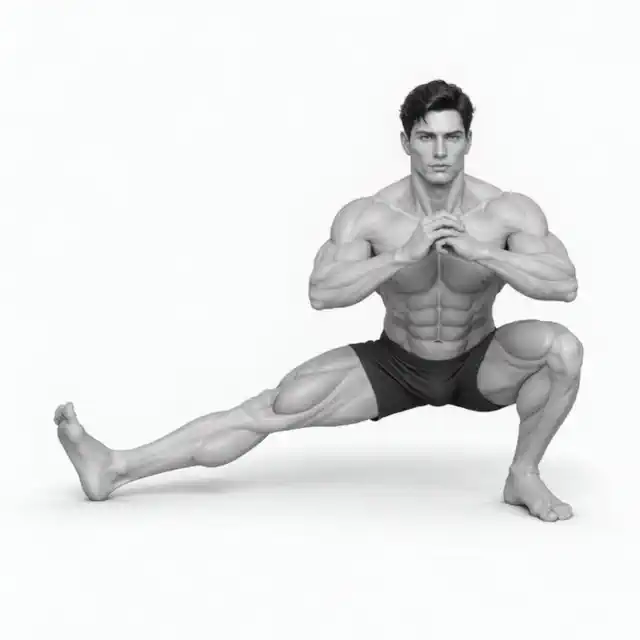
Should the toes of the extended leg be lifted?
Lifting is possible depending on depth, but not required. Prioritize heel and knee alignment and hip comfort.
STEP BY STEP
4 Steps for One Complete Rep
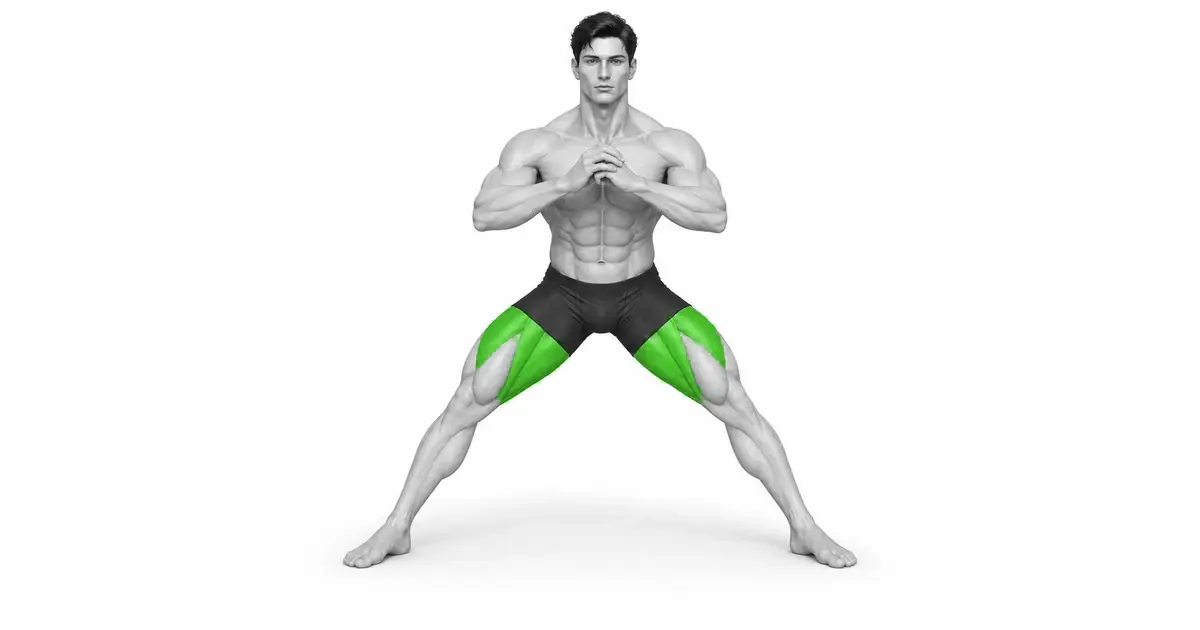
- 1
Creating a wide and stable stance
Place your feet wider than shoulder width and turn your toes comfortably outward. Choose a width that allows your entire foot to touch the floor and doesn't pinch your groin.
- 2
Shifting your weight to one foot
Inhale, stabilize your torso and move your pelvis toward one foot. Your working knee follows the toe of the same side and the opposite leg is extended.
- 3
Adjusting the contralateral foot and pelvis
As you get deeper, you can turn the toes of the extended leg toward the ceiling, but keep the heel on the floor. Stop before your pelvis rolls over or your torso rotates excessively.
- 4
Push with working foot to return to center
Push into the floor with the entire foot of your bent leg, shifting your pelvis toward center. Once you have fully regained your balance, repeat on the other side.
SQUAT THE WORKING LEG
On bent legs, knees and toes should follow the same direction
If the inside of the working foot collapses while the pelvis is moved to the side, the knee is likely to turn in as well. Maintain pressure on the heel, thumb ball, and little toe ball.
Before increasing the depth, make sure your working knee is pointed towards your toes and your heels are together.
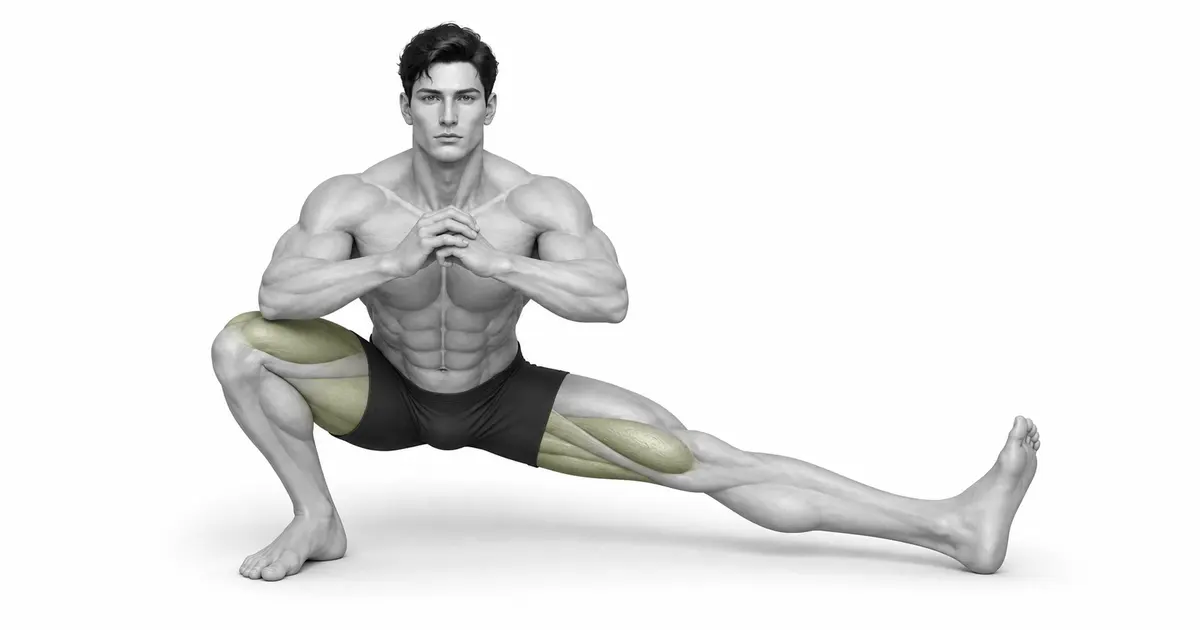
Key point: Cue to try right now: “Sit on one foot and come back on the same foot.”
CONTROL THE LONG LEG
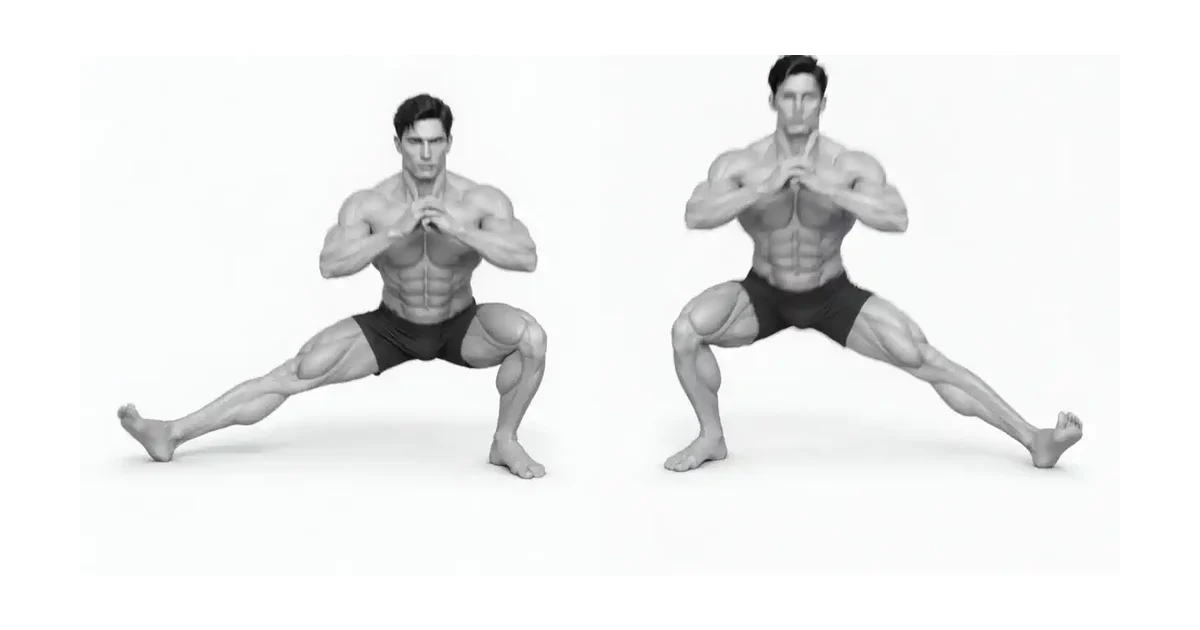
Extended leg actively presses into the floor rather than passively stretching
Place your opposite heel on the floor and extend your entire leg to control adductor tension. Toe rotation is adjusted according to the range of motion.
If your groin is poking or your pelvis is rolling to one side, reduce the width and depth and use a high box sitting variation.
TROUBLESHOOTING
Fix the cause of a mistake, not just its appearance
Work heel lifted for depth
- What you see
- The heel on the bent side rises and the weight shifts to the toes.
- Likely cause
- The ankle went deeper than the range of motion.
- How to correct it
- Reduce depth or hold support and repeat as long as the entire foot is maintained.
Knee of extended leg rolled inward
- What you see
- Knees and toes are in different directions and the groin is twisted.
- Likely cause
- Forced foot rotation and hip position.
- How to correct it
- Adjust the knee and toe of the extended leg in the same direction and narrow your stance.
Moves recoil across center
- What you see
- When switching left and right, the pelvis bounces and the feet move.
- Likely cause
- I went back and forth like a stretch without finishing each repetition.
- How to correct it
- Return fully to center from one side to reset balance and start on the other side.
REGRESSION & PROGRESSION
Match the difficulty before adding load
Lateral weight shift
Bend your knees slightly and learn the left and right foot pressure.
Support Cossack Squat
Assists balance and depth with your hands.
Box Cossack Squat
Left and right sides stop at the same height.
Bareback or Goblet Cossack
Reduce assistance or add load when alignment is maintained.
BEGINNER PROGRAM
A practical starting framework
If the left and right range of motion are different, start with the shallow side as a standard and perform from the weak side. Depth and repetition rate are differentiated depending on whether you are using it for warm-up or strength training.
Number of times
5–10 times each
Reset every time from left, right and center
Set
2–4 sets each
60–120 seconds recovery after both sides
Frequency
1–3 times a week
Light mobility set adjusted separately
- If the overall foot and knee orientation is maintained, gradually increase the depth.
- If groin stabbing, heel lift, or recoil transition occurs, reduce the range and width.
- Do not force both sides to the same depth, align with the side you can control.
Frequently asked questions
Should your hips be lowered closer to the floor?
No. The current appropriate range is the depth that maintains the direction of the entire foot, spine, and knees.
How is it different from side lunges?
Cossack squats tend to involve sitting deep to one side and extending the opposite leg in a wider fixed stance. Side lunges usually involve a foot step.