COUCH STRETCH
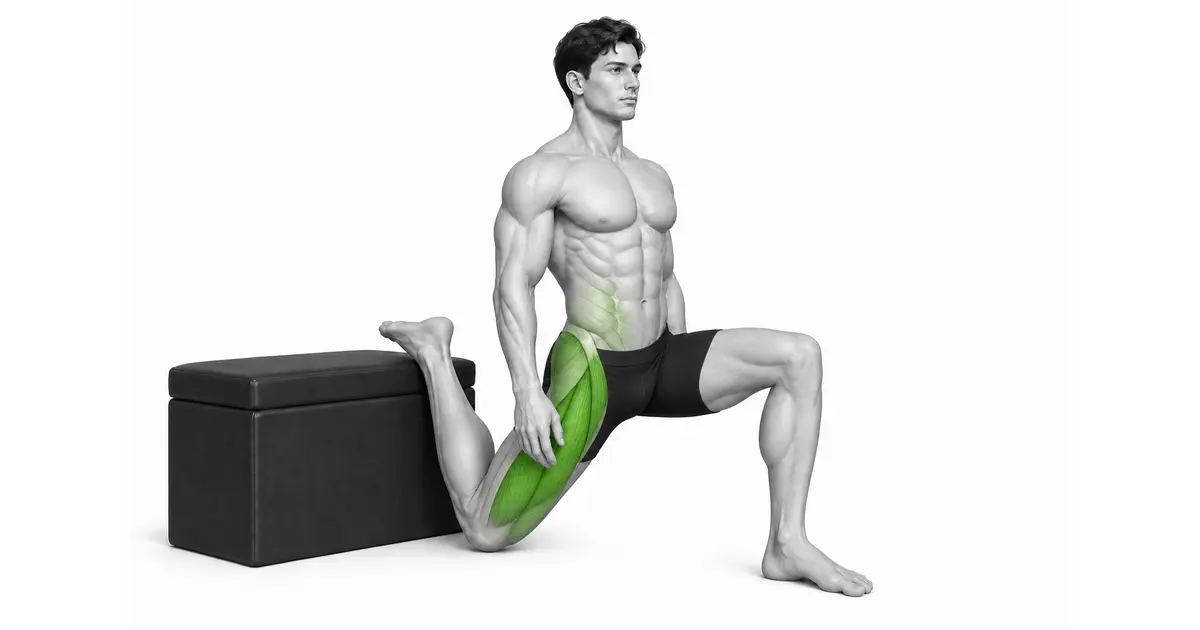
The couch stretch is not a competition to press your buttocks against the wall, but a posture that gradually stretches the rectus femoris and the front of the hip joint while keeping the pelvis close to neutral.
The half-knee position with the back knee close to the wall or bench and the feet raised creates both knee bending and hip extension, providing a strong stretch to the rectus femoris and the front of the hip joint. If you place your knees too close to the wall and tilt your back, the target area will be blurred, although the range may seem large. Start in a regression position with your knees away from the wall and tighten your back glutes to control your pelvic position.
- Primary muscles
- Rectus femoris · Iliopsoas muscle
- Secondary muscles
- sartorius muscle, tensor fascia latae, abdomen, gluteal muscle
- Difficulty
- Intermediate
- Movement type
- Half-knee hip extension/knee bending stretching
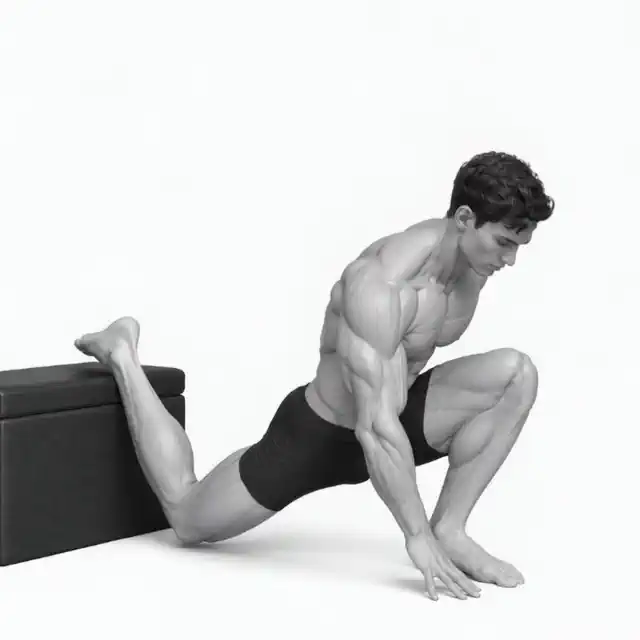
Should I put my knees against the wall?
No. Even if you place it far away from the wall, you will still get sufficient stretching if your pelvic alignment is good. Adjust the distance according to your comfort.
STEP BY STEP
4 Steps for One Complete Rep
- 1
Creating a low intensity position with knee pads
Place a thick pad in front of a wall or bench. Place your back knee 20 to 40 cm away from the wall and place the top of your foot on the support surface.
- 2
Align the front foot and pelvis in front
Place your front foot far enough forward so that your shins stand comfortably. Make sure both pelvic bones face forward and your body does not lean to one side.
- 3
Locking the pelvis with the rear glutes
Tighten the glutes of your back legs, feeling like you are pulling your tailbone down and down. Lower your lower ribs and do not arch your lower back.
- 4
Keep your torso erect and soft
Raise your torso as high as possible without changing your pelvic position. Breathe in for 20 to 45 seconds with wide tension in the front of the thighs and front of the hip joints, then slowly release.
PELVIS FIRST
Posterior pelvic tilt and gluteal contraction lengthen the front of the hips instead of the lower back.
Raising your ribs and tilting your lower back causes your pelvis to tilt forward, reducing hip extension. Exhale and tighten your back glutes.
Even if you cannot make your torso completely vertical, it is enough if your pelvis is stable and you can feel the target area.
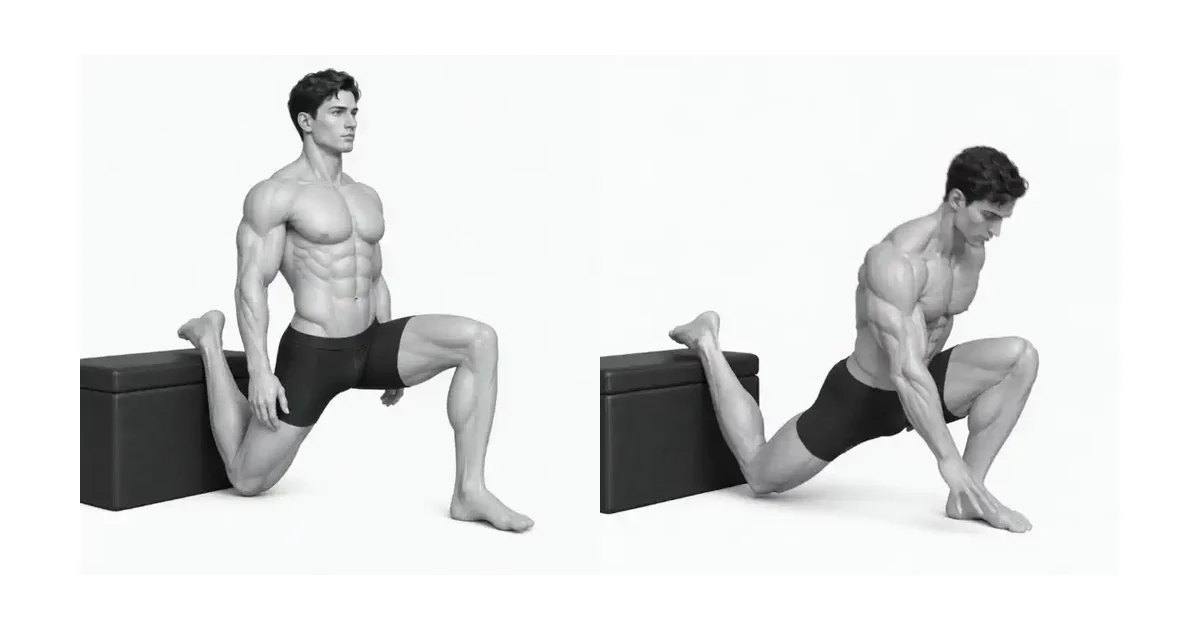
Key point: Cue to use right away: “Lower your ribs and tighten your buttocks.”
ADJUST THE DISTANCE
Distance between wall and knees is the easiest strength control device
The closer your knees are to the wall, the greater the knee bend and the stronger the rectus femoris tension. Stay away at first.
If you experience pressure in the front of your ankles or knees, lower the bench height, increase padding, or reposition your feet.
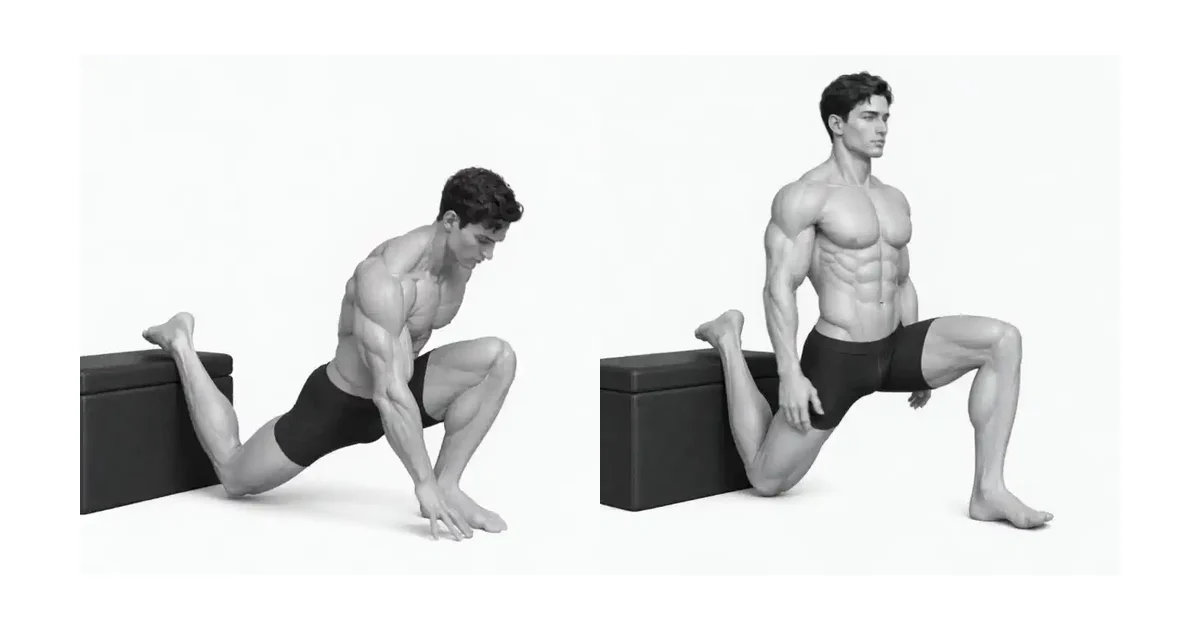
TROUBLESHOOTING
Fix the cause of a mistake, not just its appearance
Tilt the waist and raise the torso
- What you see
- Ribs are lifted and pressure is felt in the lower back, but tension in the front of the thighs is reduced.
- Likely cause
- Prioritized vertical posture over hip range.
- How to correct it
- Move your torso slightly forward, exhale and re-lock your pelvis with your glutes and abdominals.
Knees against the wall from the beginning
- What you see
- Strong pressure is created on the front of the knees and ankles, making it difficult to maintain posture.
- Likely cause
- Started with maximum knee flexion.
- How to correct it
- Move your knees away from the wall and return to a low bench or floor feet position.
Pelvis rotated sideways
- What you see
- The body twists toward the front feet and the hind leg pelvis opens outward.
- Likely cause
- Used pelvic rotation to avoid robbery.
- How to correct it
- Widen your stance a little and reduce the range with both pelvic bones in front.
REGRESSION & PROGRESSION
Match the difficulty before adding load
Half-knee hip flexor stretch
Place your back foot on the floor and learn the pelvic position.
Low Bench Couch Stretch
Reduces knee bending requirements.
Couch stretch away from wall
Increase time with a stable pelvis.
Couch stretch close to wall
Increase range gradually only when your knees are comfortable.
BEGINNER PROGRAM
A practical starting framework
You can use 15-30 seconds for a short warm-up, or 30-60 seconds for a separate flexibility session. Maintain wide tension that allows breathing rather than strong pain.
Time
20–60 seconds each
3 to 6 comfortable breaths
Set
1–3 sets each
Performs both left and right
Frequency
3–7 times a week
Adjust according to knee response
- As you maintain breathing and pelvic alignment, slowly move your knees toward the wall.
- If you experience back pressure, knee pain, or numbness in your feet, immediately reduce the distance and time.
- Maintain the stretching intensity at a wide tension of 5 to 7 out of 10.
Frequently asked questions
Is it normal to feel tightness in your lower back?
Target is the front of the thigh and front of the hip joint. If your lower back is tight, lower your ribs, tighten your glutes, and place your torso slightly forward.
Can I do it for a long time before exercising?
Before exercise, it is better to keep it short and combine it with dynamic movements. Place long static holds after your workout or in a separate session.