CRUNCH
Crunching is not a movement that lifts the upper body high, but a movement that keeps the neck relaxed and slightly curls the ribcage.
Crunches are an exercise that involves lying down and using your abdomen to roll up your ribcage enough to lightly lift your shoulder blades off the floor. Neck position and hand assistance can affect the use of neck muscles, but no one head position is best for everyone. The goal of this guide is to create repeatable movements in a small, pain-free range without pulling your head with your hands.
- Primary muscles
- Rectus abdominis
- Secondary muscles
- Obliques, transversus abdominis, hip flexors
- Difficulty
- Beginner
- Movement type
- Torso Flexion
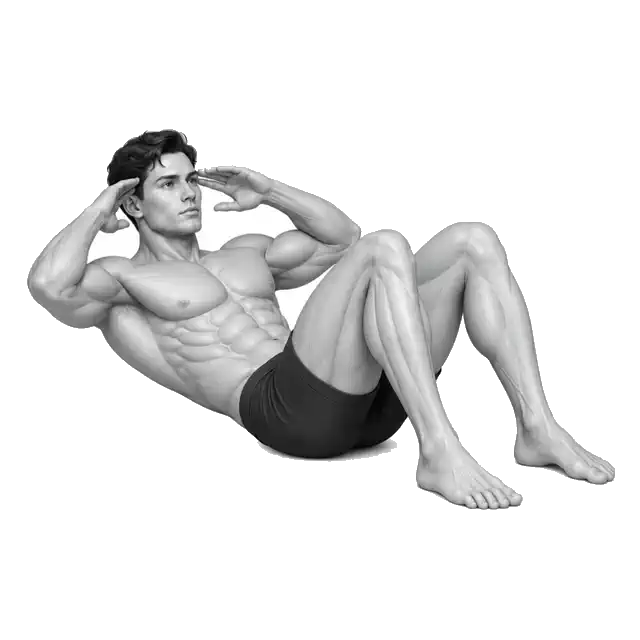
Can I put my hands behind my head?
It is possible, but the condition is not to pull your hair. It's easy to check your neck strength by lightly placing your fingers next to your temples.
STEP BY STEP
6 Steps for One Complete Rep
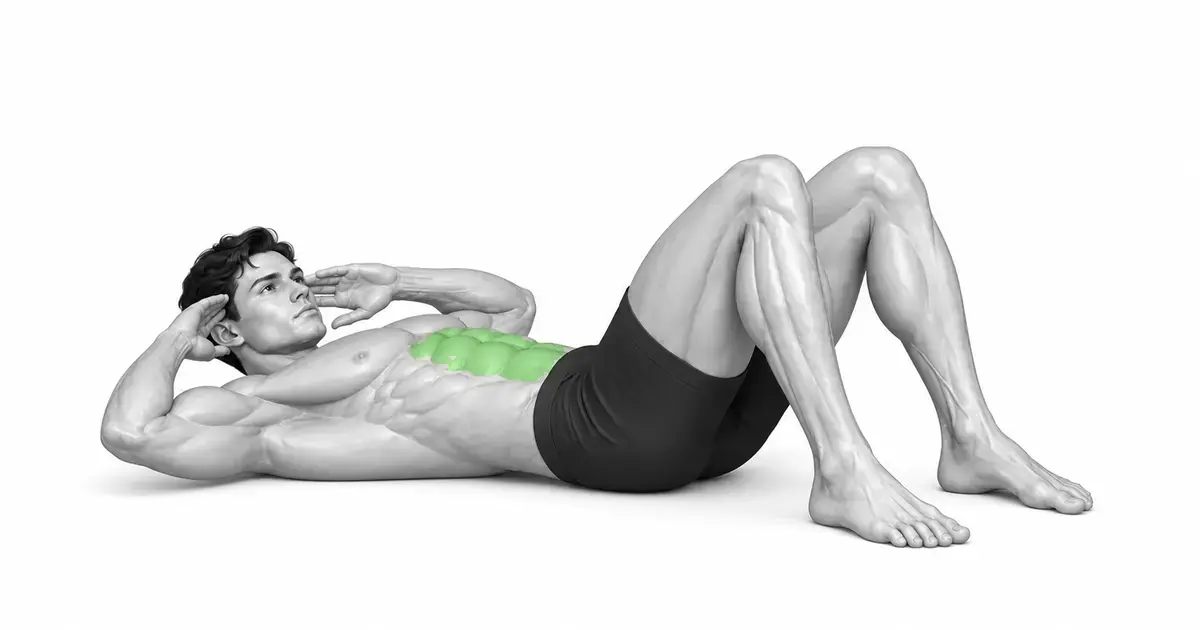
- 1
Lie on your back on a comfortable surface
Lie down on a mat and place the soles of your feet on the floor. If you have back or neck pain, don't force yourself to start.
- 2
Bend knees and evenly place foot pressure
Bend your knees comfortably and keep your feet flat. Do not push yourself up with your legs.
- 3
Place your fingers lightly next to your temples
The hands only support the head and do not pull the head forward. Place your elbows in a comfortable direction.
- 4
Exhale and slightly roll up your ribcage.
Lightly tighten your stomach and raise your shoulder blades to a level where they are slightly off the floor. Do not force your chin to your chest.
- 5
Stop in a comfortable range for your neck and shoulders
If the front of your neck feels tense first or your lower back feels uncomfortable, lower the height. There is no need to sit your upper body fully.
- 6
Slow down and reset before next repeat
Quietly lower your shoulder blades to the floor, and recheck the positions of your hands, neck, and feet. If you experience any bounce, end the set.
RIB CAGE
A small rib cage roll is sufficient.
The scope of the crunch is not to raise the upper body high, but to gently move the ribcage towards the pelvis with the abdomen.
If you start using your hip flexors or kickbacks to get higher, it becomes difficult to replicate the same movement. Repeat in small, pain-free ranges.
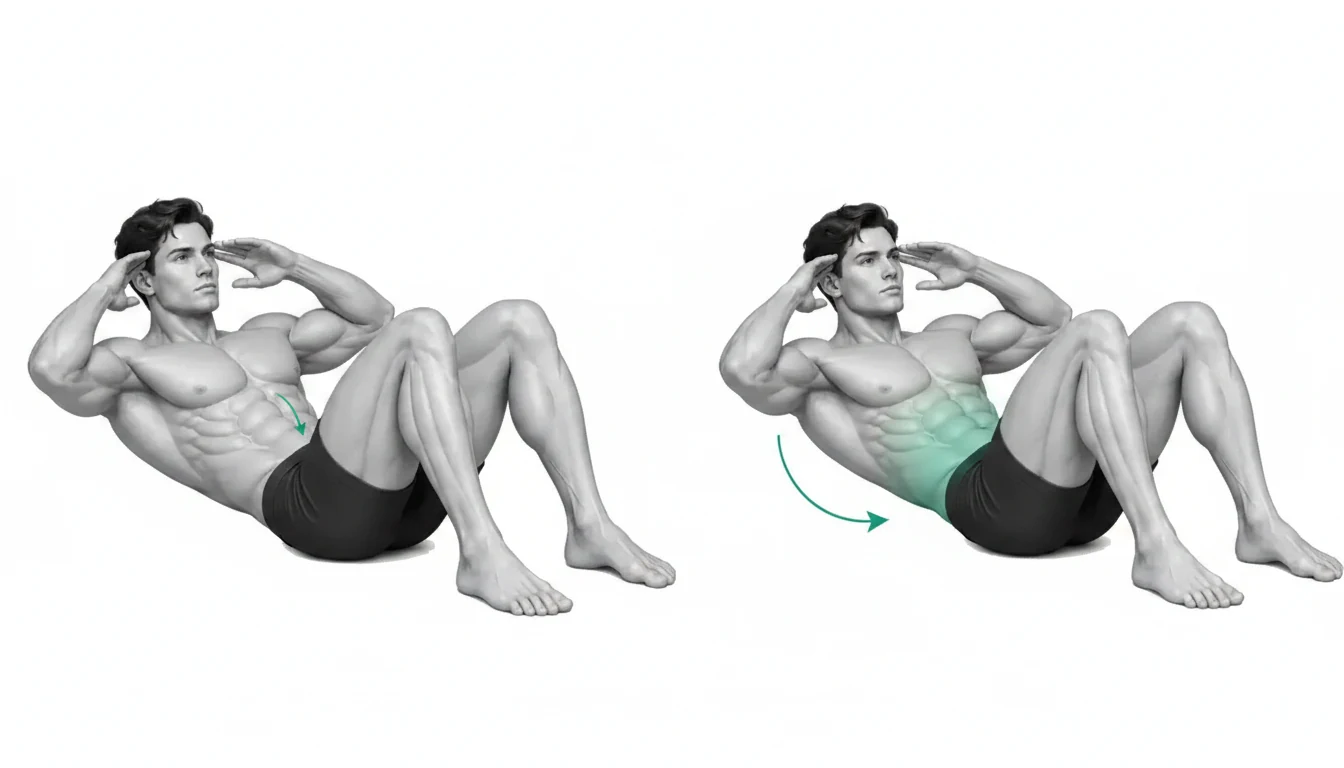
Key point: Practice cue: “Gently roll your ribs toward your pelvis and keep your neck long.”
NECK SUPPORT
Support your hands and do not pull your neck
Neck discomfort may increase when you pull your head with your hands or forcefully fold your chin. Keep your fingers light and your gaze comfortably in front of you.
Discontinue immediately if sharp pain in the neck, numbness, or headache occurs. Do not forcibly fix your neck and endure the discomfort.
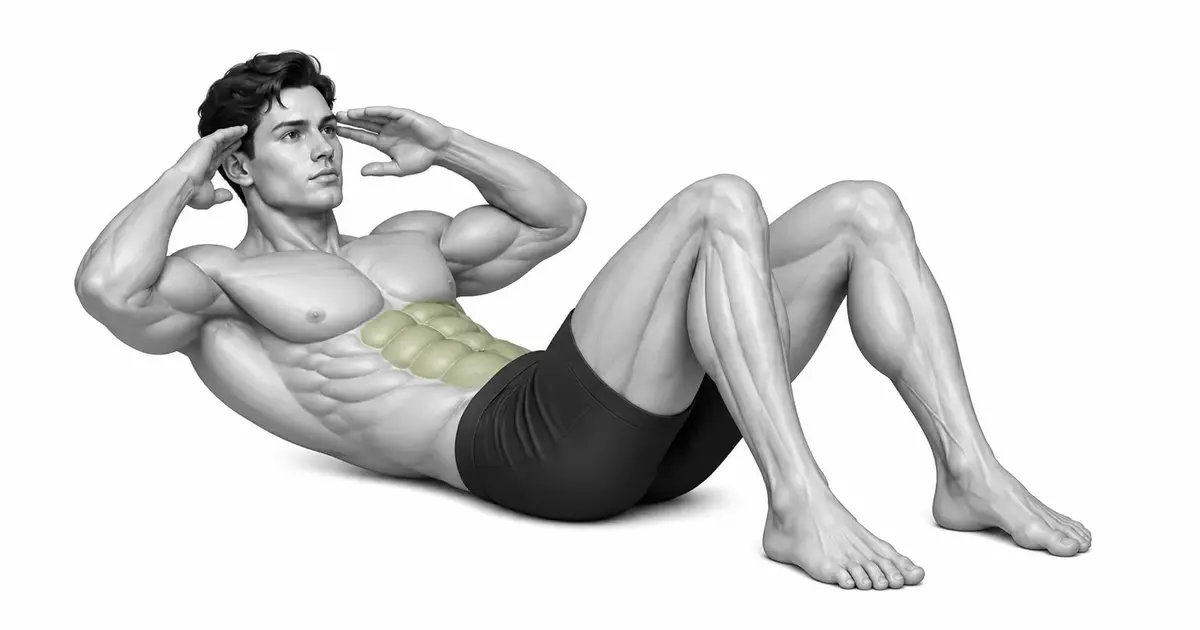
Key point: Check: There is no pulling feeling between the hands and neck, and the chin is comfortably spaced apart.
RANGE CONTROL
Proceed only within the range that can be lowered without recoil.
Stopping at the top or using a longer range is only considered when the base crunch is stable. If your feet lift with each repetition or your lower back feels uncomfortable, the current variation may be fast.
The number of repetitions, speed, and range are not increased at once. Raise just one variable to control the same range without neck and back discomfort.
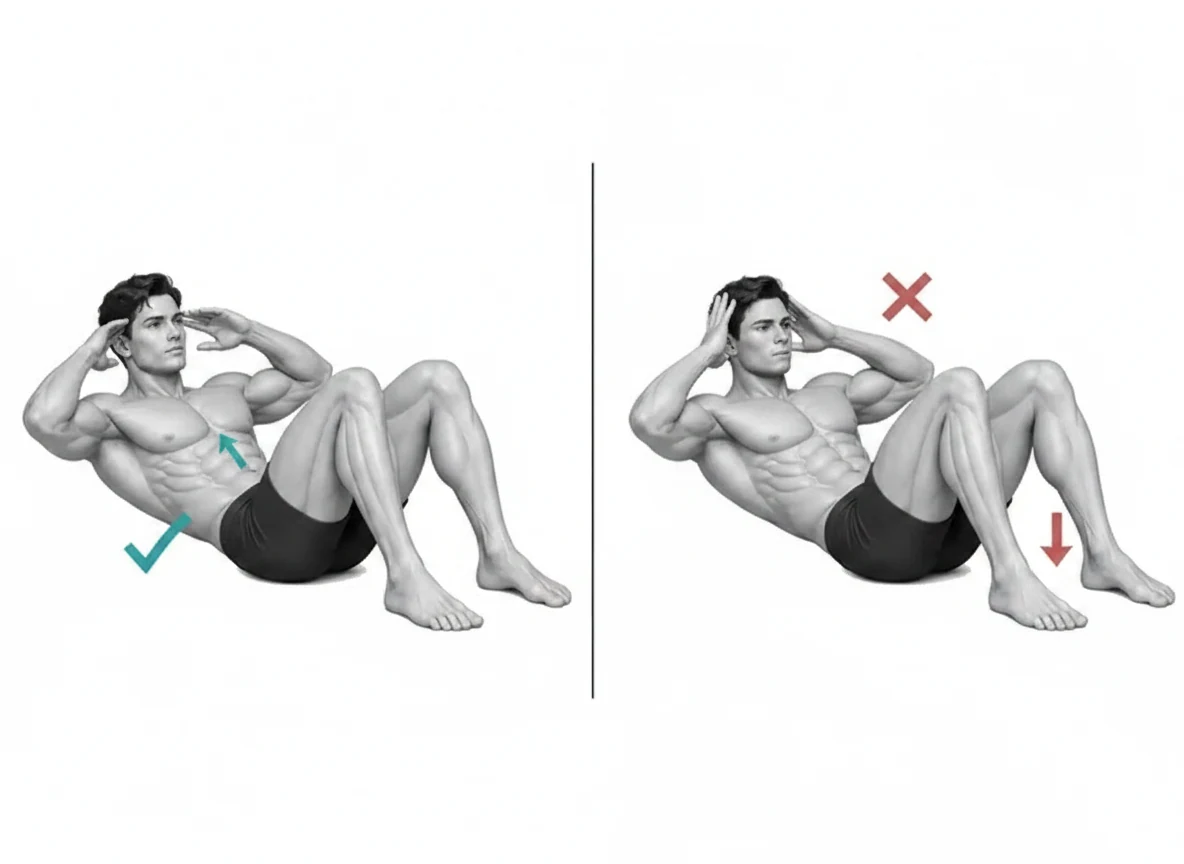
Key point: Progression Principle: If your neck or back feels uncomfortable, lower the height and number of repetitions and return to the previous step.
TROUBLESHOOTING
Fix the cause of a mistake, not just its appearance
Pull your hair with your hands
- What you see
- My chin is pressed against my chest and the front of my neck gets tired first.
- Likely cause
- You may try to raise your upper body with your arms instead of your stomach.
- How to correct it
- Keep your hands light and lower the range.
Trying to sit down fully
- What you see
- The upper body rises significantly, the feet are lifted, or the pelvis shakes.
- Likely cause
- You might want to get into sit-up range rather than crunches.
- How to correct it
- Returns the shoulder blades to a slightly lifted range.
Repeat with recoil
- What you see
- It bounces up as soon as it comes down.
- Likely cause
- Current number of iterations may be out of control.
- How to correct it
- Lower speed and number of iterations.
Ignore back discomfort
- What you see
- Sharp pain or numbness in the lumbar spine.
- Likely cause
- Current range or variant may not be correct.
- How to correct it
- Stop immediately and consult a specialist if necessary.
Feet are pushed off the floor
- What you see
- Heel lifts during repetition.
- Likely cause
- You may be pushing yourself up with your legs.
- How to correct it
- Re-adjust foot pressure and reduce range.
Hold your breath
- What you see
- Excessive force is applied to the face and neck.
- Likely cause
- You may want to hold on to the power at the top.
- How to correct it
- Exhale gently when going up and inhale when coming down.
REGRESSION & PROGRESSION
Match the difficulty before adding load
Short Range Crunch
Start with a small range that is comfortable for your neck and back.
Basic Crunch
Repeat rib cage roll-up and controlled lowering.
Top Stop Crunch
Short pause only when base range is stable.
Slow descending crunch
Only slows down when controlling the descent without kickback.
BEGINNER PROGRAM
A practical starting framework
Use as abdominal assistance exercises in a pain-free range, 2–3 times a week. In the first two weeks, prioritize neck and back comfort and speed without kickback over number of repetitions.
Number of iterations
8–15 times
Range that does not pull the neck
Number of sets
2–3 sets
Rest 45–60 seconds between sets
Progress
+1–2 times or +1–2 seconds
When all iterations are comfortable, just add one
- If your hands do not pull your head by the last repetition and your neck and back are comfortable, make small progress in the next session.
- If you experience kickbacks, foot lift, or neck discomfort, end the set and lower the range or reps on the next set.
- Distinguish between muscle fatigue and sharp pain, numbness, and headache. Do not continue if you have symptoms.
Frequently asked questions
Is the higher you lift your upper body the better?
No. The goal is to control and roll up the ribcage within a pain-free range.
Can I continue if my throat hurts?
No. Stop immediately and adjust range/hand position. If pain persists, do not proceed with the modification.
Do I need to secure my feet?
There is no need to force your feet. Find a position where the soles of your feet comfortably touch the floor and you can repeat the exercise without kicking back.
When can I proceed?
Increase either the holding time or the number of repetitions by a small amount only when controlling the same range for all repetitions without causing neck or back discomfort.