CYCLING
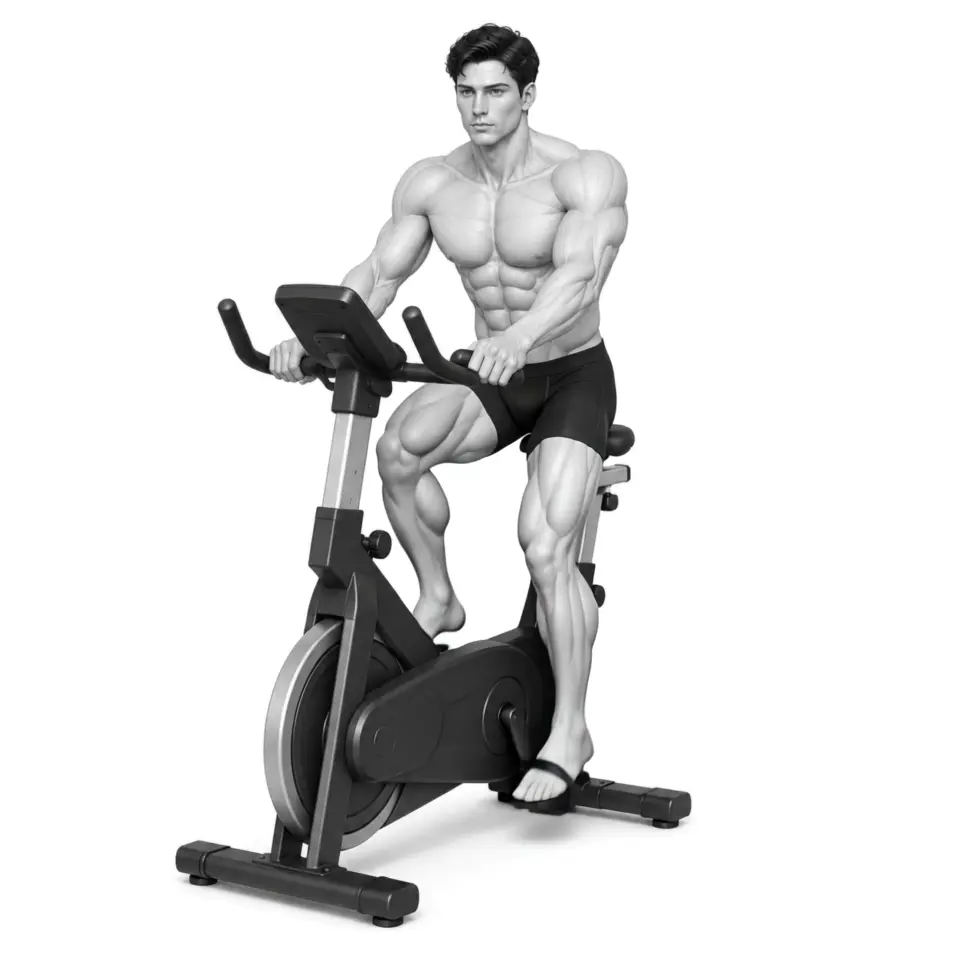
Indoor cycling is not an exercise that involves pedaling with heavy resistance, but rather an aerobic exercise that involves adjusting the saddle and foot position and maintaining a rhythm so that the knees rotate in a natural path.
Bicycles have relatively low shocks, but if the saddle is too low or your feet are unsteady on the pedals, you may experience recurring discomfort in your knees and hips. When standing next to the saddle, adjust it to approximately hip height and check whether your knees are slightly bent at the lowest point of the actual pedal. Warm up with light resistance and increase your time at a cadence that keeps your upper body steady.
- Primary muscles
- Quadriceps, gluteus maximus
- Secondary muscles
- Hamstrings, calves, hip flexors, core
- Difficulty
- Beginner
- Movement type
- Continuous Pedaling
How do I quickly adjust the saddle height?
Take your pelvic height as an initial standard, and actually ride it to see if your pelvis doesn't rock at the bottom of the pedal and your knees are slightly bent.
STEP BY STEP
4 Steps for One Complete Rep
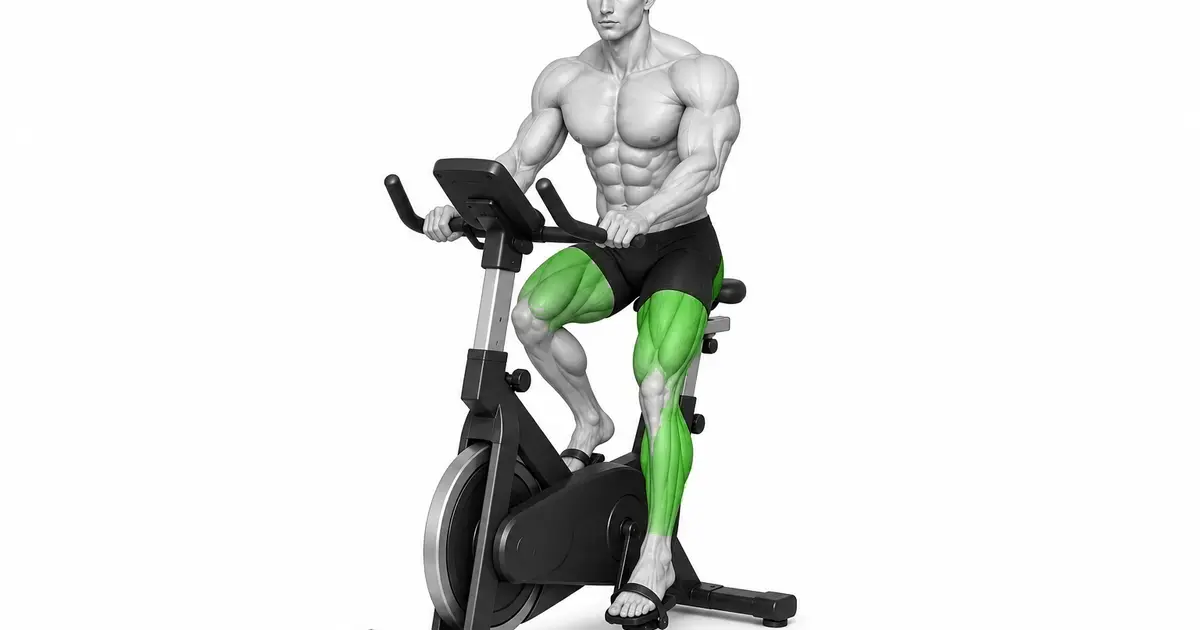
- 1
Adjust saddle height and front/rear position
Adjust the height so that the knees are slightly bent and the pelvis is not tilted at the lowest point of the pedal. Adjust the front and rear positions to a point that is comfortable for your knees and pedal path.
- 2
Keeping your feet and hands stable
Place the ball of your foot close to the pedal axle and tighten the strap. Hold the handle lightly, lower your shoulders, and keep your elbows soft.
- 3
Pedaling smoothly with light resistance
Let your knees move up and down in the direction of your toes. Maintain a cadence that keeps your hips from rocking side to side on the saddle.
- 4
Increasing resistance or time by one step
Warm up for at least 5 minutes, then gradually adjust the resistance or speed depending on your goal. Before ending, lower the resistance and recover slowly.
FIT BEFORE EFFORT
Make sure your saddle height is right so your knees and hips stay stable through the loop.
If the saddle is too low, the knee bend will increase at the top of the pedal, and if it is too high, the pelvis will rock from side to side at the bottom.
After meeting the initial standard, adjust in 0.5 to 1 cm increments and do not forcefully maintain an uncomfortable position.
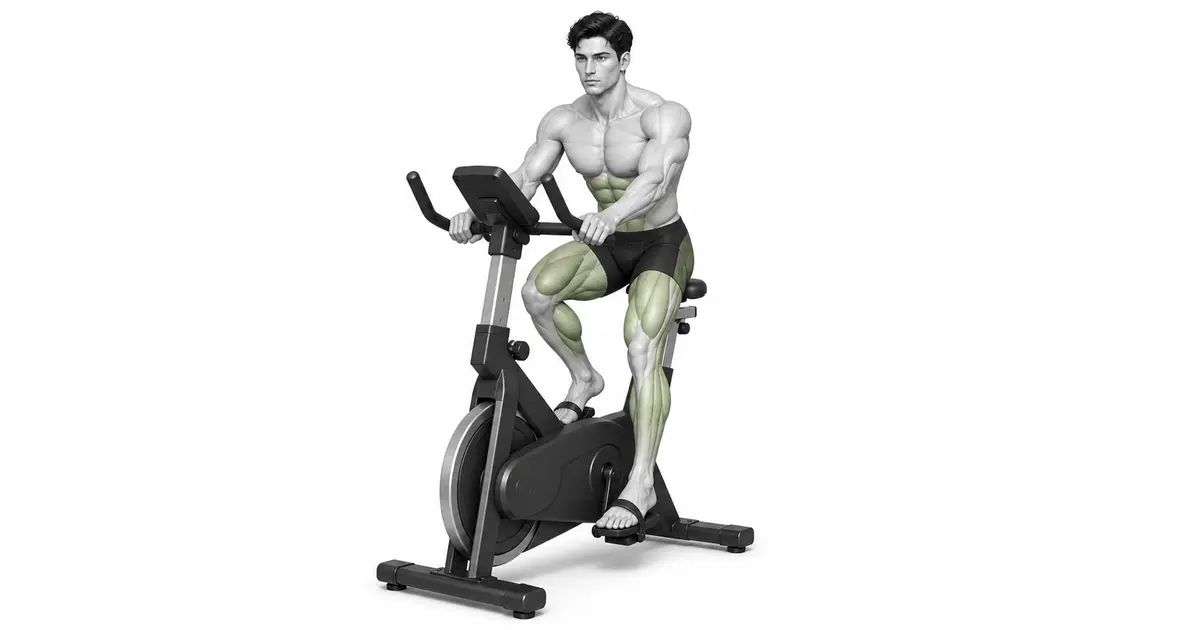
Key point: Cue to use right away: “Quiet your pelvis, keep your knees toward your toes.”
ENOUGH RESISTANCE
If the resistance is too light, the pedal will bounce and joint control will be difficult
If your feet can't keep up with the pedal speed and your hips are bouncing, lower your cadence or add a little more resistance.
Conversely, if your knees move inward or you twist your upper body when you step on heavy resistance, it will immediately lower.
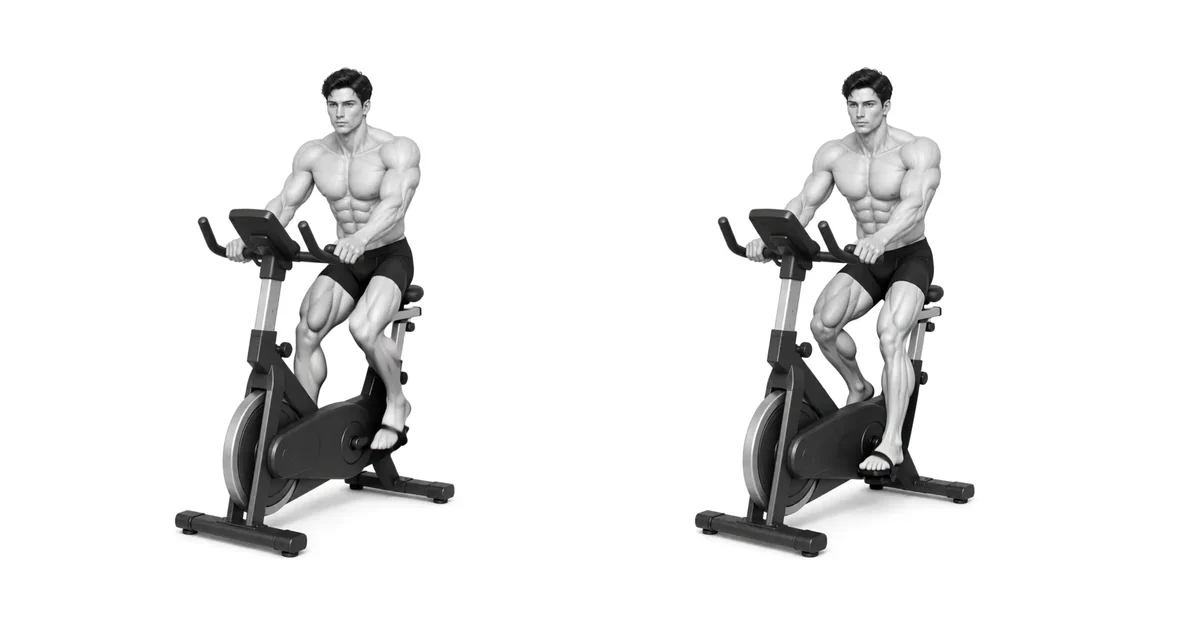
TROUBLESHOOTING
Fix the cause of a mistake, not just its appearance
Saddle too low
- What you see
- The knee bends significantly at the top of the pedal and the front knee is uncomfortable.
- Likely cause
- The saddle has been lowered excessively so that your feet can easily touch the floor.
- How to correct it
- Raise the pedal little by little from the lowest point to a height where your knees are slightly bent.
Pelvis shakes from side to side
- What you see
- My hips lift/tilt off the saddle at every bottom of the pedal.
- Likely cause
- Saddle is too high or cadence is excessive.
- How to correct it
- Lower the saddle slightly and reduce the revs to a controllable level.
Leaning the upper body excessively on the handle
- What you see
- My palms and shoulders hurt and my neck feels tense.
- Likely cause
- The handle is too far away or there is too much resistance, so I hold on with my upper body.
- How to correct it
- Adjust the handle, lower the resistance, keep your hands light and your torso supported.
REGRESSION & PROGRESSION
Match the difficulty before adding load
Interval Training
improve calorie consumption efficiency by repeating high and low intensity.
Increased time and resistance
Strengthen your stamina by increasing performance time or increasing the resistance level of the machine.
BEGINNER PROGRAM
A practical starting framework
Start with 20-30 minutes or short intervals at a comfortable intensity. Do not increase time, cadence, and resistance all at once, but check the condition of the area where your knees contact the saddle.
Frequency
3-5 times a week
If your goal is to lose body fat, it is important to do it consistently.
Volume
20~40 minutes
Gradually increase the time according to your fitness level.
- Do this while drinking plenty of water.
- Protect your joints through light stretching before and after exercise.
Frequently asked questions
Which is better, fast cadence or heavy resistance?
Depends on your goals. Adjust one element at a time as long as you can maintain the position, and lower if your hips bounce or your knees collapse.
Can I keep riding if my knees hurt?
Immediately check saddle, foot position, and resistance. If sharp pain persists after adjustment, stop and consult a specialist.