DEAD BUG
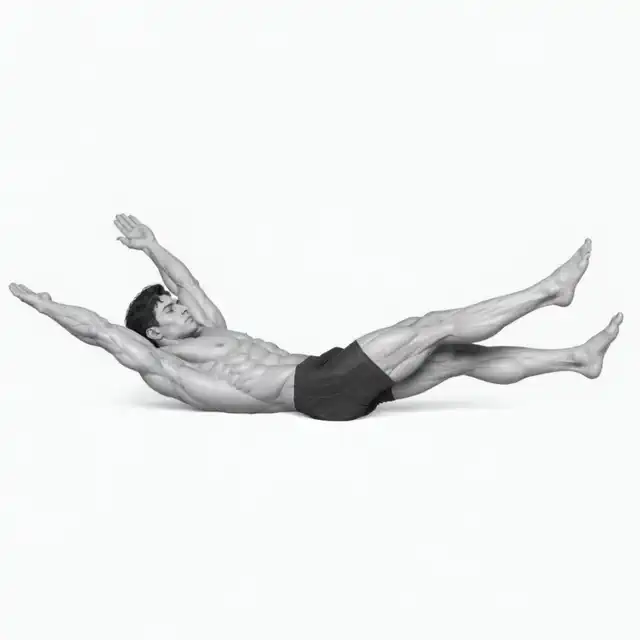
Dead bug is not an exercise that lowers the limbs to the floor, but rather an anti-extension exercise that keeps the lower back and pelvis still when the opposite arm and leg move away.
If you lie on your back, raise your arms, bend your hips and knees to 90 degrees, and extend the opposite arm and leg, your torso will rotate and you will have the force to lift your lower back. The abdomen serves to stabilize the ribs and pelvis rather than directly move the limbs. Start with variations that involve only heel tabs and arm movements, and only use ranges where your back position doesn't change.
- Primary muscles
- Transverse abdominis · Rectus abdominis
- Secondary muscles
- Obliques, iliopsoas, serratus anterior
- Difficulty
- Beginner
- Movement type
- Recumbent Crossed Limb Antiextension
Should I press my lower back hard into the floor?
Rather than pushing hard, it's important to stabilize your ribs and pelvis so your back curve doesn't change during the repetition.
STEP BY STEP
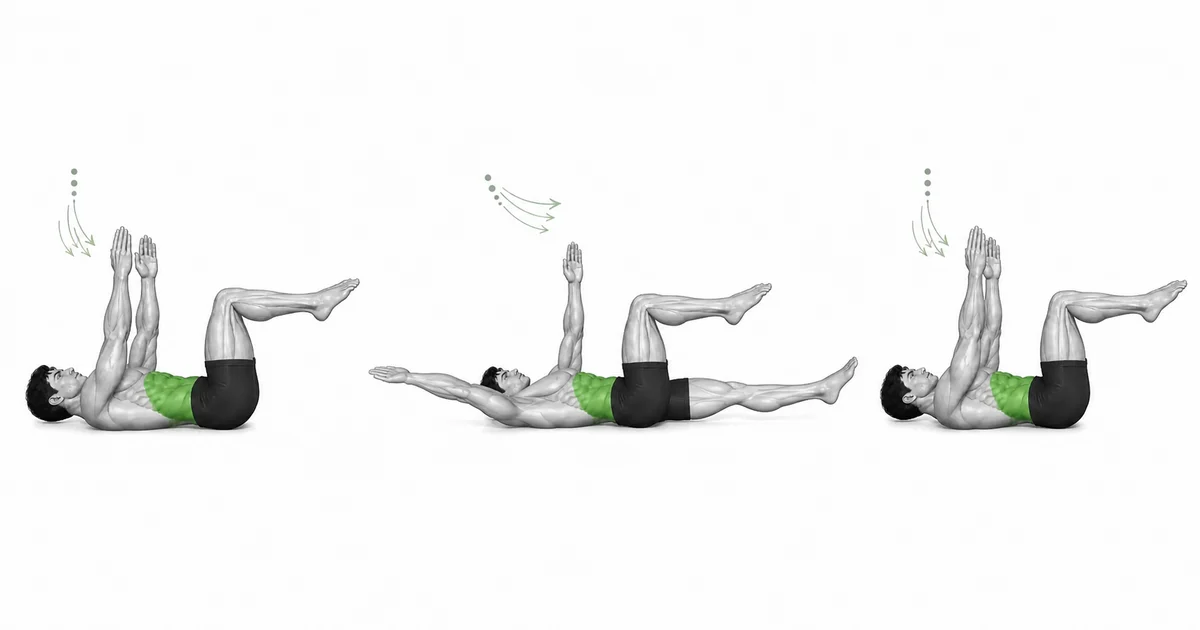
4 Steps for One Complete Rep
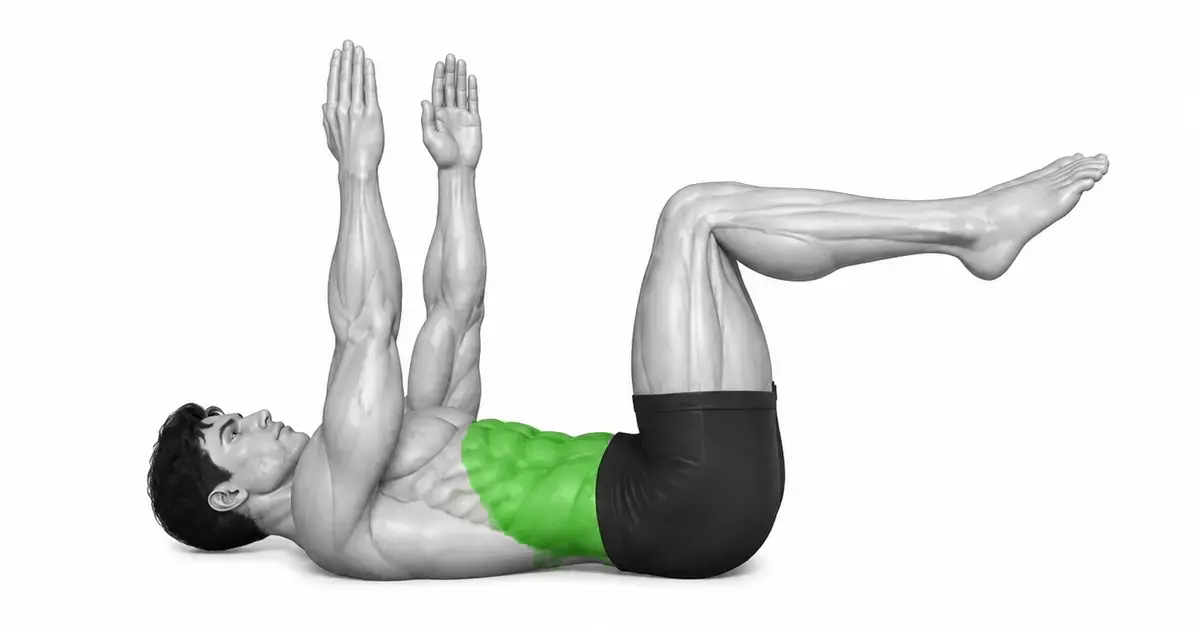
- 1
Creating tabletop posture and arm positions
Lie on your back, extend your arms over your shoulders, and bend your hips and knees to approximately 90 degrees. Place your head and shoulders comfortably on the mat.
- 2
Exhale and stabilize the torso
Exhale long, lower your lower ribs and keep your pelvis neutral or slightly posteriorly tilted. Do not force your lower back and maintain the position.
- 3
Slowly extend opposite arm and leg
Raise your right arm overhead and left leg toward the floor for 2 to 4 seconds. Stop before your lower back rises or your pelvis rotates.
- 4
Return to center and repeat on the other side
Exhale and bring your arms and legs to the starting position. Reset your torso and extend your opposite arm and leg to the same extent.
THE TRUNK STAYS QUIET
The limbs should move and the ribs, pelvis, and lower back should remain quiet.
The lower your legs, the larger the lever that lifts your lower back. It is sufficient to maintain your torso without your feet touching the floor.
Place one hand on your waist or ribs to directly see the change in movement.
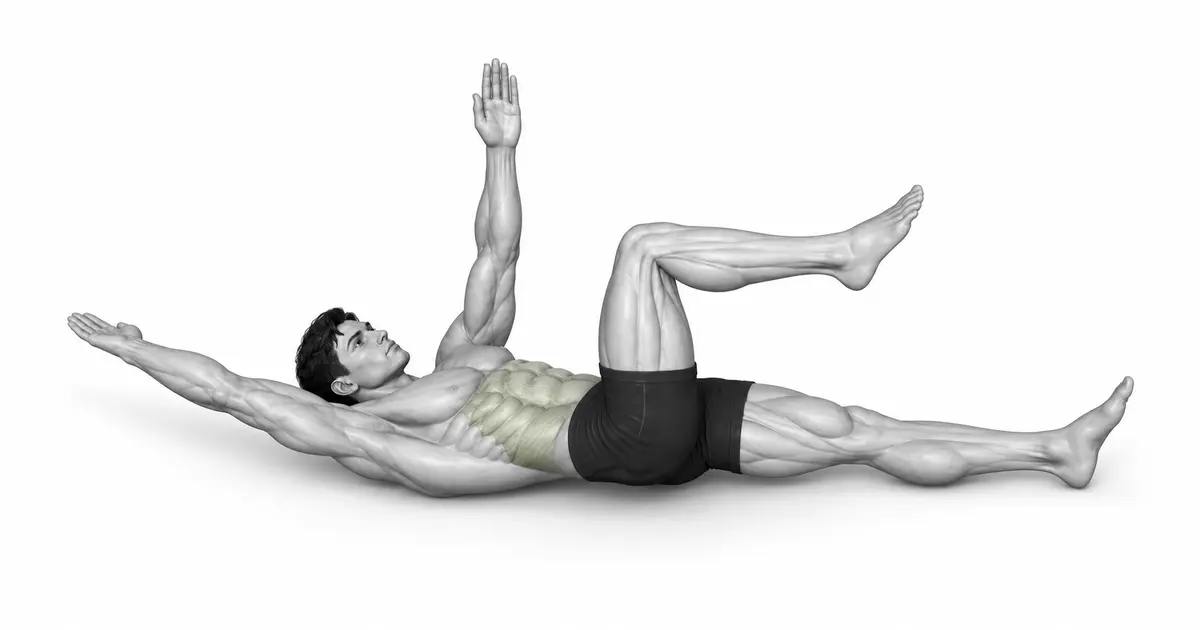
Key point: Cue to use right away: “Limbs away, ribs and pelvis intact.”
EXHALE INTO CONTROL
Long exhales help lower the ribs and maintain abdominal tension
Try taking a long exhale while extending your limbs and a short inhale as you return. You don't have to hold your breath completely.
If breathing causes you to lose alignment, start with an easy variation where you only move one arm or leg.
TROUBLESHOOTING
Fix the cause of a mistake, not just its appearance
Pain in the lower back when lowering the leg
- What you see
- The space between the mat and the waist increases and the ribs are lifted.
- Likely cause
- Leg lever and range exceed current anti-extension capabilities.
- How to correct it
- Bend your knees more, use your heel tabs, and lower your legs less.
Inadvertently moving the arm and leg on the same side
- What you see
- The torso leans to one side and the order changes from repetition to repetition.
- Likely cause
- Intersection pattern not fully learned.
- How to correct it
- Move only one arm or one leg at a time and then proceed with the opposite arm/leg pattern.
Elevates head and neck
- What you see
- My chin rests against my chest and my neck gets tired quickly.
- Likely cause
- Abdominal tension was compensated by upper body flexion.
- How to correct it
- Place your head on the mat, look toward the ceiling, and exhale to lower your ribs.
REGRESSION & PROGRESSION
Match the difficulty before adding load
Dead bug with only arms moving
Legs are fixed to the tabletop.
Heel Tab
Maintain your knee angle and lower only your heels.
Reverse arm and leg dead bug
Controls the cross lever.
Band resistance dead bug
Add resistance when torso alignment is sufficient.
BEGINNER PROGRAM
A practical starting framework
Can be used for warm-up or core sessions, ensuring equal left and right range and breathing. One slow stroke is more effective than many quick strokes.
Count
5–10 times each
Stretch 2-4 seconds
Set
2–4 sets each
30–60 seconds recovery after both sides
Frequency
3–6 times per week
Practice your skills with low fatigue
- If your lower back and pelvis are quiet, gradually increase your limb range.
- If you experience lower back moxibustion, torso rotation, or neck tension, try lowering it to one limb deformation.
- Prioritizes long exhalations and ranges such as left and right over speed.
Frequently asked questions
Do your heels have to touch the floor?
No. Lower only to a height that allows you to maintain your lower back.
What if it's too easy?
Start by slowing your descent and increasing limb range, then add bands or light loads only when your torso is fully maintained.