DEPTH JUMP
Depth jumping is not a courage exercise where you jump from a high box, but an advanced reactivity exercise where you quickly take a low impact of the fall and jump right back up again.
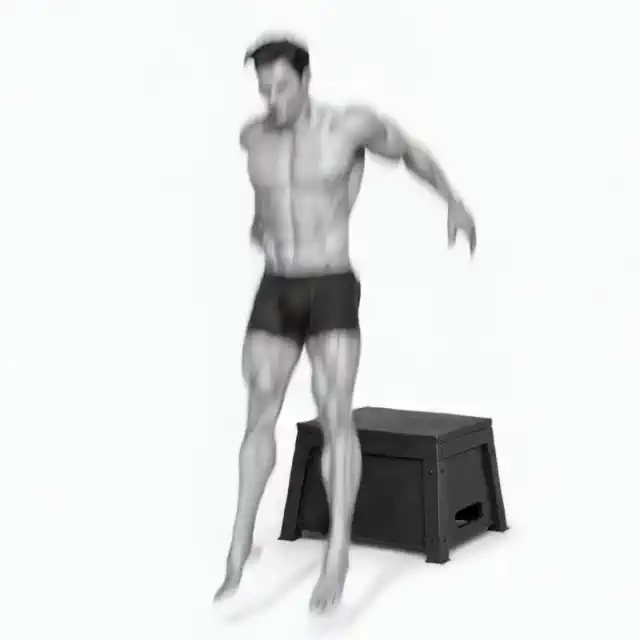
Depth jumps are done by stepping off the box onto one foot and immediately after landing on both feet, pushing off the ground as briefly as possible to transition into a vertical jump. Higher drops are not always effective, and they lose their responsiveness goals if they take longer to absorb impact and sit down too deeply or if their landing alignment is disrupted. Use in small quantities on low boxes only by trainers sufficiently skilled with regular jumps and drop landings.
- Primary muscles
- Quadriceps, gluteus maximus, calves
- Secondary muscles
- Hamstrings, Achilles tendon complex, core
- Difficulty
- Advanced
- Movement type
- Responsive vertical jump after drop landing
Is the higher the box the better?
No. If it is too high, contact time will be longer and alignment will be disrupted. Producing a quick and stable response at the lowest height is a priority.
STEP BY STEP
4 Steps for One Complete Rep
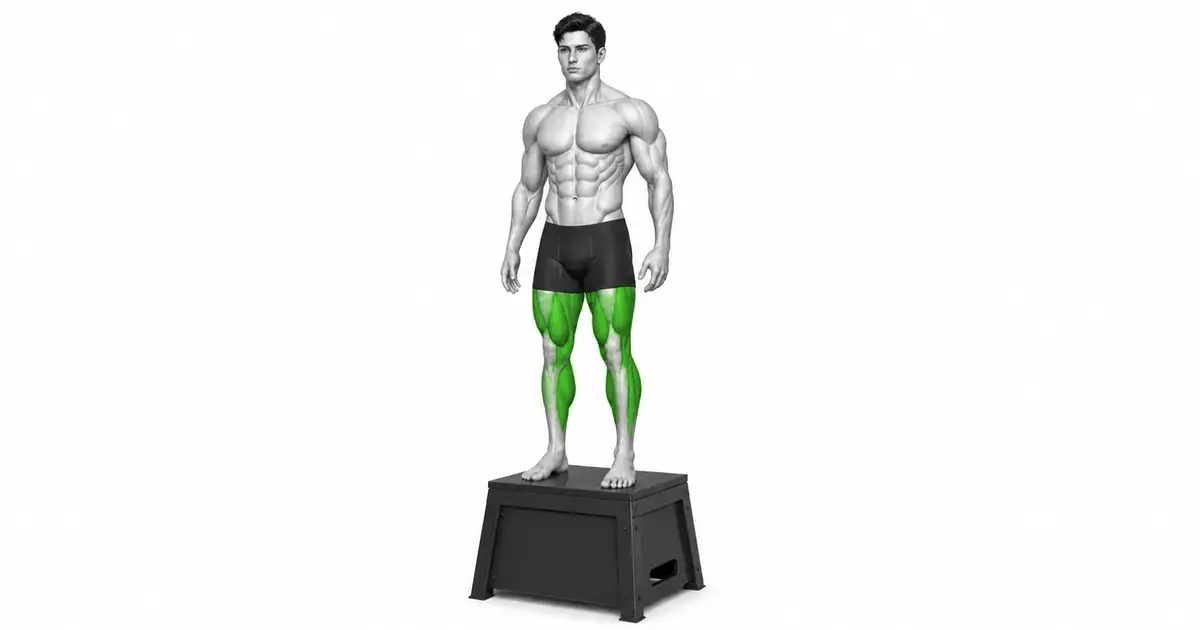
- 1
Prepare a low box and enough space
Start with a low, stable box about 15 to 30 cm high. Clear the landing area in front of the box and all overhead space.
- 2
Don't jump, get down on one foot
Step forward from the edge of the box and let your body fall naturally. Do not jump up or leap forward very far.
- 3
Pick up with both feet and immediately push to the floor
Touch the middle feet of both feet at about the same time and place your knees toward your toes. Instead of sinking down deeply, immediately jump upward using the elasticity of your ankles, knees, and hip joints.
- 4
Second Landing to a Soft Stop
After jumping again, bend all three joints sufficiently to absorb the shock and maintain balance for 2 seconds. Walk back to the box and do a complete reset.
STEP, DON'T JUMP
The first drop should only be as high as the box to ensure consistent comparison of responsiveness
Jumping up from the box increases the actual fall height, increasing impact and repetition variation. Put one foot out and allow your center of gravity to pass over the edge.
You must be able to repeat the same drop and simultaneous contact with both feet before increasing the height of the box.
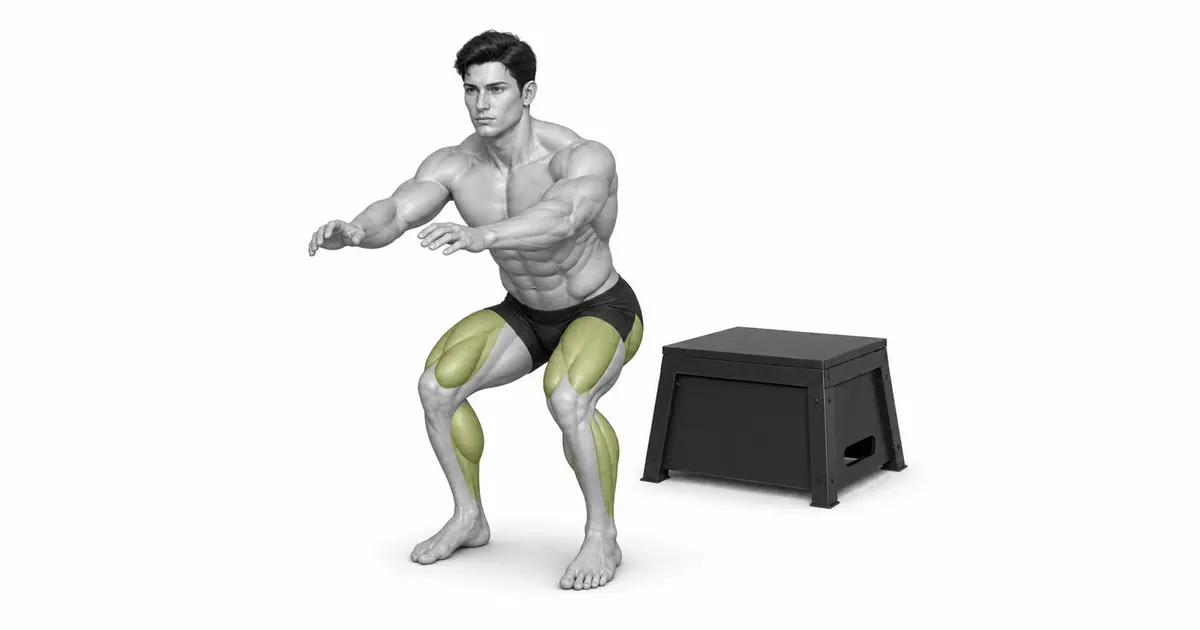
Key point: Cue to use right away: “Get down, reach briefly, and go straight up.”
SHORT CONTACT
Ground contact should be brief but not bounced with stiff knees
The ankle, knee, and hip joints must bend together to a small extent to store the shock and straighten immediately. If your knees are locked or brought in, the intensity is excessive.
If you sit deep after landing, stop, and then jump, it becomes a separate jump instead of a drop jump. Lower the box.
TROUBLESHOOTING
Fix the cause of a mistake, not just its appearance
Jumping up from the box
- What you see
- The fall is different every time and the impact of landing is felt significantly.
- Likely cause
- Made an extra jump in addition to the box height.
- How to correct it
- Put one foot forward, drop naturally and don't jump on the box.
Slumped deeply on first landing.
- What you see
- Long ground contact and pause like a squat before jumping again.
- Likely cause
- Fall height exceeds reactivity capability or landing technique is lacking.
- How to correct it
- Lower the box and revert to drop landings and low pogo jumps.
Jump again with knees collapsed inward
- What you see
- At first contact, the knees are inside the toes and the pressure on both feet is different.
- Likely cause
- Impact and speed are now beyond unilateral control.
- How to correct it
- Stop immediately and relearn the two-foot landing alignment from a lower height.
REGRESSION & PROGRESSION
Match the difficulty before adding load
Snap down and stick
Learn a quick landing posture from a low height.
Low box drop landing
Stop landing on both feet without rejumping.
Pogo Jump
Practice short ground contact and ankle elasticity.
Low Depth Jump
Chain reactive jumps when landing alignment is stable.
BEGINNER PROGRAM
A practical starting framework
This is an advanced exercise that puts a lot of strain on the nervous system and tendons, so perform only small amounts immediately after warming up. Contact time, re-jump height, and alignment are the criteria rather than height.
Count
2–5 times
Full reset on every iteration box
Set
3–5 sets
2–3 minutes recovery between sets
Frequency
1–2 times a week
Limited number of contacts with other high-intensity jumps
- Increase same-height repetitions only when short contact and vertical rejump are maintained.
- If you experience deep landings, knee collapse, or poor rejumping, end the set.
- Even if the technology is perfect, the box height is only raised slightly and does not aim for the maximum height.
Frequently asked questions
Should I jump right on my first landing?
Yes, if it's a reactive target, jump immediately after short contact, but if it's out of alignment, don't try it. First, you need to become skilled at drop landing.
What is the difference between depth jumps and box jumps?
Depth jump takes the impact of coming off the box and jumps back immediately, while box jump jumps from the floor onto the box. The landing and responsiveness required are different.