DRAGON FLAG
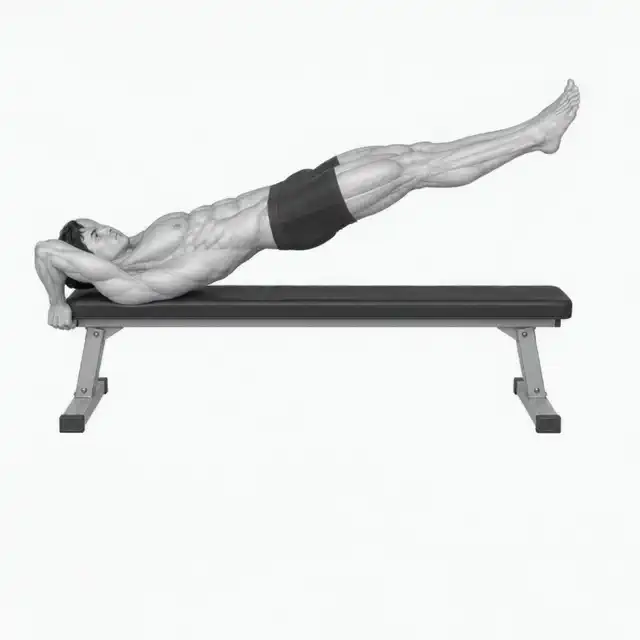
The dragon flag is not a trick of supporting the body with the neck, but a high-level anti-extension exercise that uses the shoulder blades and upper back as a support point and controls the entire body with a long lever.
The dragon flag, which involves holding onto the back of a bench, lifting your body above your shoulder blades, and then lowering your body in a long line from head to toe, places a very large demand on your abdominals and lats. It is dangerous to put your weight on your neck or lower your legs with your back bent. Starting with tuck dragon flag and single leg variations, use only a short eccentric range that leaves the shoulder blades on the bench and maintains rib and pelvic alignment.
- Primary muscles
- Rectus abdominis · Transverse abdominis
- Secondary muscles
- Lats, glutes, iliopsoas, quadriceps
- Difficulty
- Advanced
- Movement type
- Shoulder support long lever anti-extension
Can I hold on with my head and neck?
No. Your shoulder blades and upper back should be your fulcrum, and if you feel pressure in your neck, come down immediately.
STEP BY STEP
4 Steps for One Complete Rep
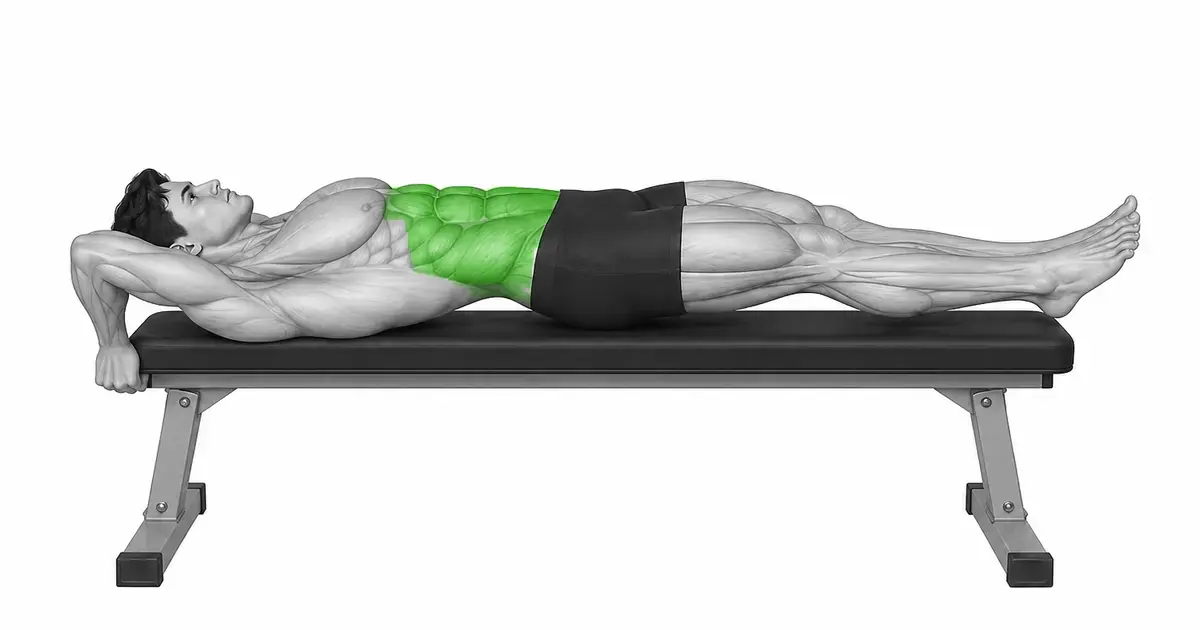
- 1
Checking fixed benches and grips
Make sure the bench does not lift or slide and hold the frame behind your head with both hands. Keep your elbows comfortably bent and your shoulder blades on the pads.
- 2
Roll your pelvis and lift it above your shoulder blades
Pull your knees toward your chest and squeeze your abdominals to lift your pelvis. Make your upper back and shoulder blades your point of support, not your neck.
- 3
Lengthen body with selected lever
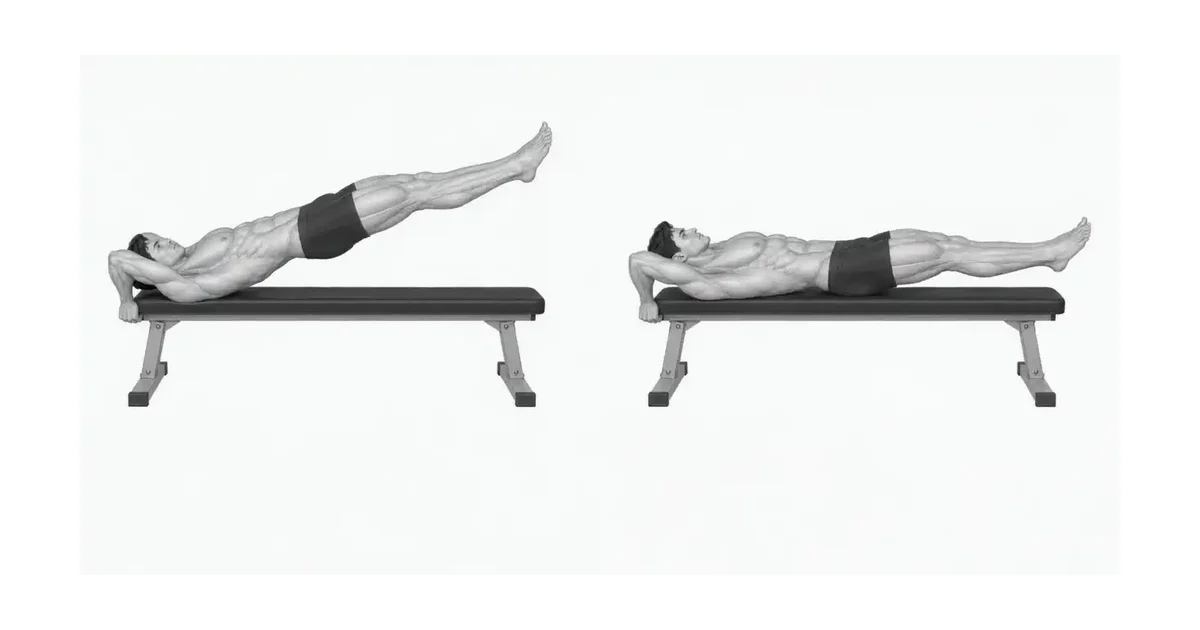
Beginners should do the chin position with the knees bent, then one leg, and experts should straighten both legs and keep them close to a straight line with the torso.
- 4
Lower yourself slowly until your back bends.
Lower your entire body to one line for 3 to 5 seconds. Just before your pelvis drops or your back gets wet, bend your knees and return safely.
SHOULDER-BLADE SUPPORT
Your body weight should be distributed across your shoulder blades and upper back, not your neck.
If you feel your chin pressing strongly against your chest or pressure on the back of your neck, come down immediately. Adjust the bench support position.
Arms pull into the bench to create lat tension, but do not push your neck into the pad.
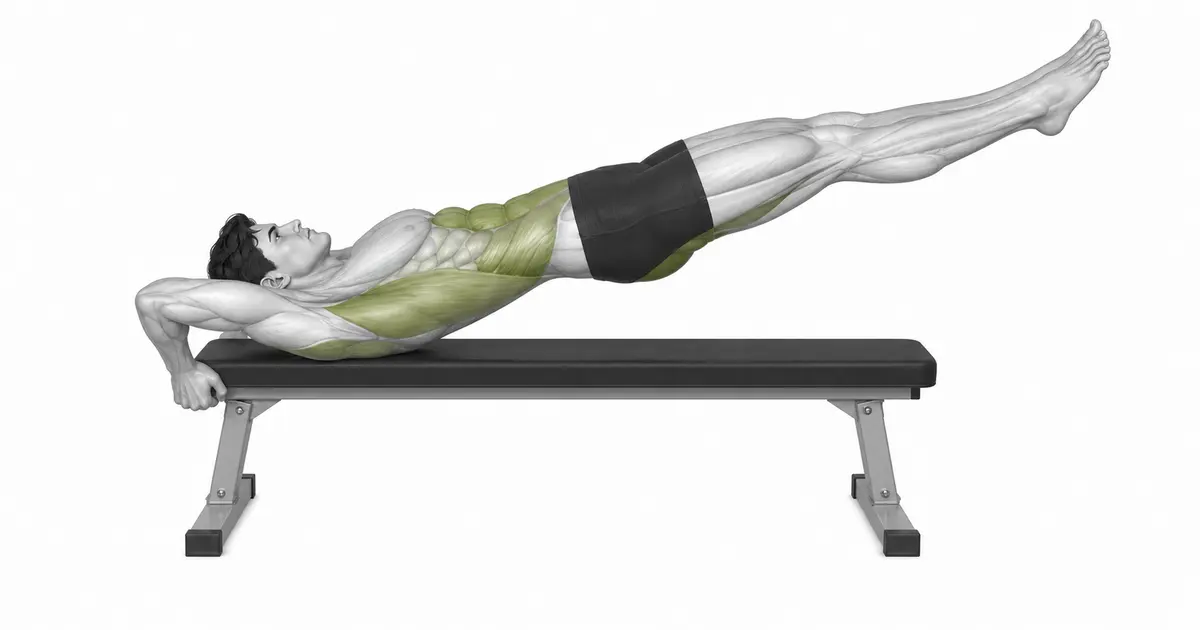
Key point: Cue to try right away: “Support with shoulder blades and lock ribs and pelvis.”
SHORTEN THE LEVER
Bending your knees is a key regression to maintaining alignment
When you straighten both legs, the lever suddenly becomes longer. A controlled lowering of the chin position is better than a full range of back arching.
For single leg variations, use left and right sides alternately to reduce asymmetry.
TROUBLESHOOTING
Fix the cause of a mistake, not just its appearance
Supports body with cervical vertebrae
- What you see
- Pressure and pain in the back of the neck and the chin pressing hard against the chest.
- Likely cause
- The shoulder blades have moved off the bench and the point of support has moved to the cervical spine.
- How to correct it
- Immediately bend your knees and return to the chin variation with shoulder blade support.
The pelvis falls first and the lower back bends.
- What you see
- Your body becomes banana-shaped and pressure is placed on your lower back.
- Likely cause
- Lever and lowering range exceeds current anti-extension capabilities.
- How to correct it
- Bend your knees and shorten your descent distance to overlap your ribs and pelvis.
Kick your leg up with a recoil
- What you see
- Bench shakes and upper body bounces off pad when rising.
- Likely cause
- Used leg inertia instead of abs and lats.
- How to correct it
- Perform an eccentric lowering only, folding your knees to safely reset to the starting position.
REGRESSION & PROGRESSION
Match the difficulty before adding load
Increased load and strength
Increase intensity by gradually increasing weight or shortening rest periods.
Complex Variant Behavior
Increase the difficulty level by combining it with other exercises or adding unstable environments.
BEGINNER PROGRAM
A practical starting framework
A quality set of 1 to 3 eccentrics is sufficient. Do not attempt full range of legs before you have achieved a controlled 5-second descent from tuck position.
Frequency
2-3 times a week
Appropriately place it in your whole body or specific area routine.
Volume
3~5 sets, 8~15 times
Adjust the number of reps and sets according to your goals.
- Always put safety first and listen to your joint pain.
- Carry out the entire process within your control.
Frequently asked questions
Do I need to do the rising motion as well?
Initially, it is sufficient to perform only a controlled eccentric descent and reset by folding the knees.
Do I have to straighten my legs?
No. Maintaining torso alignment is more important in chin or single leg variations.