DUMBBELL ARNOLD SWING
Drive the dumbbell with the hips instead of lifting it with the arm
“Dumbbell Arnold Swing” is not a standardized competition lift. In this guide, it means a one-arm dumbbell hip-hinge swing with a small forearm turn as the dumbbell approaches shoulder height. Learn the swing first: hinge with a long spine, drive the floor away, and let hip extension float the dumbbell. If the turn irritates the shoulder or wrist, omit it and use a regular one-arm dumbbell swing.
- Primary muscles
- Glutes · Hamstrings
- Secondary muscles
- Core · Anterior deltoid · Forearms
- Difficulty
- Intermediate
- Movement type
- Hip-hinge swing · Forearm rotation
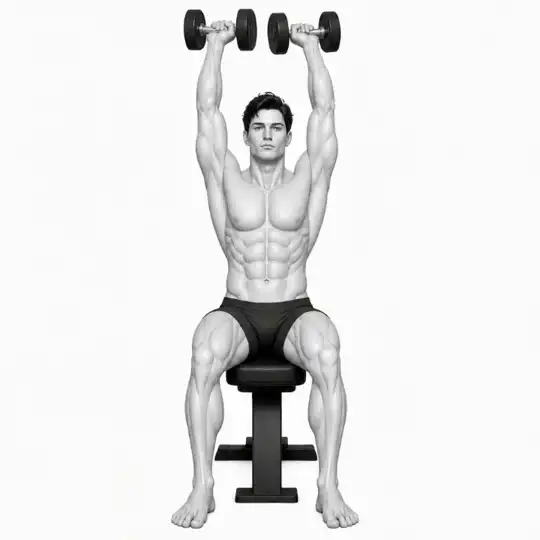
Is this the same as an Arnold press?
No. An Arnold press moves dumbbells from shoulder level to overhead. This guide defines the Arnold swing as a hip-driven one-arm swing with a small forearm turn below or near shoulder height.
STEP BY STEP
6 Steps for One Complete Rep
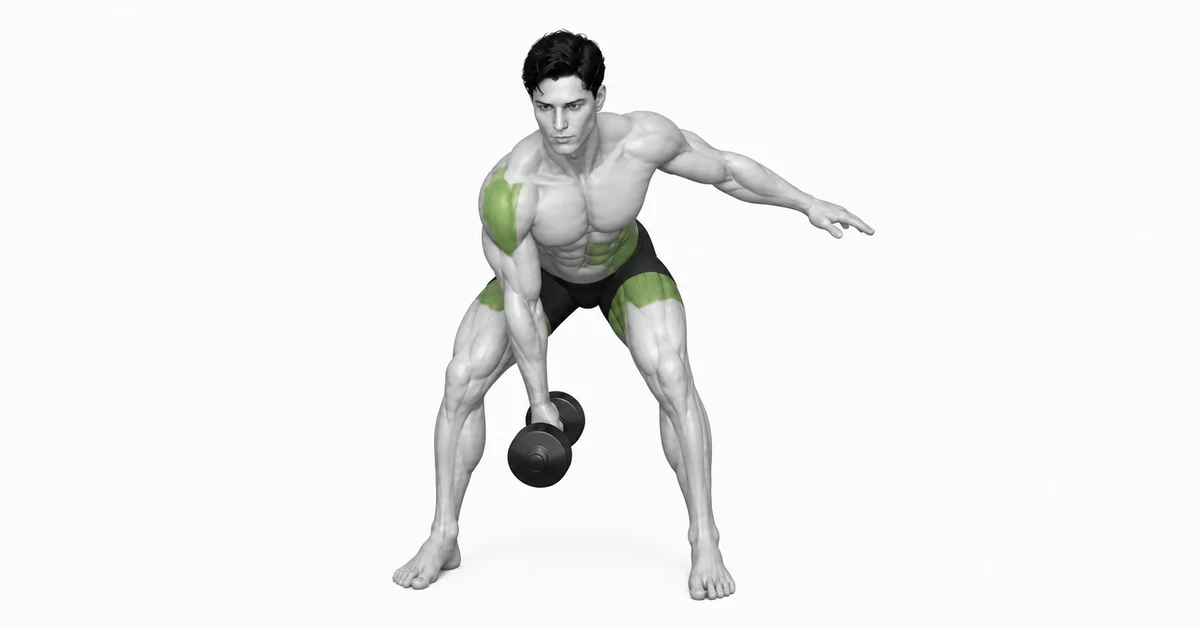
- 1
Choose a light dumbbell and clear space
Use a load you can control with one hand and clear the area in front and behind you. Check that the handle and your hand are dry.
- 2
Build a hip-hinge setup
Stand about shoulder-width and place the dumbbell slightly in front of one foot. Push the hips back, bend the knees slightly, keep the spine long, and grip the dumbbell with one hand.
- 3
Hike the dumbbell back
Guide the dumbbell close between the legs while bracing the trunk and armpit. Keep the arm long instead of pulling with the shoulder.
- 4
Drive through the floor
Extend the hips and knees so the dumbbell floats forward. Do not curl the elbow or lean back to manufacture height.
- 5
Turn the forearm within shoulder height
As the dumbbell approaches chest-to-shoulder height, make a small comfortable forearm turn. Keep the wrist neutral and the shoulder away from the ear.
- 6
Return on the same arc
Guide the dumbbell close to the body and hinge as the arm approaches the torso. On the final repetition, slow the swing and place the dumbbell safely in front.
HIP DRIVE
The feet and hips create the first impulse, not the shoulder
The ascent is not a front raise. Driving the floor away while extending the hips should float the dumbbell forward; the arm connects the load to the body without becoming the prime mover.
From the side, the dumbbell should rise as the hips and knees extend. If the elbow bends and the dumbbell moves before the pelvis, the arm is probably taking over.
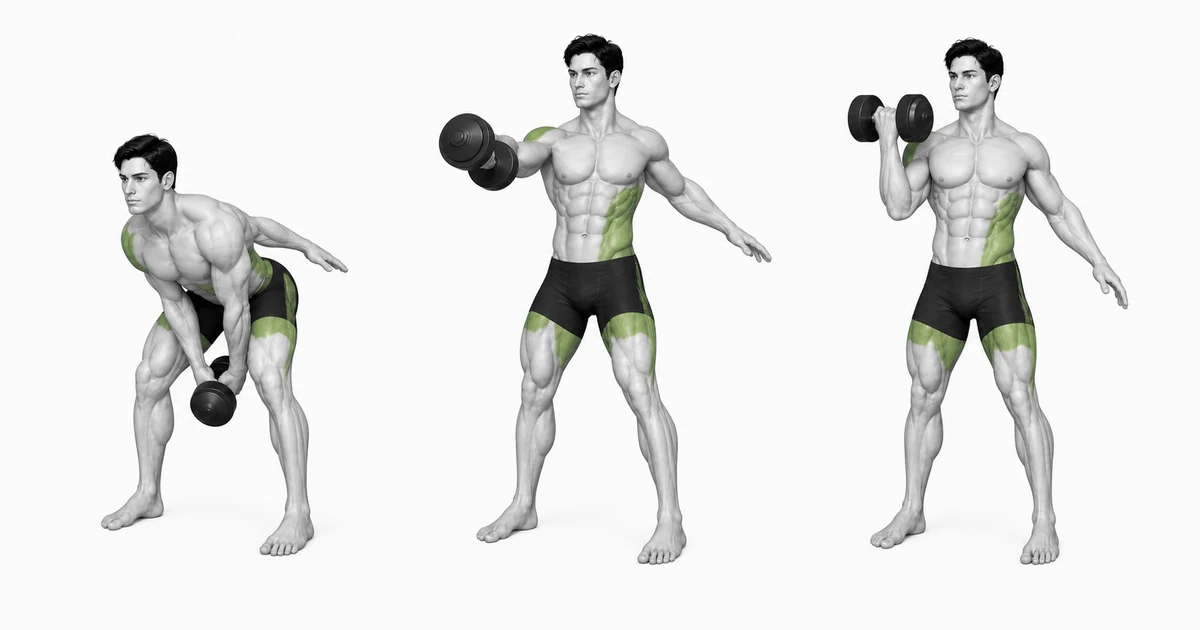
Key point: Cue: drive the floor away and let the dumbbell float.
ROTATION & FINISH
The turn is a small finish, not a substitute for trunk control
Use the forearm turn only as the dumbbell reaches chest-to-shoulder height. Do not bend the wrist or drag the elbow behind the body to force more rotation.
Finish with the ribs stacked over the pelvis. If extra height requires lumbar extension or a shrug, reduce the load or stop lower.
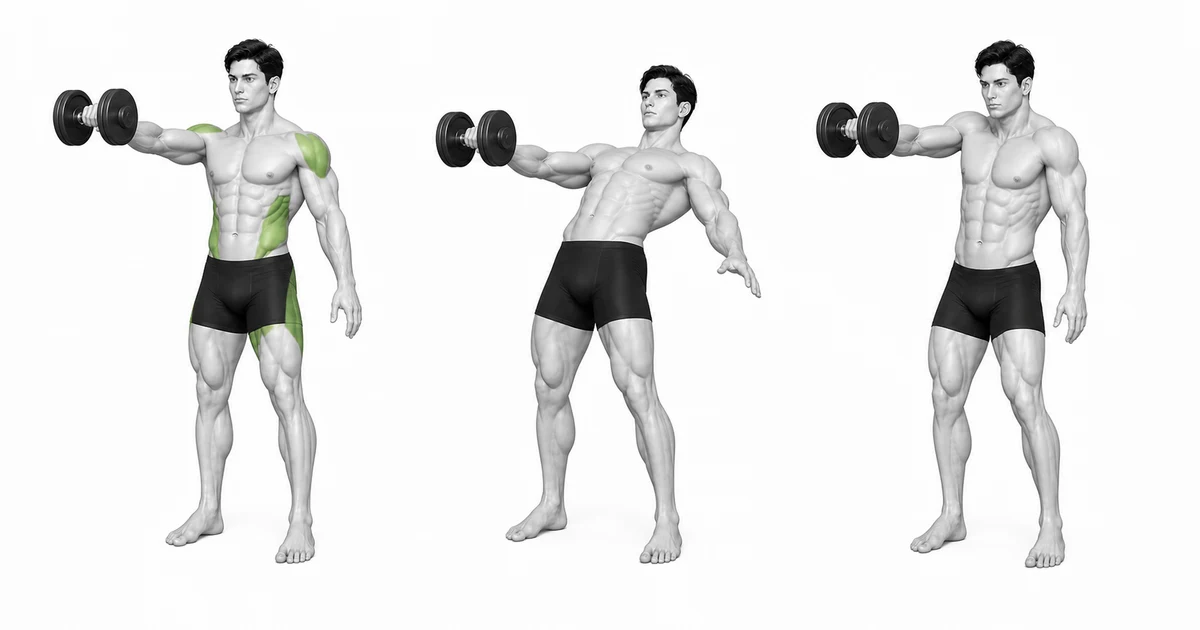
Key point: Add the turn only after a rotation-free swing is repeatable.
RANGE & LOAD
Repeatable path and a controllable load matter more than height
A repetition can be useful below shoulder height if the hip drive and trunk alignment stay consistent. The load is already too heavy if you must curl, shrug, or lean back to reach the target height.
Start each session with rotation-free one-arm swings. Train both sides for the same number of controlled repetitions and add load only when you can also control the descent and grip.
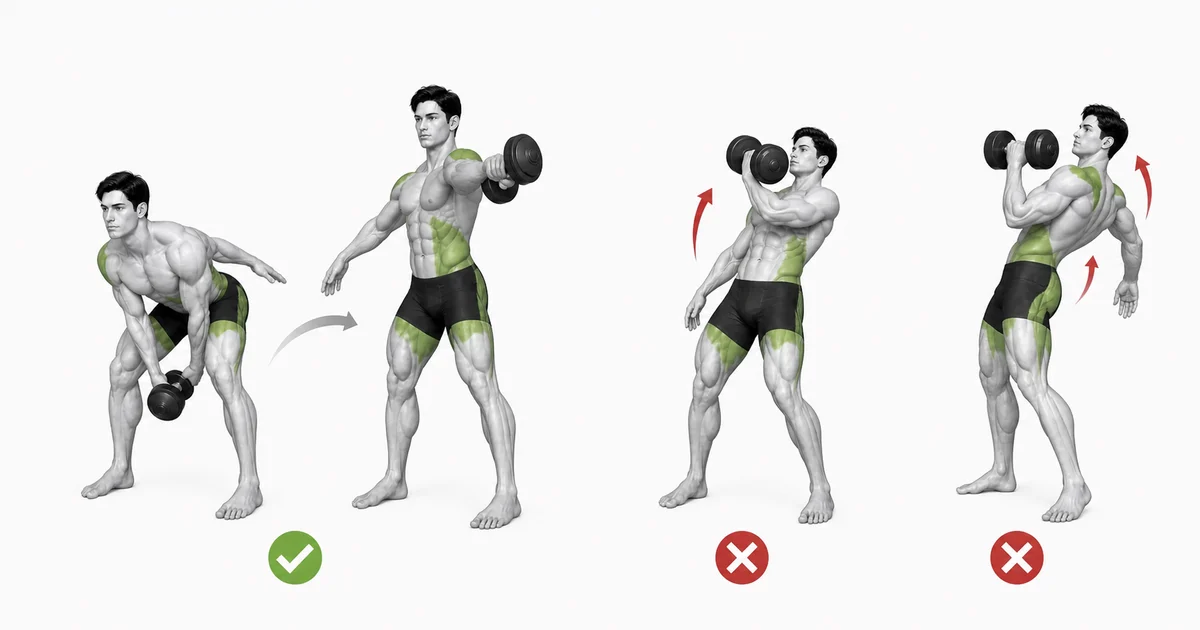
TROUBLESHOOTING
Fix the cause of a mistake, not just its appearance
Turning it into a front raise
- What you see
- The elbow bends and the dumbbell rises before the hips extend.
- Likely cause
- The movement is being treated as a shoulder raise or the load is too heavy.
- How to correct it
- Remove the turn and practice a light hip-driven swing first.
Leaning back at the top
- What you see
- The ribs flare and the pelvis shifts forward as the dumbbell rises.
- Likely cause
- Height is being prioritized after the trunk brace is lost.
- How to correct it
- Stop below shoulder height and keep the ribs stacked over the pelvis.
Bending the wrist to create rotation
- What you see
- The wrist folds back and the dumbbell rolls toward the fingers.
- Likely cause
- The wrist is substituting for a small forearm turn.
- How to correct it
- Keep the wrist neutral and reduce or remove the turn.
Letting the dumbbell drift away
- What you see
- The descending dumbbell traces a large arc and pulls on the shoulder and grip.
- Likely cause
- The top is being thrown rather than guided back under control.
- How to correct it
- Keep the armpit engaged and guide the dumbbell close as the hips hinge.
Programming sides differently
- What you see
- The fatigued side rotates the torso and shifts foot pressure.
- Likely cause
- Load or reps were chosen from the stronger side.
- How to correct it
- Start with the weaker side and match only its controlled repetitions.
REGRESSION & PROGRESSION
Match the difficulty before adding load
Wall hip hinge
Reach the hips to a wall to learn hip motion without lumbar flexion.
Two-hand dumbbell swing
Hold one end of the dumbbell with both hands and learn hip drive without unilateral rotation.
One-arm dumbbell swing
Add unilateral trunk control while keeping the forearm turn out.
Add the Arnold turn
Use a small turn near shoulder height without changing the swing path or trunk position.
BEGINNER PROGRAM
A practical starting framework
Practice about twice per week with a recovery day between sessions. Confirm that both sides can repeat a rotation-free swing before adding the turn.
Reps
6–10/side
Keep the same height and path
Sets
2–3
Rest 90–150 seconds
Load
+1–2 kg
Only after a rotation-free swing stays controlled
- Use a rotation-free one-arm swing as the first warm-up set.
- End the set when side-to-side height, trunk position, or descent speed changes.
- Remove the turn if the shoulder or wrist hurts, and seek qualified assessment if symptoms persist.
Frequently asked questions
How high should the dumbbell travel?
Chest-to-shoulder height is enough if the wrist and trunk remain controlled. Stop lower if extra height requires a shrug or lean.
What if the shoulder feels uncomfortable?
Remove the forearm turn and use a regular one-arm dumbbell swing. Stop and seek an individualized assessment if pain remains.