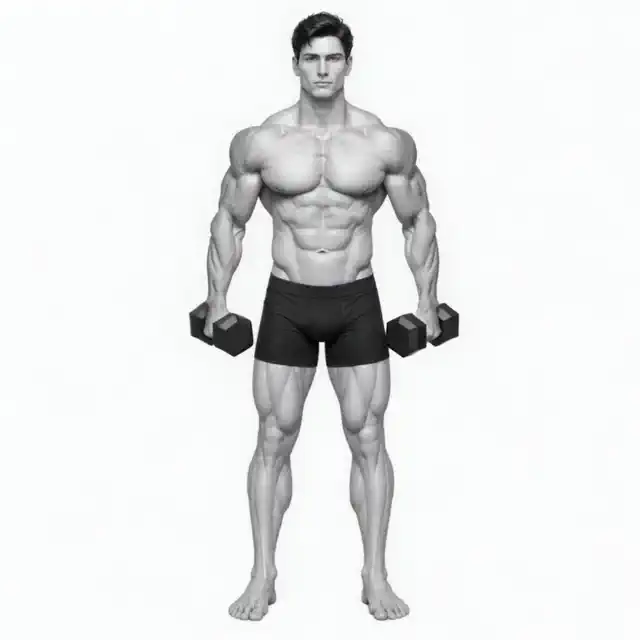
DUMBBELL FRONT RAISE
Isolation exercise to create a firm, three-dimensional front shoulder line by isolating the front deltoid muscles.
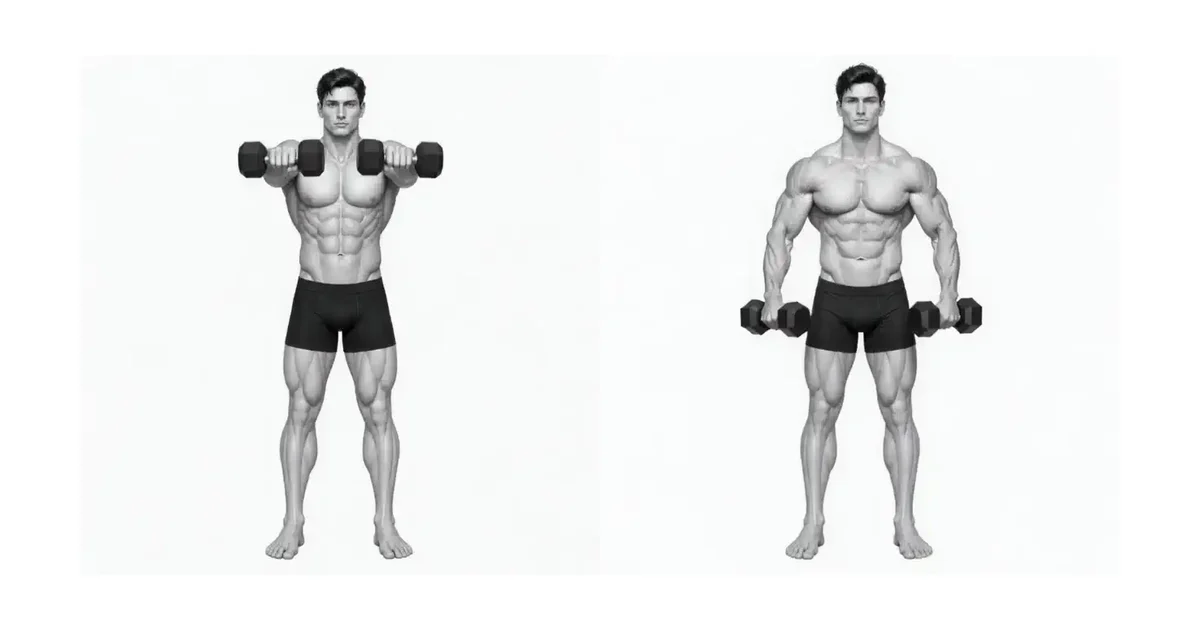
Hold a dumbbell in both hands and place it in front of your thighs. Stand straight with your feet shoulder-width apart and your core tense. With your elbows very slightly bent, raise the dumbbells forward to eye level. Feel the front deltoid contracting at the top, then slowly and controlledly return to the starting position.
- Primary muscles
- Anterior Deltoid
- Secondary muscles
- Lateral Deltoid · Upper Trapezius
- Difficulty
- Beginner
- Movement type
- Shoulder Flexion
Can I use a barbell?
Yes, barbell front raises can handle heavier weights, but they offer less wrist and shoulder freedom than dumbbells.
STEP BY STEP
4 Steps for One Complete Rep
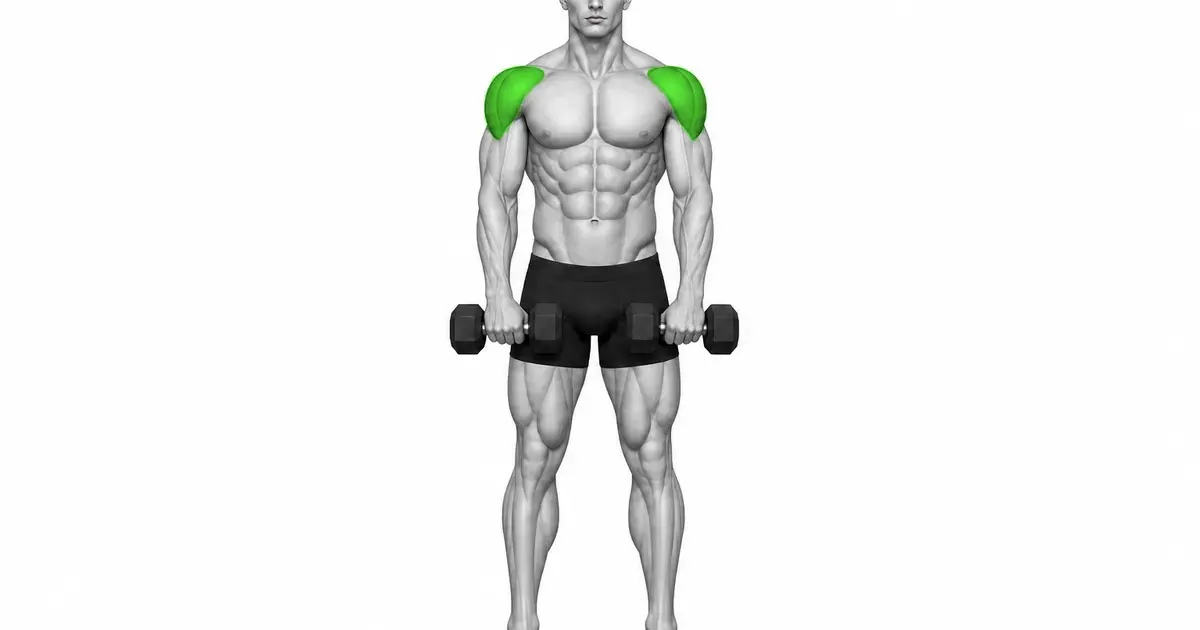
- 1
Ready posture
Hold a dumbbell and place it in front of your thighs. Expand your chest and stabilize your shoulder blades.
- 2
Lift forward
With your elbows slightly bent, raise the dumbbells in front of your body to eye level.
- 3
Apex Contraction
Pause at the highest point, feeling the strong stimulation of the front deltoid muscles.
- 4
Slow down
Against gravity, slowly lower the dumbbells to the front of your thighs.
GRIP VARIATIONS
Changes in stimulation depending on grip
The 'neutral grip', where the palms face each other, puts less strain on the shoulder joints and is good for focusing on the front deltoid muscles.
The 'overhand grip', with the palms facing down to the floor, may encourage slightly more engagement of the lateral deltoids along with the front deltoids.
RANGE, LOAD & TEMPO
Choose a range and load that keep the Dumbbell Front Raise repeatable
The useful range of motion ends before your torso or working joints have to change position to move the load. Keep the anterior deltoid producing the movement while the lateral deltoid · upper trapezius support the same alignment from the first repetition to the last.
Use a controlled lowering phase of about two to three seconds and avoid bouncing through the transition. If the final repetitions become shorter, faster, or visibly different from the first, reduce the load or stop the set before technique breaks down.
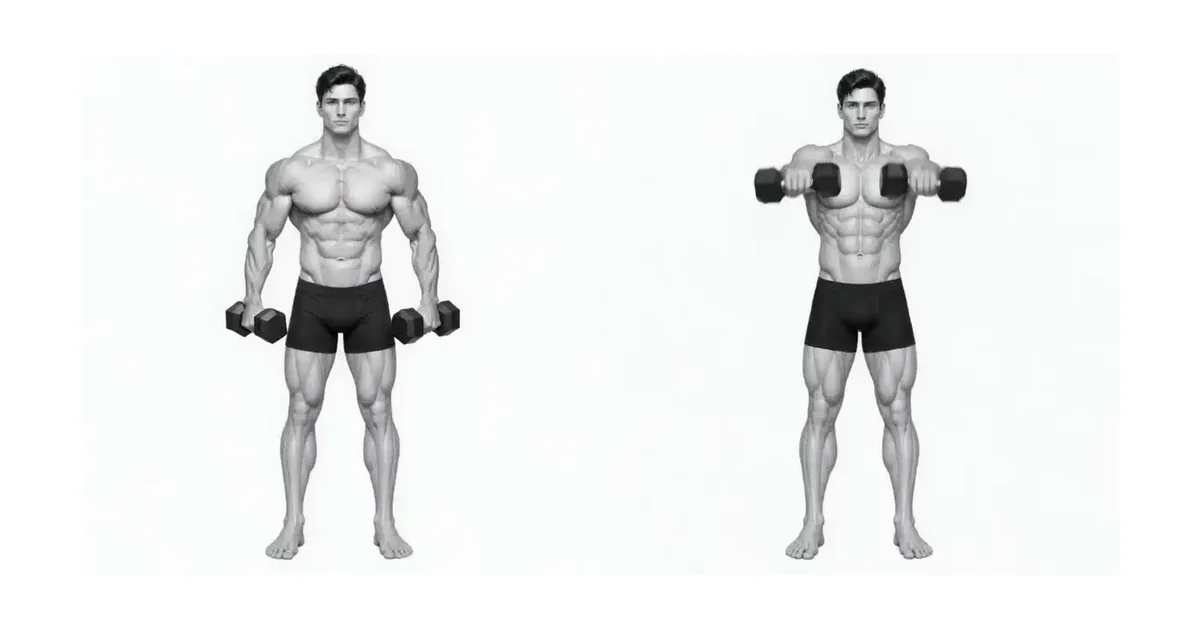
Key point: Progress the Dumbbell Front Raise only after every repetition follows the same path without joint pain.
TROUBLESHOOTING
Fix the cause of a mistake, not just its appearance
Using body recoil
- What you see
- A movement in which the upper body is rocked back and forth and raised as if throwing a weight.
- Likely cause
- The weight is too heavy to be lifted by the front deltoids alone.
- How to correct it
- Lower the weight and perform this with your back against a wall, or brace your upper body with a stronger core.
Excessive involvement of the trapezius muscle
- What you see
- A phenomenon where the shoulders are shrugged and pulled toward the ears when lifting dumbbells.
- Likely cause
- Insufficient strength to lower the shoulder (scapula depression).
- How to correct it
- Press your shoulders with the feeling of keeping them away from your ears and send only your arms forward.
REGRESSION & PROGRESSION
Match the difficulty before adding load
Alternate Front Raise
Alternately perform one arm at a time to increase concentration and provide greater torso stability.
Incline Dumbbell Front Raise
Performed lying on an incline bench to place greater tension on the front delts throughout the range of motion.
BEGINNER PROGRAM
A practical starting framework
Front raise is an exercise that completes the front line of the shoulders. Recommended to perform after shoulder presses.
Frequency
1-2 times a week
The front deltoid muscles are used a lot during pushing exercises (press), so it is suitable as an auxiliary exercise.
Volume
3 sets, 12-15 times
Choose weights that focus on isolation and pumping of the front delts rather than heavy weights.
- When lowering the dumbbells, stop just before they touch your thighs and maintain tension.
- Keep your wrists neutral and not bent.
- Look straight ahead and pull in your chin.
Frequently asked questions
Do I need to fully extend my arms?
Fully extending and locking your elbows can put strain on your joints. It is safe to maintain a very slight bend.