DUMBBELL SHRUG
A simple joint exercise that strengthens the upper trapezius muscles to create a strong shoulder frame and neck line.
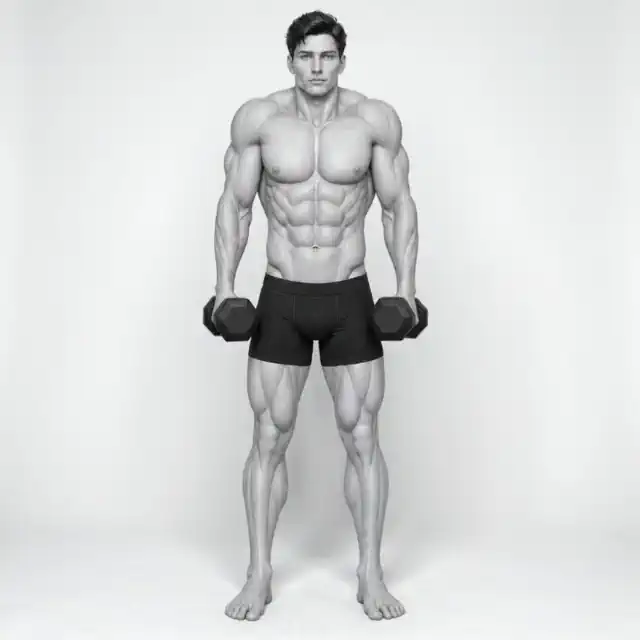
Hold a dumbbell in both hands and place it next to your body. Standing straight with your feet shoulder-width apart, raise your shoulders toward your ears as high as you can. At this time, be careful not to bend your elbows. Contract your trapezius muscles strongly at the top, then slowly and controlledly return to the starting position.
- Primary muscles
- Upper Trapezius
- Secondary muscles
- Middle Trapezius Levator Scapulae
- Difficulty
- Beginner
- Movement type
- Scapular Elevation
If the trapezius muscle gets too big, won't the shoulders look narrow?
No, if the upper trapezius and side deltoid muscles are developed harmoniously, the shoulders will look more three-dimensional and wider.
STEP BY STEP
4 Steps for One Complete Rep
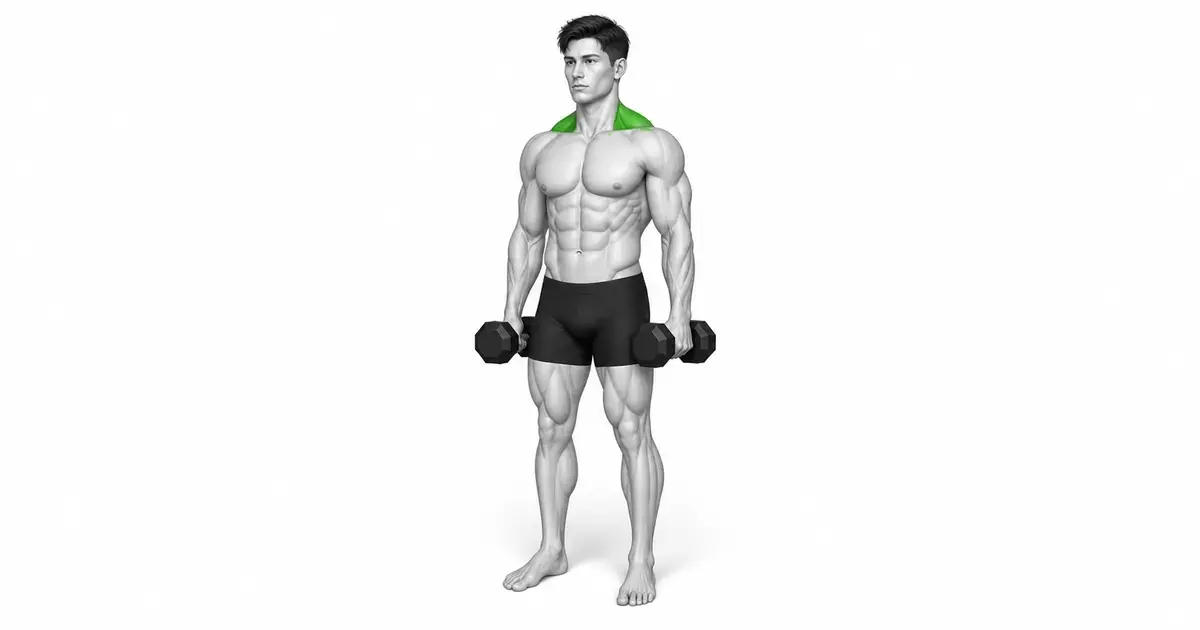
- 1
Ready posture
Hold dumbbells and stand at attention. Open your chest and lower your shoulders naturally.
- 2
Shoulder Raise
With your arms straight, raise only your shoulders vertically and high toward your ears.
- 3
Vertex Contraction
Feel the contraction of the upper trapezius muscle at the highest point and hold for 1 to 2 seconds.
- 4
Slow down
Control the weight and slowly lower your shoulders until your trapezius muscles are sufficiently relaxed.
TRAPEZIUS FOCUS
Should be held with shoulders, not arms
A common mistake in shrugs is using your biceps to lift the dumbbells. Think of your arms as just straps holding your weight, and focus only on moving the shoulder joint itself vertically.
Also, the 'rolling' motion of turning the shoulder backward can cause unnecessary friction in the shoulder joint, so it is safest and most effective to maintain a vertical raising and lowering trajectory.
RANGE, LOAD & TEMPO
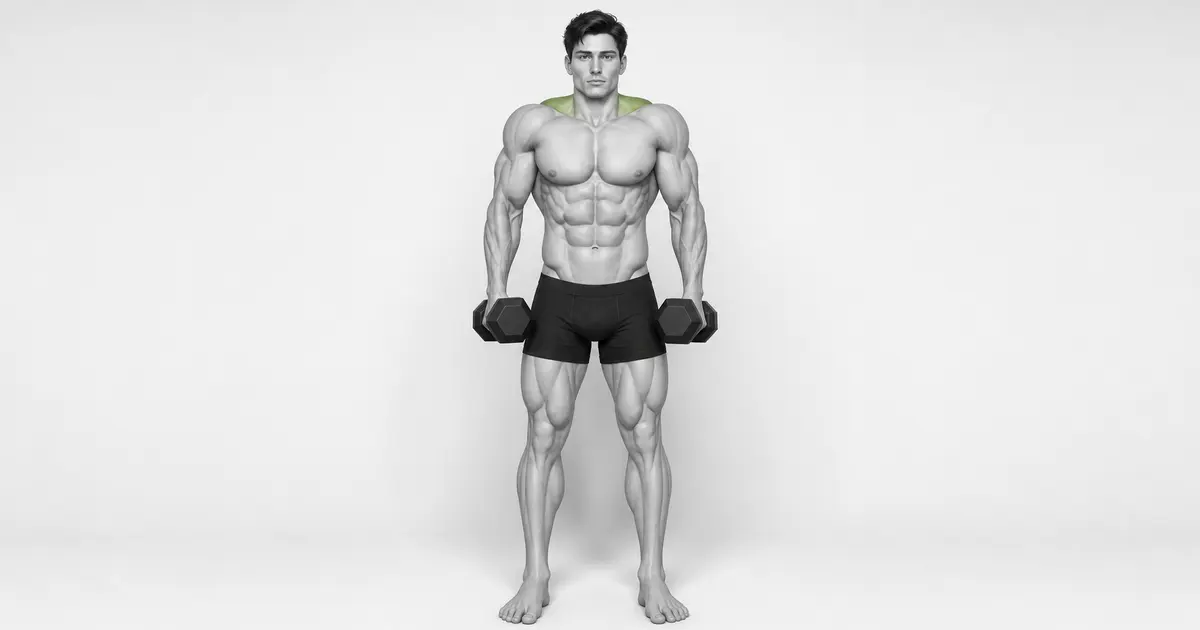
Choose a range and load that keep the Dumbbell Shrug repeatable
The useful range of motion ends before your torso or working joints have to change position to move the load. Keep the upper trapezius producing the movement while the middle trapezius levator scapulae support the same alignment from the first repetition to the last.
Use a controlled lowering phase of about two to three seconds and avoid bouncing through the transition. If the final repetitions become shorter, faster, or visibly different from the first, reduce the load or stop the set before technique breaks down.
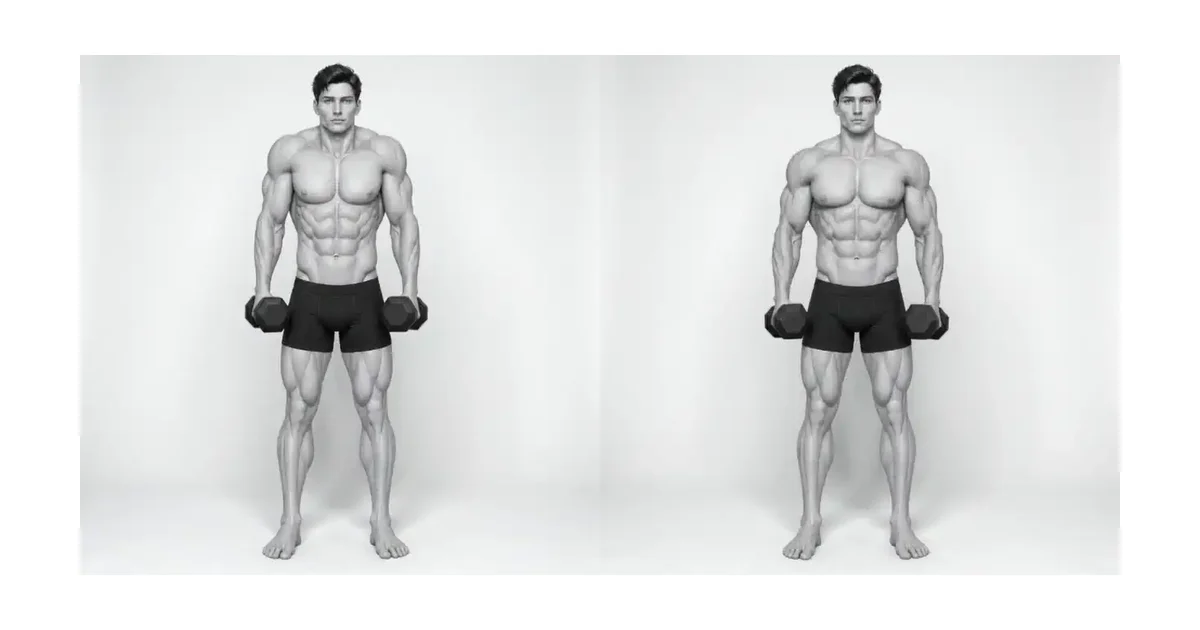
Key point: Progress the Dumbbell Shrug only after every repetition follows the same path without joint pain.
TROUBLESHOOTING
Fix the cause of a mistake, not just its appearance
Shoulder Rolling
- What you see
- The movement of turning and raising the shoulder backwards in a circular motion.
- Likely cause
- Bad habits or intent to provide further stimulation.
- How to correct it
- Move only vertically. Turning motions can put strain on the rotator cuff.
Elbow bend
- What you see
- Elbow bending phenomenon when lifting dumbbells.
- Likely cause
- Biceps involvement.
- How to correct it
- Fully extend your arms and use the wrist strap to reduce grip strain so you can focus more on your shoulders.
REGRESSION & PROGRESSION
Match the difficulty before adding load
Barbell Shrug
Using a barbell allows you to handle heavier weights, which is beneficial for improving muscle strength.
Behind Back Barbell Shrug
Perform while holding the barbell behind your body to increase engagement of the middle and lower trapezius muscles.
BEGINNER PROGRAM
A practical starting framework
Shrugs are essential to building a strong upper body frame. Perform it as an accessory exercise after other large muscle exercises.
Frequency
1-2 times a week
Recommended to be placed at the end of your back or shoulder exercise routine.
Volume
3~4 sets, 10~15 times
Heavy weights are good, but choose a weight that allows you to clearly feel the peak contraction.
- Do not put your head forward (no forward-head posture posture) and keep it neutral.
- improve your range of motion for deep relaxation.
- Do not recoil and maintain a constant speed.
Frequently asked questions
Do I need to use a strap?
If your grip loosens first when handling heavy weights, we highly recommend using a strap. You can focus more on your trapezius muscles.