GOBLET SQUAT JUMP
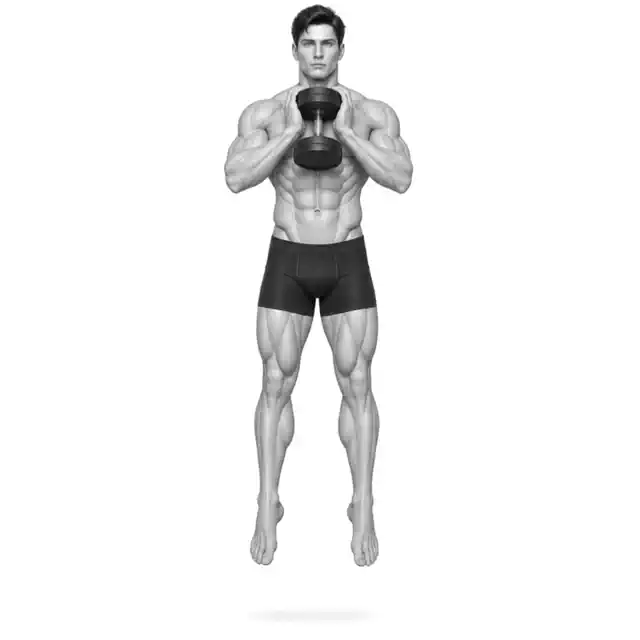
Goblet jump squats are not an exercise in which you jump high while holding heavy dumbbells, but rather a power exercise in which you push quickly with a light load and land stably.
Squat jumps while holding dumbbells in front of your chest can add extra load to your lower body power, but also increase the impact of landing and the risk of dropping the equipment. First, master your bodyweight jumps and landings, and start with low jumps with a light load that keeps the dumbbells stationary on your chest.
- Primary muscles
- Quadriceps, gluteus maximus, calves
- Secondary muscles
- Hamstrings, core, ankle stabilizers
- Difficulty
- Intermediate
- Movement type
- Front load vertical jump
How heavy should the dumbbells be?
A light load that can almost maintain the speed and landing of a bodyweight jump is appropriate. Be guided by movement quality rather than fixed ratios.
STEP BY STEP
4 Steps for One Complete Rep
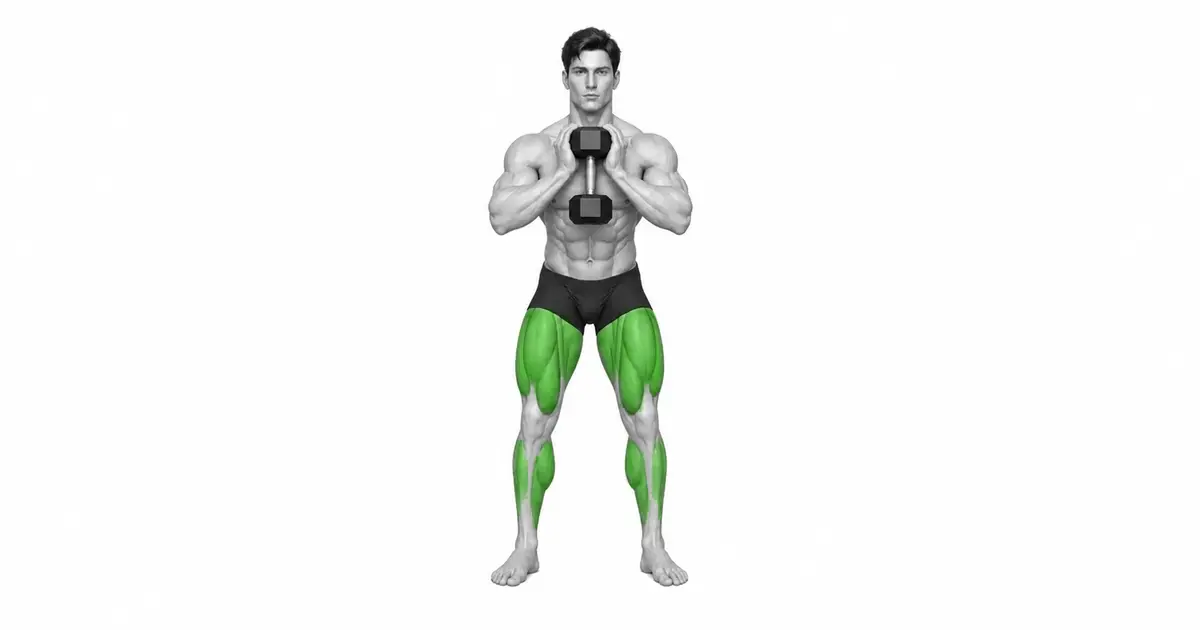
- 1
Checking bodyweight landings and light loads
First check if you can land a bodyweight squat jump quietly. For dumbbells, choose very light weights that you can hold against your chest throughout the repetition.
- 2
Creating short, fast descents
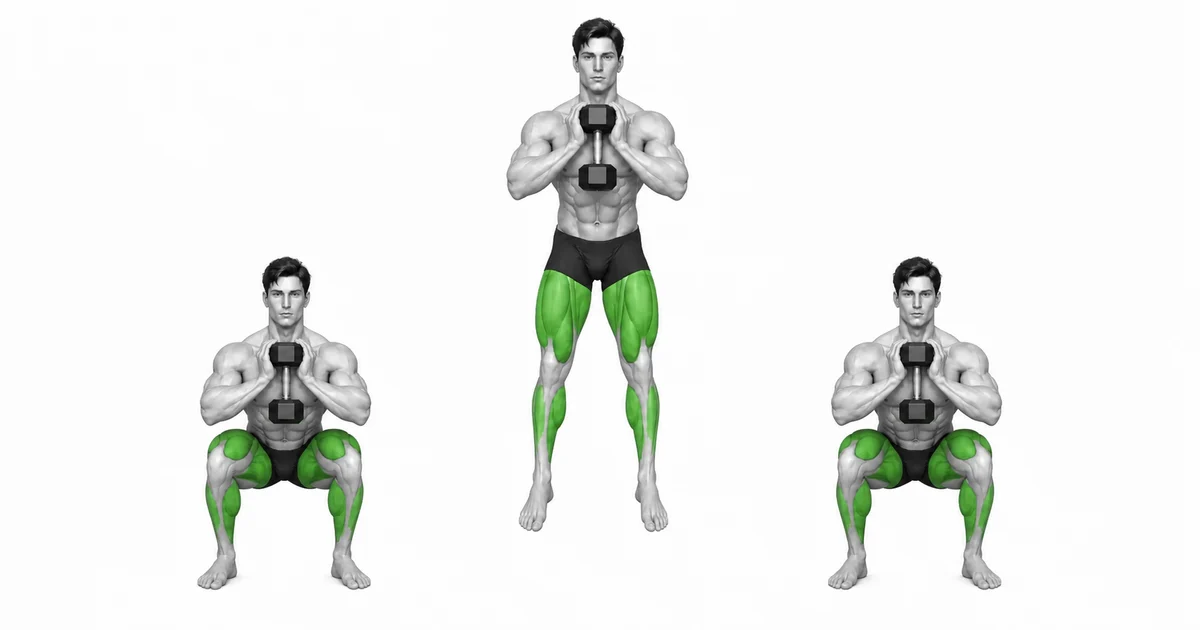
Hold dumbbells to your chest with your feet shoulder-width apart. Quickly but controlledly bend your knees and hips to get ready to jump.
- 3
Stretching ankles, knees, and hips together
Jump vertically by strongly pushing the entire foot into the floor, straightening all three joints together. Do not throw the dumbbells with your arms or lift them from your chest.
- 4
Quiet Landing and Reset
Gently touch your forefoot and midfoot, then divide your weight up to your heel. Bend your knees and hips to absorb the shock and regain balance before starting the next repetition.
LIGHT LOAD, FAST INTENT
Use load only until jump height and landing quality decrease
Power training aims to produce force faster than the weight itself. If the dumbbells are wobbly or your jumps are significantly slower than with your bare body, it is excessive load.
If fatigue accumulates, finish the set and recover sufficiently rather than increasing the number of repetitions.
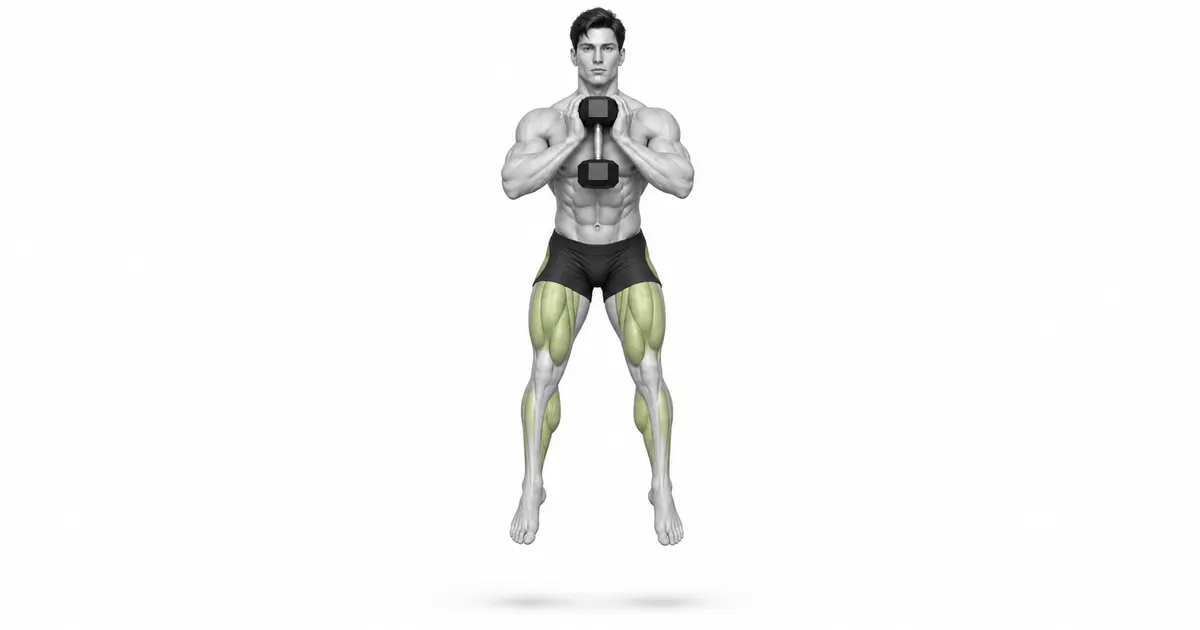
Key point: Cue to use right away: “Lift lightly, push quickly, and land quietly.”
LANDING
Landing is an independent skill, not preparation for the next jump
If your knees collapse inward or your heels hit the floor hard, you are not absorbing enough shock. Align your feet and knees and send your pelvis backward.
Rather than continuous bounding, it is first practiced by stopping at each repetition to check alignment.
TROUBLESHOOTING
Fix the cause of a mistake, not just its appearance
Slower jump speed with heavy dumbbells
- What you see
- There is almost no jump and the torso collapses forward.
- Likely cause
- Power exercises were increased to strength squats.
- How to correct it
- Lower the dumbbells significantly or return to your bodyweight for a quick takeoff recovery.
Bouncing dumbbells off chest
- What you see
- Dumbbells hit the chin or chest during takeoff and landing.
- Likely cause
- Your grip is unstable or you throw the dumbbell with your arm.
- How to correct it
- Hold dumbbells against your chest and use lighter loads.
Landing with knees locked
- What you see
- The landing sound is loud and you can feel the impact on your knees and lower back.
- Likely cause
- The ankle, knee, and hip joints cannot absorb shock.
- How to correct it
- Practice a quiet landing by lowering your jump height and gently flexing your three joints.
REGRESSION & PROGRESSION
Match the difficulty before adding load
Squat and Reach
Learn a quick triple shrine without jumping.
Bodyweight squat jump
Practice quiet landings and resets.
Light goblet jump
Learn dumbbell hold in low jumps.
Repeated Goblet Jump
Increase continuity only when landing quality is maintained.
BEGINNER PROGRAM
A practical starting framework
After warming up, place when fatigue is low, and end sets based on jump speed and landing quality rather than muscle burn.
Count
3–6 times
Reset after each repeated landing
Set
3–5 sets
90–180 seconds recovery between sets
Frequency
1–2 times a week
Adjustable number of contacts with different jump training
- Increase reps only if jump speed and quiet landing are maintained.
- If you experience dumbbell wobbling or knee collapse, immediately lower the weight.
- Do not attempt limit repetitions under fatigue.
Frequently asked questions
Can I run straight away in succession?
First, practice by stopping after each repetition. Consecutive iterations are only used when alignment and noise are maintained.
Can this be done instead of squats for muscle gain?
The main purpose is power. Hypertrophy and maximal strength may require separate controlled squat volumes.