HALF-KNEELING PRESS
A functional pushing exercise that simultaneously improves shoulder strength and core stability in a one-kneeling position.
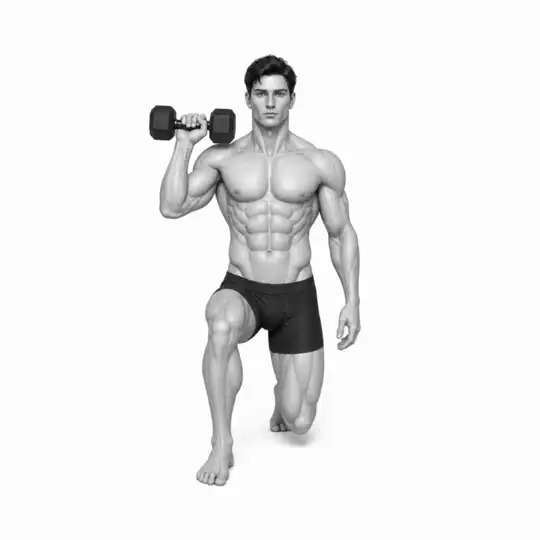
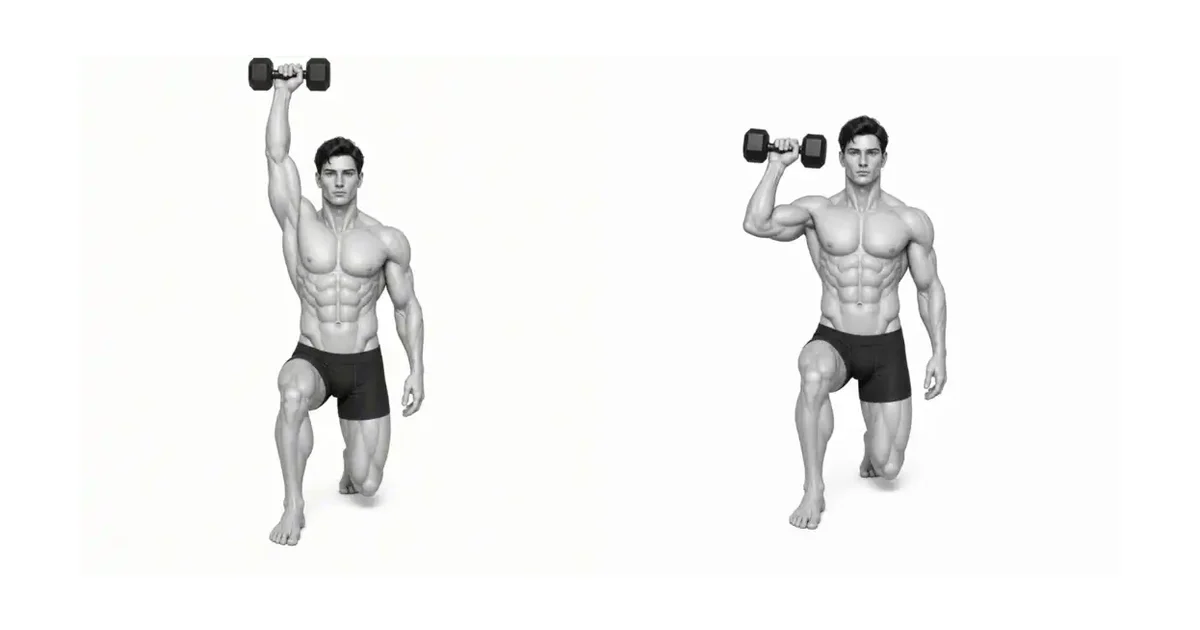
Place one knee on the floor and place the other foot in front so that both knees are at a 90-degree angle (half kneeling position). Hold a dumbbell in your hand on the floor and place it next to your shoulder. Maintain a neutral pelvis by strengthening your buttocks and abdominal muscles. Exhale and push the dumbbells vertically above your head. Pause briefly at the top, then slowly and controlledly return to the starting position. After completing one set, switch leg positions and hands.
- Primary muscles
- Anterior Deltoid
- Secondary muscles
- Lateral Deltoid · Triceps Brachii · Core · Glutes
- Difficulty
- Intermediate
- Movement type
- Vertical Push
Why are you kneeling?
This is to reduce the support of the lower body and force core stability to further isolate the shoulders and protect the lower back.
STEP BY STEP
4 Steps for One Complete Rep
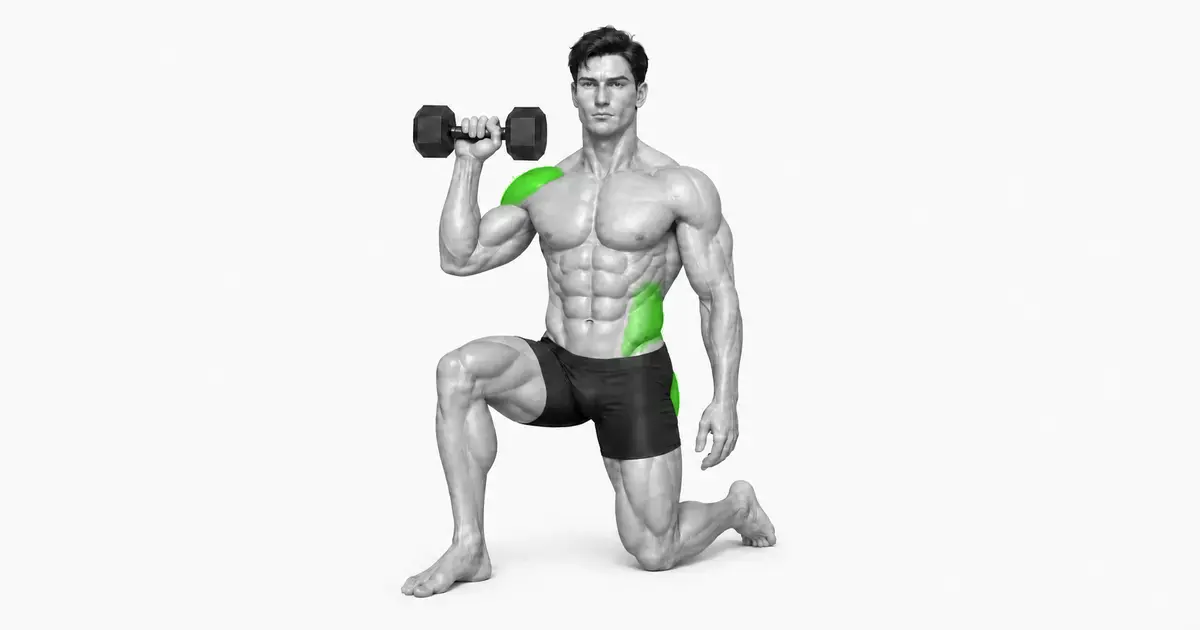
- 1
Half kneeling position
Kneel on one knee and assume a lunge position. Align your front foot and back knee at 90 degrees and keep your spine straight.
- 2
Preparing and securing cores
Hold a dumbbell in the hand on your kneeling side and place it at shoulder height. Tighten your hips (glutes) to stabilize your lower body.
- 3
Push vertically
Keeping your upper body steady, push the dumbbells straight up above your head.
- 4
Control and dismount
Feel the weight and slowly return to shoulder height. Don't relax your whole body.
PELVIC STABILITY
Pelvic stability and lumbar protection
Standing presses can easily cause you to unconsciously lean back, but the half-kneeling position physically limits lumbar hyperextension by locking your pelvis in a neutral position. This is a very safe alternative for people who experience back pain when exercising their shoulders.
Also, because the support surface becomes narrower, the core muscles are strongly involved to maintain left and right balance. In particular, strongly contracting the gluteal muscles on the side that touches the floor is the key to creating a stable base of support for the upper body.
RANGE, LOAD & TEMPO
Choose a range and load that keep the Half-Kneeling Press repeatable
The useful range of motion ends before your torso or working joints have to change position to move the load. Keep the anterior deltoid producing the movement while the lateral deltoid · triceps brachii · core · glutes support the same alignment from the first repetition to the last.
Use a controlled lowering phase of about two to three seconds and avoid bouncing through the transition. If the final repetitions become shorter, faster, or visibly different from the first, reduce the load or stop the set before technique breaks down.
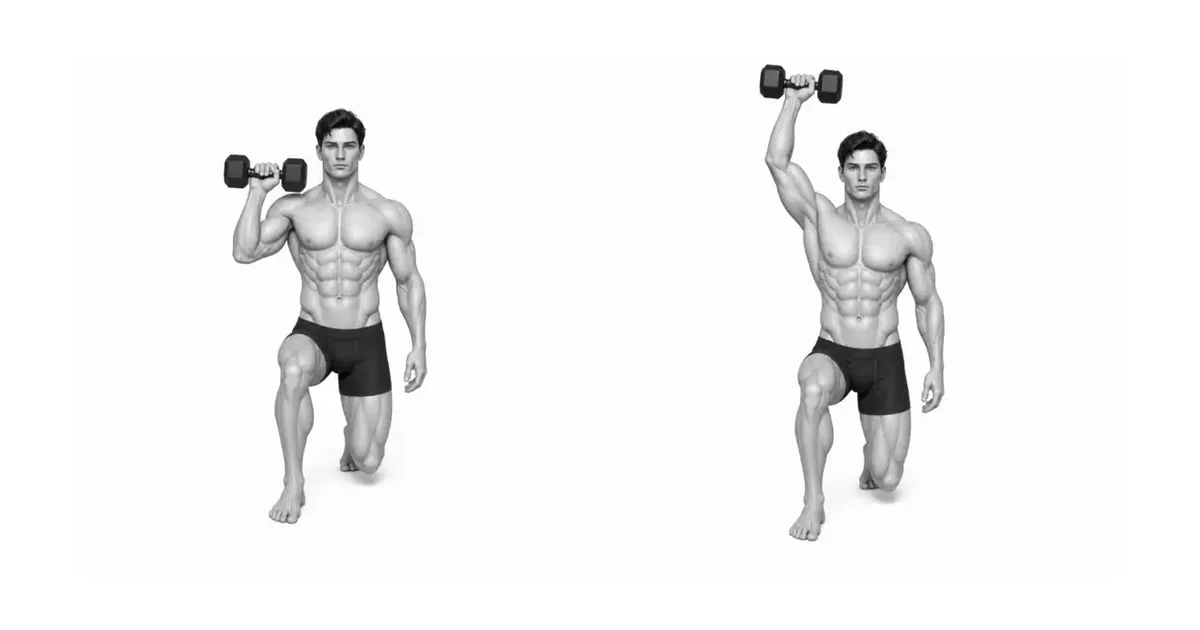
Key point: Progress the Half-Kneeling Press only after every repetition follows the same path without joint pain.
TROUBLESHOOTING
Fix the cause of a mistake, not just its appearance
Anterior pelvic tilt
- What you see
- A posture in which the waist is thrust forward and the buttocks are pulled back.
- Likely cause
- Lack of tone in the glutes or tightness of the hip flexors.
- How to correct it
- Straighten your pelvis by squeezing the buttocks on the kneeling side with the feeling of pushing them forward.
Front knee collapses inward
- What you see
- A phenomenon in which the center is lost and the front knee is tilted inward.
- Likely cause
- Insufficient lower body stability.
- How to correct it
- Firmly grip the ground with your entire front foot and keep your knee pointed toward your second toe.
REGRESSION & PROGRESSION
Match the difficulty before adding load
Half kneeling kettlebell press
Use kettlebells to further increase shoulder stabilizer involvement.
Half Kneeling Landmine Press
Use the landmine to perform presses in a diagonal trajectory and adjust the range of motion.
BEGINNER PROGRAM
A practical starting framework
The half kneeling press builds strong shoulders and a strong core at the same time. Focus on the precision of your posture.
Frequency
1-2 times a week
Include it early in your shoulder workout routine or functional training sessions.
Volume
3~4 sets, 8~12 times
Choose a weight that allows you to focus on maintaining full-body stability rather than weight.
- Place a thin pad or mat under your knees to protect your joints.
- Look straight ahead and pull in your chin.
- Once you finish one side, immediately do the other side without resting to increase density.
Frequently asked questions
Which hand should I push with?
Generally, pushing with your hands toward your knees that touch the floor is most effective for increasing diagonal stability of your core.