INCLINE DUMBBELL REVERSE FLY
A bench-supported isolation movement that eliminates momentum to improve rear deltoid engagement and shoulder detail
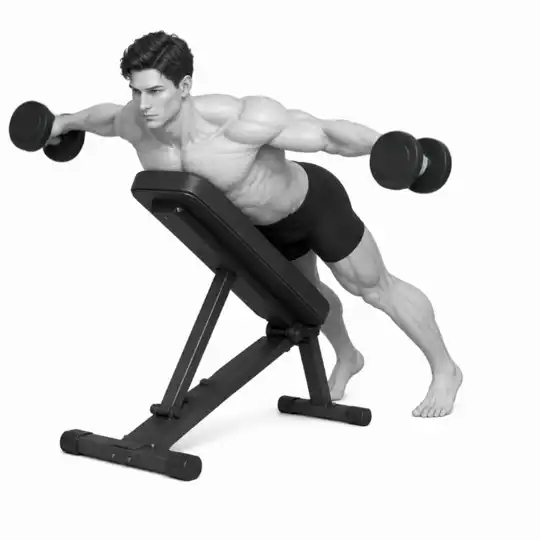
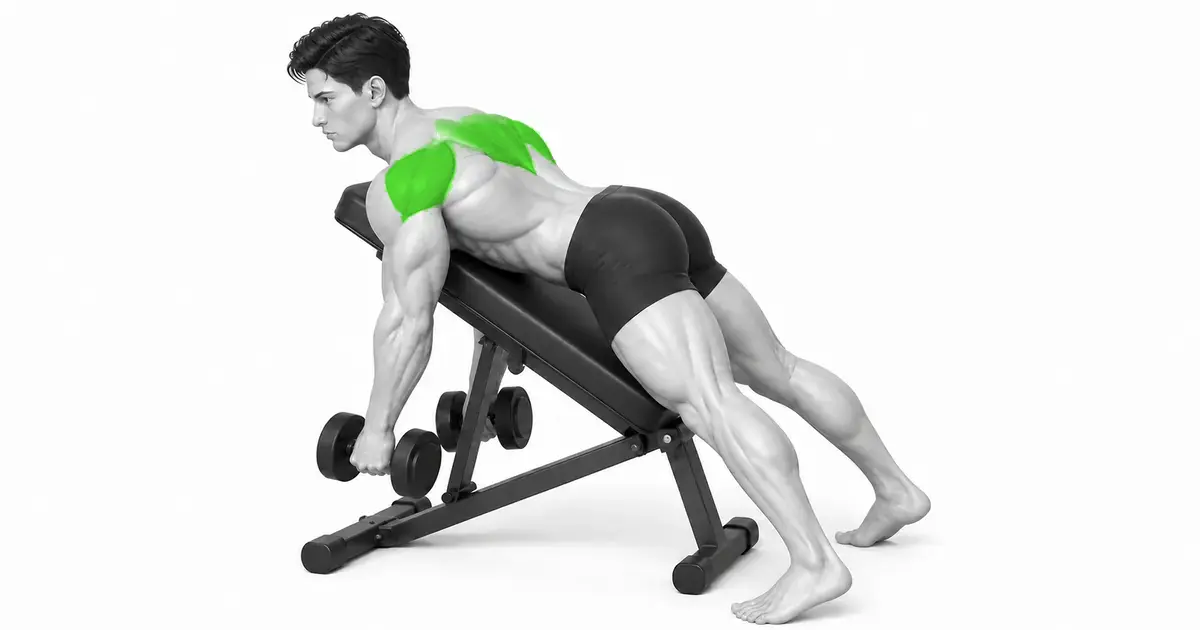
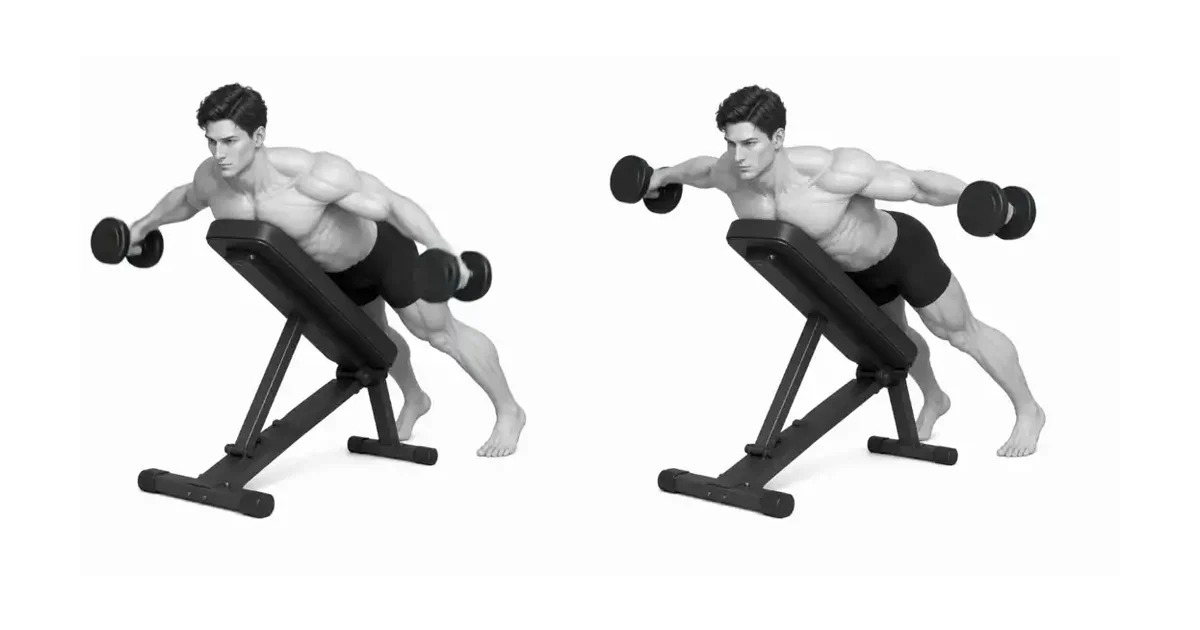
Set an incline bench to about 30-45 degrees. Lie face-down with your chest firmly against the pad and hold a dumbbell in each hand. Let your arms hang down with a slight bend in your elbows. Exhale as you raise the dumbbells out to the sides in a wide arc. Focus on using the muscles on the back of your shoulders rather than pinching your shoulder blades. Pause at the top, then slowly lower the weights back to the start under control.
- Primary muscles
- Rear Deltoid
- Secondary muscles
- Middle Trapezius · Rhomboids · Infraspinatus
- Difficulty
- Intermediate
- Movement type
- Shoulder Horizontal Abduction
What is the best bench angle?
30 to 45 degrees is standard. A lower angle often shifts more emphasis to the lower fibers of the rear deltoid.
STEP BY STEP
4 Steps for One Complete Rep
- 1
Setup and positioning
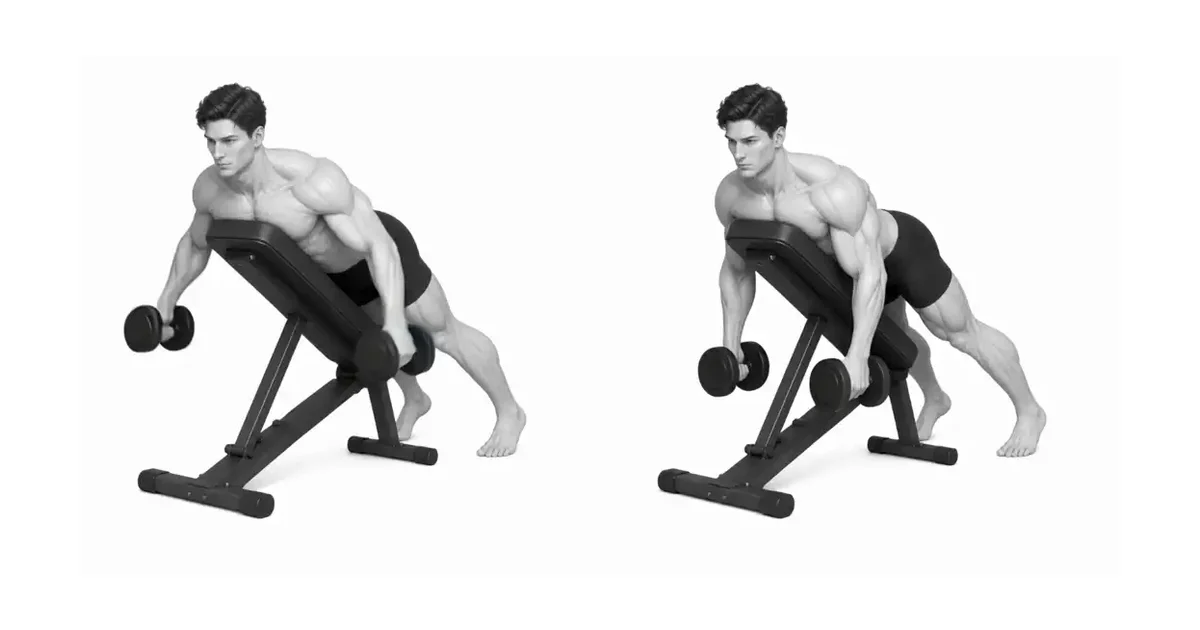
Set the bench to 30-45 degrees. Lie prone with your feet anchored on the floor for stability. Let the dumbbells hang naturally below your shoulders.
- 2
Raise outward
Lift the dumbbells in a wide arc to your sides. Lead with your elbows and keep your wrists firm. Avoid using any body sway.
- 3
Peak contraction
Pause briefly at the top when your arms are parallel to the floor, focusing on the squeeze in the rear deltoids.
- 4
Controlled descent
Slowly lower the dumbbells back to the starting position, resisting the weight and maintaining tension.
BENCH SUPPORTED ISOLATION
Pure isolation through stabilization
While the standing bent-over version is effective, it often leads to lower back fatigue and unintended body momentum. By using an incline bench, you provide a stable platform that locks your torso in place.
This stability allows you to focus 100% of your mental and physical effort on the posterior deltoid head. To maintain a neutral neck, rest your chin lightly over the top of the bench or keep your gaze fixed on the floor slightly ahead of the bench.
RANGE, LOAD & TEMPO
Choose a range and load that keep the Incline Dumbbell Reverse Fly repeatable
The useful range of motion ends before your torso or working joints have to change position to move the load. Keep the rear deltoid producing the movement while the middle trapezius · rhomboids · infraspinatus support the same alignment from the first repetition to the last.
Use a controlled lowering phase of about two to three seconds and avoid bouncing through the transition. If the final repetitions become shorter, faster, or visibly different from the first, reduce the load or stop the set before technique breaks down.
Key point: Progress the Incline Dumbbell Reverse Fly only after every repetition follows the same path without joint pain.
TROUBLESHOOTING
Fix the cause of a mistake, not just its appearance
Excessive scapular retraction
- What you see
- Pinching the shoulder blades together at the top of the rep.
- Likely cause
- Attempting to pull the weight back rather than out, engaging the rhomboids and traps.
- How to correct it
- Think about reaching 'wide' to the sides. Imagine you are trying to touch the side walls with the dumbbells.
Lifting the chest
- What you see
- The chest pulls away from the bench as the weights rise.
- Likely cause
- Using a weight that is too heavy, forcing the lower back to assist.
- How to correct it
- Lower the weight and ensure your chest remains in contact with the pad throughout the entire set.
REGRESSION & PROGRESSION
Match the difficulty before adding load
Paused Incline Reverse Fly
Hold the top position for 2-3 seconds to build isometric strength and increase the mind-muscle connection.
Single-Arm Incline Reverse Fly
Perform the movement one arm at a time to focus intensely on each posterior deltoid head.
BEGINNER PROGRAM
A practical starting framework
Incline reverse flies are excellent for finishing off the shoulders. Prioritize strict form and a controlled tempo.
Frequency
2-3 times per week
A staple isolation move for complete shoulder development.
Volume
3-4 sets of 15-20 reps
Focus on high-quality repetitions and maintaining constant tension.
- Keep a soft bend in the elbows; do not lock them out.
- Don't let the dumbbells touch at the bottom to maintain constant tension.
- Maintain a neutral gaze to avoid neck strain.
Frequently asked questions
Neutral or overhand grip?
Both work well. Experiment to see which grip allows you to feel the rear deltoid contraction most intensely.