JUMPING JACK
The standard for jumping jacks is not height and speed, but maintaining quiet landing and steady breathing for each repetition.
Jumping jacks are a full-body aerobic movement that involves raising your arms above your head, spreading your feet, and then bringing your arms and feet back together. Studies of full-body high-intensity intervals involving jumping jacks may have shown higher heart rates and subjective effort in sessions, but these results refer to specific sessions in trained adults and do not establish the appropriate pace or number of repetitions for an individual. Depending on your joint impact, balance, and breathing, use step jacks with one foot at a time instead of jumping as an equivalent starting variation.
- Primary muscles
- Quadriceps, calves, deltoids
- Secondary muscles
- Gluteus maximus, adductors, core
- Difficulty
- Beginner
- Movement type
- Full Body Aerobic Movement
What should I do if jumping is uncomfortable?
Change to step jack. The no-jump variation is also a valid jumping jack variation, and pain-free control is a priority.
STEP BY STEP
6 Steps for One Complete Rep
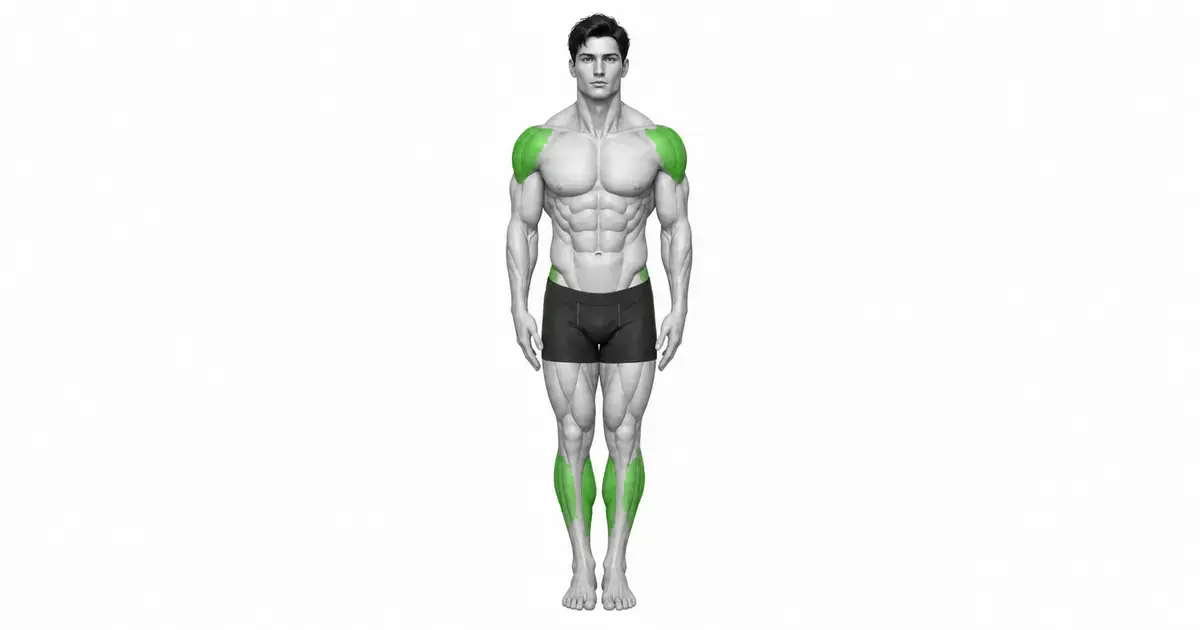
- 1
Check non-slip floor and free space
Make sure that you do not touch people or objects around you when you open your arms. Do not start if you feel dizzy or have sharp joint pain.
- 2
Stand comfortably with feet hip-width apart
Place pressure evenly across the entire foot and look forward. Do not lock your knees or overstrain your body.
- 3
Spread arms and legs together
Take a small jump, spreading your feet to a comfortable width and raising your arms as high as possible. If your shoulders feel uncomfortable, lower your arm height.
- 4
Land quietly on your whole foot
Don't just touch your toes, make sure your entire foot touches gently. Absorbs shock within a comfortable bending range for your knees and hips.
- 5
Control and bring arms and feet back together
Lower your arms and bring your feet to the center. If you lose balance or your footsteps become louder, slow down.
- 6
Do only as many reps as you can sustain your breathing and landing.
If you are too out of breath to speak or your landing is shaky, stop immediately or switch to step jacks. Don't kick back and continue when you're tired.
LANDING
Landing is the control step for the next iteration
In jumping jacks, the moment your feet touch the floor is not just an intermediate step. It's easy to maintain balance for the next repetition when you reach quietly with your entire foot and your knees and hips are comfortably bent.
Repeated jumping and fatigue can alter landing movements. If your footsteps get louder or your knees collapse inward, your speed, range, and number of reps may be out of your current control.
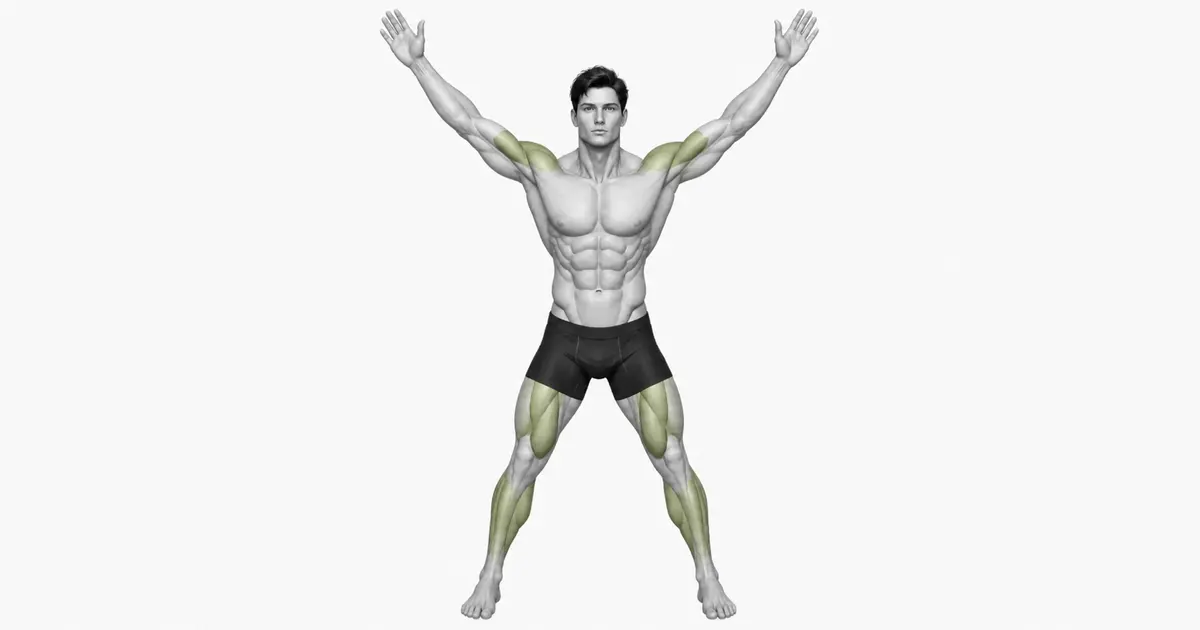
Key point: Practice cue: “Reach quietly with the entire foot, and check your balance before the next jump.”
LOW IMPACT
Step Jack is not a regression, but a proper transformation
Step jack involves moving one foot to the side, raising your arms, and then returning to the center. Keeping one foot on the floor at all times can help reduce the impact of jumping.
Does not force and sustain jumps. If you experience discomfort in your knees, ankles, pelvis, or back, poor balance, or unrecoverable fatigue, switch to step jacks.
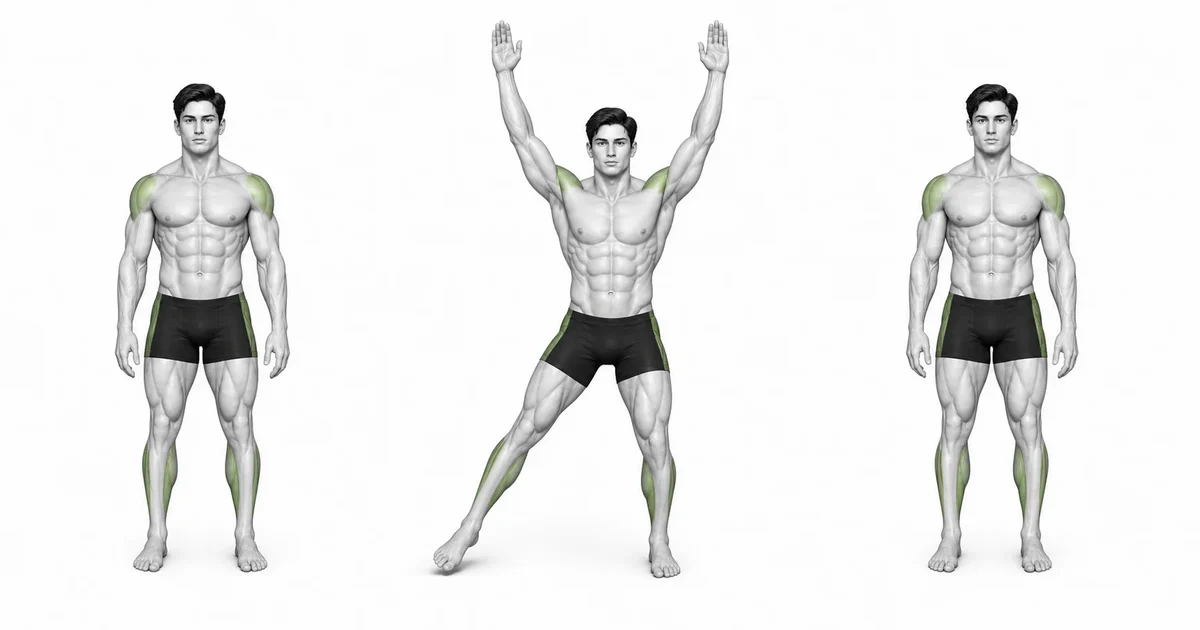
Key point: Selection criteria: If you cannot control your arms, feet, and breathing even in the non-jumping variation, first lower the speed and range.
INTENSITY
Does not increase time, speed, and range at once
Full-body interval sessions including jumping jacks can produce high effort and heart rate response, but the session configuration in the study may not be directly applicable to the individual.
Start with short times or few repetitions at first. Only add one variable when your landing, arm path, and breathing are stable across all repetitions.
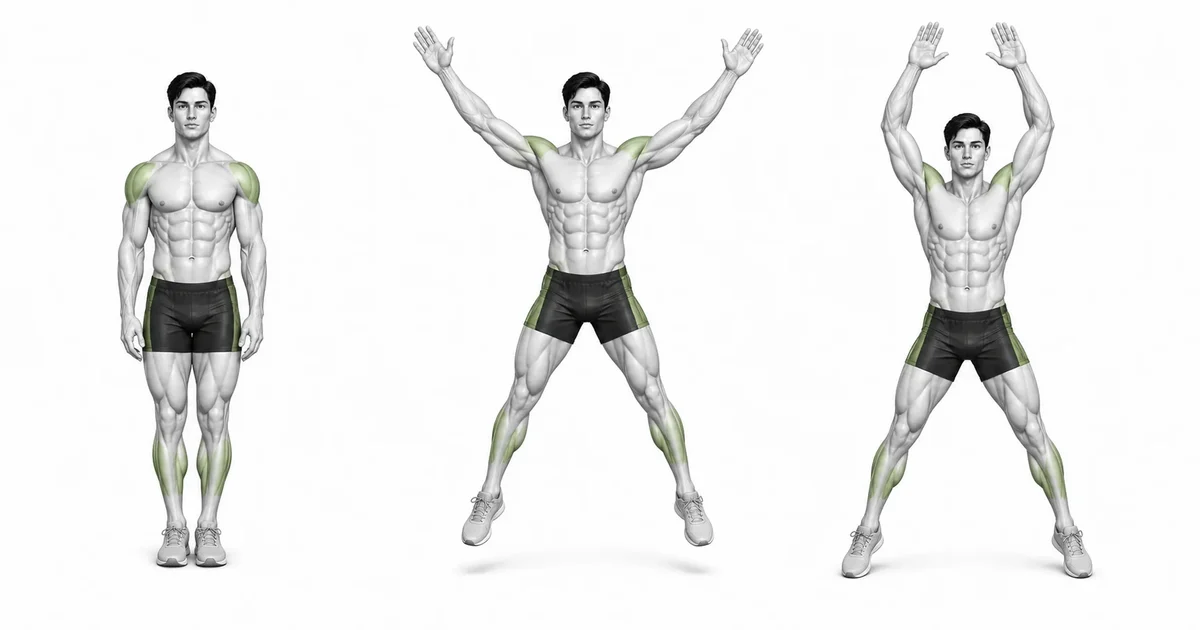
Key point: Progression principle: Increase only one of speed, number of repetitions, and arm height and maintain the others.
TROUBLESHOOTING
Fix the cause of a mistake, not just its appearance
Land hard on your toes
- What you see
- Footsteps are loud and cause discomfort in the calves or knees.
- Likely cause
- Jump height or speed may be out of control.
- How to correct it
- Reduce jump height and speed or switch to stepjack.
Knees collapse inward
- What you see
- When landing, the knees are pulled in toward the inside of the feet.
- Likely cause
- Fatigue or current width may be the cause.
- How to correct it
- Reduce foot spread and slow down.
Forcibly raise your arm all the way.
- What you see
- Shoulder discomfort or excessive rib lifting.
- Likely cause
- Arm range may be greater than current shoulder condition.
- How to correct it
- Raise your arms only to a comfortable height.
Hold your breath
- What you see
- Excessive force is applied to the face and neck.
- Likely cause
- You may have missed your breath while trying to keep pace.
- How to correct it
- Breathe naturally and slow down to the rhythm.
Maintains jumping even when fatigued
- What you see
- Landing sound becomes louder and balance becomes unstable.
- Likely cause
- You may be sticking with the jump variant.
- How to correct it
- Instantly switch to step jack or rest.
Ignore pain or dizziness
- What you see
- Sharp pain, numbness, dizziness, and chest discomfort may occur.
- Likely cause
- Your current exercise intensity or condition may not be suitable.
- How to correct it
- Discontinue immediately and consult a specialist if symptoms persist.
REGRESSION & PROGRESSION
Match the difficulty before adding load
In-place arm swing
Learn the arm path and breathing first without jumping.
Step Jack
Place one foot on the floor and move your foot to the side.
Small jumping jack
Use low jumps only when a quiet landing can be maintained.
Rhythm Jumping Jack
Increase duration only when balance and breathing are maintained on all repetitions.
BEGINNER PROGRAM
A practical starting framework
Use 2–4 times per week as a warm-up or short cardio session. For the first two weeks, use short intervals of 20–30 seconds, plenty of rest, and keep step jacks as your default choice.
Exercise Time
20–30 seconds
Stable landing and breathing range
Number of sets
2–4 sets
Rest 30–60 seconds between sets
Progress
+5 seconds or smaller speed increase
Add one thing at a time
- If the landing is quiet for all repetitions and there is no pain in the knees, ankles or shoulders, then only raise one variable for the next session.
- If you experience a landing sound, knee collapse, loss of balance, or loss of breathing control, immediately switch to step jacks or rest.
- Chest discomfort, dizziness, fainting, sharp pain and numbness are different from general exercise fatigue. Do not continue if you have symptoms.
Frequently asked questions
Do I need to raise my arms above my head?
No. Raise your shoulders only to a comfortable range. Do not forcefully increase the height of your arms.
How many minutes should I do it?
There is no set required time. Start with short intervals, such as 20–30 seconds, and increase slightly only when landing and holding your breath.
Can I continue if my knee hurts?
No. Stop immediately and switch to step jacks or another low-impact activity. If pain persists, do not proceed with the modification.
When can I go faster?
Make small increases in either speed or time only when you have a quiet landing, balance, and breathing on every repetition.