KETTLEBELL PRESS
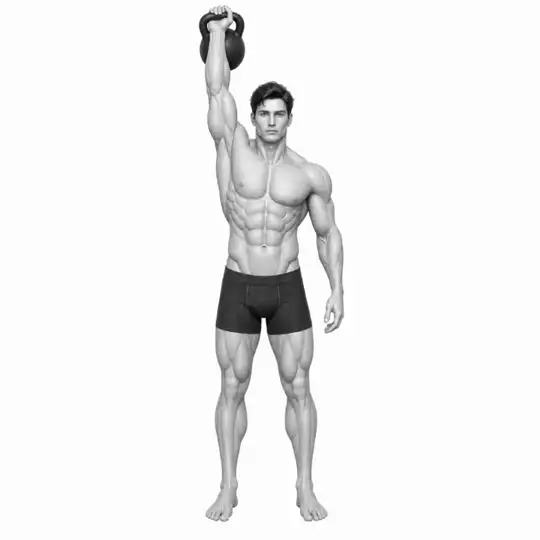
A vertical push exercise that utilizes the kettlebell’s unique center of gravity to improve shoulder strength and full-body stability.
Hold the kettlebell in rack position. Keep your elbows close to your torso and place the cable on the outside of your forearm. Stand straight with your feet shoulder-width apart and keep your whole body relaxed. Exhale and push the kettlebell vertically above your head. At this time, rotate your arm slightly and let it follow a natural trajectory. Pause briefly at the top, then slowly and controlledly return to the starting position.
- Primary muscles
- Anterior Deltoid
- Secondary muscles
- Lateral Deltoid·Triceps Brachii·Core
- Difficulty
- Intermediate
- Movement type
- Vertical Push
How is it different from the dumbbell press?
Kettlebells require much greater involvement of the shoulder stabilizers due to their offset center of gravity.
STEP BY STEP
4 Steps for One Complete Rep
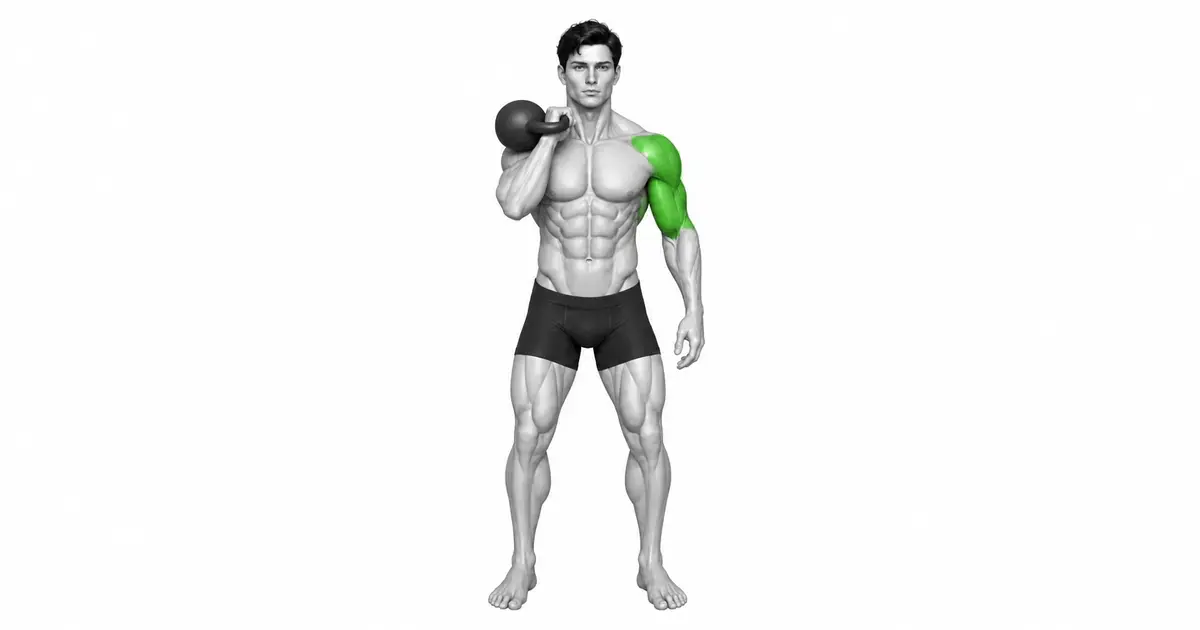
- 1
Rack Position
Raise the kettlebell to chest height. Support the kettlebell with your elbows at your sides and your wrists straight.
- 2
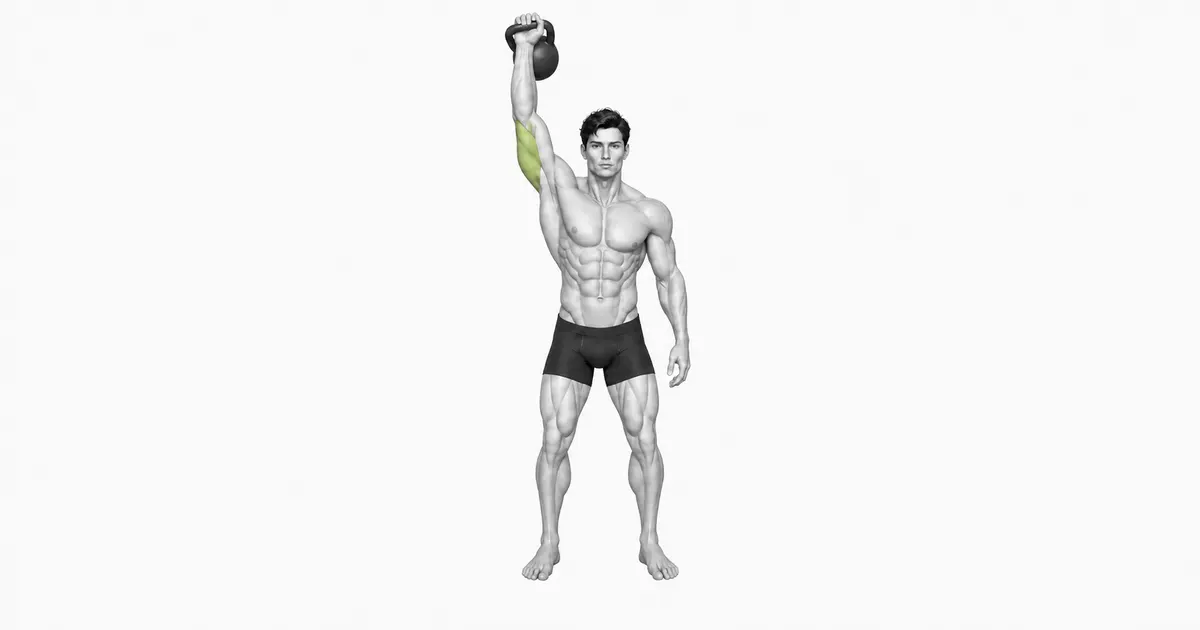
Push vertically
Keeping your core and hips strong, push the kettlebell up above your head. Place your arms next to your ears.
- 3
Vertex Lockout
Hold the kettlebell with your arms fully extended. Maintains whole body stability.
- 4
Take control and get off
Feel the weight and slowly return to the rack position. Lower your elbows toward your torso.
CENTER OF GRAVITY
Kettlebell’s unique center of gravity utilization
The center of gravity of a kettlebell is outside the handle, so a force is generated that pulls the arm outward during the press movement. In the process of overcoming this and maintaining a vertical trajectory, the rotator cuff of the shoulder and core muscles are strongly activated.
Provides a wider and more natural range of motion than the dumbbell press, and is especially effective in building wrist and forearm strength.
RANGE, LOAD & TEMPO
Choose a range and load that keep the Kettlebell Press repeatable
The useful range of motion ends before your torso or working joints have to change position to move the load. Keep the anterior deltoid producing the movement while the lateral deltoid·triceps brachii·core support the same alignment from the first repetition to the last.
Use a controlled lowering phase of about two to three seconds and avoid bouncing through the transition. If the final repetitions become shorter, faster, or visibly different from the first, reduce the load or stop the set before technique breaks down.
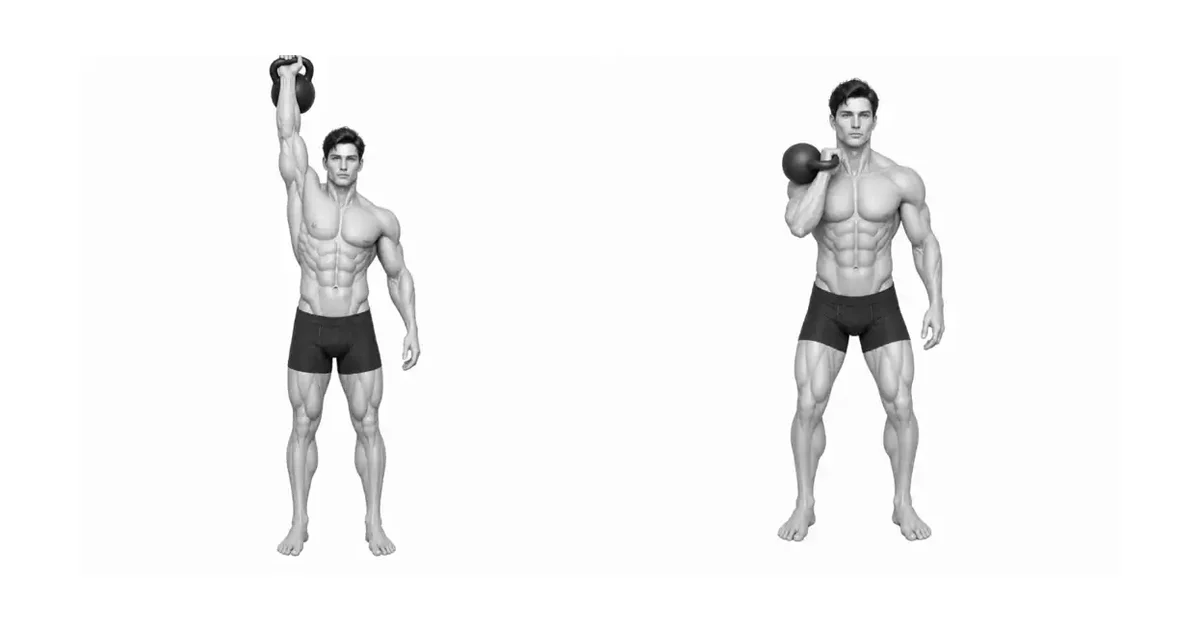
Key point: Progress the Kettlebell Press only after every repetition follows the same path without joint pain.
TROUBLESHOOTING
Fix the cause of a mistake, not just its appearance
wrist bent
- What you see
- A phenomenon in which the wrist is tilted backward due to the weight of the kettlebell.
- Likely cause
- Poor grip or lack of wrist strength.
- How to correct it
- Keep your wrists straight so the kettlebell and forearm are in a straight line.
Back hyperextension
- What you see
- The action of leaning the upper body back excessively when pushing a weight.
- Likely cause
- The weight is too heavy or the core strength is loose.
- How to correct it
- Firmly tighten your hips and abs to keep your pelvis in a neutral position.
REGRESSION & PROGRESSION
Match the difficulty before adding load
Double Kettlebell Press
Hold a kettlebell in both hands and push up simultaneously to increase overall upper body strength.
Bottoms-Up Press
improve grip strength and shoulder stability by holding the kettlebell upside down with the bottom facing the sky.
BEGINNER PROGRAM
A practical starting framework
The kettlebell press is more than just a shoulder exercise. Focus on strengthening your entire body.
Frequency
1-2 times a week
Place this exercise early in the session as it requires full body coordination.
Volume
3~5 sets, 5~10 times
Stability is important, so focus on high-quality repetitions rather than excessive numbers.
- Push off the ground strongly with the soles of your feet.
- Be careful not to shrug your shoulders when pushing up.
- Maintain abdominal pressure firmly through breathing.
Frequently asked questions
The rack posture is very uncomfortable.
At first, the feeling of the kettlebell touching your forearm may be unfamiliar. You will gradually get used to it by using a wrist guard or learning the correct grip technique.