LANDMINE PRESS
A shoulder-friendly diagonal press that builds anterior deltoid strength and upper chest volume
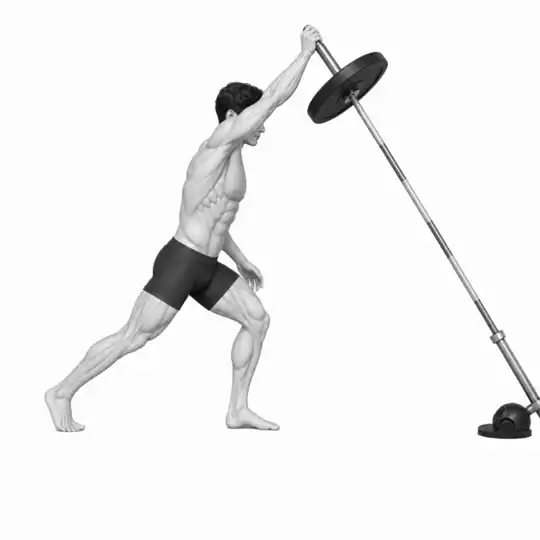
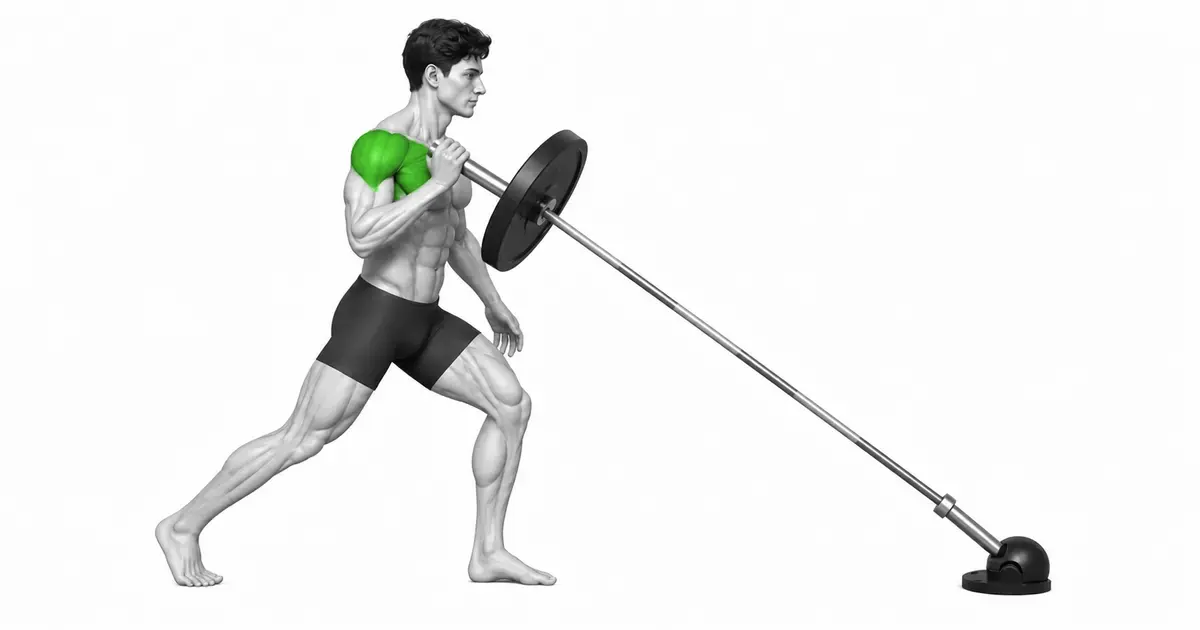
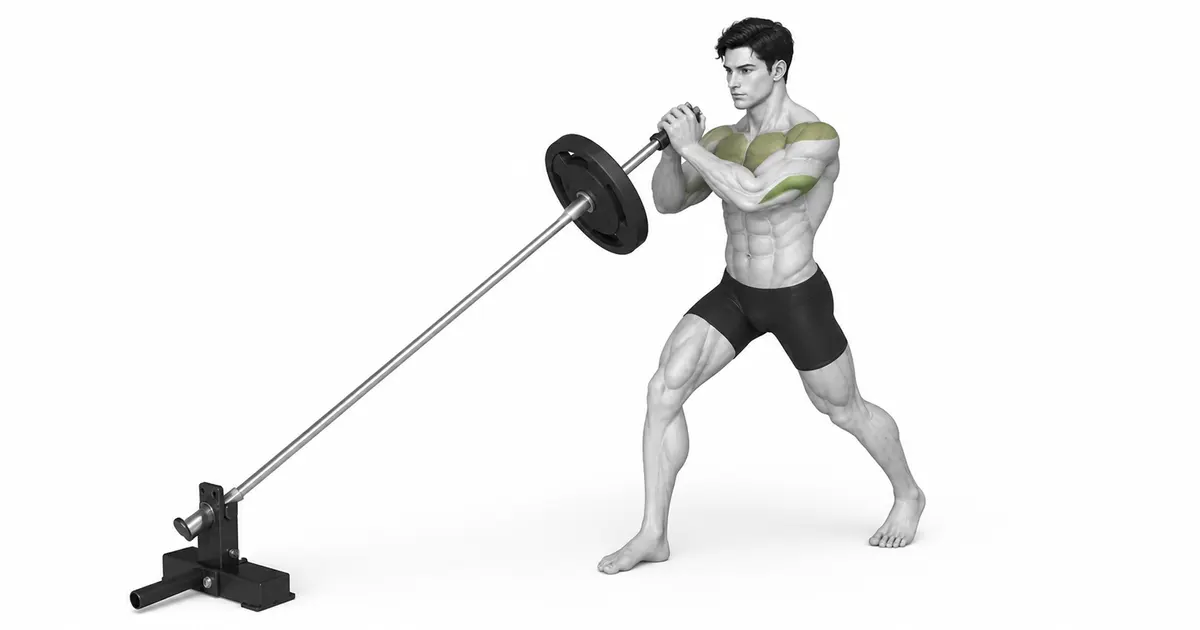
Anchor one end of a barbell in a landmine socket or a corner. Hold the opposite end with one hand at shoulder height. Stand with your feet in a staggered stance or side-by-side and engage your core. Exhale as you press the bar diagonally upward and forward until your arm is fully extended. Pause briefly at the top, then slowly lower the bar back to the starting position under control.
- Primary muscles
- Anterior Deltoid · Upper Pectoralis Major
- Secondary muscles
- Triceps Brachii · Serratus Anterior · Core
- Difficulty
- Beginner
- Movement type
- Diagonal Push
Is this a chest or shoulder exercise?
It targets both. The anterior deltoid is the primary mover, but the upper pectoralis major is heavily involved in the diagonal pressing motion.
STEP BY STEP
4 Steps for One Complete Rep
- 1
Setup and grip
Hold the end of the barbell at shoulder level. Stand tall with your chest out and stabilize your core. Grip the bar firmly.
- 2
Diagonal press
Drive the barbell upward and forward in a straight line. Focus on using your front deltoid and upper chest to move the weight.
- 3
Peak contraction
Feel the tension in your shoulder and serratus anterior as you reach full arm extension.
- 4
Controlled return
Slowly lower the bar back to your shoulder, resisting the weight and keeping your elbow from flaring too far out.
SHOULDER FRIENDLY ARC
A safer path for the shoulder joint
Because the landmine press follows a diagonal arc rather than a purely vertical path, it reduces the demand for thoracic and shoulder mobility. This makes it an excellent choice for individuals who experience discomfort during traditional overhead pressing.
The anchored nature of the bar also provides increased stability, allowing you to focus on the mechanics of the press and the engagement of the target muscles without the balancing requirements of a free-standing barbell.
RANGE, LOAD & TEMPO
Choose a range and load that keep the Landmine Press repeatable
The useful range of motion ends before your torso or working joints have to change position to move the load. Keep the anterior deltoid · upper pectoralis major producing the movement while the triceps brachii · serratus anterior · core support the same alignment from the first repetition to the last.
Use a controlled lowering phase of about two to three seconds and avoid bouncing through the transition. If the final repetitions become shorter, faster, or visibly different from the first, reduce the load or stop the set before technique breaks down.
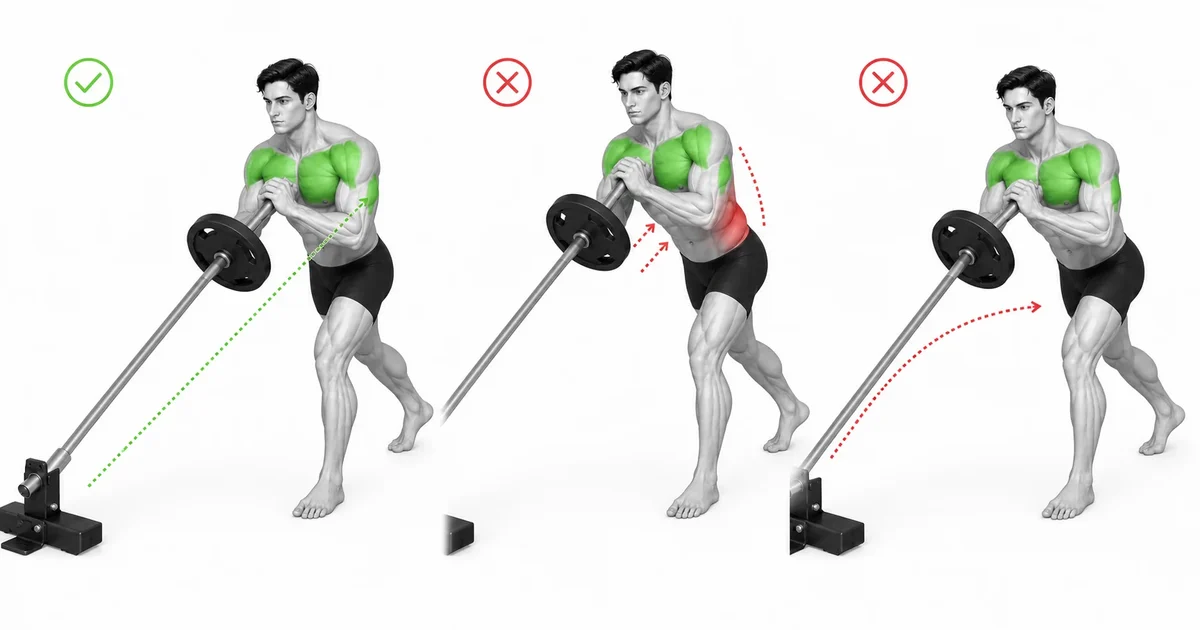
Key point: Progress the Landmine Press only after every repetition follows the same path without joint pain.
TROUBLESHOOTING
Fix the cause of a mistake, not just its appearance
Excessive torso rotation
- What you see
- The body twists away from the bar as you press.
- Likely cause
- Using a weight that is too heavy or having a weak core.
- How to correct it
- Lower the weight and focus on keeping your shoulders and hips square to the front throughout the set.
Elbow flaring
- What you see
- The elbow points directly out to the side during the descent.
- Likely cause
- Improper shoulder alignment.
- How to correct it
- Keep your elbow tucked at about a 45-degree angle to your body to maintain a safe and strong pressing position.
REGRESSION & PROGRESSION
Match the difficulty before adding load
Kneeling Landmine Press
Perform the press while kneeling to eliminate leg drive and increase the demand on your core and shoulder isolation.
Two-Handed Landmine Press
Hold the bar with both hands to move heavier loads and shift more emphasis to the upper pectorals.
BEGINNER PROGRAM
A practical starting framework
The landmine press combines safety with functionality. It's a great addition to any upper-body strength program.
Frequency
1-2 times per week
A versatile movement that fits well in both shoulder and chest-focused routines.
Volume
3-4 sets of 10-15 reps
Focus on the quality of the contraction and a smooth, controlled tempo.
- Do not shrug your shoulder toward your ear at the top of the press.
- Keep your feet firmly planted and avoid using momentum.
- Take 2-3 seconds to lower the bar for maximum time under tension.
Frequently asked questions
Which foot should be forward?
A staggered stance with the foot opposite to the pressing arm forward is most stable, but you can also use a parallel stance to challenge your core more.