MACHINE LATERAL RAISE
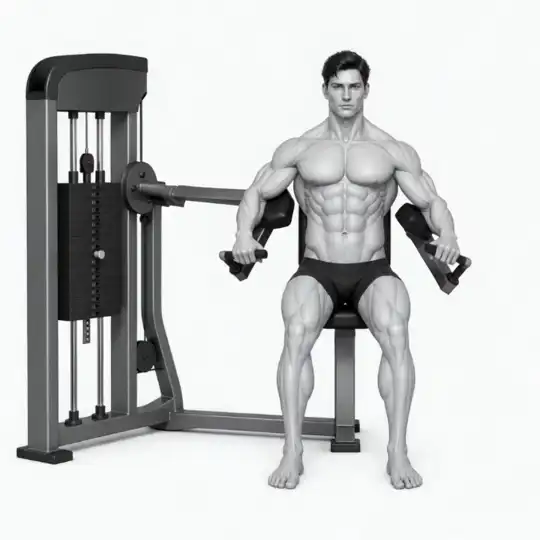
Machine exercise that focuses the lateral delts and fills shoulder volume with a fixed trajectory.
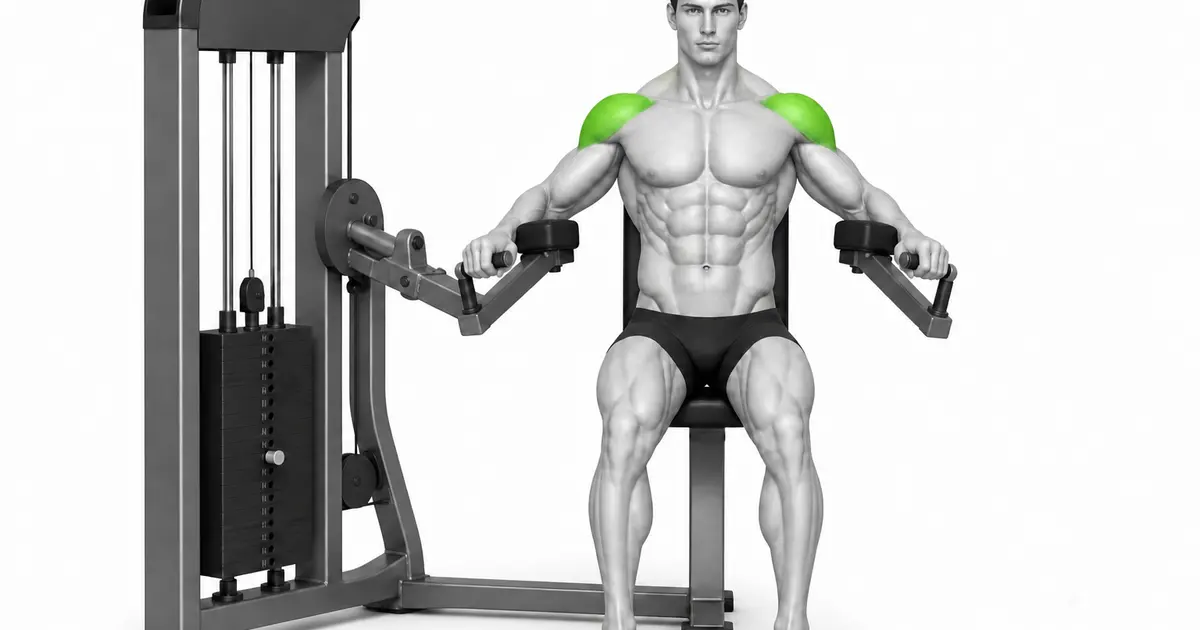
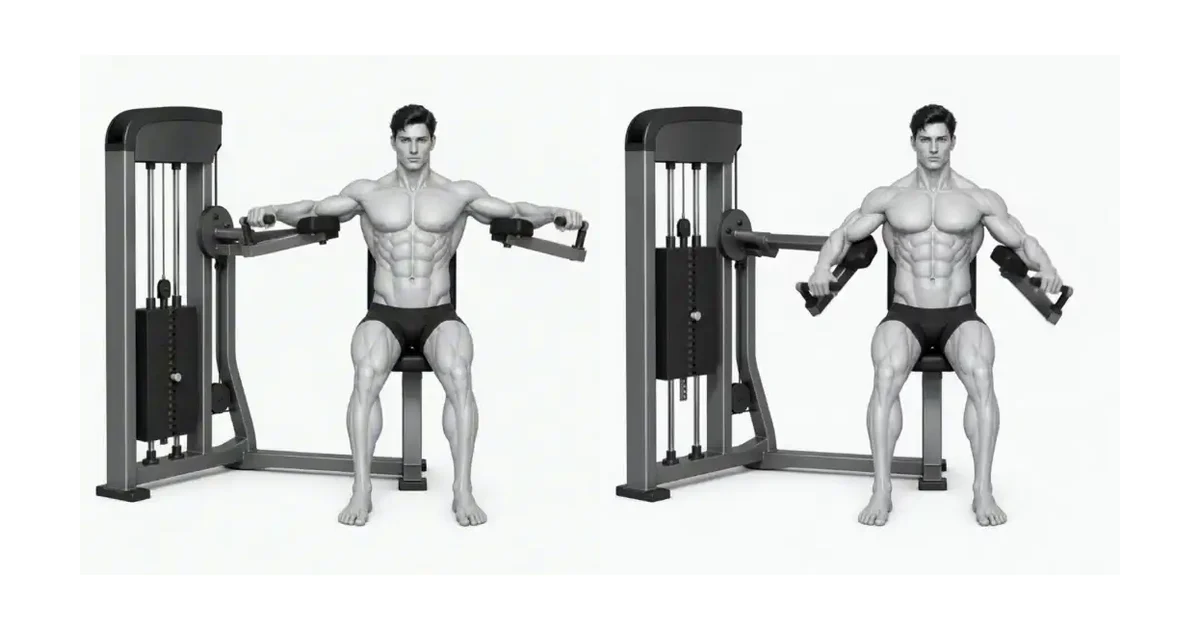
Sit on the machine with your chest pressed against the pad or lean back and hold the handle. Keep your elbows on the pads and lower your shoulders. Exhale and lift the pad as if pushing your elbows to the sides. After feeling a strong contraction of the side deltoid muscles at the top, slowly withstand resistance and return to the starting position.
- Primary muscles
- Lateral Deltoid
- Secondary muscles
- Upper Trapezius · Anterior Deltoid
- Difficulty
- Beginner
- Movement type
- Shoulder Abduction
Are machines better than dumbbells?
Machines provide constant resistance and stability, making them good for isolation training, while dumbbells are great for developing coordination muscles. Mix the two properly.
STEP BY STEP
4 Steps for One Complete Rep
- 1
Setting and positioning
Adjust the seat height so that your elbows are centered on the machine's pad. Hold the handle lightly to stabilize your shoulders.
- 2
Push-ups with elbows
Lift the pad from side to side as if you are pushing it with your elbows, not your hands. Focus on isolation of the lateral deltoids.
- 3
Apex Contraction
Pause briefly where your arms are parallel to the floor to improve muscle tension.
- 4
Return slowly
Lower the weight slowly and under control. Stop just before the weight stack touches down to avoid releasing tension in your shoulders.
ALIGNMENT IS KEY
Alignment of rotation axis and elbow
The most important thing in machine lateral raises is to match the axis of rotation of your shoulder joints with the axis of rotation of the machine.
Misalignment can cause the elbow to slip off the pad during movement or create unnecessary shear forces on the shoulder joint. Finely adjust the seat height to find the most stimulating position.
RANGE, LOAD & TEMPO
Choose a range and load that keep the Machine Lateral Raise repeatable
The useful range of motion ends before your torso or working joints have to change position to move the load. Keep the lateral deltoid producing the movement while the upper trapezius · anterior deltoid support the same alignment from the first repetition to the last.
Use a controlled lowering phase of about two to three seconds and avoid bouncing through the transition. If the final repetitions become shorter, faster, or visibly different from the first, reduce the load or stop the set before technique breaks down.
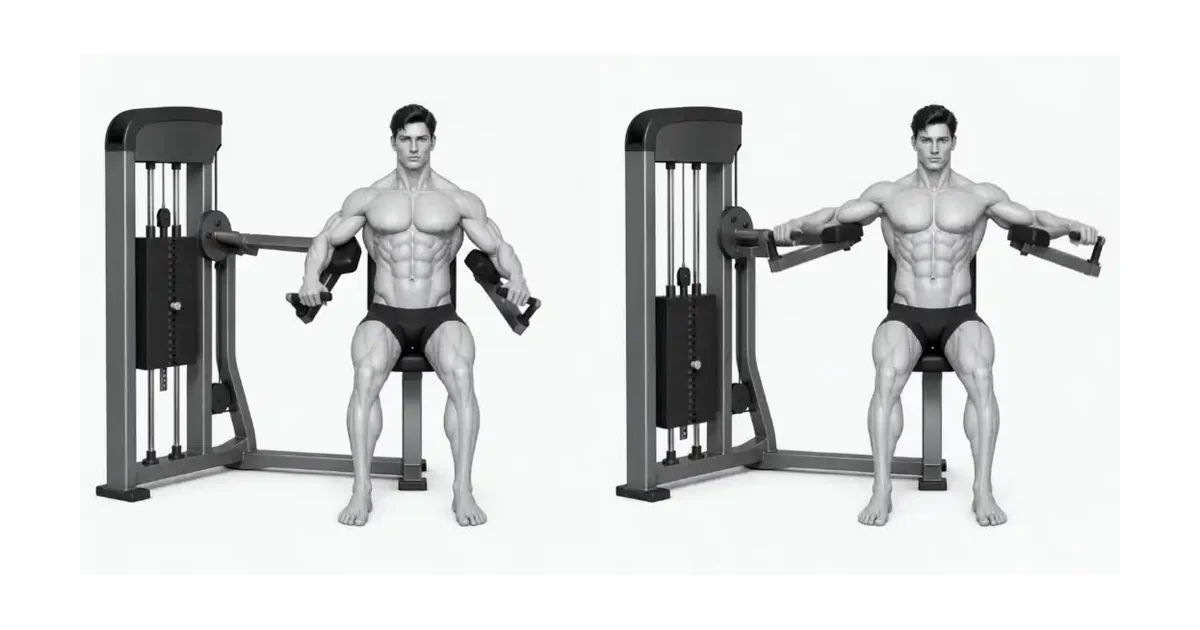
Key point: Progress the Machine Lateral Raise only after every repetition follows the same path without joint pain.
TROUBLESHOOTING
Fix the cause of a mistake, not just its appearance
Excessive trapezius muscle use
- What you see
- A condition in which the neck muscles become tense when the pad is lifted, causing shoulders to be shrugged.
- Likely cause
- There is not enough strength to lower the shoulder or the weight is too heavy.
- How to correct it
- With your shoulders pressed down and fixed, focus on the feeling of only sending your elbows out to the sides.
Hold the handle firmly with your hand.
- What you see
- A phenomenon in which excessive force is applied to the wrist and forearm muscles.
- Likely cause
- Lack of understanding of elbow-led movements.
- How to correct it
- Hold the handle lightly as if you are only positioning it, and focus all your strength on the elbow pad.
REGRESSION & PROGRESSION
Match the difficulty before adding load
One Arm Machine Raise
Perform with one arm to more closely feel the stimulation of each side deltoid muscle and correct imbalances.
Posed Machine Raise
Pause for 2 to 3 seconds at the peak contraction point to increase muscle nervous system activity.
BEGINNER PROGRAM
A practical starting framework
Machine lateral raises are excellent for increasing lateral deltoid definition. Choose a weight that allows you to maintain correct posture.
Frequency
2-3 times a week
It is very effective when performed as a finishing exercise after dumbbell raises.
Volume
3~4 sets, 15~20 times
Take advantage of the stability of the machine to completely tire your muscles with high reps.
- Keep your upper body firmly on the pad and do not use recoil.
- Maintain a constant speed throughout the movement.
- Use the full range of motion to fully relax your muscles.
Frequently asked questions
Is it the same for standing machines?
Yes, standing machines may require slightly more core involvement, but the basic principles are the same.