MACHINE SHRUG
A stabilized vertical movement that targets the upper trapezius to build powerful upper-body thickness
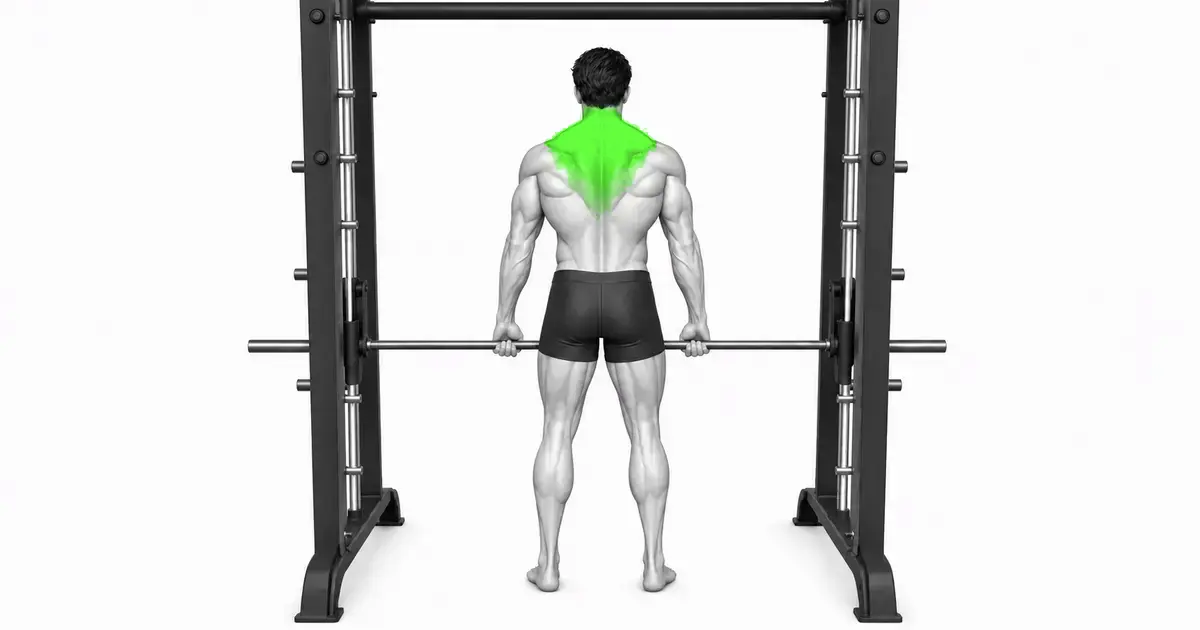
Stand in the shrug machine and grasp the handles firmly. Stand tall with your chest out and shoulders depressed. Keeping your arms perfectly straight, lift your shoulders toward your ears in a shrugging motion. Feel the peak contraction in your trapezius at the top, then slowly lower the handles back to the starting position under full control.
- Primary muscles
- Upper Trapezius
- Secondary muscles
- Middle Trapezius · Levator Scapulae
- Difficulty
- Beginner
- Movement type
- Scapular Elevation
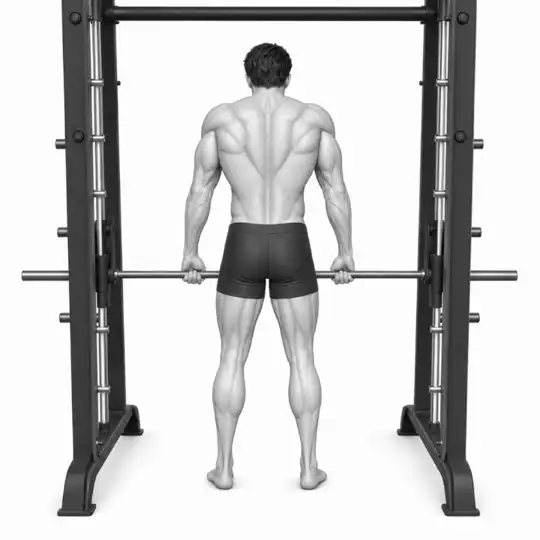
Is it as effective as barbell shrugs?
Yes, for isolating the traps, machines can be even more effective due to the increased stability and focus on the target muscle.
STEP BY STEP
4 Steps for One Complete Rep
- 1
Setup and stance
Position yourself in the center of the machine. Grip the handles with a neutral grip and stand with feet hip-width apart.
- 2
Elevate shoulders
Lift your shoulders vertically toward your ears without bending your elbows. Focus on using your traps to drive the weight.
- 3
Peak contraction
Pause briefly at the top to improve the tension on the upper trapezius muscles.
- 4
Controlled descent
Slowly lower the handles until your traps are fully stretched. Do not let the weight stack touch down between reps.
MACHINE STABILITY
improve tension with guided stability
The primary benefit of using a machine for shrugs is the elimination of horizontal movement. This allows you to channel all your energy into the vertical elevation of the scapula, which is the primary function of the upper trapezius.
Machines also often feature ergonomic handles that reduce wrist strain and provide a more natural path for the shoulders. This makes them ideal for high-volume hypertrophy training or intensity techniques like drop sets, where maintaining perfect form with free weights becomes difficult as you fatigue.
RANGE, LOAD & TEMPO
Choose a range and load that keep the Machine Shrug repeatable
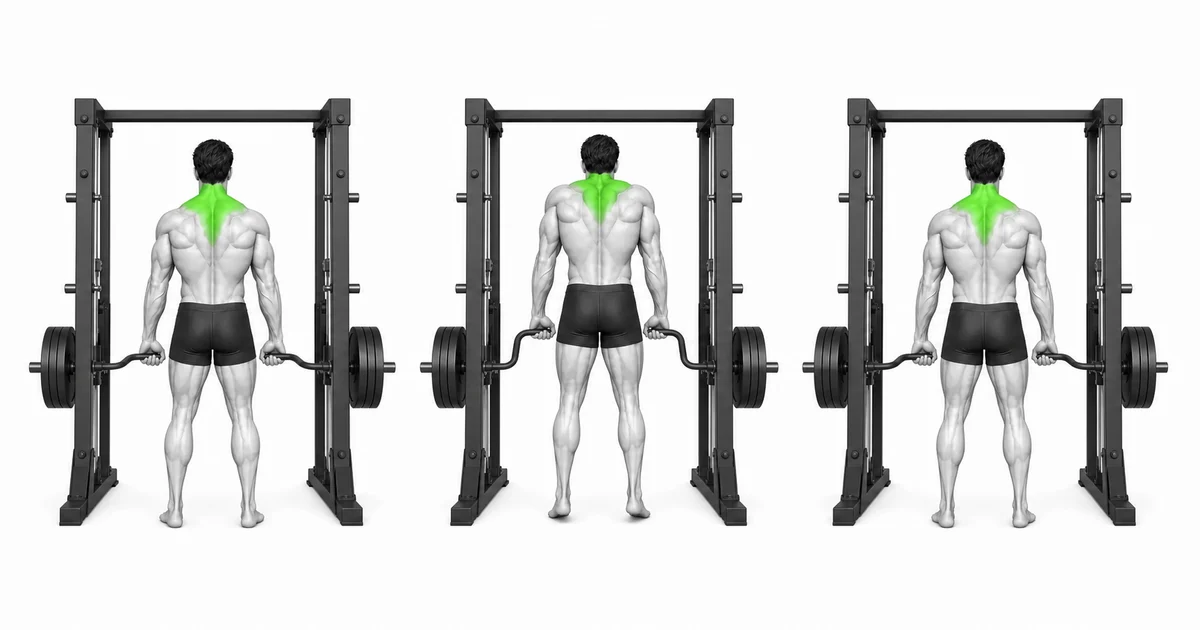
The useful range of motion ends before your torso or working joints have to change position to move the load. Keep the upper trapezius producing the movement while the middle trapezius · levator scapulae support the same alignment from the first repetition to the last.
Use a controlled lowering phase of about two to three seconds and avoid bouncing through the transition. If the final repetitions become shorter, faster, or visibly different from the first, reduce the load or stop the set before technique breaks down.
Key point: Progress the Machine Shrug only after every repetition follows the same path without joint pain.
TROUBLESHOOTING
Fix the cause of a mistake, not just its appearance
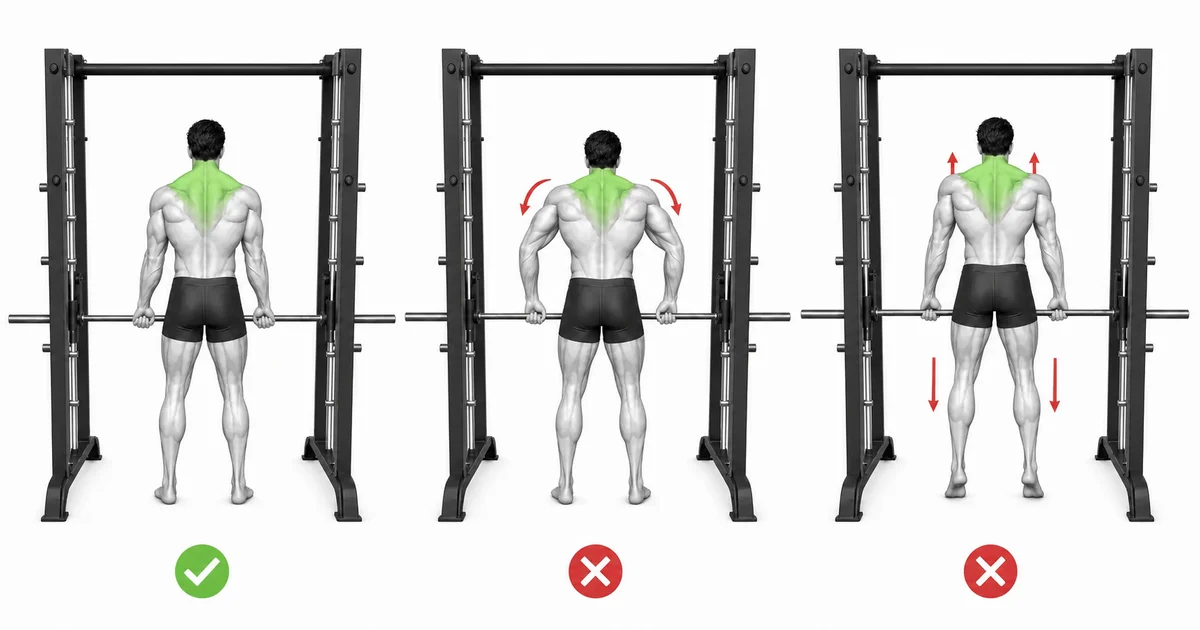
Rolling the shoulders
- What you see
- Moving the shoulders in a circle at the top of the movement.
- Likely cause
- Incorrect belief that it hits the muscles better or a lack of technical awareness.
- How to correct it
- Move the weight only up and down. Rolling can lead to shoulder impingement and rotator cuff issues over time.
Bending the elbows
- What you see
- Using the biceps to help pull the weight up.
- Likely cause
- Using a weight that is too heavy for the traps to move independently.
- How to correct it
- Keep your arms fully extended. Think of your hands as hooks; the only movement should come from the shoulders.
REGRESSION & PROGRESSION
Match the difficulty before adding load
Paused Machine Shrug
Hold the top position for 3-5 seconds to build isometric strength and increase time under tension.
Seated Machine Shrug
Use a seated machine variation to completely remove any potential leg drive or body sway.
BEGINNER PROGRAM
A practical starting framework
The machine shrug is a safe and effective choice for building trap size. Prioritize control and a full range of motion.
Frequency
1-2 times per week
A great finishing move for back or shoulder sessions.
Volume
3-4 sets of 12-15 reps
Higher repetitions are ideal for maximizing the pump and blood flow to the trapezius.
- Keep your neck neutral; do not crane your head forward.
- Maintain a consistent, controlled tempo on both the lift and the lower.
- Use lifting straps if your grip fails before your traps are exhausted.
Frequently asked questions
What is the best grip?
Most machines use a neutral grip (palms facing each other), which is generally the most comfortable and safest for the shoulder joints.