NORDIC HAMSTRING CURL
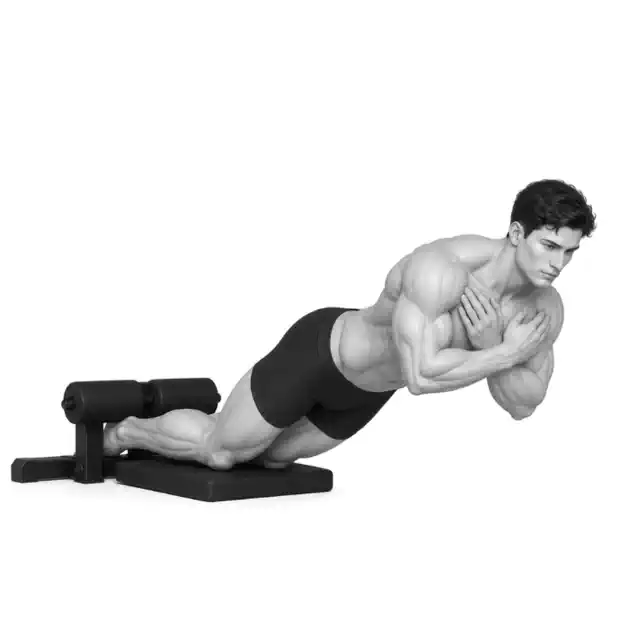
Nordic hamstring curl is not an exercise in which you hold on to the end and then collapse, but rather an eccentric exercise in which you slowly lower a controllable section while keeping your torso and thighs in one line.
Nordic curl trains the eccentric strength of the hamstrings by locking the ankles and lowering the entire body forward around the knees. It is normal for it to be very intense and difficult to control from start to finish. Use secure anchors and thick knee pads, and gradually increase the range by using bands, elevated supports, and hand holds.
- Primary muscles
- Hamstrings
- Secondary muscles
- Gluteus maximus, gastrocnemius, core
- Difficulty
- Advanced
- Movement type
- Eccentric knee bending
Do I have to go all the way down from the beginning?
No. Most start with a short range. Gradually increase the extent to which you can maintain alignment and descent for at least 3 seconds.
STEP BY STEP
4 Steps for One Complete Rep
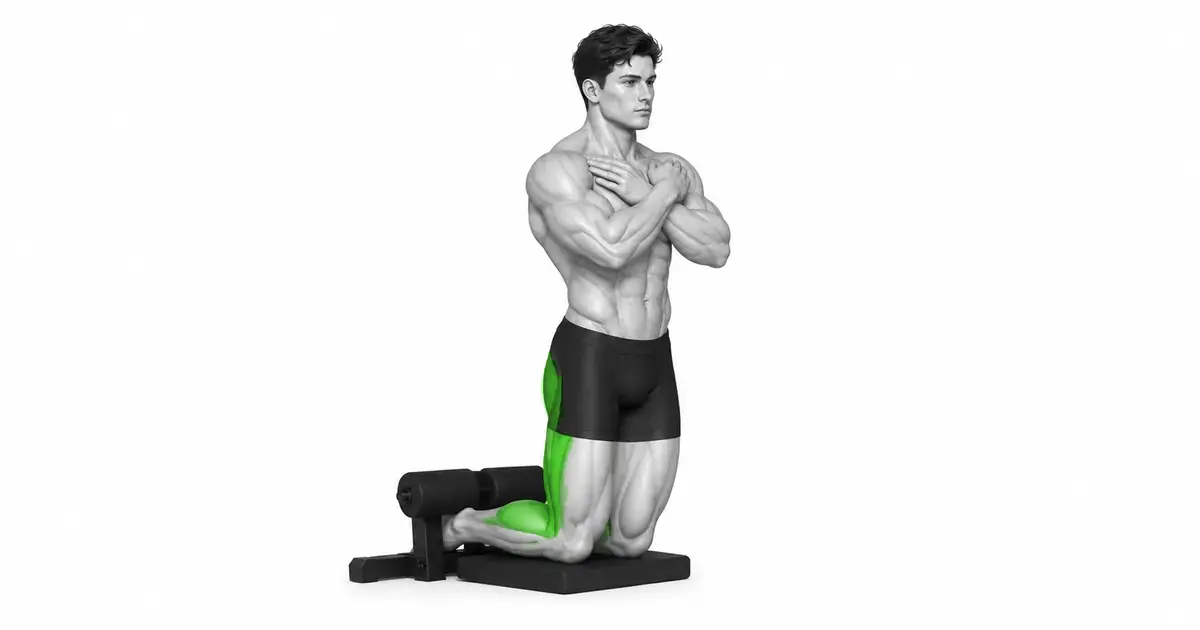
- 1
Check ankle anchors and knee pads
Tests whether the Nordic bench's pads or heavy anchors provide secure ankle support. Use thick pads to avoid compressing your kneecaps.
- 2
Create a line from head to knees
Tighten your hips, lower your ribs, and keep your torso and thighs close to a straight line. Keep your ankles comfortably fixed and your hands ready to receive in front of you.
- 3
Slowly lower forward with hamstrings
Lean your entire body forward, pivoting on your knees, for 3 to 5 seconds. Hold as much as possible until your hips fall back or your lower back bends.
- 4
Pick it up by hand and return safely
Place your hand on the floor or a high support at the end of control to reduce the impact. Push lightly to return to the starting position, but do not force the rise using only your hamstrings.
ONE LONG LINE
When the hips are folded, the eccentric demands on the hamstrings are greatly reduced.
The more tired you are, the more likely it is to send your pelvis backward and bend your upper body. Squeeze your hips and think of your ears, shoulders, pelvis, and knees moving together.
The point where alignment is broken is currently in the control range. It is more important to hold on slowly until just before going down to the bottom.
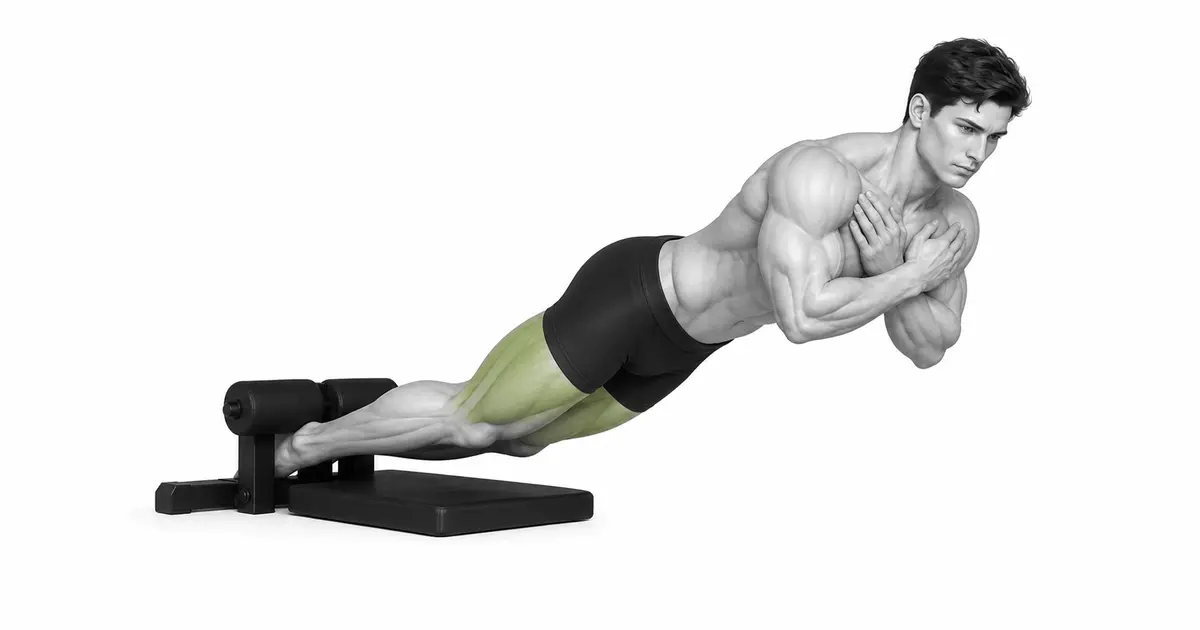
Key point: Cue to use right now: “Lean from your knees to your head as if you were playing a game.”
ASSIST THE RANGE
Band and high rest are formal regression methods to adjust eccentric strength
If you place the support at chest height, you can receive it with your hand in a short range, and the band fixed at the top helps as you go towards the bottom.
To reduce sudden muscle soreness, start with fewer sets and repetitions. Increase the range little by little as control time is maintained.
TROUBLESHOOTING
Fix the cause of a mistake, not just its appearance
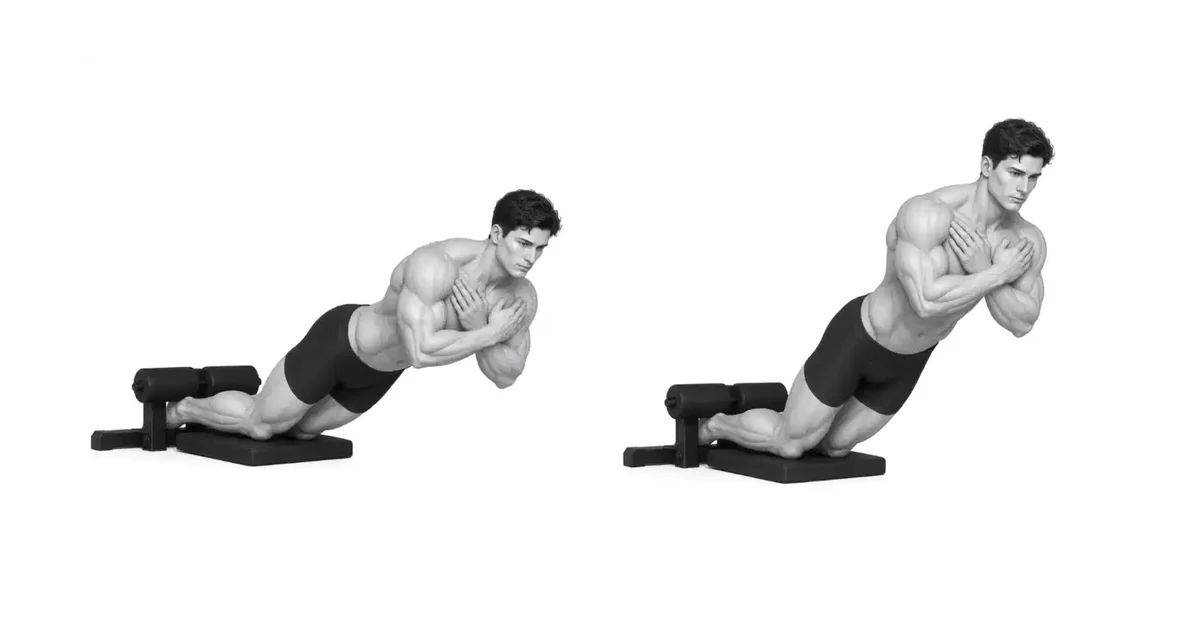
Fold your hips back and down
- What you see
- The pelvis falls behind the knees and only the upper body is bent forward.
- Likely cause
- Current range is too difficult or torso lock is loose.
- How to correct it
- Use a band or high rest and go back to short ranges where one line is maintained.
Falling to the floor without control
- What you see
- The speed increases from the beginning and you get a lot of impact with your wrists and shoulders.
- Likely cause
- Prioritized range over eccentric force.
- How to correct it
- Keep your hands ready to receive and reduce the number and range of repetitions to ensure a descent of at least 3 seconds.
Using unstable anchors
- What you see
- Ankle anchor moves or pressure is concentrated on one side.
- Likely cause
- Temporarily secured using only the weight of furniture or an assistant.
- How to correct it
- Use only dedicated equipment or secure anchors and test their strength before starting.
REGRESSION & PROGRESSION
Match the difficulty before adding load
Leg Curl Machine
Learn controlled knee bending and lowering.
High Stand Nordic
Received by hand at short eccentric range.
Band Assist Nordic
Reduces load across range to maintain alignment.
Eccentric Nordic Curl
Descend unassisted and return safely by hand.
BEGINNER PROGRAM
A practical starting framework
Strong muscle soreness may occur, so start with low volumes and consider overall hamstring fatigue, especially on days such as running/sprint training.
Count
3–6 times
3~5 seconds eccentric, return to hand
Set
2–3 sets
2–3 minutes recovery between sets
Frequency
1–2 times a week
Initially once a week
- If one line and eccentric time are maintained, increase the range first.
- Increase assistance as your fall speed increases or your hips collapse.
- Do not perform if you have acute hamstring pain or a recent injury without a professional return plan.
Frequently asked questions
Should the rising movement be done with the hamstrings as well?
You may initially return to using your hands or band. Making eccentric lowering your primary goal will reduce unnecessary failures and cramps.
Does it prevent hamstring injuries?
Studies have reported reduced injury rates when included in sports prevention programs, but no single exercise prevents all injuries. Consider a combination of progressive loading and actual sport training.