PLATE FRONT RAISE
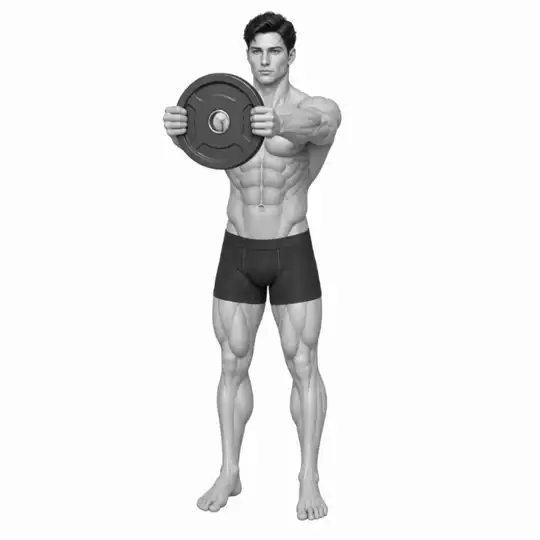
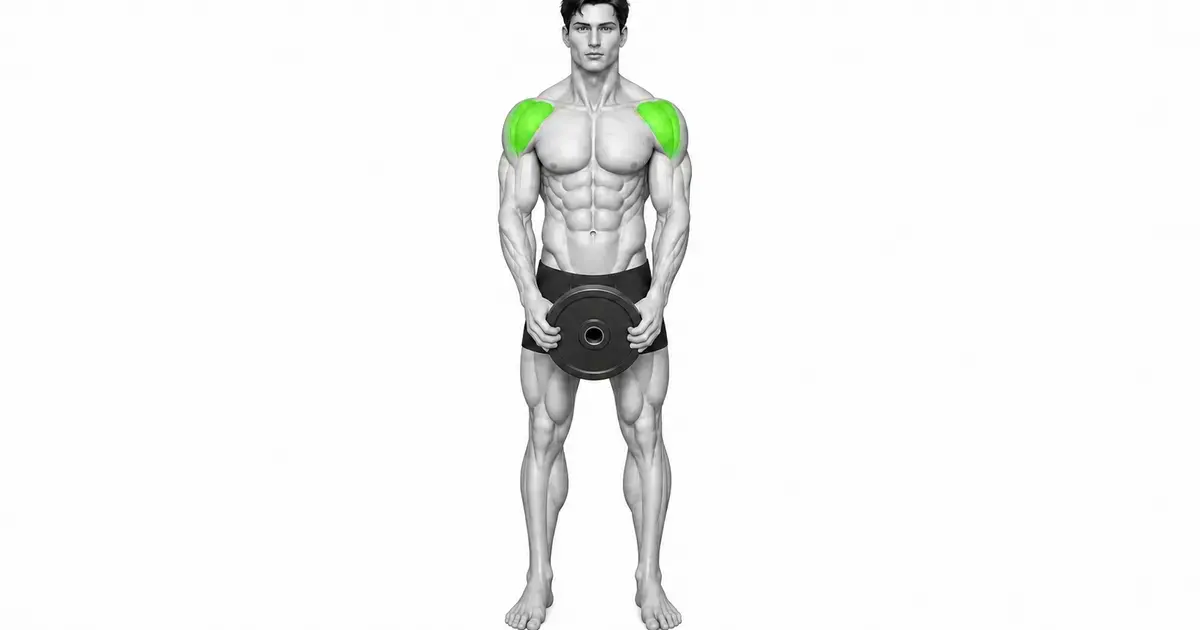
A simple joint exercise that targets the front delts and defines the shoulder line by lifting the disc.
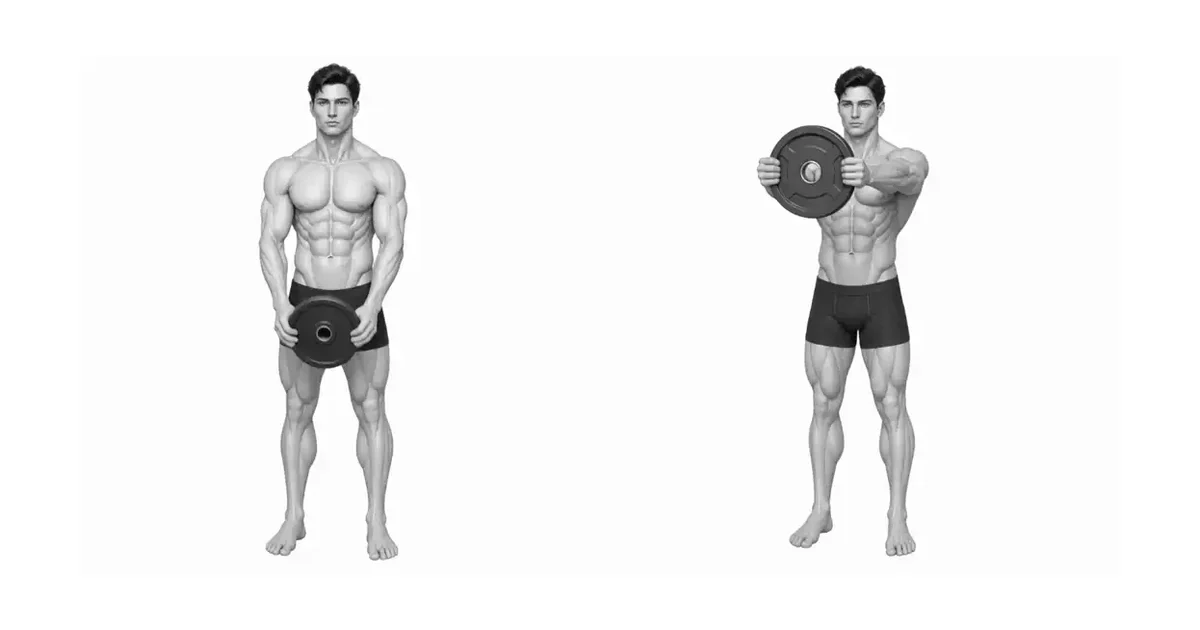
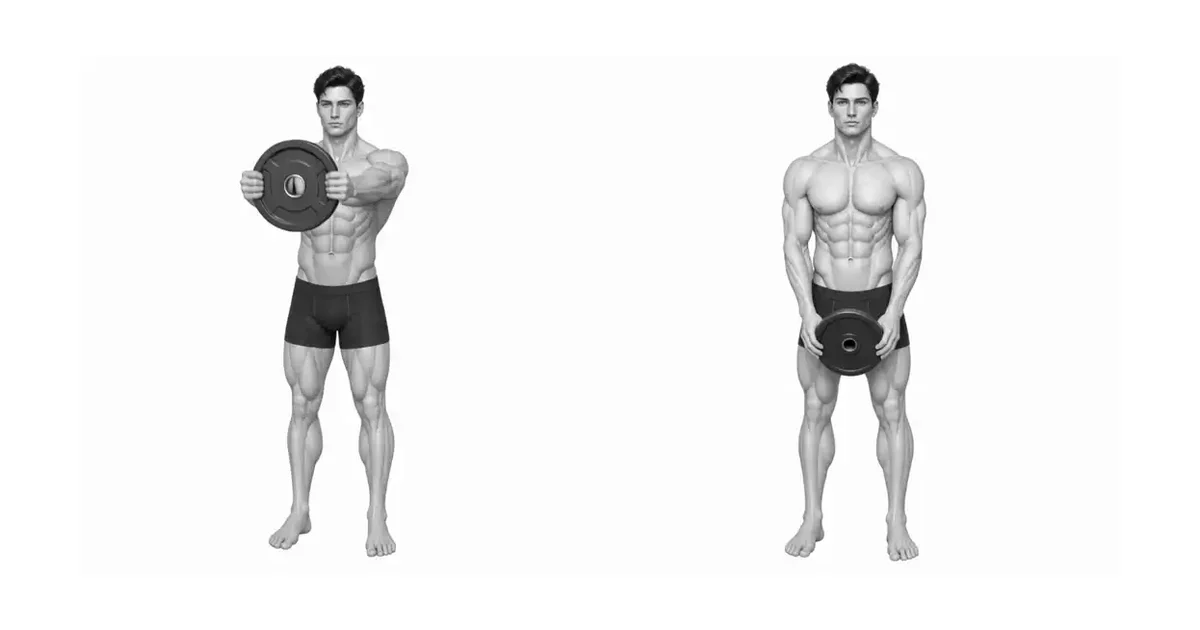
Hold both sides of the disc and place it in front of your thighs. Stand straight with your feet shoulder-width apart and your core tense. With your elbows very slightly bent, lift the disc forward to eye level. At the top, feel your front delts contracting and slowly, controlledly return to the starting position.
- Primary muscles
- Anterior Deltoid
- Secondary muscles
- Lateral Deltoid · Upper Trapezius · Core
- Difficulty
- Beginner
- Movement type
- Shoulder Flexion
Are discs better than dumbbells?
Discs have a fixed grip and are highly stable, but dumbbells allow independent movement of each arm. Choose according to your purpose.
STEP BY STEP
4 Steps for One Complete Rep
- 1
Ready posture
Hold the disk with both hands and stand upright. Lower your shoulders and expand your chest to stabilize your shoulder blades.
- 2
Lifting the disc
With your elbows slightly bent, raise the disc in front of your body to eye level.
- 3
Apex Contraction
Pause briefly at the point of maximum contraction, feeling the stimulation of the anterior deltoid.
- 4
Slow down
Slowly lower the disc to the starting position, resisting gravity. Keep your shoulders relaxed.
PLATE GRIP ADVANTAGE
Stability and stimulation of disc grip
Compared to dumbbells or barbells, the plate front raise places both hands facing each other (closer to a neutral grip), putting less strain on the shoulder joints.
Additionally, the act of holding the disc itself induces tension in the forearm muscles, and the core muscles become more involved to maintain upper body stability. The key is to control the disc so that it does not shake throughout the movement.
RANGE, LOAD & TEMPO
Choose a range and load that keep the Plate Front Raise repeatable
The useful range of motion ends before your torso or working joints have to change position to move the load. Keep the anterior deltoid producing the movement while the lateral deltoid · upper trapezius · core support the same alignment from the first repetition to the last.
Use a controlled lowering phase of about two to three seconds and avoid bouncing through the transition. If the final repetitions become shorter, faster, or visibly different from the first, reduce the load or stop the set before technique breaks down.
Key point: Progress the Plate Front Raise only after every repetition follows the same path without joint pain.
TROUBLESHOOTING
Fix the cause of a mistake, not just its appearance
Use upper body recoil
- What you see
- The movement of leaning back or shaking the body to lift weight.
- Likely cause
- The disc is too heavy to be lifted with the front deltoid muscles alone.
- How to correct it
- Lower the weight and perform this with your back against a wall, or brace your torso with a stronger core.
Elbow hyperextension
- What you see
- A condition in which the arm is fully extended, causing strain on the joints.
- Likely cause
- Bad posture habits.
- How to correct it
- Keep your elbows slightly bent, about 10 degrees, to protect your joints and focus your muscles.
REGRESSION & PROGRESSION
Match the difficulty before adding load
Steering Wheel
Raise the disk to eye level and rotate it left and right like turning a car steering wheel to stimulate various angles of the deltoid muscle.
Overhead Plate Raise
Raise the disc high above your head to strengthen the front deltoid, upper trapezius, and serratus anterior muscles.
BEGINNER PROGRAM
A practical starting framework
Plate front raise is effective in creating a three-dimensional effect on the front shoulder. Do it at a steady pace.
Frequency
1-2 times a week
Great to use as a pumping exercise at the end of your shoulder routine.
Volume
3 sets, 12-15 times
Select the number of times you can maintain the correct form with the appropriate weight.
- When lowering the disc, stop just before it touches your thighs.
- Look straight ahead and pull in your chin.
- Exhale when going up and inhale when going down.
Frequently asked questions
How high should I raise my arms?
Raising to eye level is generally best for anterior deltoid isolation.