REVERSE PEC DECK
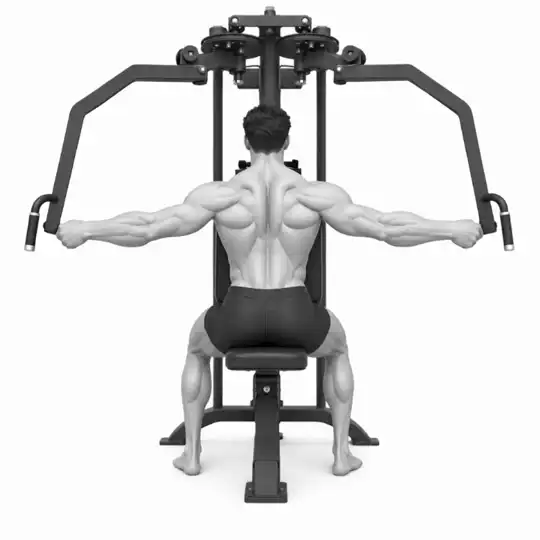
Use the reverse pec deck to train the rear deltoids without turning the movement into a shrug.
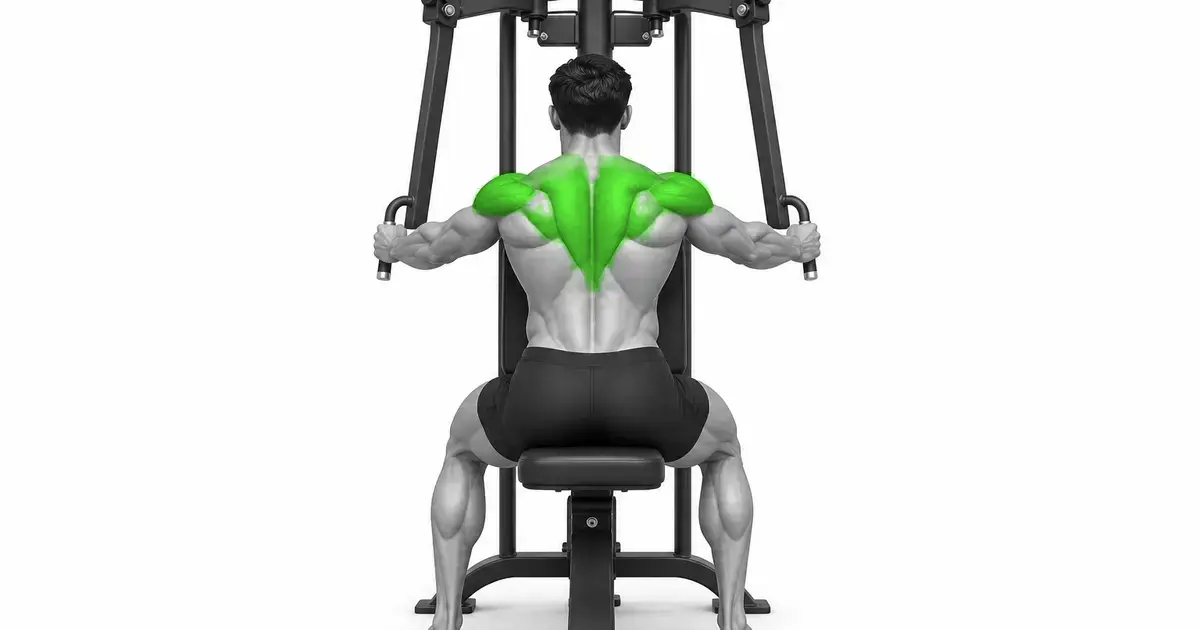
Sit facing the pad with the chest supported and the handles near shoulder height. Keep a small bend in the elbows, open the arms until the shoulders are about to roll forward, and return the handles under control without shrugging.
- Primary muscles
- Rear Deltoid
- Secondary muscles
- Middle Trapezius · Rhomboids · Infraspinatus
- Difficulty
- Beginner
- Movement type
- Shoulder Horizontal Abduction
Is it a back exercise or a shoulder exercise?
This is a shoulder exercise that primarily targets the back of the shoulder (rear deltoids), but the upper back muscles also get involved.
STEP BY STEP
4 Steps for One Complete Rep
- 1
Setting and Preparation
Sit facing the machine and press your chest against the pad. Adjust the seat height so that your arms are parallel to the floor when holding the handle.
- 2
Open back
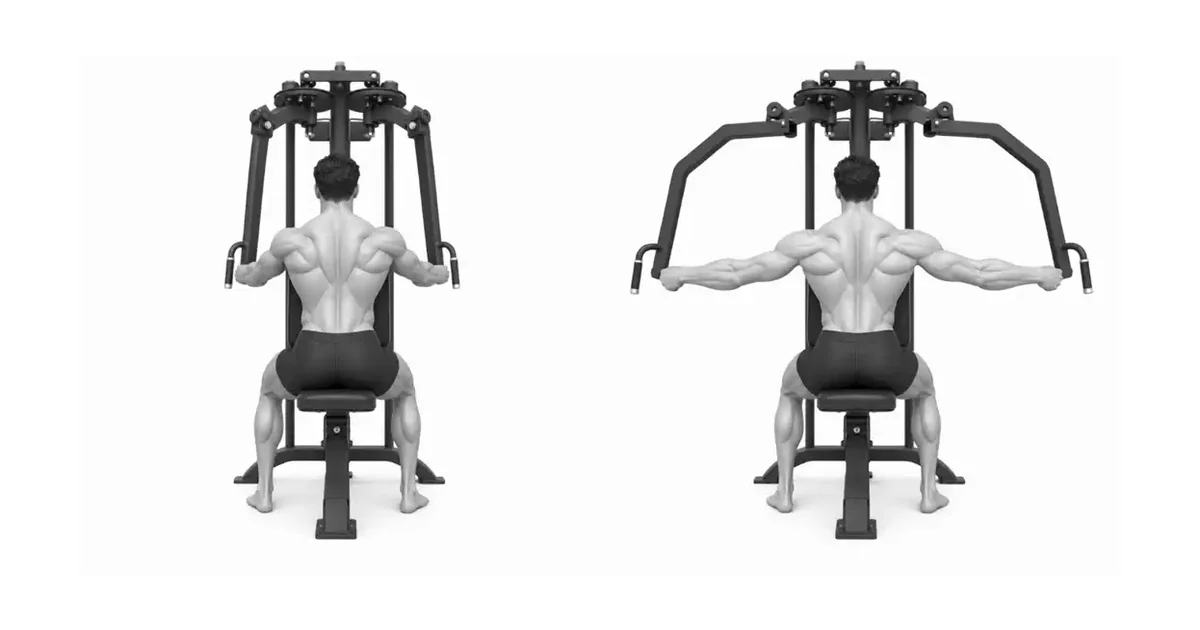
With your elbows fixed, spread your arms back in an arc. Use the strength of the muscles behind your shoulders.
- 3
Apex Contraction
At the point of maximum contraction, feel the stimulation of the rear deltoid and pause very briefly.
- 4
Return slowly
Return to starting position, controlling the weight. Lower the weight just before touching it to maintain muscle tension.
REAR DELT ISOLATION
Pull behind your shoulders, not your back muscles
The most common mistake in the reverse peck deck is to overly fold the scapula (wing bone) and use the back muscles (trapezius, rhomboid) as the prime mover.
To properly isolate the rear delts, you need to keep your shoulder blades still or moving only slightly, and perform the movement with your elbows pulled out and away from your body. The tip is to relax your wrists and lead with your elbows.
RANGE, LOAD & TEMPO
Choose a range and load that keep the Reverse Pec Deck repeatable
The useful range of motion ends before your torso or working joints have to change position to move the load. Keep the rear deltoid producing the movement while the middle trapezius · rhomboids · infraspinatus support the same alignment from the first repetition to the last.
Use a controlled lowering phase of about two to three seconds and avoid bouncing through the transition. If the final repetitions become shorter, faster, or visibly different from the first, reduce the load or stop the set before technique breaks down.
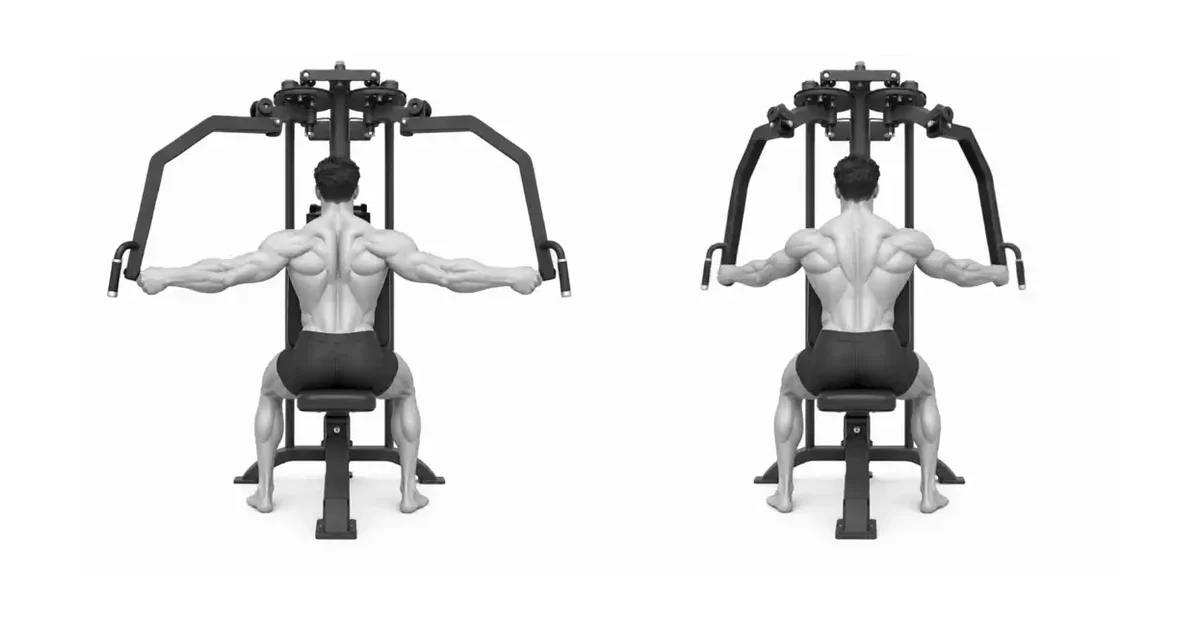
Key point: Progress the Reverse Pec Deck only after every repetition follows the same path without joint pain.
TROUBLESHOOTING
Fix the cause of a mistake, not just its appearance
Shrug
- What you see
- A phenomenon in which the shoulder rises toward the ear during movement.
- Likely cause
- Excessive involvement of the upper trapezius muscle.
- How to correct it
- Stabilize your upper body by pressing your shoulders down and your chest closer to the pad.
Excessive range of motion
- What you see
- A movement that sends the arms too far behind the body.
- Likely cause
- Compensatory action to use more back muscles.
- How to correct it
- The rear deltoid muscles are sufficiently contracted even if the arms are spread out to the point where they are parallel to the torso.
REGRESSION & PROGRESSION
Match the difficulty before adding load
One Arm Reverse Peck Deck
Perform with one arm at a time to increase the isolation of the rear deltoid muscles and closely check left and right imbalances.
Neutral vs Overhand Grip
Try alternating between a grip with your palms facing each other and a grip with your palms facing down, choosing the method that gives you more stimulation.
BEGINNER PROGRAM
A practical starting framework
Start with a light load that lets you keep the chest supported and the shoulders away from the ears throughout every repetition.
Frequency
2-3 times a week
Great to include as the second half of a shoulder routine or in a back workout routine.
Volume
3~4 sets, 12~15 times
The rear delts are small muscles that get tired easily, so focus on stimulating them with appropriate weights.
- Do not fully straighten your elbows, but keep them slightly bent.
- Do not lift your chest from the pad throughout the movement.
- Do not use recoil and move at a constant speed.
Frequently asked questions
Do I need to hold the handle tightly?
If you hold it with your fingers as if you are walking lightly, you can relax your wrists and forearms and focus more on the back of your shoulders.