REVERSE WOOD CHOP
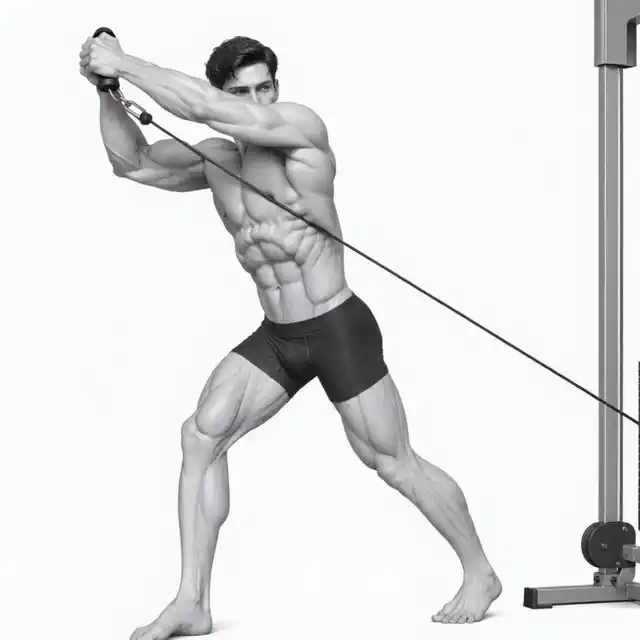
Reverse Wood Chop is not an exercise in which you lift a cable with your arms, but rather a full-body diagonal movement in which the feet, pelvis, and ribs are connected and rotated from a low position to a high position.
Starting with a low pulley and moving the cable over the shoulder on the opposite side of your body, you can train diagonal force transfer from your lower body to your torso and arms. If you twist your back or lift the handle with your arms while keeping your feet fixed, this will put a strain on your lumbar spine and shoulders. Stand so that your feet allow for rotation, allowing your pelvis and chest to turn together.
- Primary muscles
- Internal oblique muscle · External oblique muscle
- Secondary muscles
- Gluteus maximus, gluteus medius, deltoid, serratus anterior
- Difficulty
- Intermediate
- Movement type
- Diagonal rotation from low to high
Can I move my feet?
Yes. When your heels and feet naturally pivot, it's easy for your pelvis and chest to rotate together. Do not force your feet.
STEP BY STEP
4 Steps for One Complete Rep
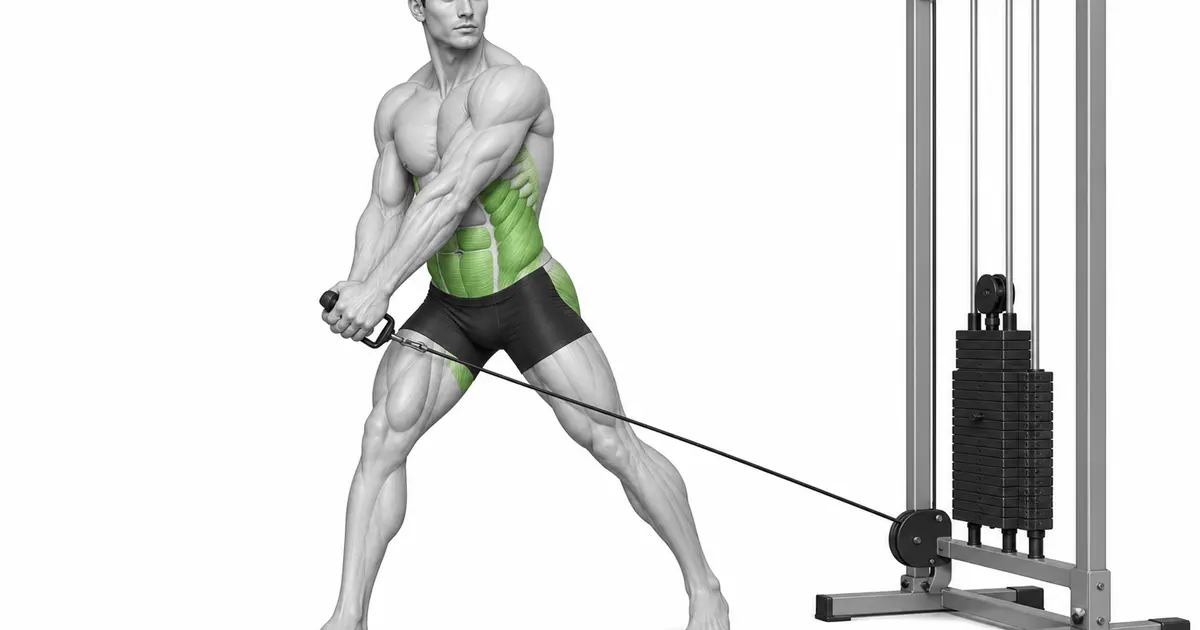
- 1
Create diagonal space with lower pulley
Stand at least arm's length away from the machine with the pulley at its lowest position. Hold the handle with both hands and slightly bend your knees and hips toward the cable.
- 2
Align your feet and pelvis with the cable side
Rotate your pelvis and chest toward the starting direction, but keep your spine long. Place pressure on the heels and front of both feet and prepare to rotate in the opposite direction.
- 3
Push from the bottom and rotate upwards on the other side
Push into the floor with the foot on the cable side and move your pelvis, ribs, and arm together over the opposite shoulder. Keep your elbows slightly bent and the distance between your hands and chest.
- 4
Slowly returning to the same route
Pause at the top without overextending your torso, then rotate the cable to the lower starting point over 2 to 3 seconds. Bring your feet and hips back too.
GROUND TO HANDS
The movement starts with the feet pushing against the floor, not the hands
If you raise your arms first, your shoulders will shrug and your torso will barely rotate. Begin with foot pressure and hip rotation, allowing your ribs and hands to follow.
Keeping the distance between your hands and chest almost constant can reduce errors in moving only your arms.
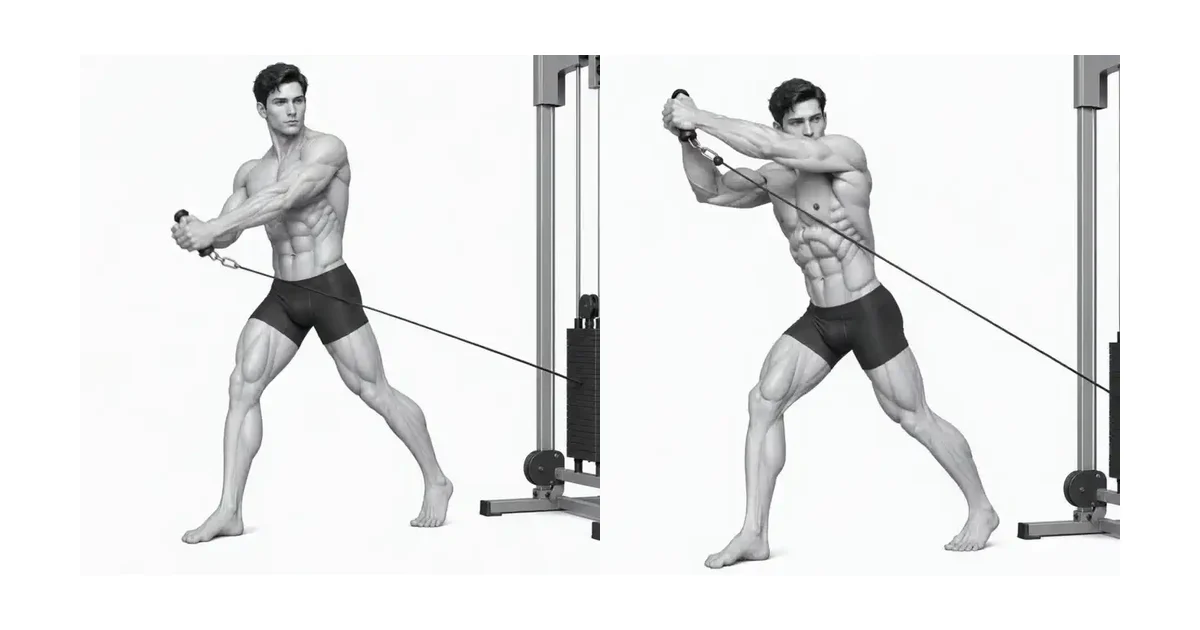
Key point: Cue to use right away: “Push with your feet and your pelvis, chest, and hands rotate together.”
ROTATE, DON'T ARCH
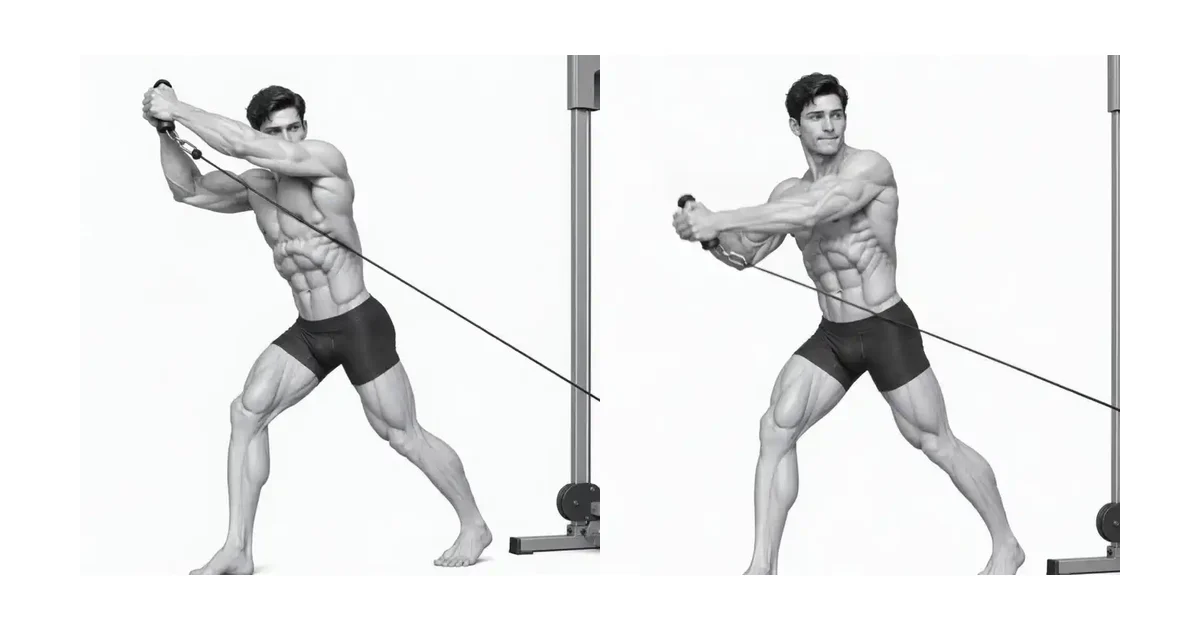
The top is not a reclined position, but rather the end point of rotation that stops above the opposite shoulder.
Do not lift your ribs and arch your back to raise the handle. Maintain abdominal tension and glutes.
If turning is uncomfortable, pivot your feet more freely and lower the handle height.
TROUBLESHOOTING
Fix the cause of a mistake, not just its appearance
Keep your feet fixed and twist only your waist.
- What you see
- The knees and pelvis are straight, but only the chest and arms are rotated significantly.
- Likely cause
- Used lumbar range instead of full body rotation.
- How to correct it
- Let your heels pivot naturally and move your feet, pelvis, and chest in the same direction.
Lift the handle with your arms
- What you see
- Shoulders shrug, arms get tired first, and there is little torso rotation.
- Likely cause
- Lower body propulsion and torso disconnected.
- How to correct it
- Lower the weight and start the movement on your feet, keeping the distance between your hands and chest.
Recline at the waist at the top
- What you see
- The steering wheel goes behind my head and I feel pressure on my lower back.
- Likely cause
- The diagonal height was excessive.
- How to correct it
- Stop in front of your opposite shoulder and keep your ribs above your pelvis.
REGRESSION & PROGRESSION
Match the difficulty before adding load
Band diagonal lift
Learn to connect your feet and pelvis with light resistance.
Half Kneeling Reverse Chop
Practice torso rotation by reducing lower body movements.
Standing Reverse Wood Chop
Connects full body rotation from feet to hands.
Split Stance Reverse Chop
Enhances unilateral foot pressure and deceleration.
BEGINNER PROGRAM
A practical starting framework
Perform both sides with equal weight and range, starting with your weak side. Make sure you have full control of the return leg before picking up speed.
Count
8–15 times each
Return 2~3 seconds
Set
2–4 sets each
60–120 seconds recovery after both sides
Frequency
2–3 times a week
Different rotation movement and volume control
- Increase the number of repetitions if the connection between the feet, pelvis, and chest is maintained.
- If you experience back twisting, arm forwarding, or upper hyperextension, lower the weight and range.
- Fast power repetitions should only be used after slow returns and side-to-side symmetry have been mastered.
Frequently asked questions
How high do you raise the handle?
A height that maintains rib and pelvic alignment at about the front of the opposite shoulder is sufficient.
Why does it feel like an arm exercise?
The weight may be heavy or your hands may move first. Start by lowering the load and pushing off the floor with your feet.