RUSSIAN TWIST
Russian twist is not an exercise where you place your hands on the floor on the left or right, but rather a core exercise that rotates by controlling the chest bone and ribs while stabilizing the pelvis.
Sitting with your knees bent and your torso tilted back and turning left and right activates your obliques and torso stabilizers. If you move your hands too much or swing a heavy disc with your back rounded, the range of rotation may seem large, but the burden on your back increases. With your feet on the floor, create a long spine and slowly rotate so that your solar plexus faces left and right.
- Primary muscles
- Internal oblique muscle · External oblique muscle
- Secondary muscles
- Rectus abdominis, iliopsoas, erector spinae
- Difficulty
- Intermediate
- Movement type
- Seated Torso Rotation
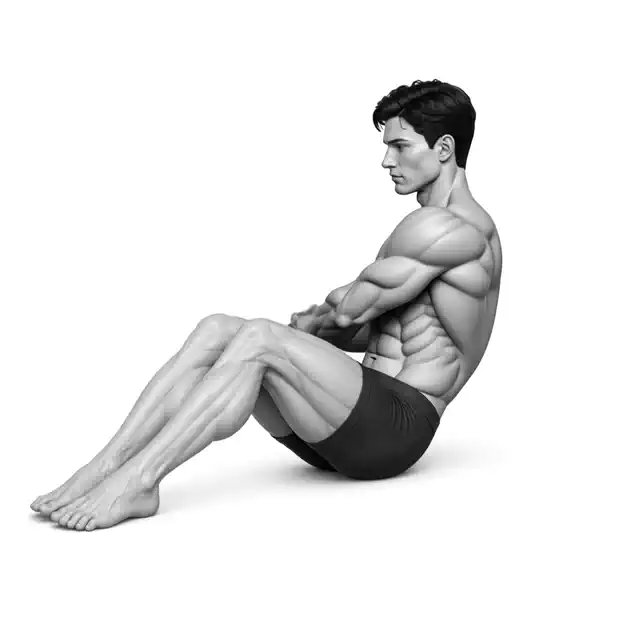
Is it necessary to lift your foot for proper movement?
No. Placing your feet on the floor will help stabilize your pelvis more, allowing you to focus on torso rotation.
STEP BY STEP
4 Steps for One Complete Rep
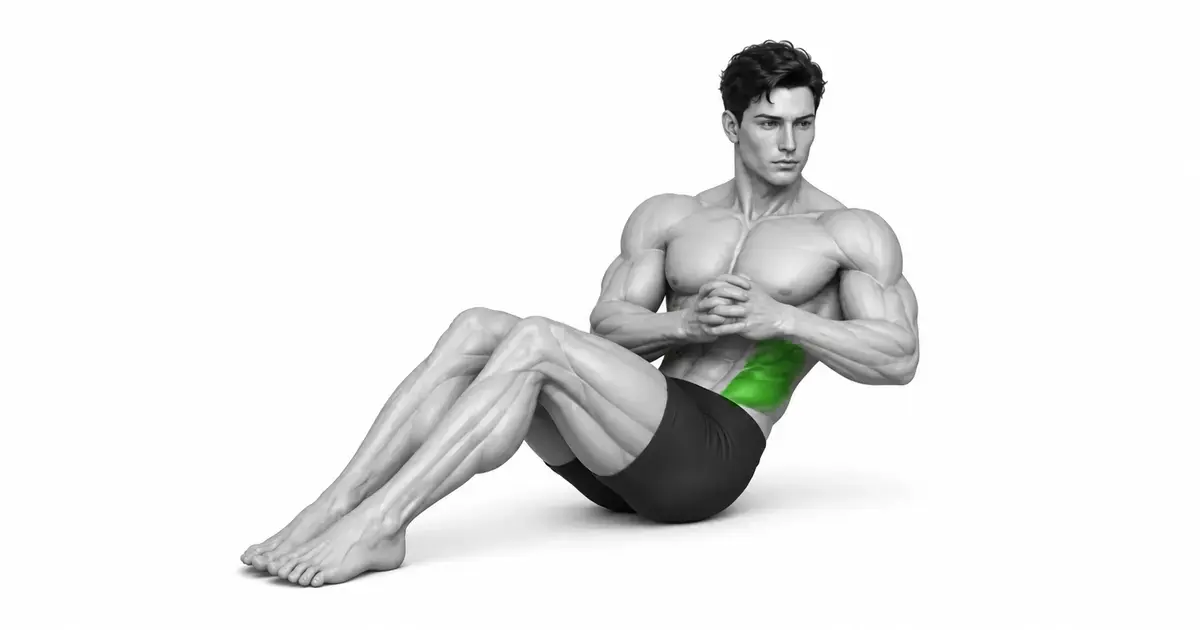
- 1
Balance with your feet on your sit bones
Bend your knees and place your entire foot on the floor. Place your weight evenly on the left and right sit bones and lengthen your spine rather than lifting your chest.
- 2
Torso tilt with abdominal tension
Exhale, lower your ribs and tilt your torso back. Stop at an angle before your back is rounded or your feet are lifted.
- 3
Rotating the breastbone to one side
Place your hands in front of your chest and turn your solar plexus and ribs to one side. Keep your hips and knees as far forward as possible and do not place your hands behind you.
- 4
Controlling through the center to the other side
Maintaining abdominal tension, return to center and rotate the same range to the opposite side. Count each side as 1 time.
TURN THE RIBCAGE
Rotation of the ribs and breastbone is key, not the distance the hand travels
When you extend your arms long, your hands may go far but there may be little torso rotation. Place your hand close to your chest and check the direction of your solar plexus.
If your pelvis swings from side to side, widen the distance between your feet and reduce the range of rotation.
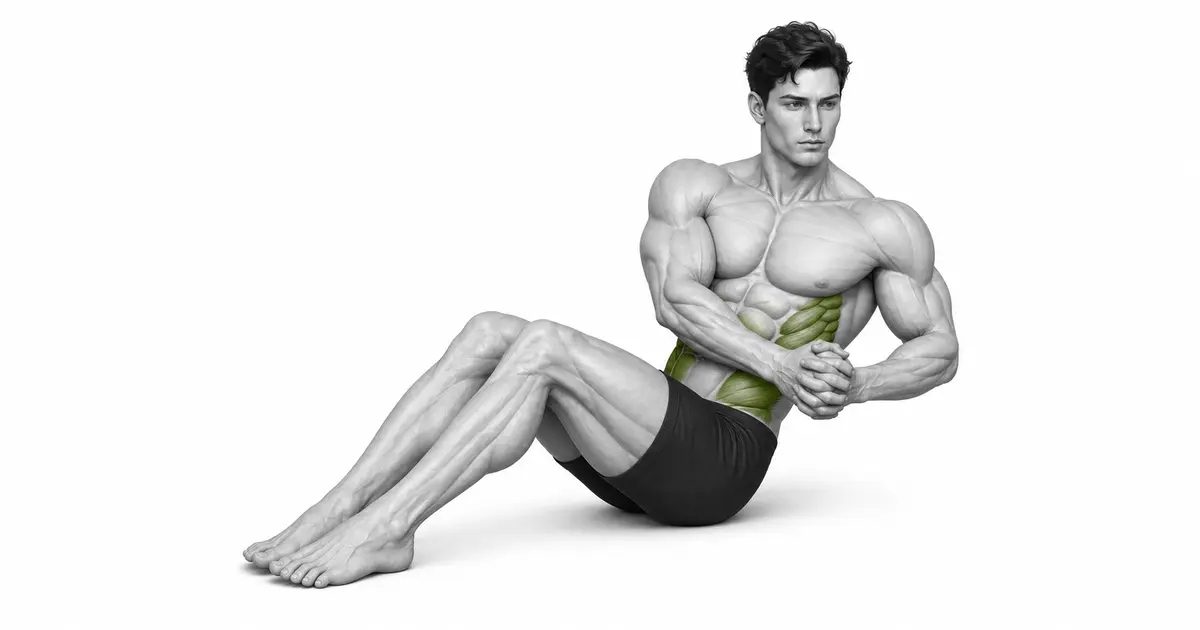
Key point: Cue to use right away: “Turn your solar plexus left and right, not your hands.”
EARN THE LOAD
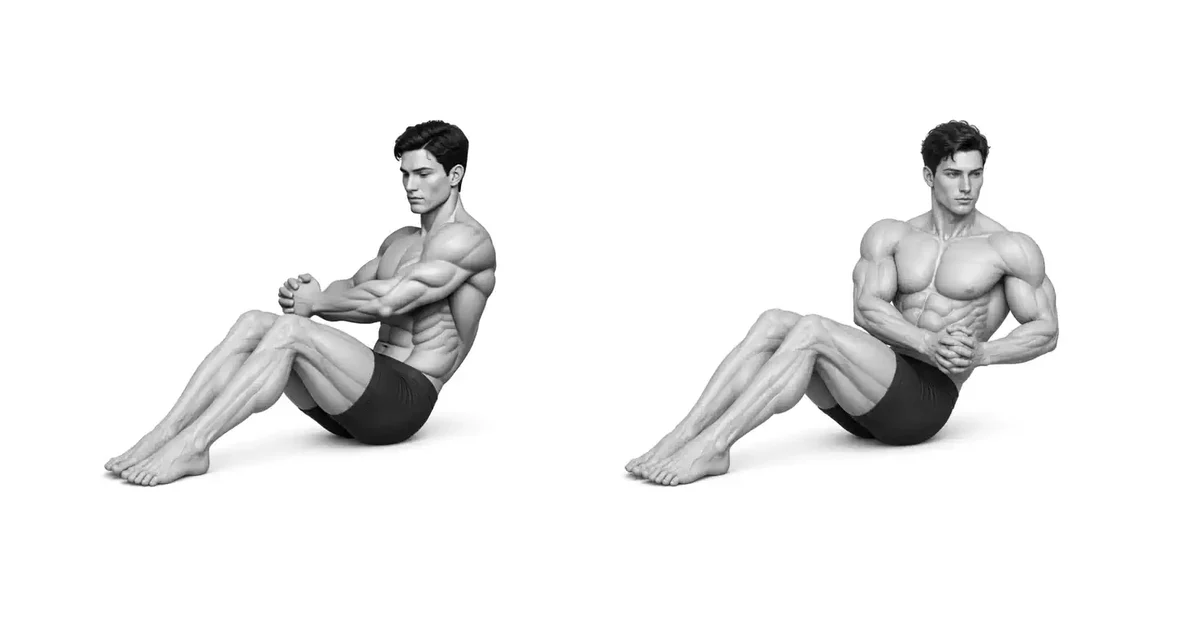
Feet raised position and weight addition are selected after maintaining torso alignment
Raising your feet places greater demands on your hip flexors and balance, making it easier for your lower back to round. You can sufficiently train your oblique rotation by putting your feet down.
Use only when you can keep the weight close to your chest and maintain the same slow speed and range.
TROUBLESHOOTING
Fix the cause of a mistake, not just its appearance
Only hands are stamped on the left and right floors
- What you see
- The arms move greatly, but the direction of the chest rarely changes.
- Likely cause
- Targeted touch location rather than torso rotation.
- How to correct it
- Place your hands close to your chest and practice small rotations with your solar plexus facing to the side.
Round your back and use recoil
- What you see
- With each repetition, my upper body shakes back and forth and my lower back feels stiff.
- Likely cause
- Incline and weight exceed current torso control.
- How to correct it
- With your torso erect and your feet on the floor, rotate slowly without weight.
Knees and pelvis shake in opposite directions
- What you see
- Both knees move left and right with each rotation.
- Likely cause
- Increased rotation range without pelvic stability.
- How to correct it
- Stand facing forward with your feet wide apart and a light object between your thighs.
REGRESSION & PROGRESSION
Match the difficulty before adding load
Seated Torso Rotation
List your torso upright and learn how to rotate your ribs.
Russian twist with feet
Controls backward leaning posture.
Light load Russian twist
Add resistance at the same speed.
Russian twist with your feet up
Increases balance demands only when the lower back is maintained.
BEGINNER PROGRAM
A practical starting framework
Use a speed that allows you to stop without recoil at the left and right endpoints. If your lower back is fatigued, lower the torso angle and load instead of filling the repetitions.
Count
8–15 times each on the left and right
Round trip can be calculated as 1 time
Set
2–4 sets
45–90 seconds recovery between sets
Frequency
2–4 times a week
Different rotational movements and adjustments
- Once rib rotation and pelvic stability are maintained, increase the number of repetitions first.
- If you experience rounding of the back, hand reaction, or knee shaking, lower the angle and load.
- Prevents weight from dragging the turning range.
Frequently asked questions
Do your hands have to touch the floor?
Not required. The extent to which the chest bone rotates and the spine is maintained is more important than hand position.
What should I do if my back hurts?
Stop immediately and switch to a more erect or anti-rotational exercise. Endure the pain and do not rotate.