SINGLE-ARM DUMBBELL SHOULDER PRESS
A unilateral vertical press that improves shoulder range of motion and demands high-level core stabilization
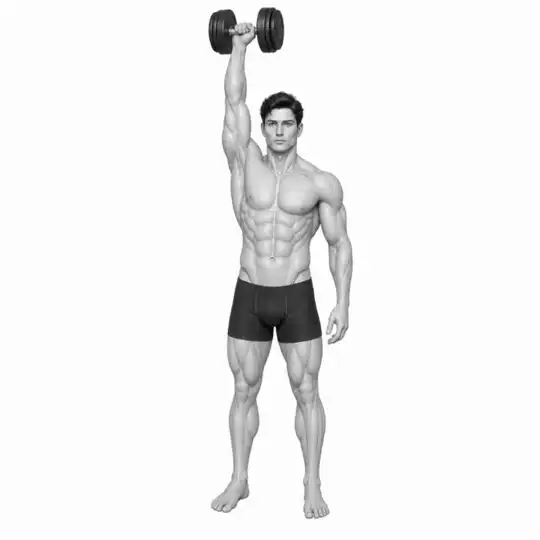
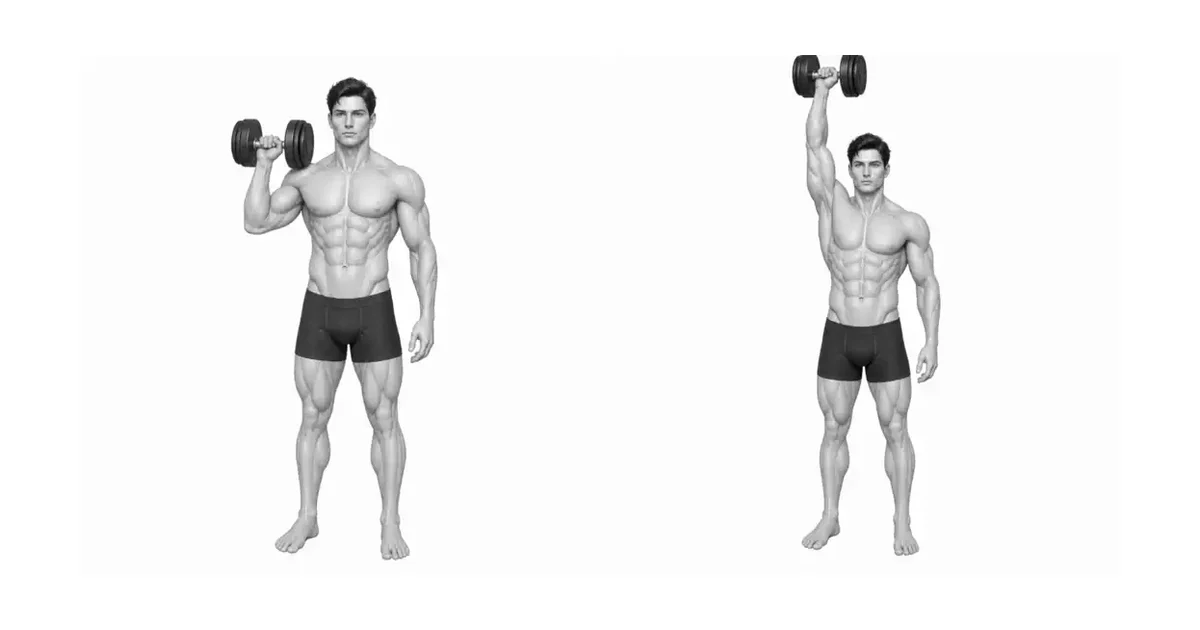
Hold a dumbbell in one hand at shoulder height. You can use an overhand grip or a neutral grip (palm facing your body). Stand with feet shoulder-width apart and keep your non-working arm at your side or on your hip for balance. Brace your core and exhale as you press the dumbbell vertically overhead until your arm is fully extended. Pause briefly at the top, then slowly lower the weight back to the starting position. Complete the set for one arm before switching to the other.
- Primary muscles
- Anterior Deltoid
- Secondary muscles
- Lateral Deltoid · Triceps Brachii · Core
- Difficulty
- Intermediate
- Movement type
- Vertical Push
Is it better than a two-arm press?
It's not necessarily better, but it offers unique benefits for core stability and addressing muscle asymmetries.
STEP BY STEP
4 Steps for One Complete Rep
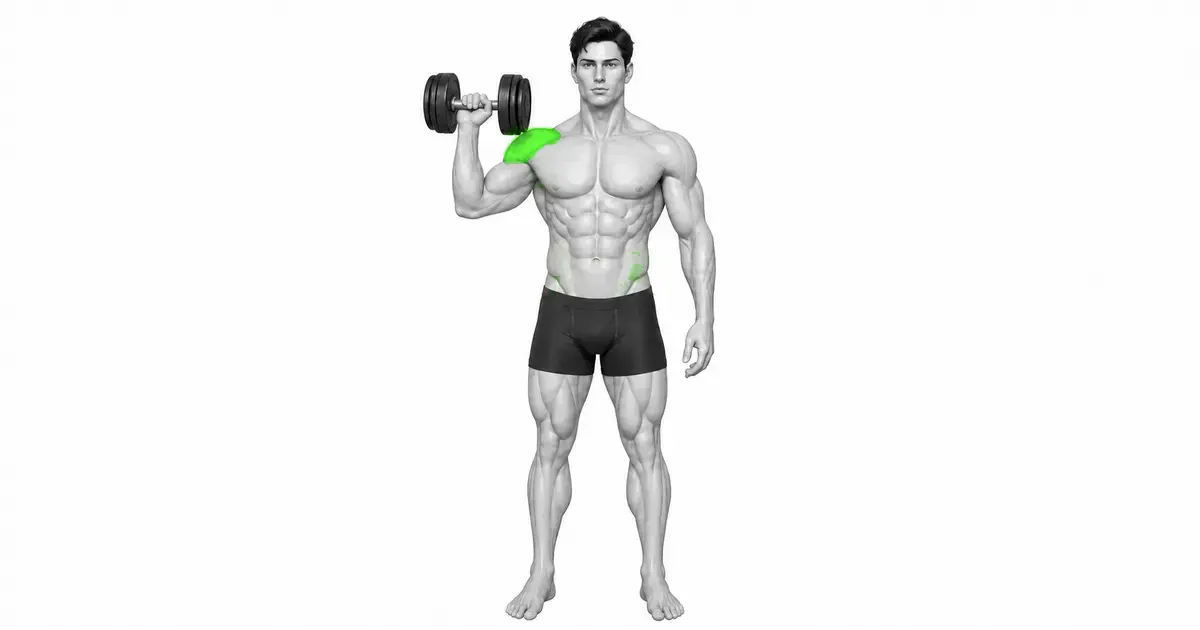
- 1
Starting position
Position the dumbbell at ear level. Keep your elbow tucked slightly forward and stabilize your shoulder joint.
- 2
Vertical press
Drive the weight toward the ceiling in a straight line. Maintain a rigid torso and do not allow your hips to shift.
- 3
Peak contraction
Feel the intense engagement of the deltoid and triceps at full extension. Ensure your body remains square to the front.
- 4
Controlled descent
Slowly lower the dumbbell back to shoulder height, resisting the weight and keeping the muscle under tension.
UNILATERAL BENEFITS
Functional strength through asymmetry
The primary advantage of the single-arm press is the significant demand it places on the core, particularly the obliques. Because the weight is only on one side, your body must actively work to prevent leaning or rotating, making this a highly functional 'anti-rotation' movement.
Additionally, training unilaterally allows you to identify and correct strength imbalances between your left and right shoulders. It also provides a more natural and free path for the shoulder joint, which can be beneficial for those with limited mobility or previous injuries.
RANGE, LOAD & TEMPO
Choose a range and load that keep the Single-Arm Dumbbell Shoulder Press repeatable
The useful range of motion ends before your torso or working joints have to change position to move the load. Keep the anterior deltoid producing the movement while the lateral deltoid · triceps brachii · core support the same alignment from the first repetition to the last.
Use a controlled lowering phase of about two to three seconds and avoid bouncing through the transition. If the final repetitions become shorter, faster, or visibly different from the first, reduce the load or stop the set before technique breaks down.
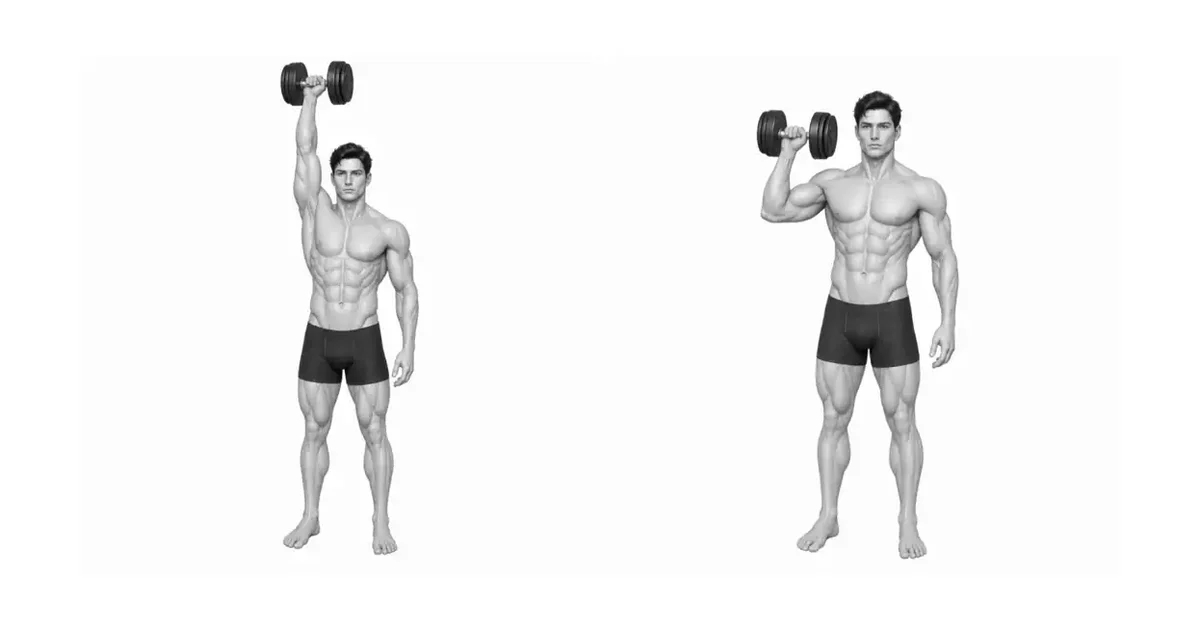
Key point: Progress the Single-Arm Dumbbell Shoulder Press only after every repetition follows the same path without joint pain.
TROUBLESHOOTING
Fix the cause of a mistake, not just its appearance
Excessive lateral lean
- What you see
- The torso tilts far away from the weighted side to help move the dumbbell.
- Likely cause
- Using a weight that is too heavy for the core and shoulder to handle together.
- How to correct it
- Lower the weight and focus on keeping your spine perfectly vertical, as if you were standing between two panes of glass.
Elbow drifting back
- What you see
- The elbow moves behind the plane of the torso during the descent.
- Likely cause
- Improper shoulder mechanics or lack of control.
- How to correct it
- Keep your elbow slightly in front of your shoulder (the scaption plane) to ensure a safe and stable pressing path.
REGRESSION & PROGRESSION
Match the difficulty before adding load
Seated Single-Arm Press
Perform the exercise while seated to reduce lower body involvement and focus purely on the shoulder and core isolation.
Single-Arm Kettlebell Press
Use a kettlebell to shift the center of gravity and increase the demand on the shoulder's stabilizer muscles.
BEGINNER PROGRAM
A practical starting framework
The single-arm dumbbell press builds both aesthetic shoulders and functional core strength. Focus on a perfectly vertical bar path.
Frequency
1-2 times per week
Use as an accessory movement after your primary compound presses.
Volume
3-4 sets of 10-12 reps
Take minimal rest between switching arms to maintain training intensity.
- Do not hold onto external objects for support; use only your internal core strength.
- Keep your gaze fixed straight ahead to maintain neck alignment.
- Exhale as you press up, inhale as you lower.
Frequently asked questions
Which arm should I start with?
Start with your weaker arm and match the number of repetitions with your stronger arm to help balance your strength over time.