SINGLE-LEG GLUTE BRIDGE
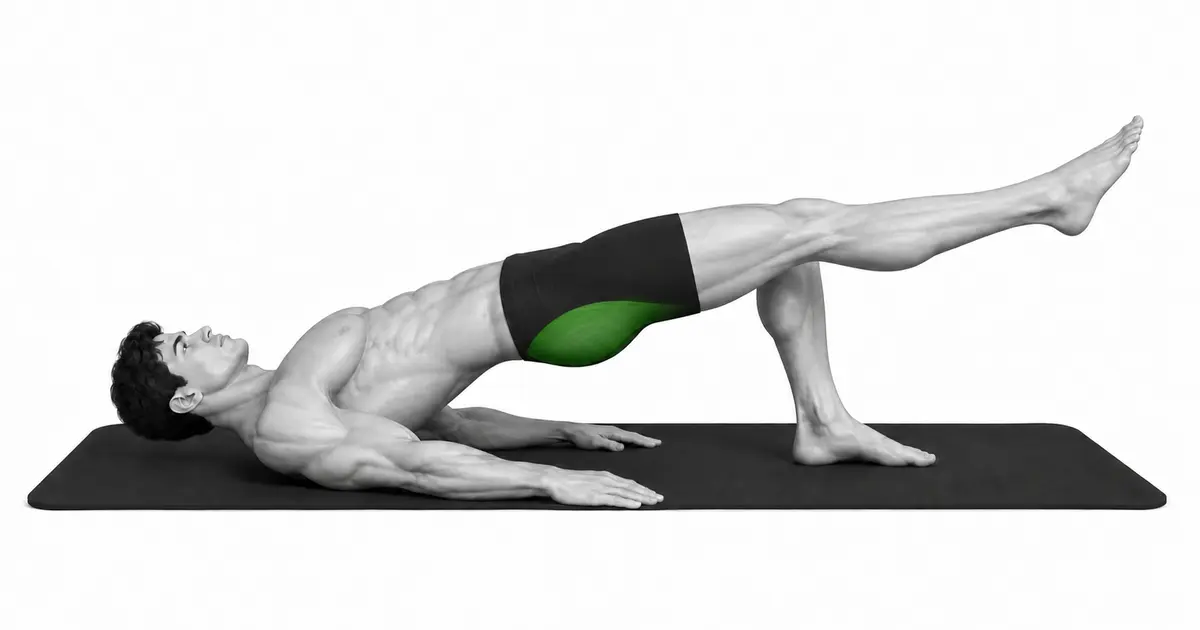
The single leg glute bridge is not an exercise that involves lifting your legs high, but rather a unilateral glute exercise that involves lifting your pelvis horizontally with one foot.
Glute bridges with only one foot on the floor place greater demands on glute and pelvic rotation control than the two-foot variation. If you stretch your legs out in the air or raise your pelvis as high as possible, it's easy for your body to rotate and your lower back to get wet. First, learn the top alignment on a two-foot bridge, then gently pull the opposite knee toward your chest to keep your pelvis level.
- Primary muscles
- Gluteus maximus
- Secondary muscles
- Hamstrings, gluteus medius, core
- Difficulty
- Intermediate
- Movement type
- Unilateral plantar hip extension
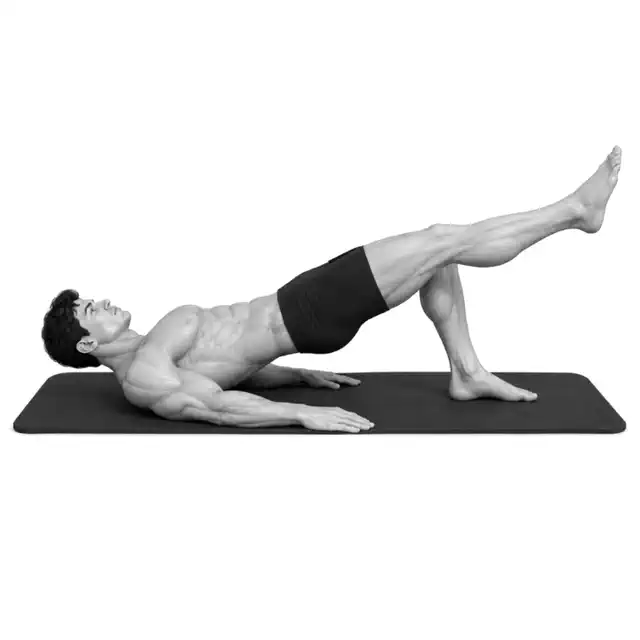
Aerial legs should be straight?
Not required. It is easier to keep your pelvis level by bending your knees and placing them close to your chest. You can stretch after you have better control.
STEP BY STEP
4 Steps for One Complete Rep
- 1
Aligning support feet and rib positions
Lie on your back, bend one knee and place your entire foot on the floor. Lower your lower ribs and tighten your abdomen to avoid overextending your lower back.
- 2
Raise the opposite leg and stabilize the pelvis
Lift your opposite knee to about 90 degrees or keep your thigh close to vertical. Make sure both pelvic bones are at the same level and pointing toward the ceiling.
- 3
Lift the pelvis by pushing into the floor with your supporting foot
Exhale and press the heel and front of your supporting foot together to lift your pelvis. Tighten your glutes as your knees, pelvis, and shoulders approach one line.
- 4
Lower slowly while keeping the pelvis level
Aerial Lower over 2-3 seconds without changing leg and pelvic positions. Let your hips lightly touch the mat and begin the next repetition.
LEVEL PELVIS
If your pelvis falls to one side, you should reduce range before height
If the pelvis opposite your working leg drops or your torso rotates, one glute muscle is not transmitting force to the pelvis. Lift only to the point where both pelvic bones remain at the same height.
Rotation is easy to immediately check by touching the front of both hips with your palms.
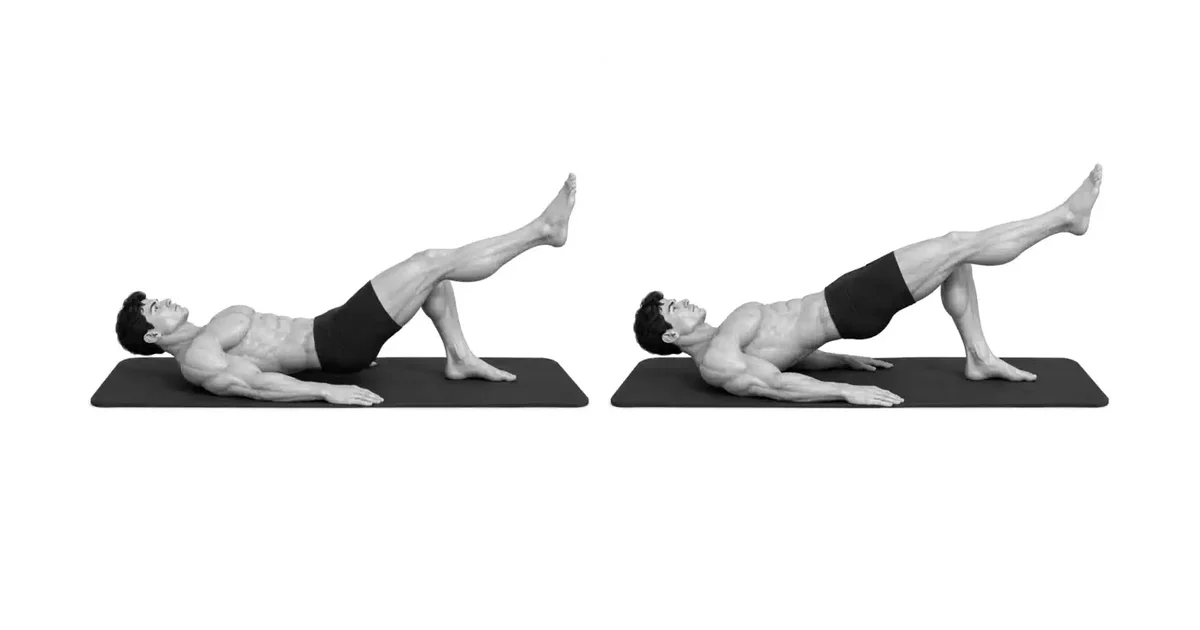
Key point: Cue to use right away: “Raise both pelvises to the same height.”
FOOT DISTANCE
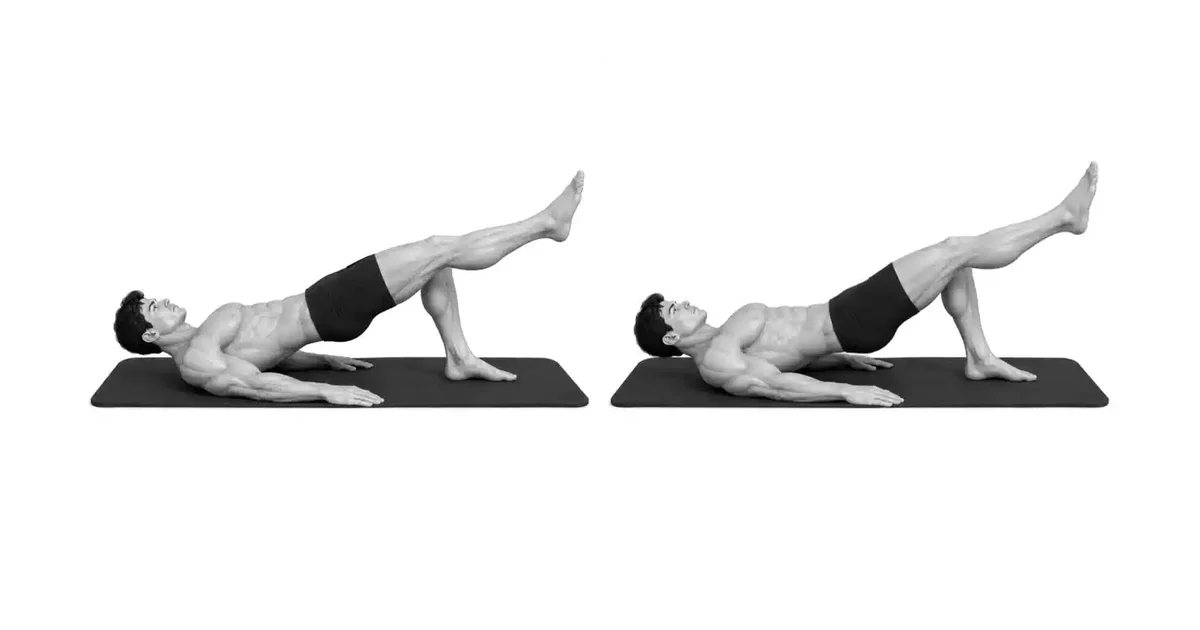
Supporting Foot Distance Significantly Changes How Your Hamstrings and Knees Feel
If your feet are too far apart, you are prone to hamstring cramps, and if your feet are too close, bending your knees can be uncomfortable. Start at the top where your shins are almost vertical.
Share the pressure throughout your entire foot, rather than just pressing on your toes or rolling them outward.
TROUBLESHOOTING
Fix the cause of a mistake, not just its appearance
Pelvis rotates toward working leg
- What you see
- One pelvis is higher at the top and the belly button points to the side.
- Likely cause
- Excessive range or loss of gluteus medius and core control.
- How to correct it
- Lower your height and pull the opposite knee toward your chest to re-level your pelvis.
Tilt your back to create height
- What you see
- My ribs are lifted and I feel pressure in my lower back rather than my glutes.
- Likely cause
- After hip extension, the range was increased to the lumbar spine.
- How to correct it
- Take a long exhale to lower your ribs and slightly roll your pelvis, stopping at the glute contraction.
Hamstrings cramp with each repetition.
- What you see
- The backs of the thighs suddenly become tight and glute stimulation is reduced.
- Likely cause
- Supporting foot is too far away or glutes are not producing sufficient pelvic extension.
- How to correct it
- Pull your feet slightly toward your hips and return to a double leg bridge to practice glute contraction.
REGRESSION & PROGRESSION
Match the difficulty before adding load
Double glute bridge
Learn rib and pelvic locking.
Bridge March
Maintain your upper pelvis and lift your feet alternately.
Single leg glute bridge
Perform a full repetition on one foot.
Stop single leg bridge
Increase unilateral control with a 2-3 second pause at the top.
BEGINNER PROGRAM
A practical starting framework
Start with the weak side and apply equal reps and ranges to both sides. If you experience hamstring cramps or pelvic rotation, don't push to failure and return to the two-legged variation.
Count
8–15 times each
Top 1-2 seconds, pelvis horizontal
Set
2–4 sets each
45–90 seconds recovery after both sides
Frequency
2–3 times a week
Combine volume with other glute exercises
- Once pelvic level and supporting foot pressure are maintained, increase the number of repetitions first.
- If rotation, back bending, or hamstring cramps occur, lower the range or return to both feet.
- Select to extend your legs far in the air after you have sufficient pelvic control.
Frequently asked questions
How high should I raise my pelvis?
A height where the knees, pelvis, and shoulders are close to one line and the gluteal muscles are contracted is sufficient. Stop before your back gets wet.
Why can I only feel my hamstrings?
Your feet may be too far apart or your pelvis and ribs may be out of alignment. Bring your feet a little closer together and reacquaint yourself with the glute contraction on a double leg bridge.