SIT-UP
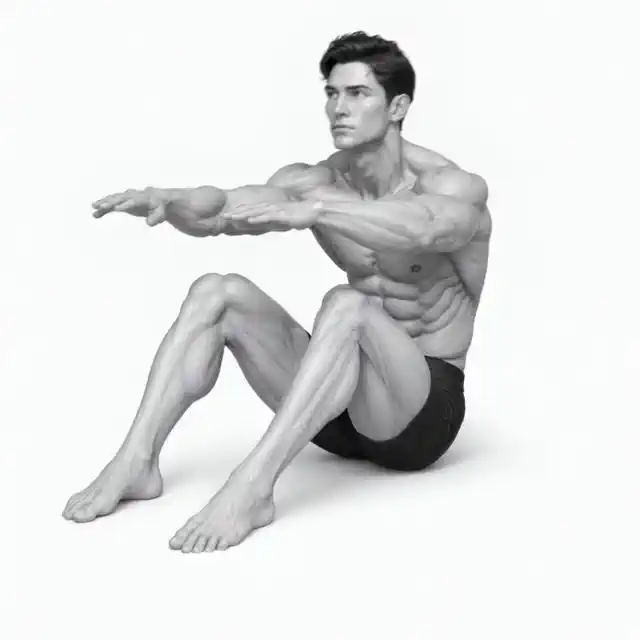
A sit-up is not an exercise that involves standing up with your feet fixed, but rather an exercise that involves controlling the upper body by connecting abdominal flexion and hip flexion.
Sit-ups with the torso fully erect from a supine position increase the involvement of the hip flexors after initial abdominal flexion. Swinging your arms or keeping your feet firmly planted will make repetitions easier but may reduce back and neck control. With your arms at your chest and your feet comfortably on the floor, slowly roll up starting from your shoulder blades and then go down in the same order.
- Primary muscles
- Rectus abdominis · Iliopsoas
- Secondary muscles
- Rectus femoris · Obliques
- Difficulty
- Beginner
- Movement type
- Transition from spinal flexion to sitting position
Do I need to secure my feet?
Not required. Control with your free foot first, as a strong hold can increase hip flexor engagement and speed.
STEP BY STEP
4 Steps for One Complete Rep
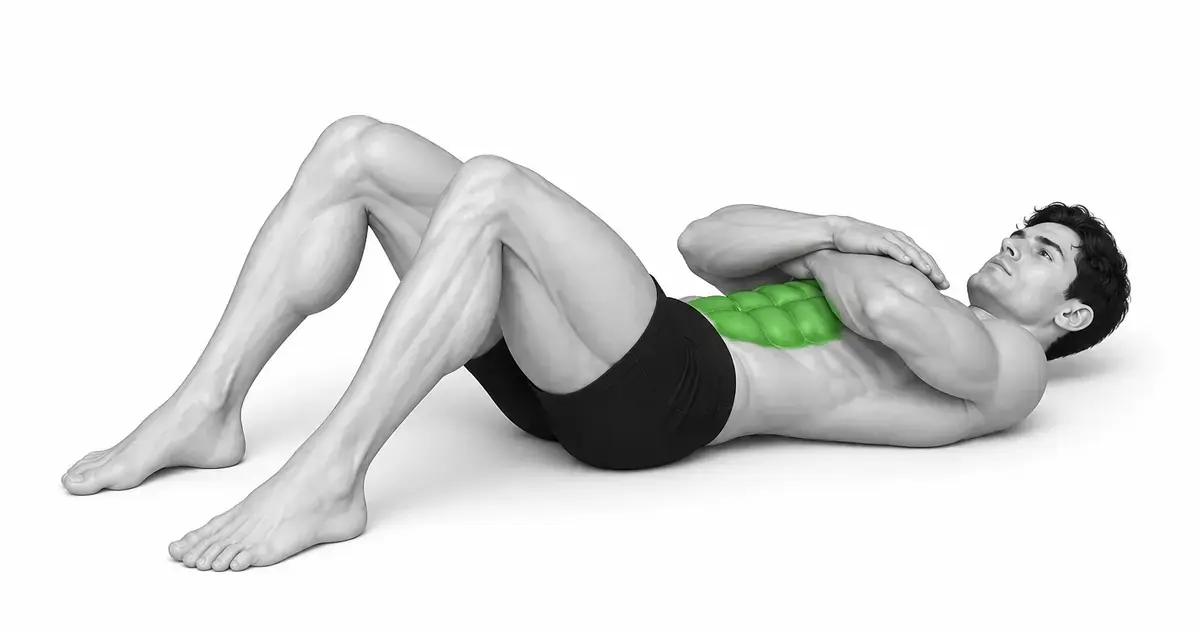
- 1
Preparing your feet and pelvis for comfort
Lie on your back, bend your knees and place your entire foot on the floor. Do not place your feet firmly under any heavy objects and keep your hands in front of your chest.
- 2
Roll ribs and raise shoulder blades
Exhale, gently pull in your chin, bring your ribs toward your pelvis, and lift your shoulder blades off the mat.
- 3
Connecting the hip joint to a sitting position
Continuing torso flexion without recoil, straighten the upper body toward the thighs. Do not pull your neck or swing your arms.
- 4
Lowering the spine in order starting from the pelvis
At the top, inhale and tilt your pelvis back, aligning your spine into the mat for 2 to 4 seconds. Don't drop your head.
ROLL UP, ROLL DOWN
Links spine and hip movements in sequence for both raising and lowering
If you throw your entire torso as a lump from the beginning, you will need to lift your feet or kick back your arms. Lift your shoulder blades first and connect them to a sitting position.
When going down, slowly roll from the pelvis and feel each vertebra touching the mat.
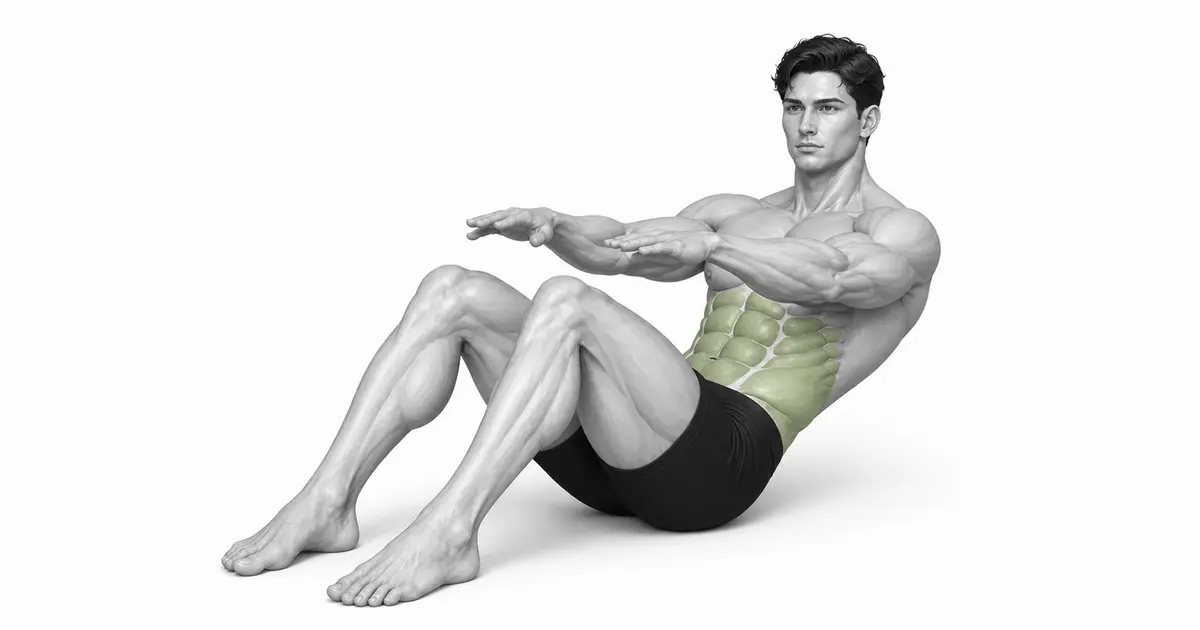
Key point: Cue to use right away: “Goes up from the shoulder blades and goes down from the pelvis.”
EXPECT HIP FLEXORS
Hip flexor involvement is natural during the fully seated position.
If you want to completely exclude your hip flexors, crunches are better than sit-ups. Tailor your exercise selection to your goals.
If you experience cramps in the front of your hips or discomfort in your lower back, reduce the range to crunches only.
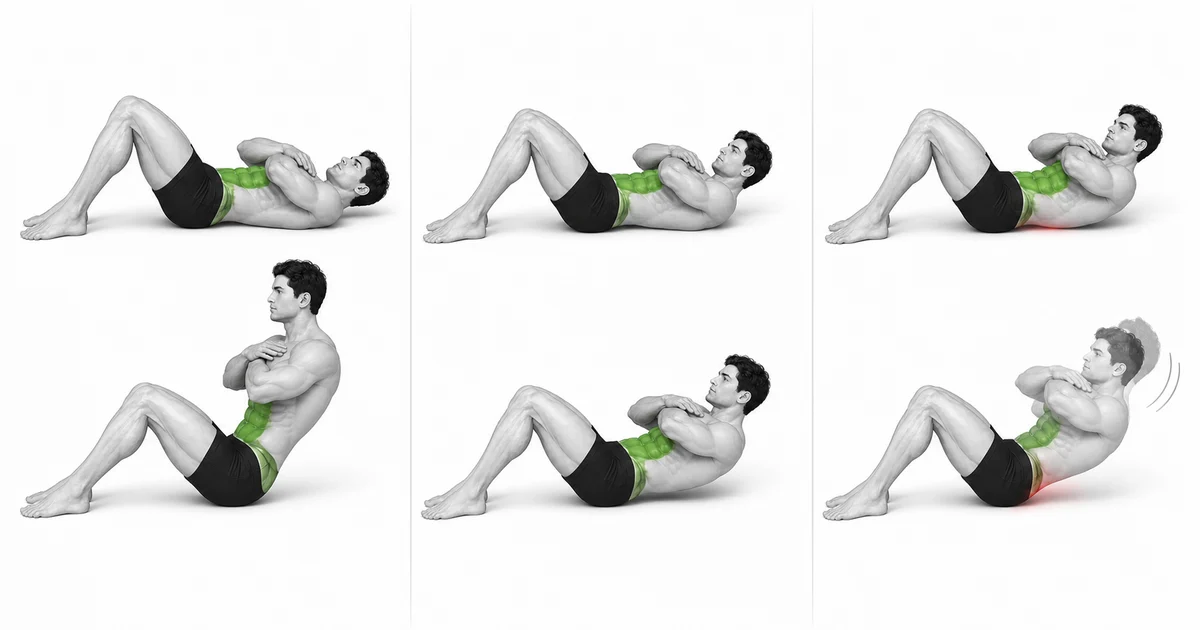
TROUBLESHOOTING
Fix the cause of a mistake, not just its appearance
Stands up by swinging arms
- What you see
- Hands move quickly from overhead to front of knees and feet are lifted.
- Likely cause
- Used inertia rather than abdominal and hip flexion.
- How to correct it
- Place your hands on your chest and lower into a partial crunch or assisted sit-up.
Pull back of head with hand
- What you see
- My chin is pressed against my chest and the back of my neck hurts.
- Likely cause
- I flexed my cervical spine with my hands to lift my upper body.
- How to correct it
- Place your hands in front of your chest and keep a small space under your chin.
When descending, drop your back to the floor.
- What you see
- Your back and head crash into the mat with each rep.
- Likely cause
- Lack of eccentric control or excessive fatigue.
- How to correct it
- Reduce the number of repetitions and use 2-4 second descents or shorter ranges.
REGRESSION & PROGRESSION
Match the difficulty before adding load
Increased load and strength
Increase intensity by gradually increasing weight or shortening rest periods.
Complex Variant Behavior
Increase the difficulty level by combining it with other exercises or adding unstable environments.
BEGINNER PROGRAM
A practical starting framework
Check first whether a full sit-up is necessary for your goal. If your goal is abdominal flexion, crunches may be more appropriate, and if your goal is anti-extension, dead bugs or planks may be more appropriate.
Frequency
2-3 times a week
Place it appropriately in your whole body or relevant area routine.
Volume
3~5 sets, 8~15 times
Adjust the number of reps and sets according to your goals.
- Always put safety first and listen to your joint pain.
- Perform the entire operation within the scope of your control.
Frequently asked questions
What is the difference between sit-ups and crunches?
Crunches are a short spinal flexion that primarily lifts the shoulder blades, while sit-ups engage hip flexion to fully erect the torso.
If my back hurts, do I still have to adapt?
No. Stop immediately, switch to crunches or anti-stretch exercises, and check with a professional if pain persists.