STEP-UP
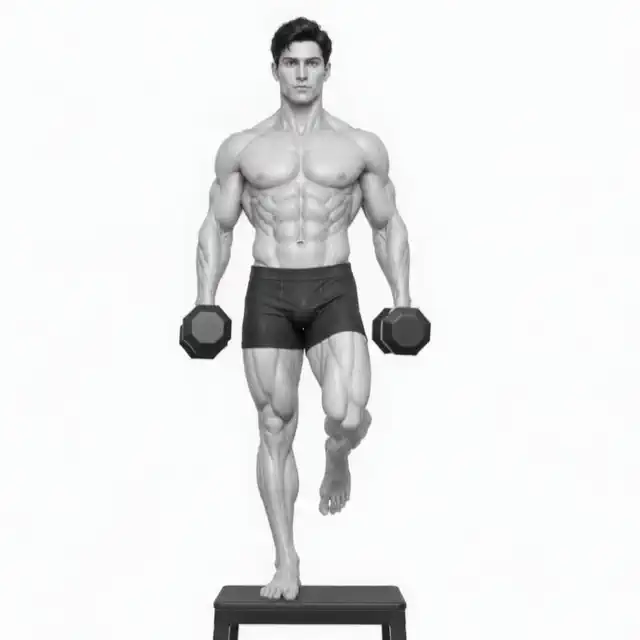
Step-up is not an exercise where you jump on your back foot and climb onto a box, but rather a unilateral exercise where you lift your weight with your foot on the box and come down with the same leg.
The action of standing up with one foot on a box or step is similar to climbing stairs, but if the box is high or you use a kickback with your back foot, the front leg training effect and balance will be disturbed. Choose a fixed height that elevates your entire foot, keeping your front knee toward your second toe and controlling both the up and down.
- Primary muscles
- Quadriceps, gluteus maximus
- Secondary muscles
- Hamstrings, gluteus medius, calves, core
- Difficulty
- Intermediate
- Movement type
- One-sided stair climbing
How high should the box be?
The height is appropriate so that the entire front foot can be raised, the pelvis is not tilted, and the back foot can stand up without kickback. Start low at first.
STEP BY STEP
4 Steps for One Complete Rep
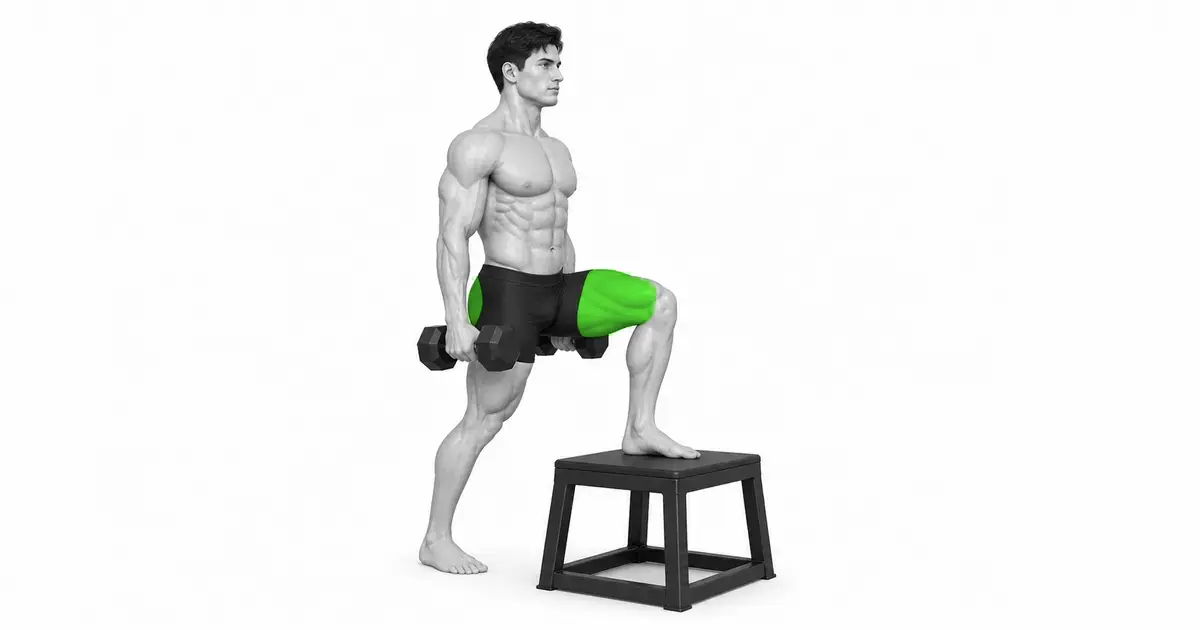
- 1
Selecting Stable Box Height
Place the box on a wall or non-slip floor and check for shaking. When you raise your front foot, start at a height where your entire foot rests on the top without your pelvis tilting.
- 2
Aligning front feet and knees
Press the base of the big and little toes of the front foot and the heel onto the upper plate. Stand tall with your torso and point your front knee toward your second toe.
- 3
Pull your body up with your feet on top of the box
Tilt your upper body slightly forward, place your center of gravity on your front foot, and push your upper body to stand up. Rather than jumping with your back foot on the floor, level your pelvis above.
- 4
Controlling descent with the same leg
Maintaining pressure on the front foot, slowly lower the opposite foot to the floor. Instead of stamping your feet on the floor or jumping off the box, reset your starting position.
BOX HEIGHT
A height that allows control of the hips and knees is a priority over a high box
The higher the box, the greater the hip and knee bends, but it is easy to rotate the pelvis or kick back with the back foot. Your entire front foot should be together and you should be able to put pressure on your front leg from the start.
Start with your knees lower or similar to your hips, and only increase the height little by little when you feel stable for all repetitions.
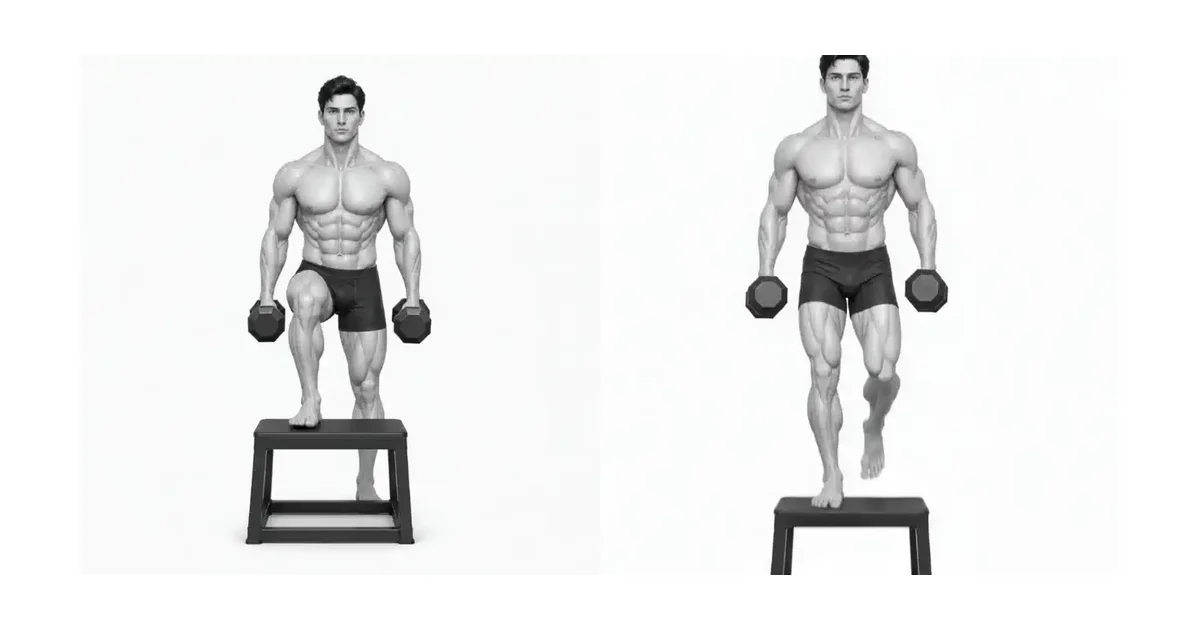
Key point: Cue to use right away: “Go up with your foot on the box and come down with the same foot.”
TRAILING LEG
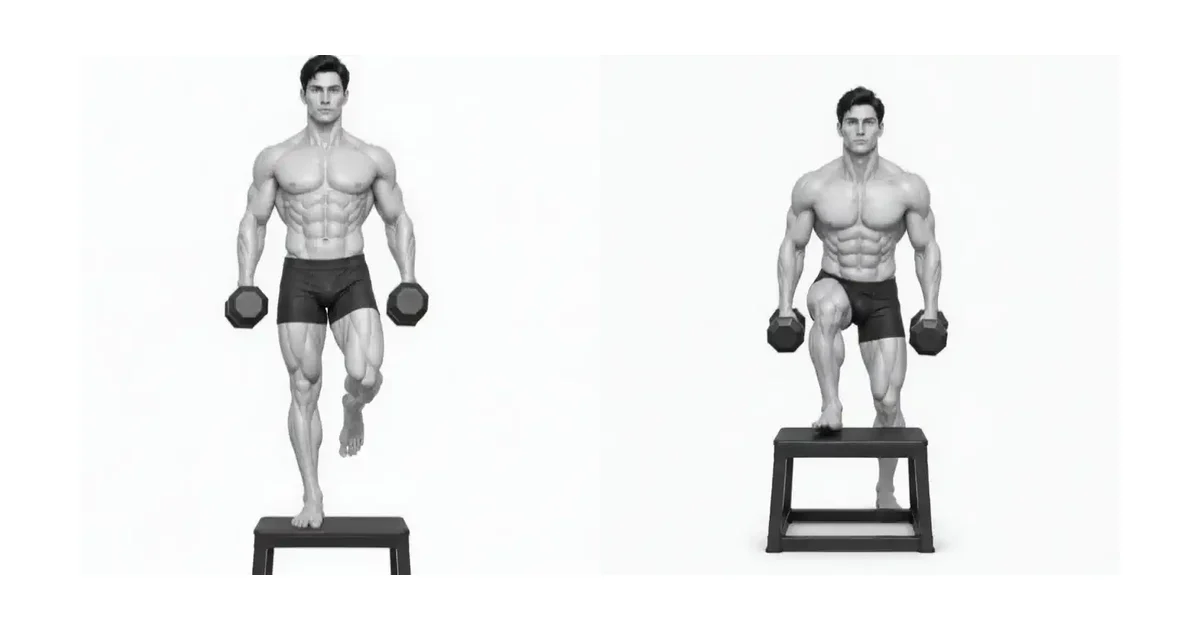
The back foot helps with balance but should not be the main force of the lift
When you kick hard with your back foot, your body bounces upward and your knees shake on the box. Lightly place your toes on your back foot, move your body over your front foot, and then climb up.
Descent is also an eccentric contraction of the forelimb. Instead of dropping your hips to find the floor, slow down so that your opposite foot touches quietly.
TROUBLESHOOTING
Fix the cause of a mistake, not just its appearance
Kick the floor with the back foot and climb up
- What you see
- The body bounces like a jump and the pressure on the feet on the box is reduced.
- Likely cause
- The box is high or the load is difficult to raise with the front legs.
- How to correct it
- Lower the box, shift your weight over your front foot and reduce your back foot help.
Front knee collapses inward
- What you see
- When rising and falling, the knee moves inward toward the big toe.
- Likely cause
- Lack of pelvic stability or foot pressure on one side.
- How to correct it
- Reduce the weight and height and keep your knees toward your second toe.
Jumping out of the box
- What you see
- At the end of the descent, there is a large impact on the floor and the body tilts.
- Likely cause
- The front leg does not support the descent or fatigue has accumulated.
- How to correct it
- Slow your descent to 2-3 seconds and end your set before you lose control.
REGRESSION & PROGRESSION
Match the difficulty before adding load
Low step-up
Learn the alignment of your feet and knees while holding the support with your hands.
Body step up
Controls up and down without rear foot kickback.
Single Leg Balance Step Up
At the top, lift the opposite knee to balance for 1 second.
Dumbbell Step Up
Slightly increase the load while maintaining the box height.
BEGINNER PROGRAM
A practical starting framework
Do not increase box height and weight at the same time, first secure a backfoot kick-free rise and 2 second descent from the body.
Count
6–12 times each
1 second up, 2 seconds down
Set
2–4 sets each
60–120 seconds recovery after both sides
Frequency
1–2 times a week
Different unilateral movement and volume control
- If you control the same height without backfoot kickback, increase the number of repetitions first.
- If you experience knee collapse or lowering shock, lower the box height and weight.
- Do not use unstable benches or soft seats as footrests.
Frequently asked questions
Do I need to put both feet up on top?
For balance learning, both feet can be brought together, but to maintain unilateral stimulation, you can lightly touch the opposite foot or lift the knee to stop.
Do I have to press only the heel of my front foot?
Press the top with your entire foot, not just your heel. If your toes lift or your feet wobble, adjust the box height and position.