TREADMILL RUNNING
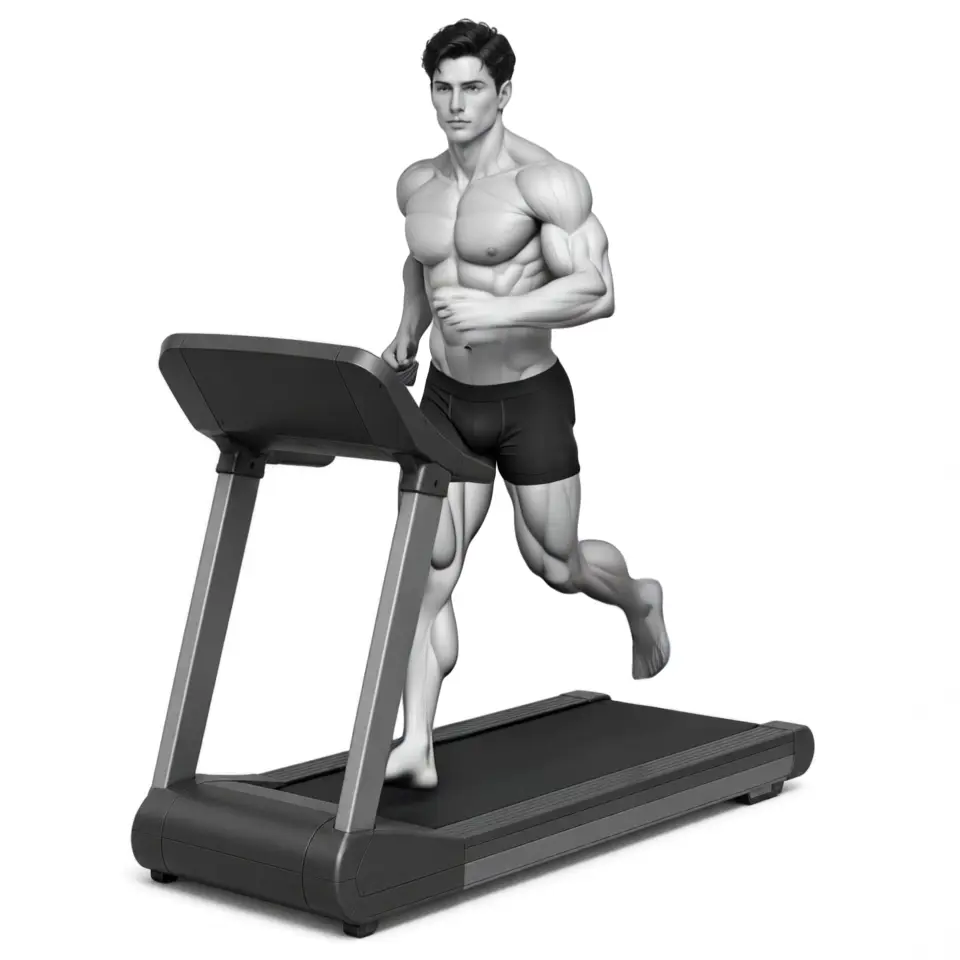
Treadmill running is not an exercise that involves keeping up with a moving belt, but rather an indoor aerobic exercise that maintains a constant rhythm and short, natural strides in the center of the belt.
The treadmill can precisely adjust the speed and incline, but it is easy to lose balance if you suddenly start at a high speed or run while holding the console. Start by climbing up the stationary side rail, attaching the safety clip to your clothing, and walking. Stand upright, don't let your feet touch too far in front of your body, and learn the rhythm at an intensity that allows you to have a conversation, then raise only one element at a time.
- Primary muscles
- Quadriceps, gluteus maximus, calves
- Secondary muscles
- Hamstrings, hip flexors, core
- Difficulty
- Beginner
- Movement type
- Repeat running on belt
Should the slope be fixed at 1%?
Not necessarily. Adjust based on your target speed, equipment and personal comfort, there is no need to force a specific number to mimic the outdoors.
STEP BY STEP
4 Steps for One Complete Rep
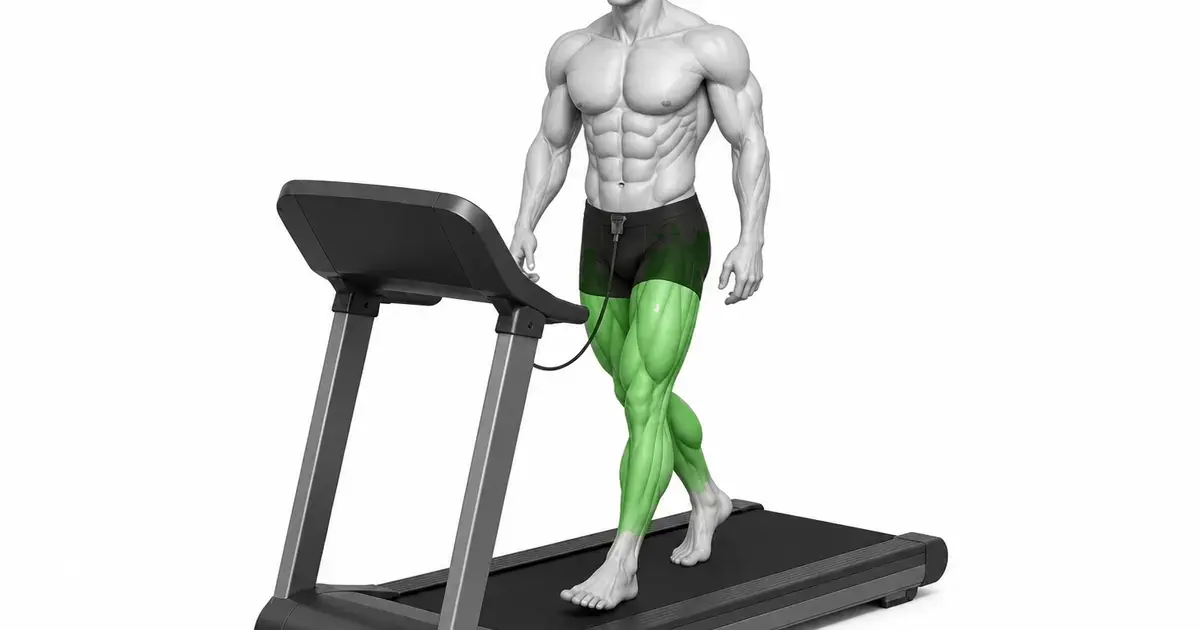
- 1
Check safety clip and equipment status
With the belt stopped, stand on the side rail and check the handle and emergency stop position. Secure the safety clip to your clothing.
- 2
Transitioning from walking to running slowly
Move the belt at low speed and walk for 2-5 minutes. As your body warms up, increase your speed in small increments and jog naturally.
- 3
Maintaining rhythm in the center of the belt
Keep your gaze forward and swing your arms back and forth comfortably. Feet rest quietly close under the body and do not rest on the handle.
- 4
Slow down enough to slow down
Step down from jogging to walking for a few minutes before ending. After the belt has completely stopped, come down through the side rail.
RUN IN THE CENTER
Maintains a central position without sticking to the console or sliding behind the belt
Being too close to the front will block your stride length and arm swing, and being pushed backwards will increase your risk of falling.
Avoid looking down at the screen for a long time and maintain natural gaze and upper body rhythm.
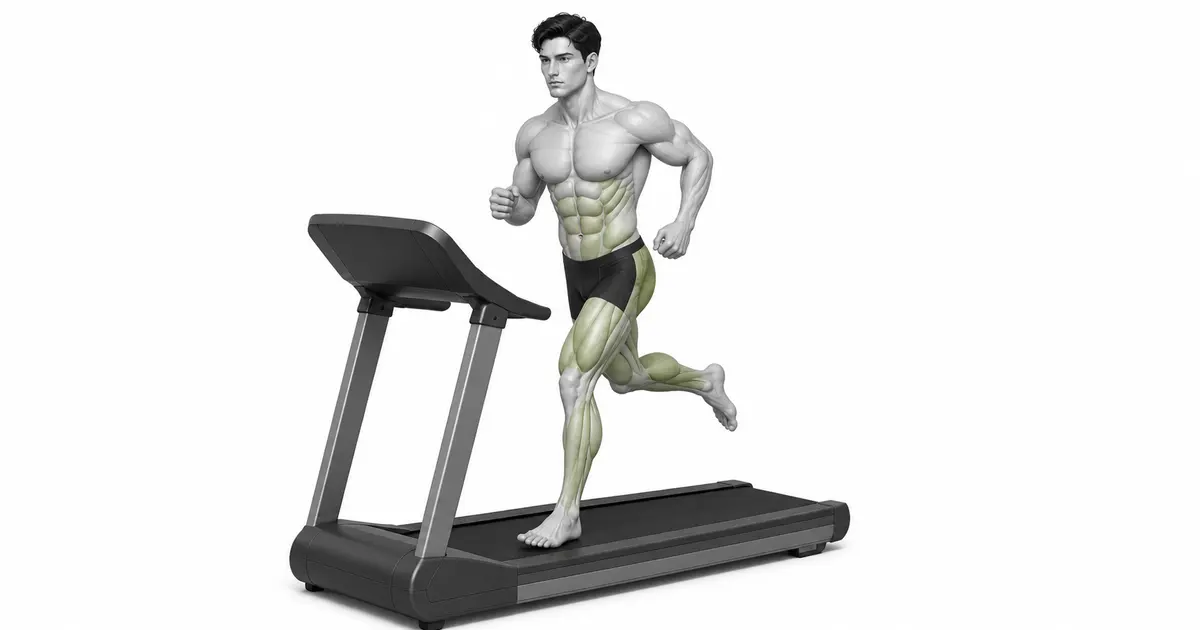
Key point: Cue to use right away: “Light in the center, let go of the handle, and stride naturally.”
CHANGE ONE VARIABLE
Does not increase speed and incline significantly at the same time
Fast speeds and high inclines simultaneously increase calf, Achilles tendon, and cardiorespiratory load. Adjust one element at a time, checking for adaptation.
You don't need to force a specific incline to fully replicate outdoor running. Just adjust it to your goals and physical strength.
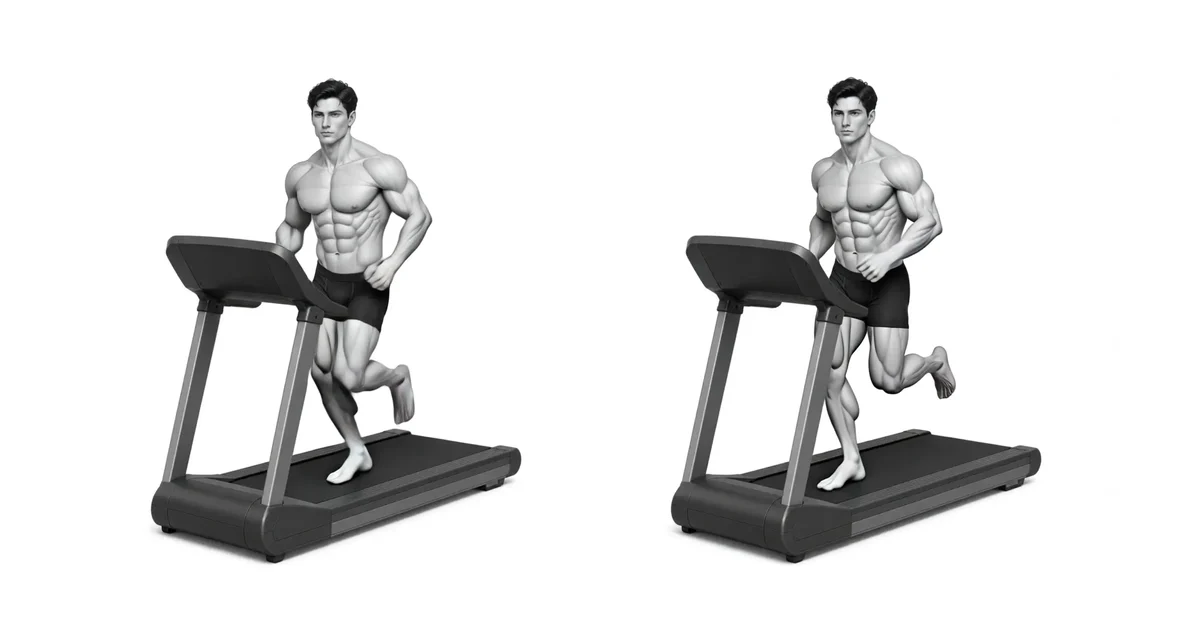
TROUBLESHOOTING
Fix the cause of a mistake, not just its appearance
Run with your weight on the handlebars
- What you see
- Shoulders rise, body leans back, only feet follow the belt.
- Likely cause
- Speed or incline exceeds current capabilities.
- How to correct it
- Reduce the intensity and return to a speed that allows you to maintain the center position even when you let go.
Feet extended in front of body
- What you see
- Landing is loud, knees are almost straight, heels are far out.
- Likely cause
- Stride length was excessively extended to keep up with speed.
- How to correct it
- Slow down and shorten your strides so your feet are closer to your body.
Sudden drop from moving belt
- What you see
- Immediately after exercising, jump off the side rail or onto the floor.
- Likely cause
- Deceleration and emergency stop procedures omitted.
- How to correct it
- Gradually lower to walking distance, then lower until the belt stops completely.
REGRESSION & PROGRESSION
Match the difficulty before adding load
Interval Training
improves calorie consumption efficiency by repeating high and low intensity.
Increased time and resistance
Strengthen your stamina by increasing performance time or increasing the resistance level of the machine.
BEGINNER PROGRAM
A practical starting framework
Beginners should start from 15 to 30 minutes of alternating walking and jogging. Gradually increase the weekly time or distance and stop if you experience pain, dizziness, or unusual shortness of breath.
Frequency
3 to 5 times a week
If your goal is to lose body fat, it is important to do it consistently.
Volume
20~40 minutes
Gradually increase the time according to your fitness level.
- Do this while drinking plenty of water.
- Protect your joints through light stretching before and after exercise.
Frequently asked questions
Can I jump while holding the handle?
It is recommended not to lean except for brief moments to regain balance. If the intensity requires holding, lower the speed or incline.
What should I do if I find it difficult to continue running from the beginning?
Alternate between walking and short jogging. You can first stabilize the total exercise time and then increase the jogging section.