TUCK JUMP
Tuck jump is not an exercise where you slam your knees against your chest, but rather a power movement where you first float vertically and then pull your knees in the air to prepare for landing.
Tuck jumps are a high-intensity plyometric exercise that involves pulling your knees toward your torso at the top of the jump. Folding your body or extending your knees late before takeoff will reduce your height and shorten your landing time. Start by mastering the quiet landing of squat jumps first, pausing after each rep to reset your form.
- Primary muscles
- Quadriceps, gluteus maximus, calves
- Secondary muscles
- Hamstrings, iliopsoas, core, ankle stabilizers
- Difficulty
- Intermediate
- Movement type
- Vertical jump and mid-air knee pull
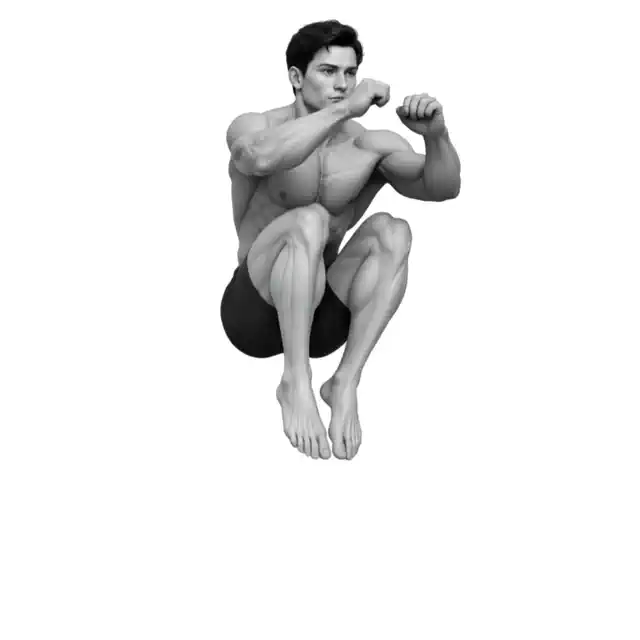
Should your knees touch your chest?
No. You only need to pull within a range that maintains a vertical jump and safe landing. Do not fold your torso aiming for contact.
STEP BY STEP
4 Steps for One Complete Rep
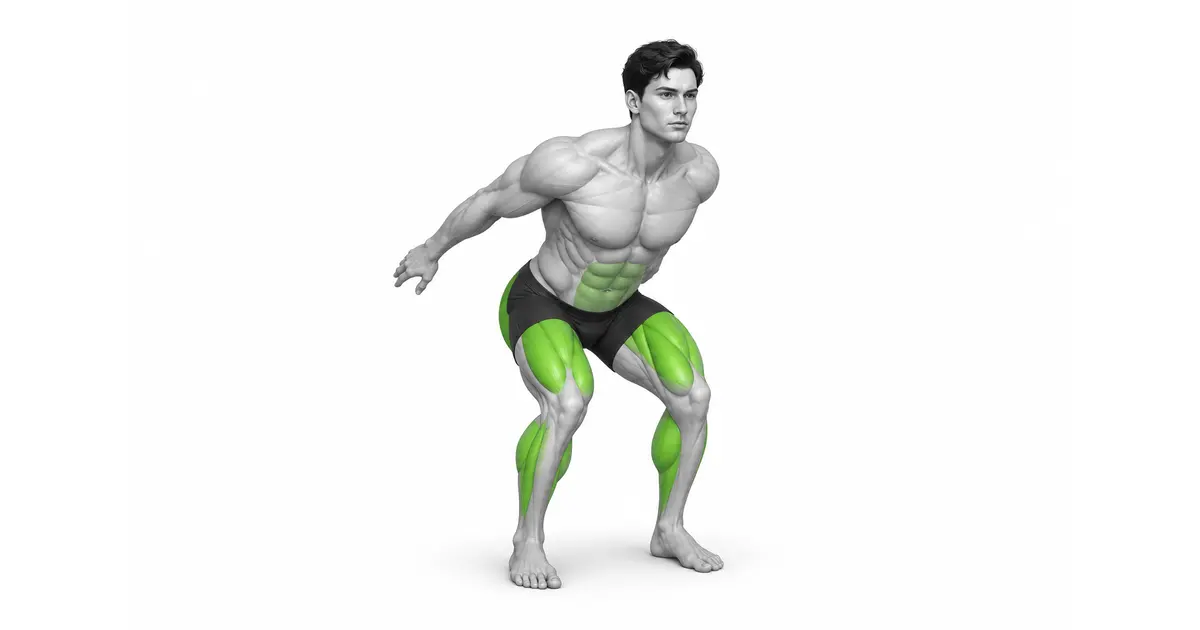
- 1
Determining Vertical Space and Landing Surface
Clear overhead and surrounding obstacles and select a non-slip, resilient floor. Start with low repetitions with minimal fatigue.
- 2
Vertical takeoff from a short descent
Send your arms backward and briefly bend your knees and hip joints, then swing your arms upward and quickly straighten your ankles, knees, and hip joints.
- 3
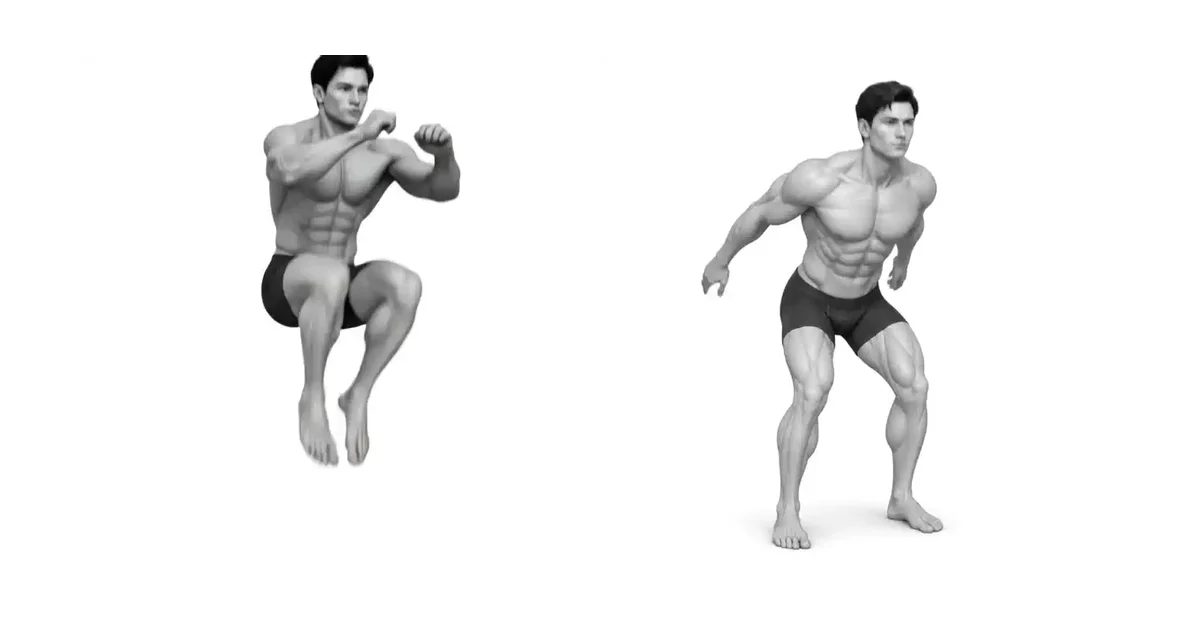
Pulling knees at the top of the air
After the body rises, tighten the abdomen and pull both knees toward the chest. Don't tuck your chest too far into your knees, but keep your torso as long as possible.
- 4
Put your feet down to land quietly and stop
After the peak, straighten your knees and bring your feet toward the floor. Reach with your middle foot, absorb the shock with your three joints, pause for 1 to 2 seconds, and then begin the next repetition.
JUMP, THEN TUCK
Knee pull starts in the air after creating takeoff
If you fold your torso before leaving the floor, your triple extension will not end and your jump will be lower. First, stretch vertically as if you were growing taller.
Pull up briefly at the top and then lower your foot again before landing to give your knees and hips time to shock.
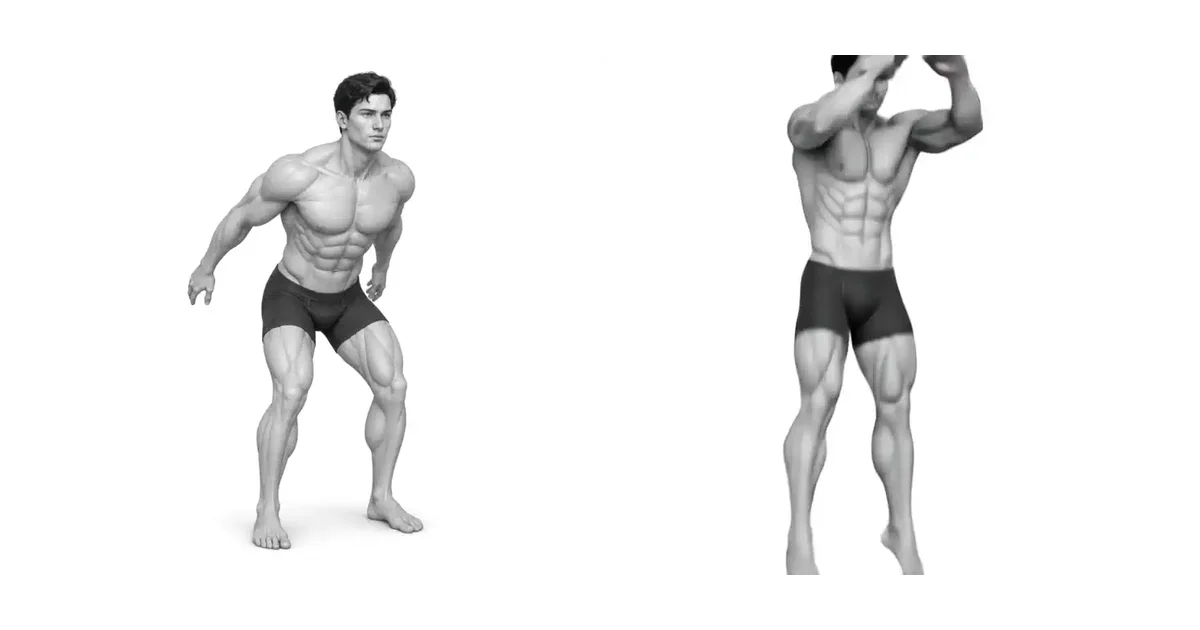
Key point: Cue to use right away: “First, float high, pull, then lower your feet to land.”
QUALITY REPS
Same takeoff and landing for each repetition is more important than knee height
When you're tired, your knees don't come up as much, your landing sounds louder, and your feet spread apart. In this case, finish the set without completing the number of repetitions.
It is easier to check landing errors with a method of stopping every repetition than with continuous bounces.
TROUBLESHOOTING
Fix the cause of a mistake, not just its appearance
Fold upper body before takeoff
- What you see
- The jump is low and the chest goes down towards the knees first.
- Likely cause
- Prioritized knee height over vertical thrust.
- How to correct it
- Go back to the squat jump and just add a small tuck movement after the full takeoff.
Failure to put foot down before landing
- What you see
- Falling into a squat position, the landing sound and impact are loud.
- Likely cause
- You held the mid-air tuck too long or pulled your knees too far for your current jump height.
- How to correct it
- Lower your knee pull and quickly bring your feet toward the floor immediately after the top.
Continuously bounding while fatigued
- What you see
- With each repetition, the knee height decreases and the foot and knee become disoriented.
- Likely cause
- Power exercise performed at cardiorespiratory limit sets.
- How to correct it
- Use short sets of 3 to 5 reps with plenty of rest, and reset after each rep.
REGRESSION & PROGRESSION
Match the difficulty before adding load
Squat Jump and Stick
Learn vertical takeoff and stationary landing.
Low Knee Drive Jump
Pull your knees in slightly and quickly lower your feet.
Single jaw jump
Comes to a complete stop after landing each rep.
Continuous chin jump
Add responsiveness only when single repeat quality is sufficient.
BEGINNER PROGRAM
A practical starting framework
Deploy fresh after warm-up and finish before loss of height and landing. High-quality, small sets are better than doing many repetitions with cardiorespiratory training.
Count
3–6 times
Reset after each repeated landing
Set
3–5 sets
90–180 seconds recovery between sets
Frequency
1–2 times a week
Summing with other jump contact counts
- Increase repetitions only when vertical height and quiet landing are maintained.
- If you get off your feet late or your knees give way, end the set immediately.
- Do not do consecutive tuck jumps before becoming skilled at controlled squat jumps.
Frequently asked questions
Is it effective if done in quick succession?
I like the idea of first doing a single iteration and then stopping. Use continuous repetitions only when the landing and height are stable.
Can I put it in burpees?
Possible, but it may increase fatigue and reduce landing quality. If power is your goal, perform tuck jumps in separate, short sets.