UPRIGHT ROW
A vertical pulling exercise that strengthens the lateral deltoids and upper trapezius to create a balanced shoulder development.
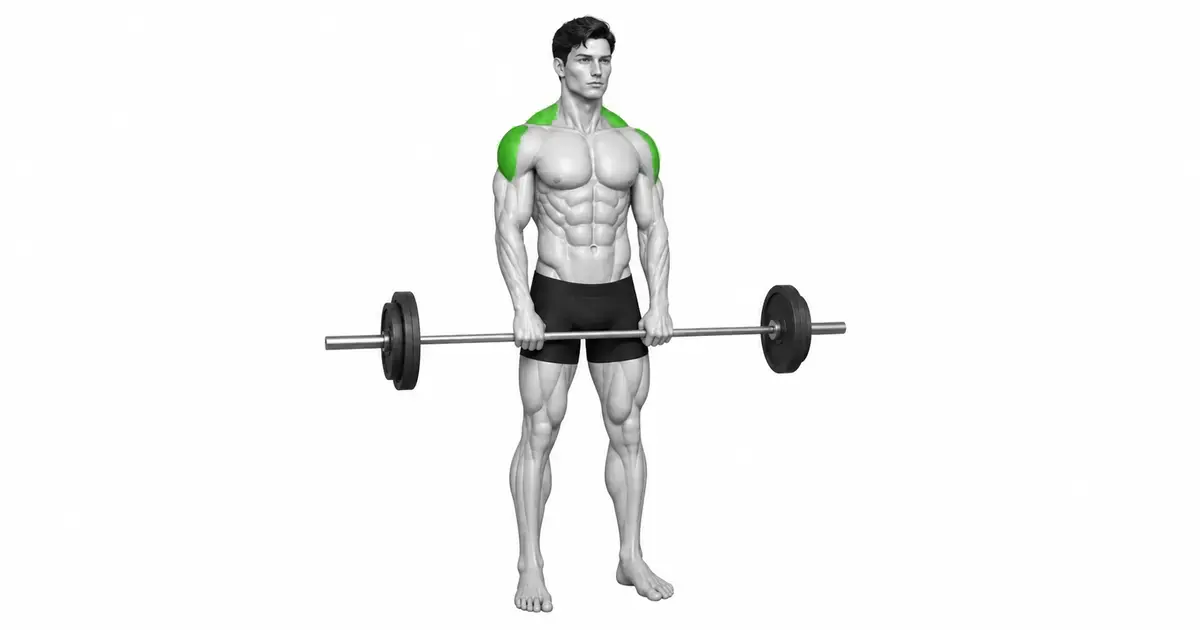
Hold the barbell slightly narrower than shoulder width and place it in front of your body. Keeping your back straight and your core tense, raise the bar straight up toward your chin. Your elbows should always be higher than your hands. When the barbell reaches your upper chest, pause briefly to feel the contraction, then slowly and controlled lower it to the starting position.
- Primary muscles
- Lateral Deltoid Upper Trapezius
- Secondary muscles
- Anterior Deltoid·Biceps Brachii
- Difficulty
- Intermediate
- Movement type
- Vertical Pull
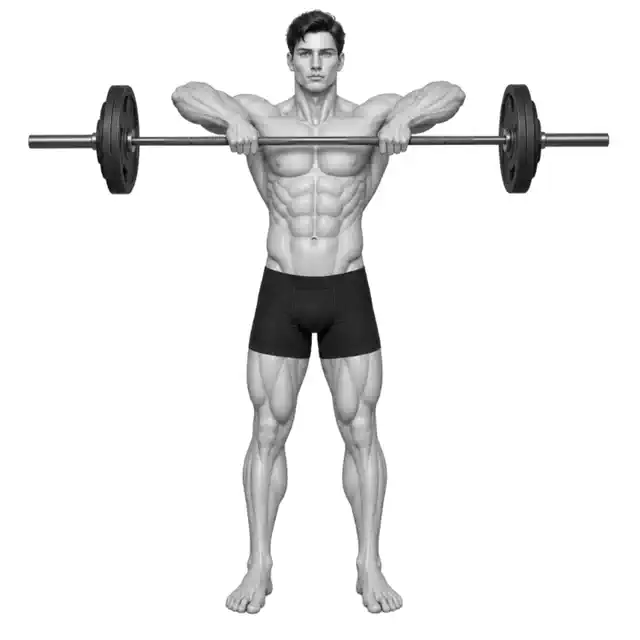
Do I have to raise the barbell up to my chin?
No, just raising it to the upper chest is sufficient to stimulate the side deltoid muscles. The well-being of your joints is more important than lifting too high.
STEP BY STEP
4 Steps for One Complete Rep
- 1
Ready and Grip
Hold a barbell and stand up straight. Grip should be shoulder width or slightly narrower, with palms facing your body.
- 2
Pull up vertically
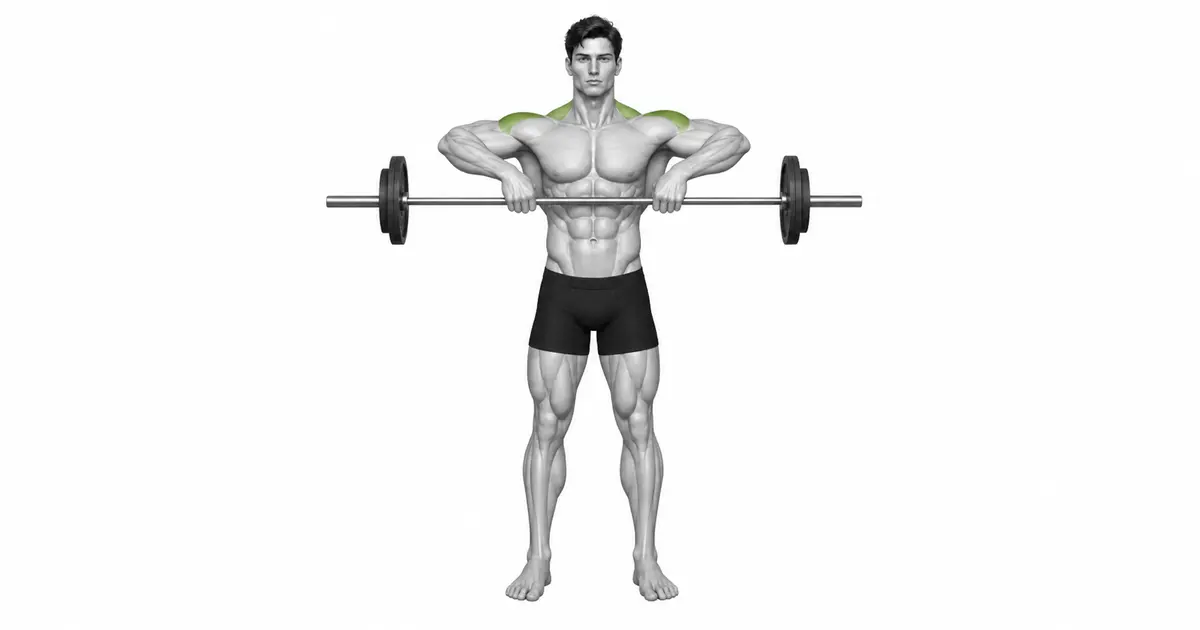
Hold the barbell as close to your body as possible and lift it vertically with your elbows spread high to the sides.
- 3
Vertex Contraction
When the barbell is near your upper chest or chin, stop with your elbows slightly above shoulder height.
- 4
Slow down
Slowly lower the barbell in front of your thighs while controlling the weight. Keep your shoulders relaxed.
ELBOW HEIGHT
Elbow position determines stimulation
In upright rows, your elbows should always be higher than your wrists. This allows you to use your lateral deltoid muscles as your prime mover and reduces the strain on your joints.
However, raising your elbows excessively higher than shoulder height can cause shoulder impingement syndrome, so it may be safe to only raise them to chest height within a pain-free range.
RANGE, LOAD & TEMPO
Choose a range and load that keep the Upright Row repeatable
The useful range of motion ends before your torso or working joints have to change position to move the load. Keep the lateral deltoid upper trapezius producing the movement while the anterior deltoid·biceps brachii support the same alignment from the first repetition to the last.
Use a controlled lowering phase of about two to three seconds and avoid bouncing through the transition. If the final repetitions become shorter, faster, or visibly different from the first, reduce the load or stop the set before technique breaks down.
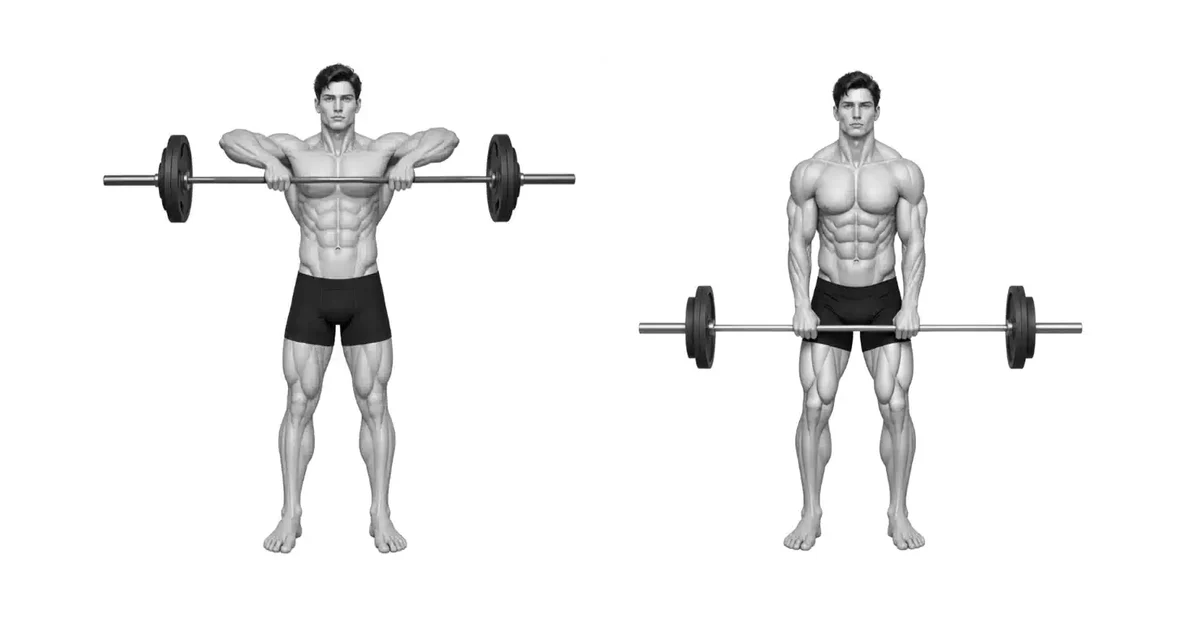
Key point: Progress the Upright Row only after every repetition follows the same path without joint pain.
TROUBLESHOOTING
Fix the cause of a mistake, not just its appearance
When the barbell moves away from the body
- What you see
- The movement of lifting a barbell as if throwing it forward.
- Likely cause
- Over-involvement of biceps or weight too heavy.
- How to correct it
- Maintain a vertical trajectory with the feeling that the barbell is passing over your body.
Excessively narrow grip
- What you see
- When holding the barbell with both hands almost together.
- Likely cause
- Compensating action to raise higher.
- How to correct it
- Widen the grip slightly to about shoulder width to ensure shoulder joint range of motion and reduce the risk of collision.
REGRESSION & PROGRESSION
Match the difficulty before adding load
Dumbbell Upright Row
Use dumbbells to increase wrist and shoulder freedom, reducing joint strain.
Easy Bar Upright Low Perform this by using the
EZ-Bar to angle your wrists for a more comfortable angle.
BEGINNER PROGRAM
A practical starting framework
Upright rows are excellent for creating a three-dimensional effect on the shoulders. The effect is improved when performed in conjunction with a raise exercise.
Frequency
1-2 times a week
Hits your shoulders and upper back muscles at the same time, so include it in your routine for those areas.
Volume
3~4 sets, 10~15 times
This is an exercise that can be hard on the joints, so focus on the correct trajectory and stimulation rather than the weight.
- Never use recoil to bounce the barbell.
- Keep your back straight and core tight throughout the movement.
- Lead with your elbow, being careful not to bend your wrist.
Frequently asked questions
Won't just the trapezius muscles become too big?
You can increase the proportion of your lateral deltoids by holding your grip slightly wider. However, developing the upper trapezius muscle helps complete the frame of the entire shoulder.