V-UP
The V-up is not a movement that forces the hands and feet to touch each other, but is a high-level abdominal flexion exercise that creates balance on the ischium by simultaneously lifting the torso and legs.
Raising the upper body and straight legs simultaneously from a lying position places a large load on the rectus abdominis and hip flexors. If you rise with arm kicks or throw your legs first, you lose balance and controlled descent above your ischia. Start with a chin-up or side-by-side regression variation, moving only as far as your chest and thighs are close at the top.
- Primary muscles
- Rectus abdominis
- Secondary muscles
- Iliopsoas muscle, Rectus femoris muscle, Oblique muscle
- Difficulty
- Advanced
- Movement type
- Simultaneous torso and hip joint flexion
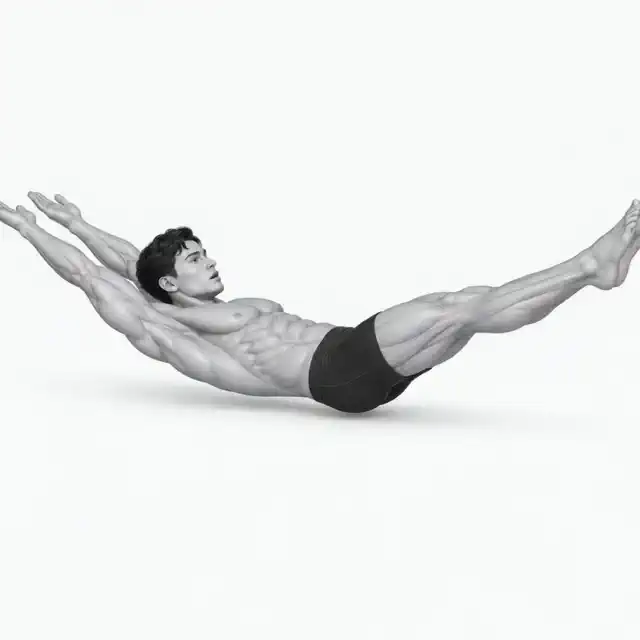
Do your hands have to touch your feet?
No. Any range that maintains balance above the sciatica and simultaneous elevation and controlled descent is sufficient.
STEP BY STEP
4 Steps for One Complete Rep
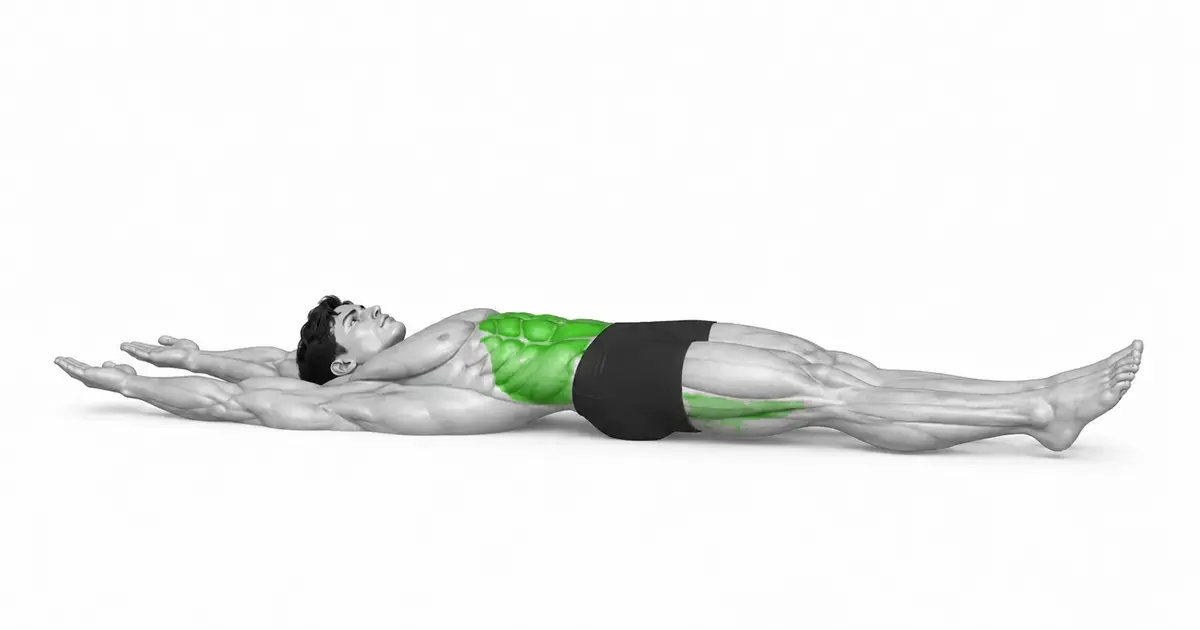
- 1
Lie down and create body tension
Lie on your back with your legs together and your arms extended overhead. Exhale to lower your lower ribs and prevent the curve of your back from becoming too large.
- 2
Lifting upper body and legs simultaneously
Squeeze your abs and lift your shoulder blades and legs together off the floor. Extend your arms in the direction of your feet and make sure your legs do not bounce ahead of your upper body.
- 3
Balancing briefly on the ischium
At the top, bring your chest and thighs together and move your hands toward your feet or shins. Do not arch your back excessively or pull your neck.
- 4
Slowly lower your arms and legs together
Lower your upper body and legs simultaneously over 2 to 4 seconds. Pause in the pre-low back range or lie down completely to reset tension.
RISE TOGETHER
Your upper body and legs must rise at the same speed to maintain balance over your sit bones.
If the legs come up first, the upper body stays behind, and if the arm recoils first, there is an impact on the lower back. Start on both sides at the same time with a small range.
Bend-knee chin-ups are a formal return to practicing the same timing with a shorter lever.
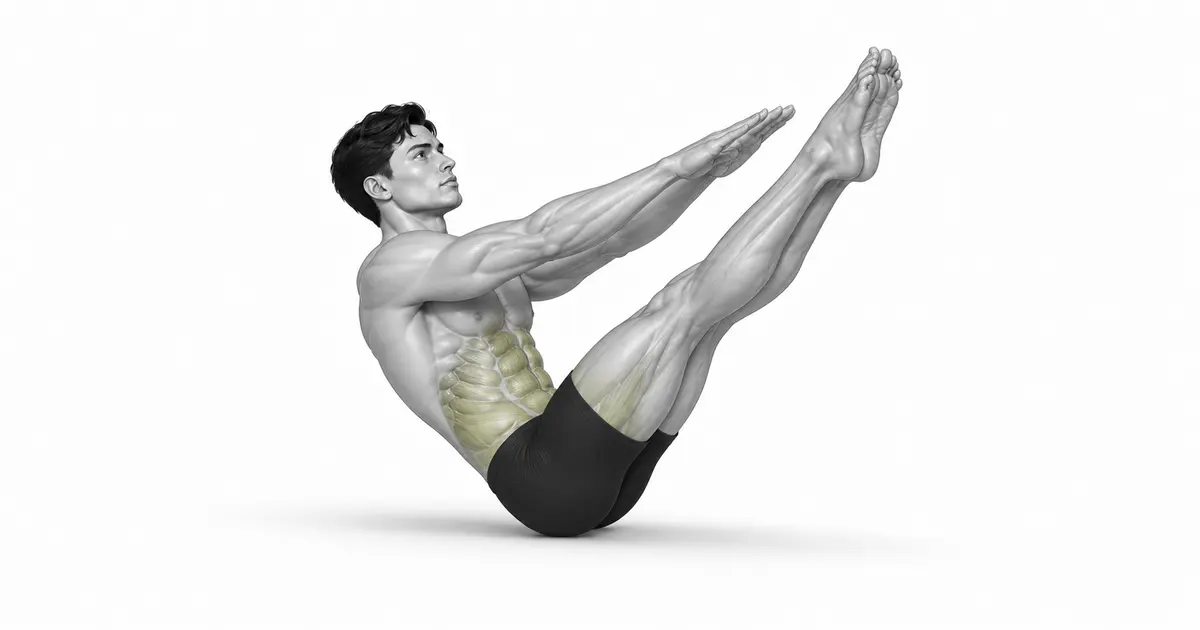
Key point: Cue to use right away: “Bring your chest and thighs together at the same time and lower them together.”
CONTROL THE DESCENT
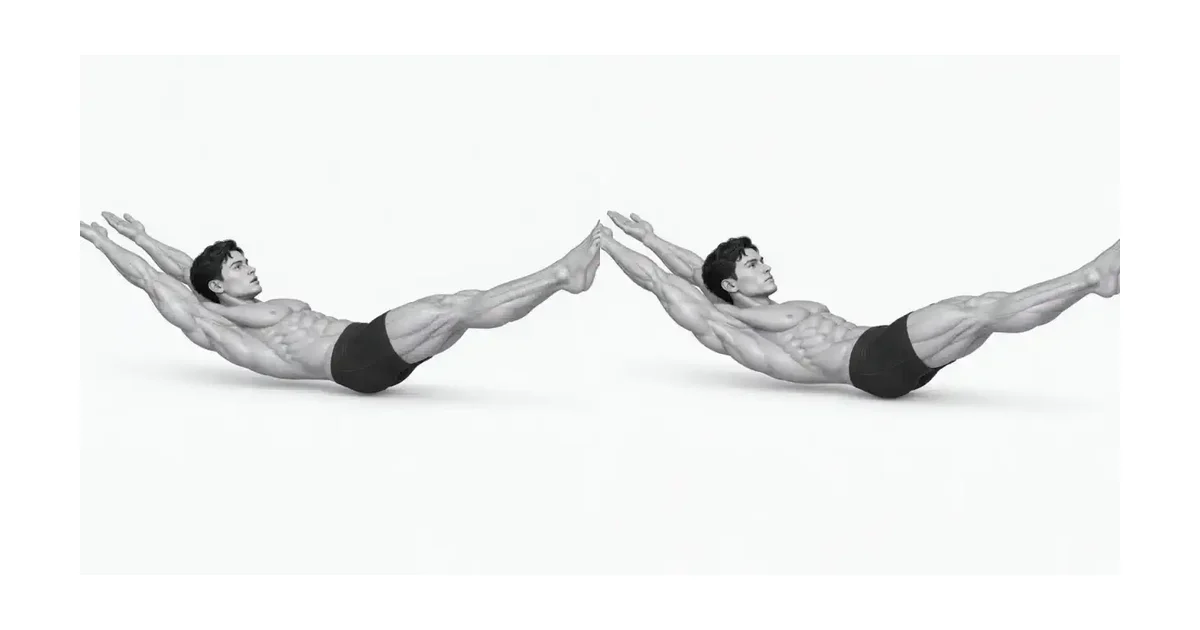
It is more difficult to control the lower back and pelvis on descents than on ascents
Drop your feet and shoulders to the floor, breaking abdominal tension with each repetition. Stop just before touching or touch gently to reset.
If your lower back rises first, lower your legs higher or bend your knees.
TROUBLESHOOTING
Fix the cause of a mistake, not just its appearance
Swing your arms and throw your upper body
- What you see
- Shoulders spring up first and lose balance at the top.
- Likely cause
- Used arm inertia rather than abdominal flexion.
- How to correct it
- Practice simultaneous raises by placing your arms in front of your chest or returning to knee chin-ups.
Legs rise first, lower back stiffness
- What you see
- When descending, the waist space increases and only the front of the hip joint becomes fatigued.
- Likely cause
- The lever is longer than the current anti-extension capability.
- How to correct it
- Bend your knees, lower your legs less, and keep your ribs and pelvis aligned.
Trying to reach feet by pulling neck
- What you see
- My chin is too close to my chest and the front and back of my neck is tense.
- Likely cause
- Forced range targeting hand and foot contact.
- How to correct it
- Keep your eyes on your knees and your hands only towards your shins.
REGRESSION & PROGRESSION
Match the difficulty before adding load
Your chin lying down
Learn pelvic flexion with a short lever.
Seated Chin-Up
Place your hands on the floor and align your upper body and knees.
Vent Knee V-Up
Perform simultaneous rise with knees bent.
Straight leg V-up
Extend your legs when you have a controlled descent.
BEGINNER PROGRAM
A practical starting framework
Speed up the repetition or finish before the descent drops. Since this is a movement that places great abdominal flexion and hip flexor fatigue, low repetitions are sufficient.
Count
5–12 times
Descent 2-4 seconds
Set
2–4 sets
60–120 seconds recovery between sets
Frequency
1–3 times a week
Different leg lifting exercises and controls
- Increase number of repetitions if simultaneous rise and controlled descent are maintained.
- If you experience arm stiffness, lower back stiffness, or neck tension, bend your knees or return to chin-ups.
- We do not consider reaching hands and feet as a criterion for success.
Frequently asked questions
Does bending your knees reduce the effect?
The lever is shorter, making it less difficult, but you can still learn the same timing and abdominal control.
Can I continue if I hear a sound in my back?
Check by lowering your posture even if it is a simple sound without pain. Stop immediately if pain or discomfort occurs.
Evidence and references
- 1. ACE — V-sit