WINDSHIELD WIPER
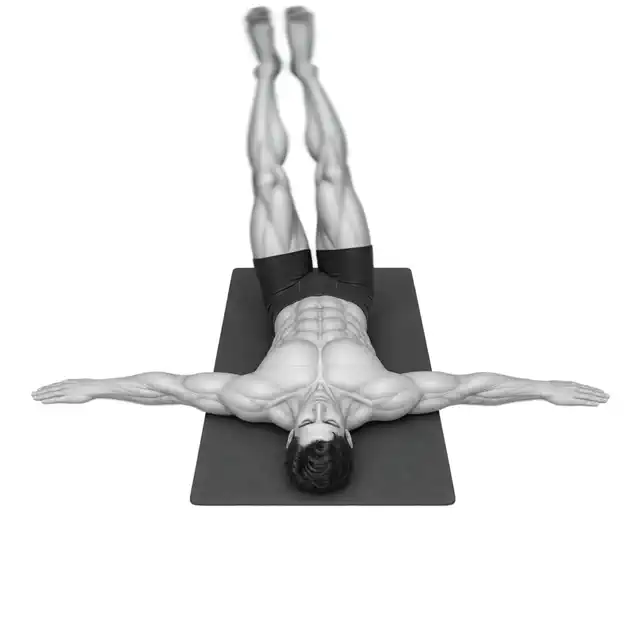
The windshield wiper is not an exercise where you place your feet on the left or right floor, but rather a high-level core movement that fixes your shoulders and slows down the rotation made by the leg lever with your oblique muscles.
Lie on your back, spread your arms out to the sides, and lower your legs to the side to create a large rotational lever for your pelvis and lumbar spine. Since the straight legs variation is very difficult, you should start with the bent knee wiper with your knees bent at 90 degrees. Allow both shoulder blades to remain on the floor and the opposite lower back to lift, but slowly decelerate within a pain-free range.
- Primary muscles
- Internal oblique muscle · External oblique muscle
- Secondary muscles
- Rectus abdominis, transverse abdominis, iliopsoas, adductors
- Difficulty
- Intermediate
- Movement type
- Recumbent Leg Lever Torso Rotation
Do your feet have to touch the floor?
No. Return at a height that maintains both shoulders and controlled rotation.
STEP BY STEP
4 Steps for One Complete Rep
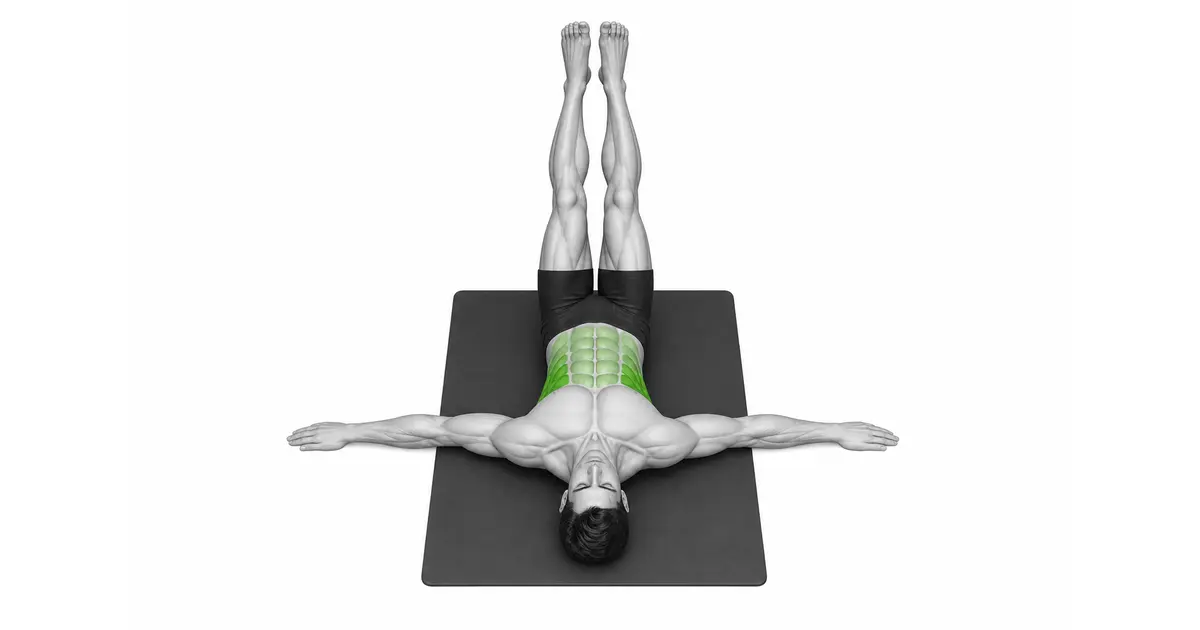
- 1
Supporting the floor with arms and shoulder blades
Lie on your back and spread your arms out in a T shape. Place your palms and shoulder blades on the floor and keep your neck relaxed.
- 2
Selecting lever with knee bend
Beginners should bend their hips and knees at approximately 90 degrees. Extend and bring your legs further together only when you have enough control.
- 3
Slowly lower your pelvis and legs to one side
Inhale and lower both knees or legs together to one side. Stop before you lift your opposite shoulder or feel pain in your lower back.
- 4
Moving the obliques through the center to the other side
Exhale and bring your legs to the center, then repeat the same range on the other side. Instead of bouncing at the bottom, slow down for 2 to 4 seconds.
BEND THE KNEES
Adjusting the rotation lever to your knee angle is the safest return
When the legs are straightened, the lever becomes longer, which significantly increases the waist rotation torque. Control your shoulders and speed in the bent knee variation.
You can lower the range and strain further by pulling your knees slightly closer to your body.
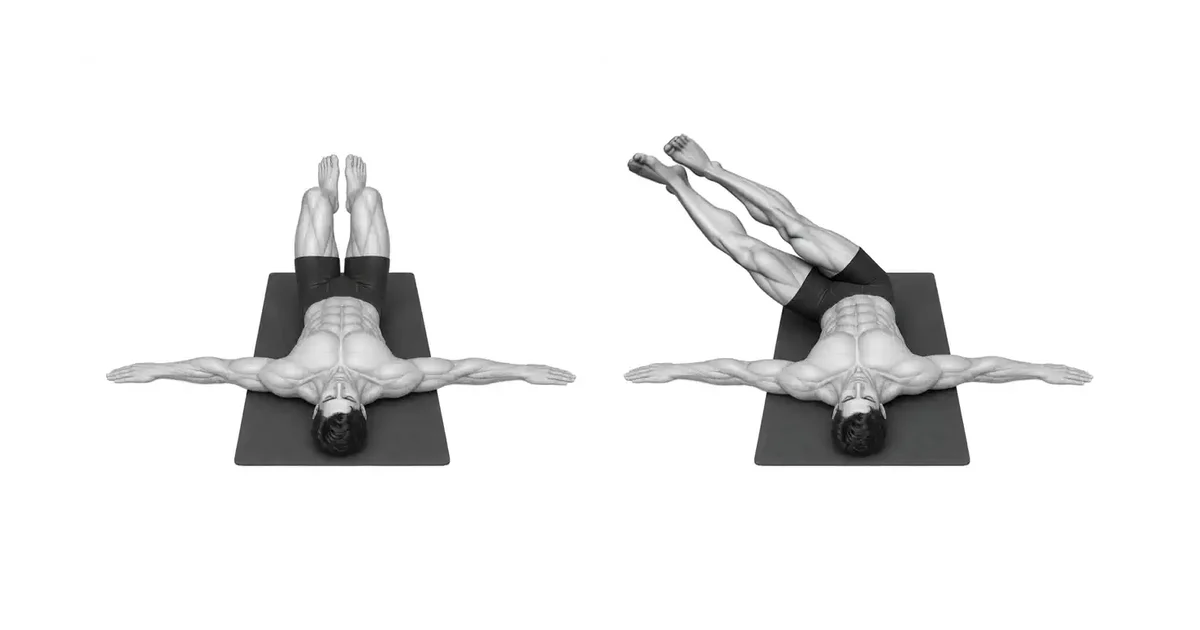
Key point: Cue to use right away: “Shoulders on the floor, legs slowly as one body.”
BRAKE THE ROTATION
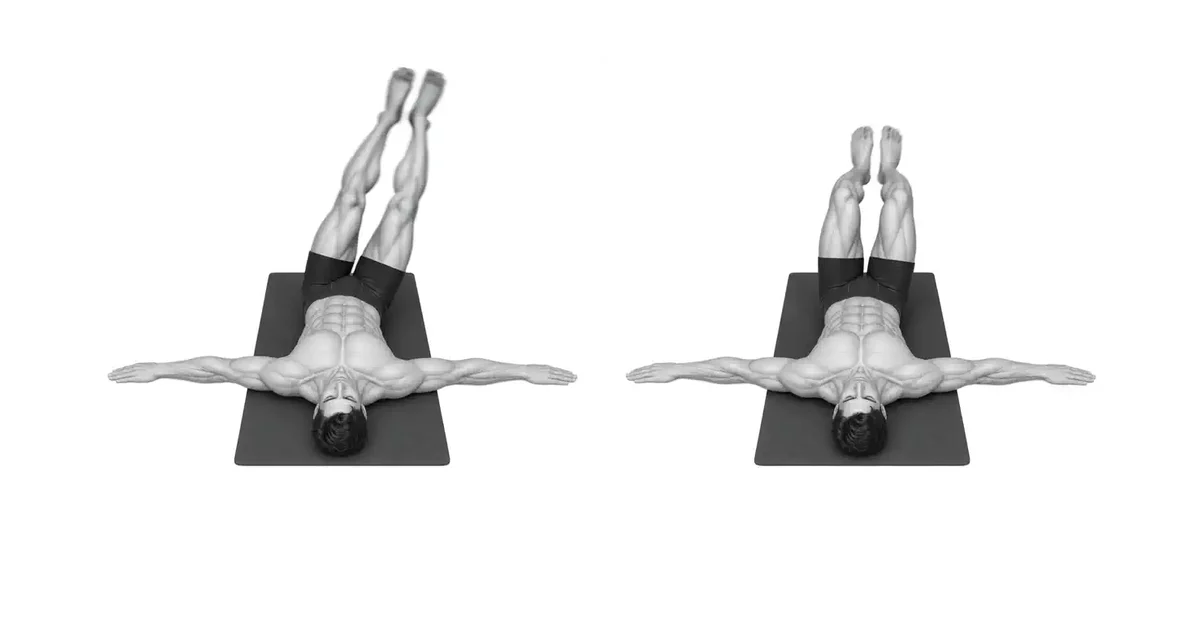
The important section is not the end point hitting the floor, but the process of braking the downward turn
Your feet or knees do not need to touch the floor. Return to a point where you maintain oblique tension and shoulder contact.
If the recoil goes past the center, it reduces range and pauses for 1 second on each side.
TROUBLESHOOTING
Fix the cause of a mistake, not just its appearance
Opposite shoulder lifted off the floor
- What you see
- The shoulder and arm opposite to the side where the leg was lowered rise into the air.
- Likely cause
- The rotation range and leg levers are currently out of control.
- How to correct it
- Bend your knees and lower your legs slightly so that your shoulder blades remain on the floor.
Bouncing legs at the bottom
- What you see
- Recoil from bottom or end range through center.
- Likely cause
- Range of motion was prioritized over oblique muscle deceleration.
- How to correct it
- Raise the endpoint and use 3 seconds lower and 1 second pause.
Both legs separated
- What you see
- One leg goes down first and the pelvis twists.
- Likely cause
- Adductors and torso are relaxed or the lever is long.
- How to correct it
- Place a towel between your knees and return to the bent knee variation.
REGRESSION & PROGRESSION
Match the difficulty before adding load
Increased load and strength
Increase intensity by gradually increasing weight or shortening rest periods.
Complex Variant Behavior
Increase the difficulty level by combining it with other exercises or adding unstable environments.
BEGINNER PROGRAM
A practical starting framework
Count each left and right as 1 rep and use low repetitions. This is a movement that causes high back rotation fatigue, so only perform sets that allow you to decelerate without kickback.
Frequency
2-3 times a week
Appropriately place it in your whole body or relevant area routine.
Volume
3~5 sets, 8~15 times
Adjust the number of reps and sets according to your goals.
- Always put safety first and listen to your joint pain.
- Perform the entire operation within the scope of your control.
Frequently asked questions
Is it the same exercise if you bend your knees?
Yes. This is a core regression with reduced levers, and most should start with the bent knee variant.
Can I lift my waist?
Depending on the rotation of the pelvis, one waist can be lifted, but if the opposite shoulder floats or causes pain, the range is excessive.