BATTLE ROPE
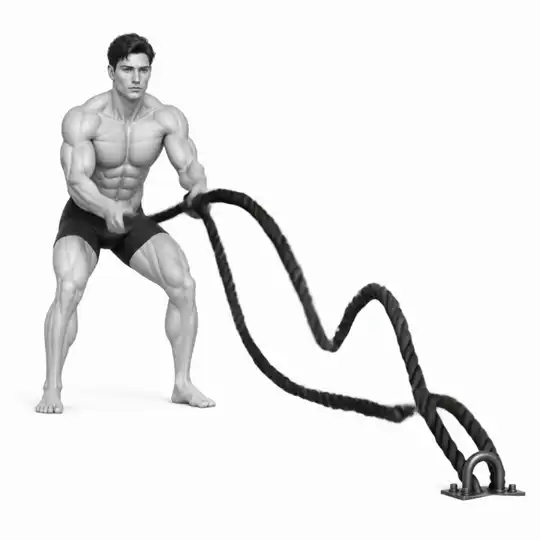
Battle rope is not an exercise where you shrug your shoulders and throw a large rope, but it is a full-body conditioning exercise that sends a steady wave to the anchor with the rhythm of both arms while keeping the lower body and torso fixed.
Swinging a heavy rope quickly places high loads on your heart, grip, and shoulders, but bigger waves aren't always better. If the anchor is loose or the rope is frayed, the equipment may bounce and become dangerous. Check your anchor and movement space, start with small alternating waves with your knees and hips slightly bent, and maintain the same height and frequency until the end of the set.
- Primary muscles
- Deltoids, forearms, abdomen
- Secondary muscles
- Lats, quadriceps, gluteus maximus, calves
- Difficulty
- Intermediate
- Movement type
- Alternating arm waves and lower body isometric support
Is the bigger the wave the better?
Depends on your goals. In conditioning, small, fast waves are sufficient and it is important that they are delivered consistently to the anchor throughout the set.
STEP BY STEP
4 Steps for One Complete Rep
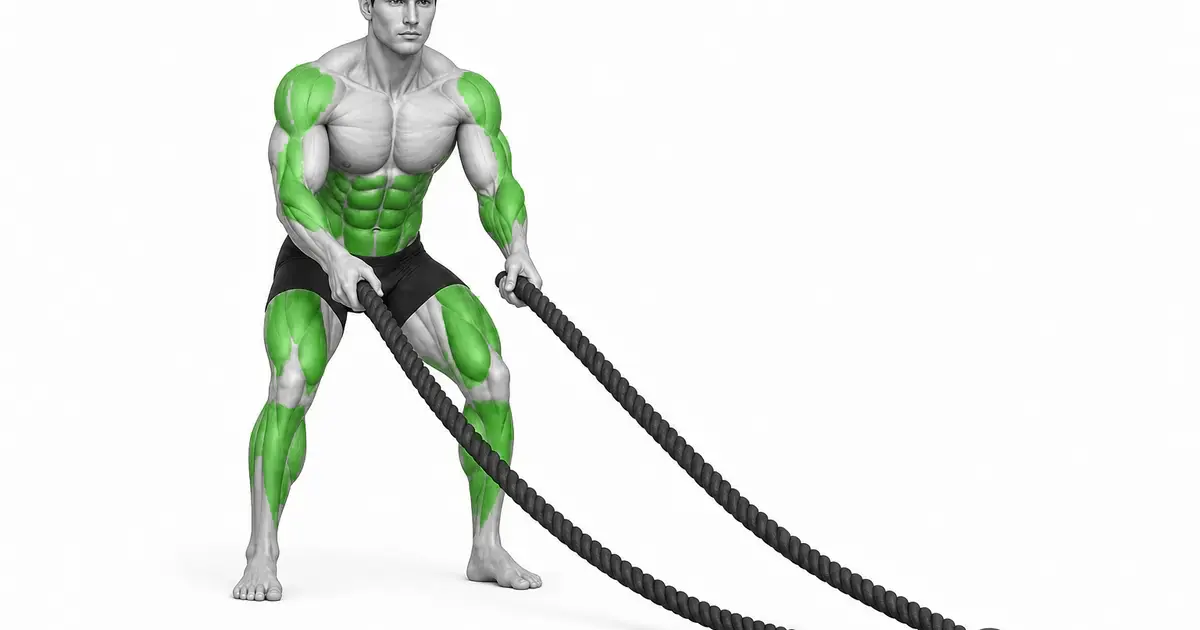
- 1
Checking anchor and rope status
Make sure the anchor points are stable and there is no significant wear on the rope. Keep both sides of the rope the same length and send bystanders out of your path.
- 2
Creating a stable stance and grip
Place your feet shoulder-width apart and lightly bend your knees and hip joints. Hold your palms facing each other and place your shoulders away from your ears.
- 3
Shortly raise and lower both arms alternately
Keep your elbow gently bent and lower your opposite hand as one hand rises. Create small, steady waves that extend to the anchor.
- 4
Quit the wave before it collapses
Slow down if your torso shakes or your shoulders rise. Recover your breathing by walking with the rope controlled on the floor.
SEND THE WAVE
Don’t just wave your hand in front of you, make sure the wave is transmitted to the anchor
If the rope is too tight, it is difficult to create waves, and if it is too loose, floor friction increases. Control your distance in one or two steps.
Maintain rhythm with short, quick movements of your elbows and wrists rather than raising your entire shoulder.
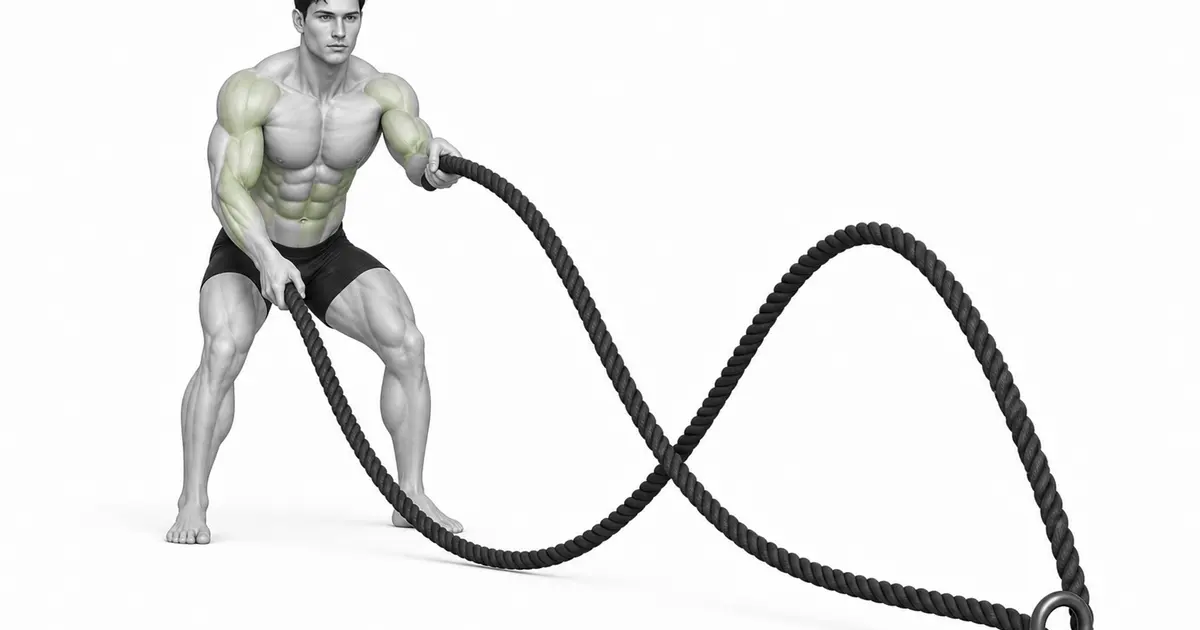
Key point: Cue to use right away: “Shoulders low, waves small and constant.”
QUIET TORSO
The more your upper body shakes, the more energy you have to move your body, not the rope.
Tighten your abdominals and glutes, overlap your ribs and pelvis, and place your entire foot on the floor.
When you are tired, avoid arching your back or bringing your knees inward and reduce your work time.
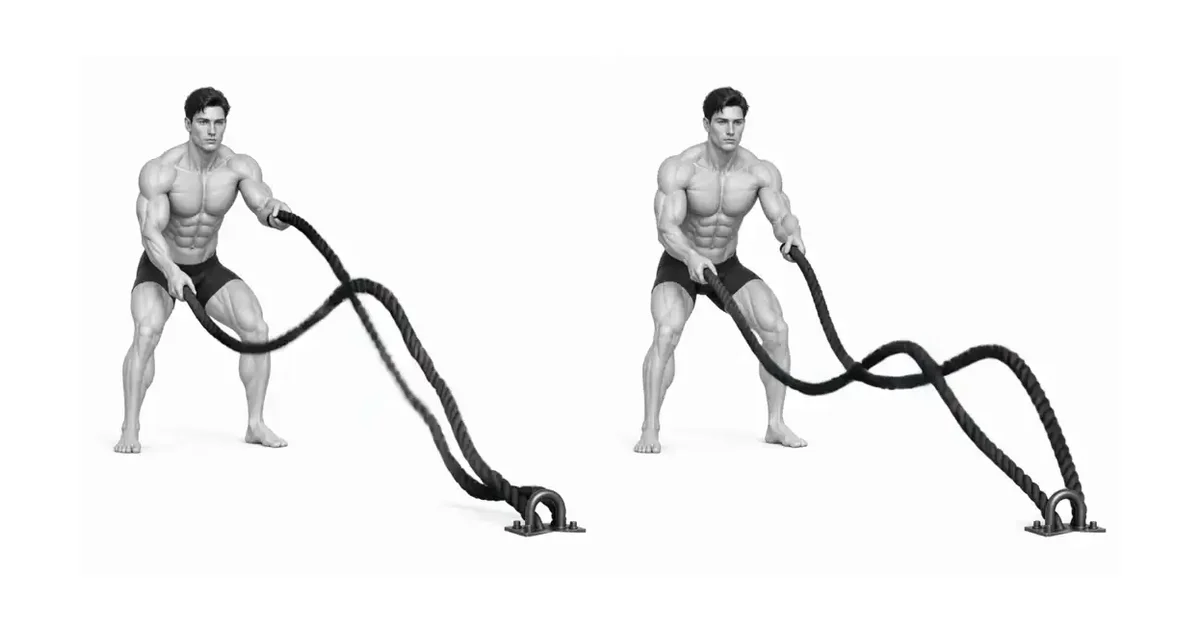
TROUBLESHOOTING
Fix the cause of a mistake, not just its appearance
Shoulders rise towards ears
- What you see
- The neck becomes short, and the trapezius muscle and front of the shoulder hurt first.
- Likely cause
- Make the wave too big or the set is too long.
- How to correct it
- Reduce the wave height and time and move around your elbows with your shoulder blades down.
Torso shakes strongly back and forth
- What you see
- With each wave, the lower back is tilted and the knees are extended and bent.
- Likely cause
- Compensates arm rhythm with full body recoil.
- How to correct it
- Slow down and lock your feet, hips, and ribs on short sets.
Not checking anchors and wear condition
- What you see
- Anchor point moves or rope fibers loosen and get caught in hand.
- Likely cause
- Skipping pre-workout equipment check.
- How to correct it
- Stop immediately and re-anchor or replace damaged rope.
REGRESSION & PROGRESSION
Match the difficulty before adding load
Interval Training
improve calorie consumption efficiency by repeating high and low intensity.
Increased time and resistance
Strengthen your stamina by increasing performance time or increasing the resistance level of the machine.
BEGINNER PROGRAM
A practical starting framework
Start with 10 to 20 seconds of work and plenty of rest. End the set when the wave height and frequency drop below half of what it was at the beginning of the set.
Frequency
3 to 5 times a week
If your goal is to lose body fat, it is important to do it consistently.
Volume
20~40 minutes
Gradually increase the time according to your fitness level.
- Do this while drinking plenty of water.
- Protect your joints through light stretching before and after exercise.
Frequently asked questions
Do I have to keep my knees bent?
Just maintain a lightly bent, stable posture. There is no need to maintain a deep squat and tire out your lower body first.
Can I hit the rope hard on the floor?
Slam is a separate variant. Make sure your equipment and floor allow and learn the basic alternating waves first.