BEHIND-THE-NECK PULLDOWN
Controlled behind-the-neck pulldowns develop the upper-lat and posterior shoulder chain when performed with strict posture, scapular control, and conservative load progression. This exercise places the bar behind the head and requires deliberate technique adjustments to protect the glenohumeral joint; when performed correctly it complements a balanced pulling program but it demands strict attention to shoulder comfort and mobility.
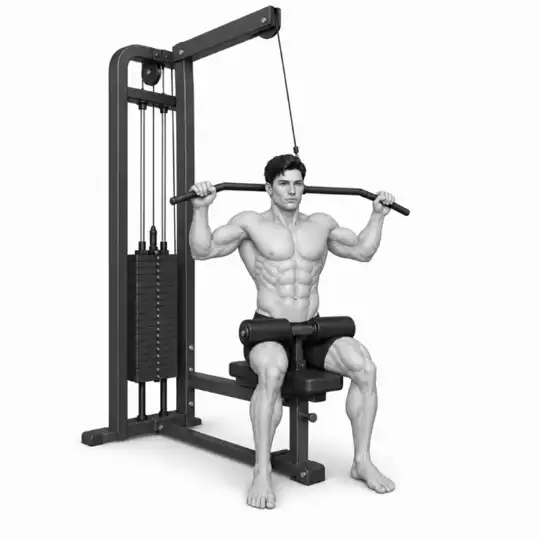
The behind-the-neck pulldown is a vertical-pull variation performed from a seated machine or cable with a wide grip, lowering the bar behind the head to the upper trapezius or the base of the skull. Because the path takes the humerus into horizontal abduction and external rotation at the end range, the movement changes scapulohumeral mechanics compared with front pulldowns. That altered line of pull can increase posterior deltoid and upper-lat emphasis for some lifters, but it also increases stress on the acromioclavicular and glenohumeral joints if performed without attention to posture, shoulder mobility, and appropriate load. This guide walks through precise set-up, incremental progressions, common technical faults and corrective cues, and a conservative short-program to integrate the exercise into a balanced routine. Read this guide if you intend to use behind-the-neck pulldowns as an accessory movement for upper-back thickness or posterior shoulder development. If you have current shoulder pain, recent shoulder injury, or a history of impingement, consult a qualified clinician before attempting this movement. Stop immediately if you experience sharp pain, catching sensations, or sudden loss of range while lowering or returning the bar.
- Primary muscles
- Latissimus dorsi, Teres major, Posterior deltoid
- Secondary muscles
- Rhomboids, Middle trapezius, Biceps brachii, Forearm flexors, Core stabilizers
- Difficulty
- Intermediate
- Movement type
- Vertical pulling with scapular retraction and controlled shoulder horizontal abduction
Can beginners do behind-the-neck pulldowns?
Beginners can experiment with a shortened and very light-range version after they have built basic pulling strength with front pulldowns and seated rows. Prioritize mobility and posterior chain activation first. If the lifter experiences joint discomfort during even the reduced range, they should avoid the behind-the-neck path and use front-oriented vertical pulls and horizontal rows instead.
STEP BY STEP
4 Steps for One Complete Rep
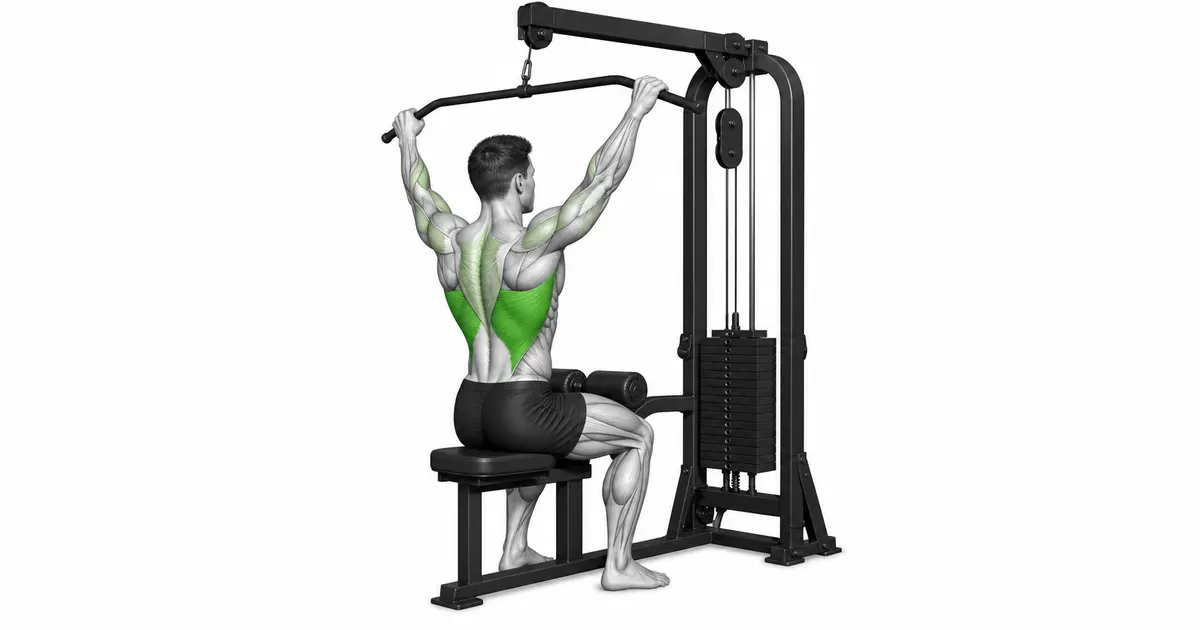
- 1
Seat and chest positioning
Set the seat height so that when you grasp the bar and sit upright, your upper arms can move back without the torso collapsing forward. Your chest should be lifted and supported by an engaged thoracic spine: think 'proud chest' rather than a flared rib cage. Adjust the knee pads to hold your thighs in place so you can brace the body with the legs and avoid using momentum from the lower body. Before loading, test a short range of motion to confirm that your shoulders are comfortable behind the head.
- 2
Grip width and hand placement
Use a grip slightly wider than shoulder width for a balance between lat engagement and shoulder safety; excessively narrow or extremely wide grips can change shoulder orientation and increase strain. Wrap the thumbs around the bar and maintain a neutral wrist. Keep the elbows tracking down and slightly back—do not flare them dramatically outward. Establish a firm but not tense grip to let the upper back and lats do the work rather than the forearms.
- 3
Descent under control
Begin each rep with a full, controlled exhale as you initiate scapular depression and slight retraction. Pull the bar down in a smooth arc so the hands and elbows travel behind the plane of the head while the torso remains upright. Lower the bar only as far as your shoulder mobility and comfort allow—many lifters will stop with the bar touching the base of the skull, others at the level of the top trapezius; avoid forcing the bar to the neck if you feel pinching. Throughout the descent, maintain a stable torso and avoid leaning the head forward or arching the lower back.
- 4
Controlled return and reset
Return the bar to the start position under muscular control, allowing the shoulders to protract and the scapulae to move forward only enough to reset tension—do not relax into a rounded posture. Keep the movement continuous and rhythmic and use a tempo that allows you to feel the lats and posterior deltoids working against resistance. Breathe rhythmically; typically inhale as you return to the start and exhale during the pull. Reset your shoulder blades as needed between reps to preserve quality of each repetition.
FORM & STRENGTH
Efficiency, scapular mechanics, and safe shoulder adaptation
Section A — Progressive set-up and posture cues: Before adding load, confirm thoracic extension and neutral head position. Sit tall with a slight posterior pelvic tilt to avoid hyperlordosis. Actively depress the scapulae to remove shrug at the top of the motion; this shortens the operating range at the upper trapezius and reduces passive impingement at the acromion. Create tension by bracing the feet and ribs lightly to keep the torso stable; avoid translating the torso backward to compensate for limited shoulder motion. If you have restricted overhead external rotation, perform thoracic mobility drills and posterior cuff/rotator cuff warm-ups before attempting the behind-the-neck path. Build strength first with front pulldowns and close-grip seated rows, then slowly introduce short-range behind-the-neck motions with a light load to test tolerance.
Section B — Scapular and humeral path control, and layered strength development: Concentrate on initiating the repetition from the scapulae: pull the shoulder blades down (depression) and then back (retraction) in a coordinated pattern rather than simply bending the elbows. This sequencing biases the lats and rhomboids to share the load and spares isolated stress on the glenohumeral joint. Use a smooth arc rather than a vertical drop: the bar should travel behind the head in a controlled curve, and the elbows should move down and slightly back. When progressing, prioritize adding repetitions with strict control or increasing range-of-motion incrementally rather than large jumps in weight. If you experience discomfort at the end range, shorten the descent and use fuller ranges with front pulldowns and other horizontal or vertical pulls until mobility improves. Consider rotating this exercise into your program as a planned accessory for specific phases rather than a weekly mainstay for all trainees.
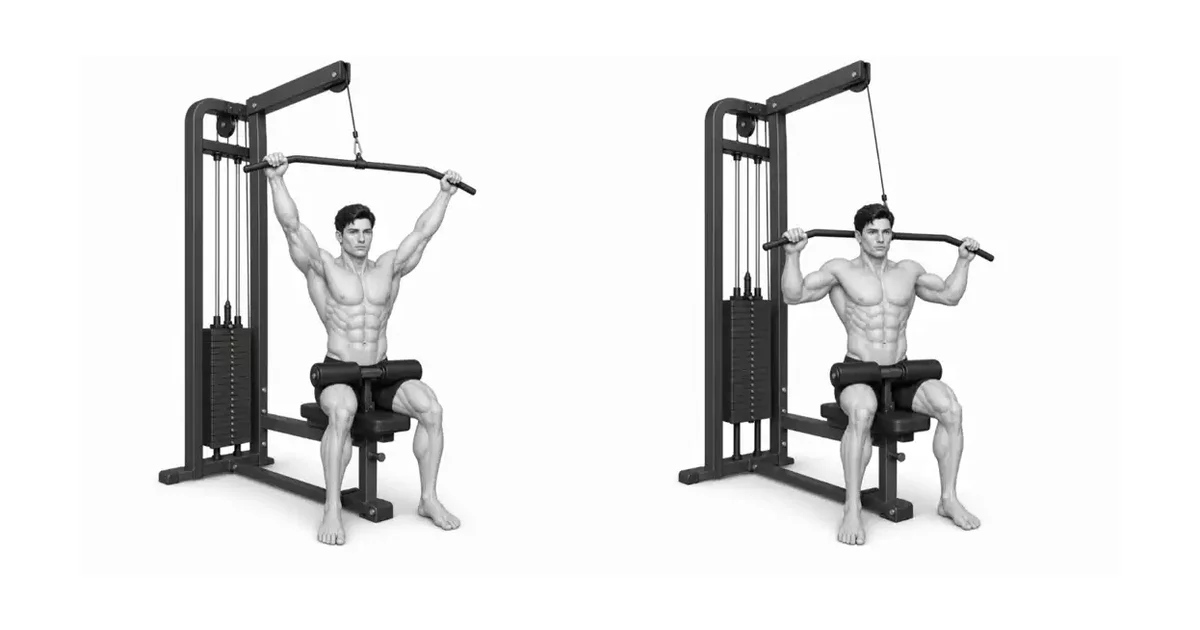
RANGE, LOAD & TEMPO
Choose a range and load that keep the Behind-the-Neck Pulldown repeatable
The useful range of motion ends before your torso or working joints have to change position to move the load. Keep the latissimus dorsi, teres major, posterior deltoid producing the movement while the rhomboids, middle trapezius, biceps brachii, forearm flexors, core stabilizers support the same alignment from the first repetition to the last.
Use a controlled lowering phase of about two to three seconds and avoid bouncing through the transition. If the final repetitions become shorter, faster, or visibly different from the first, reduce the load or stop the set before technique breaks down.
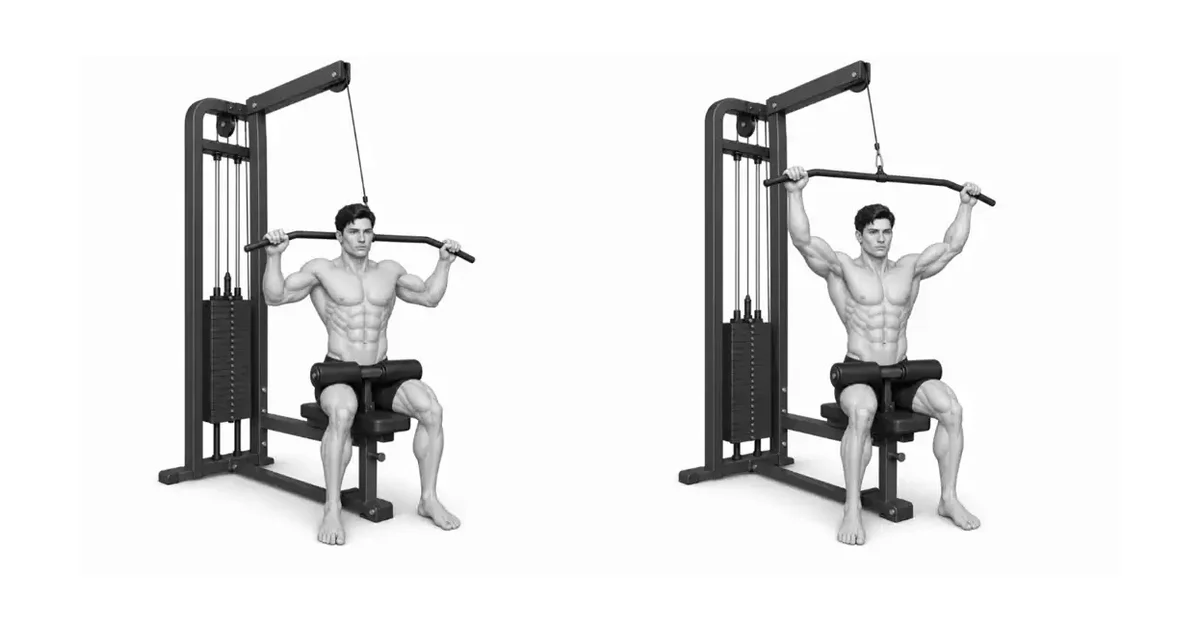
Key point: Progress the Behind-the-Neck Pulldown only after every repetition follows the same path without joint pain.
TROUBLESHOOTING
Fix the cause of a mistake, not just its appearance
Using torso lean and momentum
- What you see
- Large backward lean of the torso, a rapid backward movement, or a noticeable bounce to get the bar to the neck.
- Likely cause
- Load that exceeds the pulling strength available through strict scapular-humeral control or attempting to match other lifters' loads.
- How to correct it
- Reduce the weight and re-establish a tall, braced torso. Focus on initiating each rep from controlled scapular depression and retraction rather than hip drive. If momentum persists, perform lighter sets with a pause at the top of the descent to reinforce strict technique.
Excessive internal rotation or forced end range
- What you see
- Sharp pinching or catching in the front or top of the shoulder during the descent, inability to lower smoothly, or compensatory shrugging.
- Likely cause
- Insufficient shoulder external rotation mobility, a grip that pulls the humerus into an unsafe orientation, or forcing the bar lower than the shoulder can tolerate.
- How to correct it
- Stop descending at the first sign of sharp pain. Narrow or modify the grip and shorten the range of motion so the bar meets comfort at the top of the shoulder rather than behind the skull. Incorporate rotator-cuff activation, band external-rotation sets, and thoracic mobility work before progressing the range.
REGRESSION & PROGRESSION
Match the difficulty before adding load
Reduce range then extend gradually
Start with a truncated behind-the-neck range: allow the bar to travel only to the top of the trapezius rather than the base of the skull. When this shortened path is comfortable and quality is consistent for multiple sets, gradually add 1–2 inches of range over several sessions while maintaining strict scapular control. This preserves shoulder health while allowing adaptation.
Build posterior chain strength with accessory lifts
Prioritize horizontal rows, face pulls, and reverse flys as weekly staples to strengthen the posterior deltoids, rhomboids, and external rotators. Use behind-the-neck pulldowns as a planned accessory once those muscles and movement patterns are robust; progress load slowly and avoid combining heavy behind-the-neck sets with maximal overhead work in the same session.
BEGINNER PROGRAM
A practical starting framework
Integrate behind-the-neck pulldowns into a balanced upper-body plan as a supplementary movement for posterior shoulder and upper-lat development. Treat it as a technical accessory rather than a primary compound that should be performed heavy for most trainees. Emphasize progressive control, adequate warm-up, and complementary posterior-chain volume in the weekly training split.
Frequency
2x per week
Place behind-the-neck pulldowns later in the session as an accessory after primary vertical-pull or row exercises.
Volume
3~4 sets, 10~12 reps
Choose a weight that allows strict form for every rep; lower the load if form breaks on the final two reps.
- Always perform comprehensive rotator-cuff and thoracic mobility warm-ups before loading this variation.
- If you feel sharp pain, catching, or observable joint instability at any point, stop the exercise and regress to safer variations (front pulldowns, neutral-grip lat pulldowns, or rows) until a clinician or qualified coach clears progression.
Frequently asked questions
How should I pair this exercise with other pulls?
Use behind-the-neck pulldowns as a secondary or accessory movement. Pair them with complementary exercises that strengthen the scapular stabilizers and external rotators such as face pulls, banded external rotations, and seated rows. Avoid performing heavy behind-the-neck sets before maximal overhead presses or heavy benching to reduce accumulated shoulder stress in a single session.